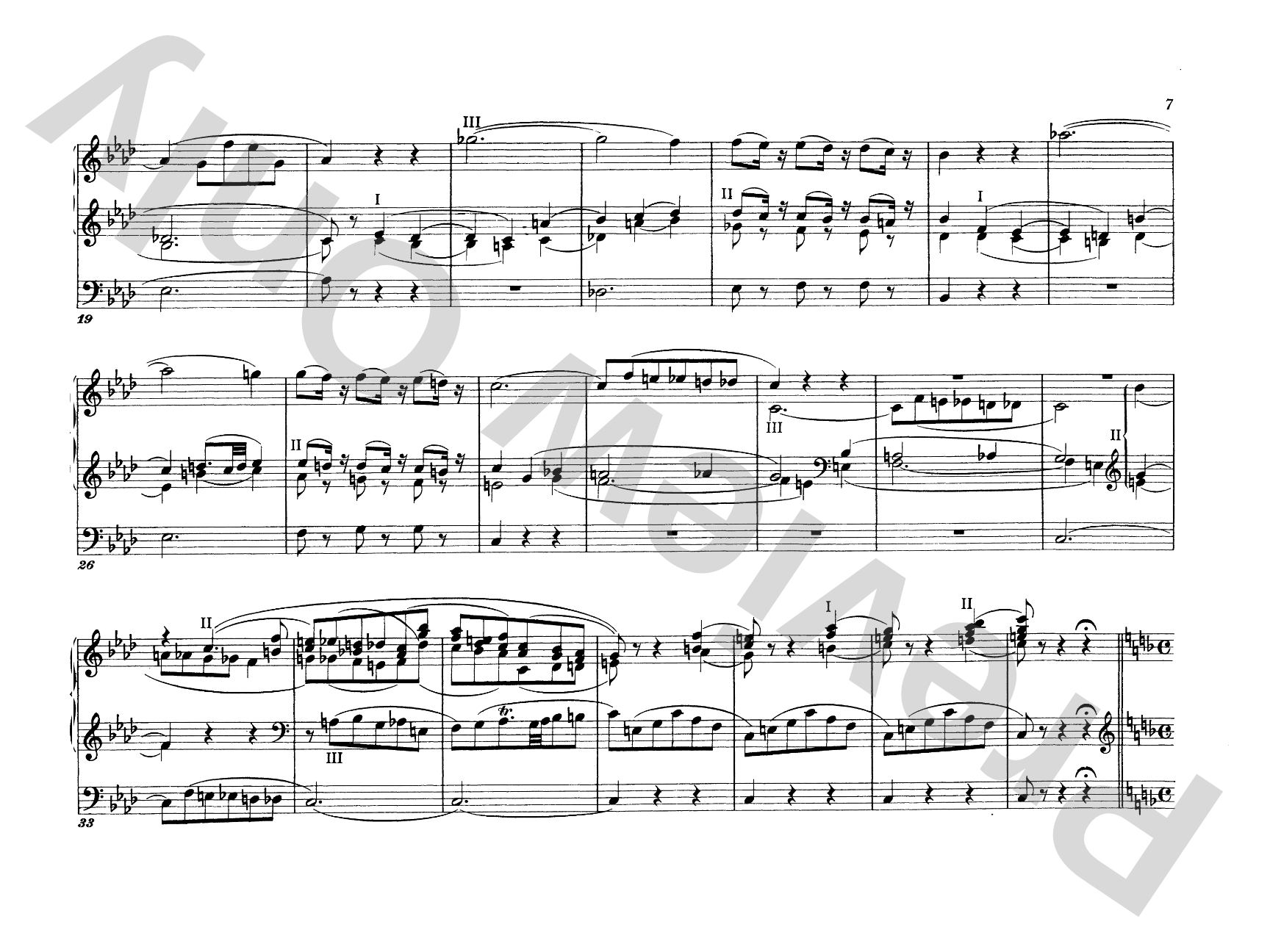
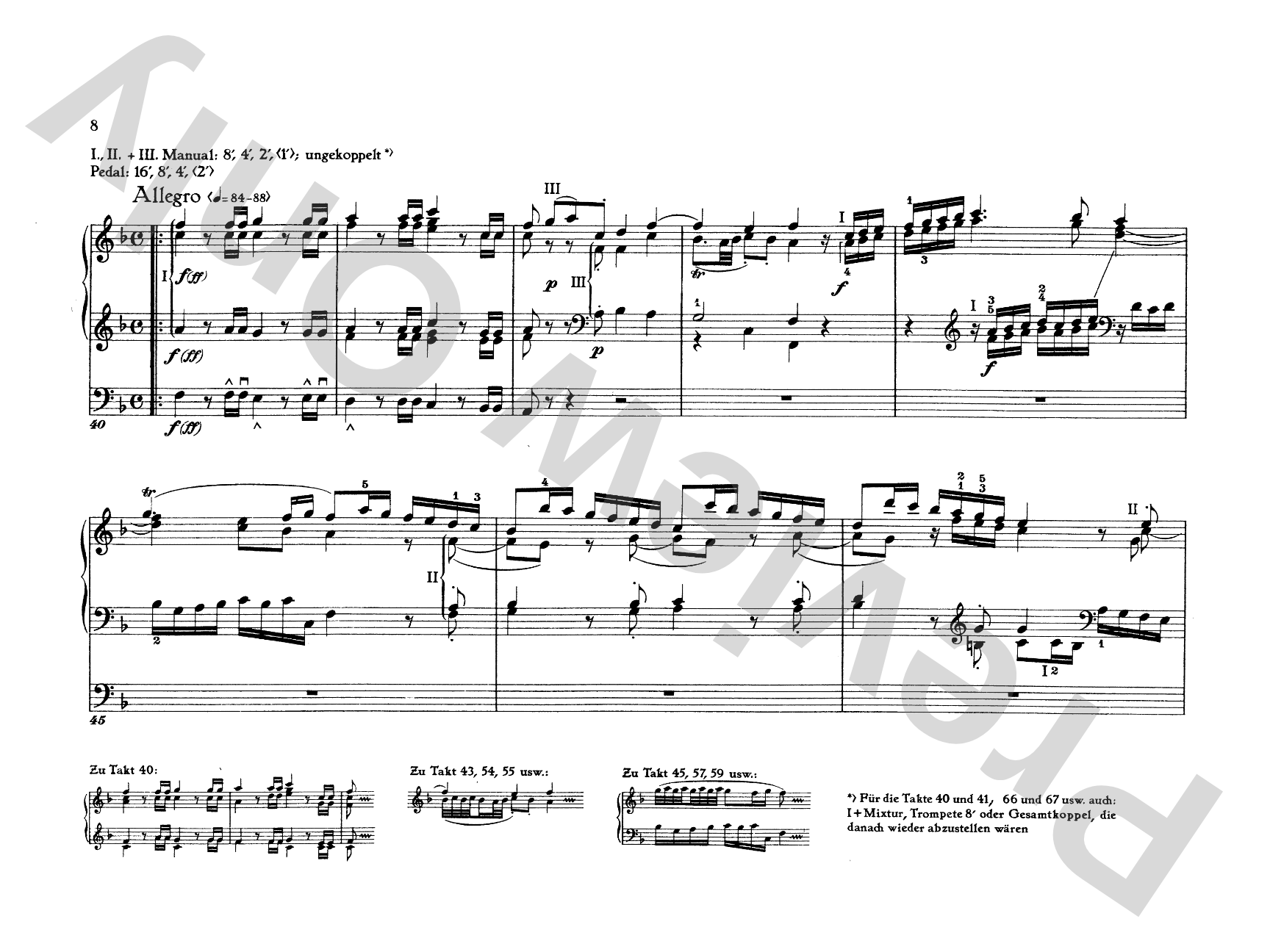
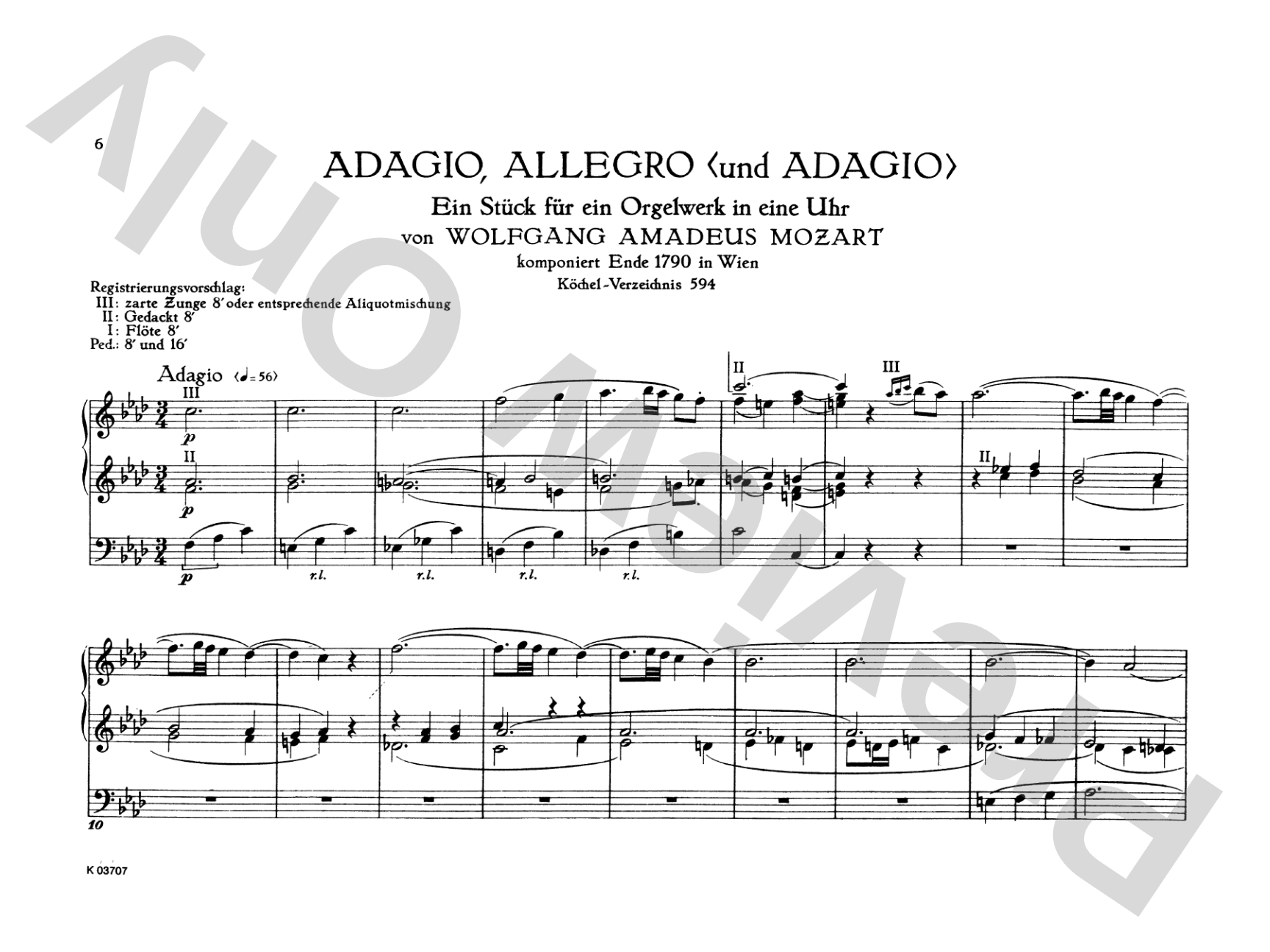
Mozart: Three Pieces Sheet Music Preview

Mozart: Three Pieces

By Wolfgang Amadeus Mozart

Item: 00-PC-0008695

Digital Download
$2.99
Description
K. 594, K. 608, K. 616. The comb binding creates a lay-flat book that is perfect for study and performance.

Don't just read it, hear it, play along with it, and watch your students grow with it. In MakeMusic Cloud, Mozart: Three Pieces comes alive with professional accompaniment, adjustable tempo, and built-in practice tools that turn solo practice into real progress.

Sample Audio
No sample audio found.
Sample Video
Additional Details
Series: Kalmus Edition
Publisher: Alfred Music
Page Count: 40
SKU: 00-PC-0008695

More about this title

About the Composer: Wolfgang Amadeus Mozart

Wolfgang Amadeus Mozart (1756-1791) composed across every major genre of his era, from symphonies and concertos to operas and chamber music. His organ works, though less frequently performed than his instrumental concertos, reveal the same harmonic sophistication and melodic invention that defined his career. These three pieces showcase his ability to write idiomatically for the keyboard, balancing contrapuntal clarity with expressive depth.

Why we love this

Mozart's three organ pieces represent essential keyboard repertoire that sits comfortably between study material and concert-worthy art. The lay-flat binding transforms this score into a genuinely practical performance tool rather than a page-turner's frustration. Organists at intermediate and advanced levels will find these works offer authentic Classical keyboard writing without the virtuosic extremes that can overshadow musicality.

What to expect

Mozart's organ music combines the intellectual architecture of the Classical period with intimate, conversational textures. These pieces move with clarity and proportion, never demanding showy display yet never settling into mere utility; they invite performers to shape phrases with the same care one would bring to a Mozart sonata.

Who it's for

Organists preparing intermediate to advanced Classical repertoire will find these three Köchel-catalogued works essential. Church musicians seeking authentic period keyboard literature and students of organ history will value having all three pieces in a single, performance-ready edition.

How to get the most out of it

  • Attend carefully to the harmonic rhythm in each piece; Mozart's organ writing often establishes forward momentum through subtle changes in chord duration rather than rapid figuration.
  • Balance manual and pedal passages so the pedal part supports without overwhelming; these pieces were composed when organ pedal technique was developing, and clarity matters more than power.
  • Use registration changes to delineate formal sections and create contrast between movements, but resist the urge to add stops that weren't available to Mozart's contemporaries.

How to use it

Position these works in recitals focused on keyboard literature or Sacred Music Sunday celebrations, where they anchor a program with unquestionable authority. Their moderate length makes them ideal for pairing with Baroque organ music on one side and Romantic pieces on the other, illustrating the shift in keyboard idiom across centuries.

Skills your students will build

  • Reading organ notation including manual and pedal parts simultaneously
  • Interpreting Classical period harmonic progressions and voice leading on the keyboard
  • Managing registration choices to reflect formal structure
  • Balancing contrapuntal clarity with Romantic-era sensibility about phrasing

You May Also Like