
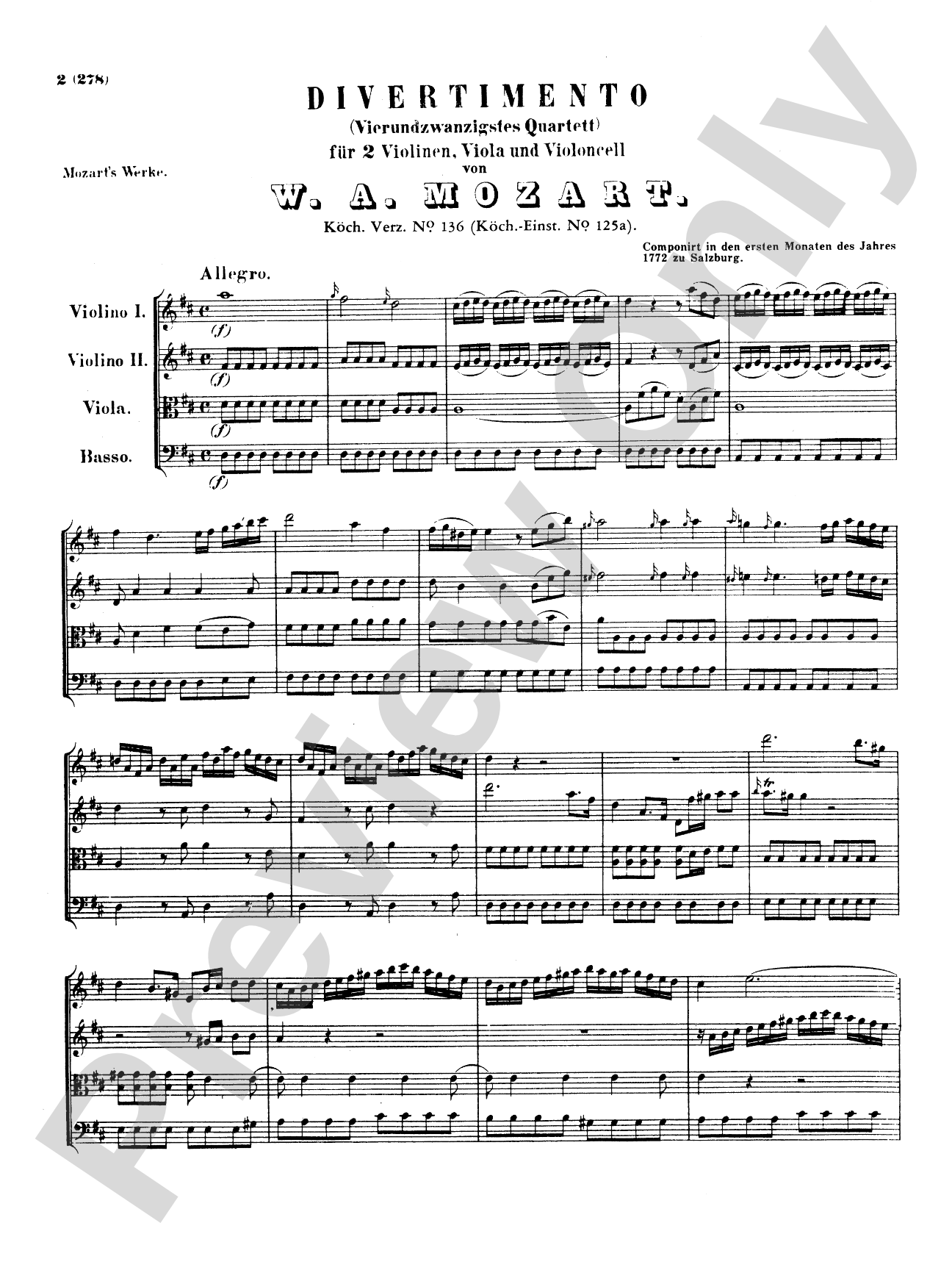
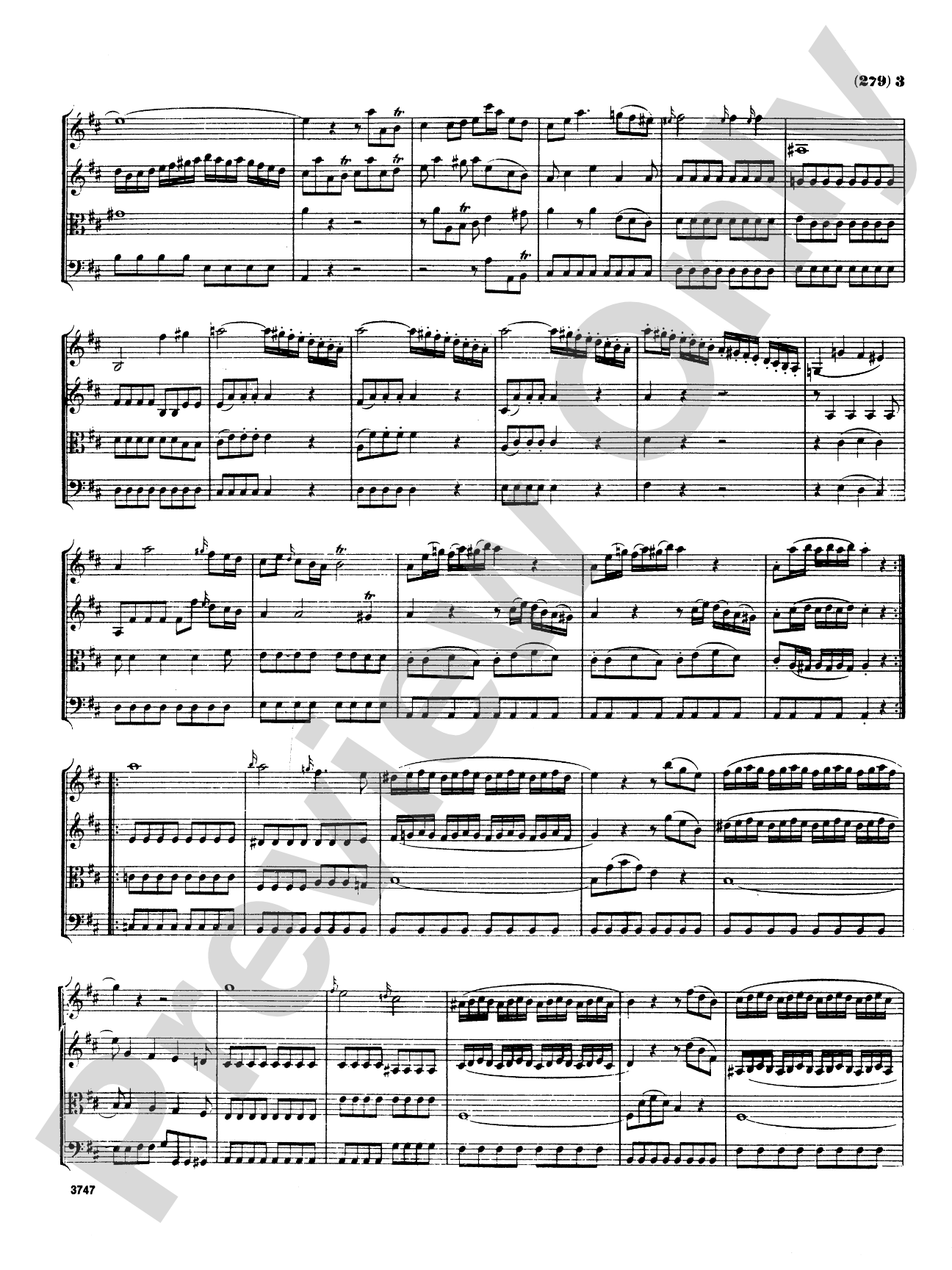
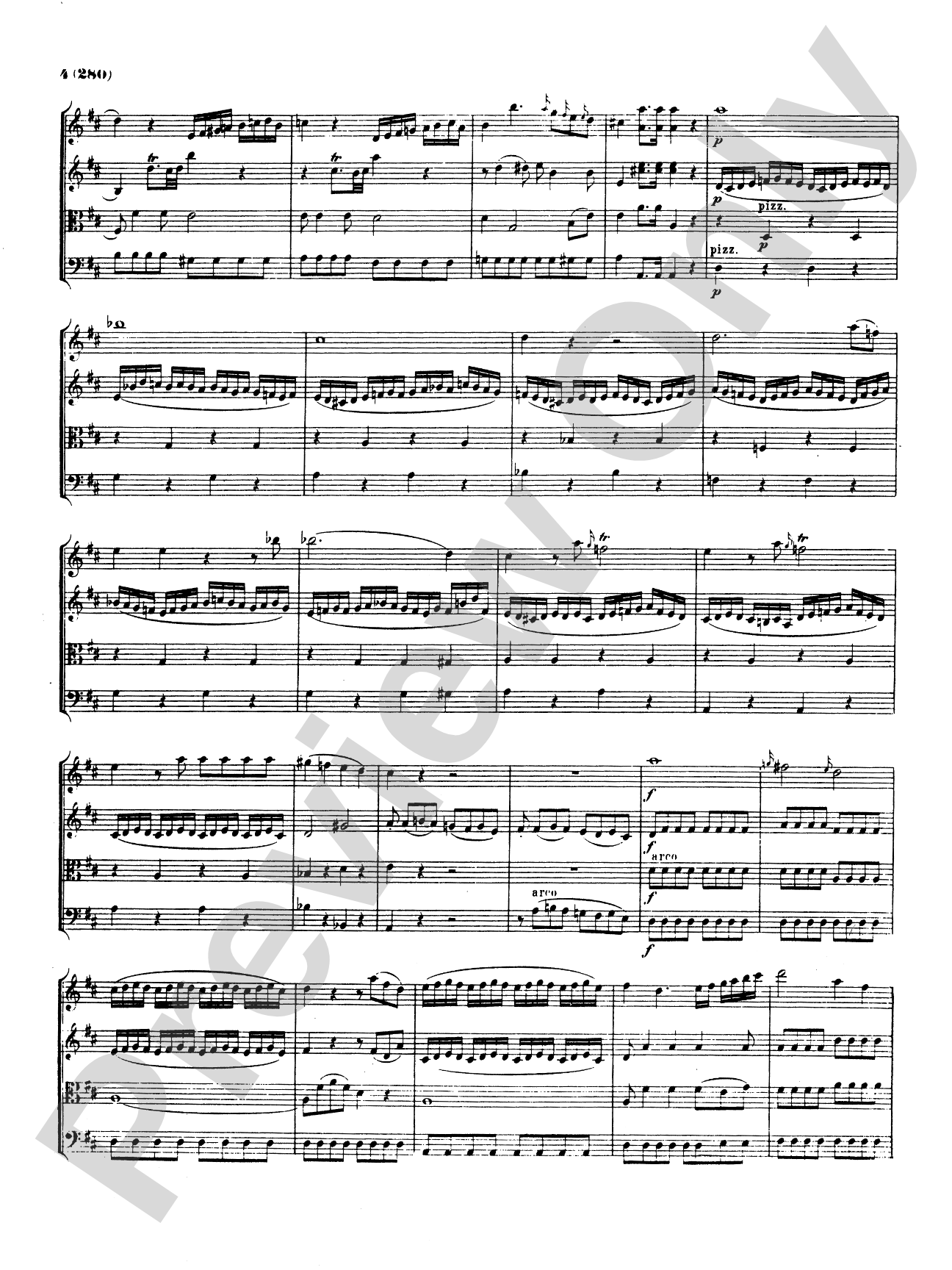
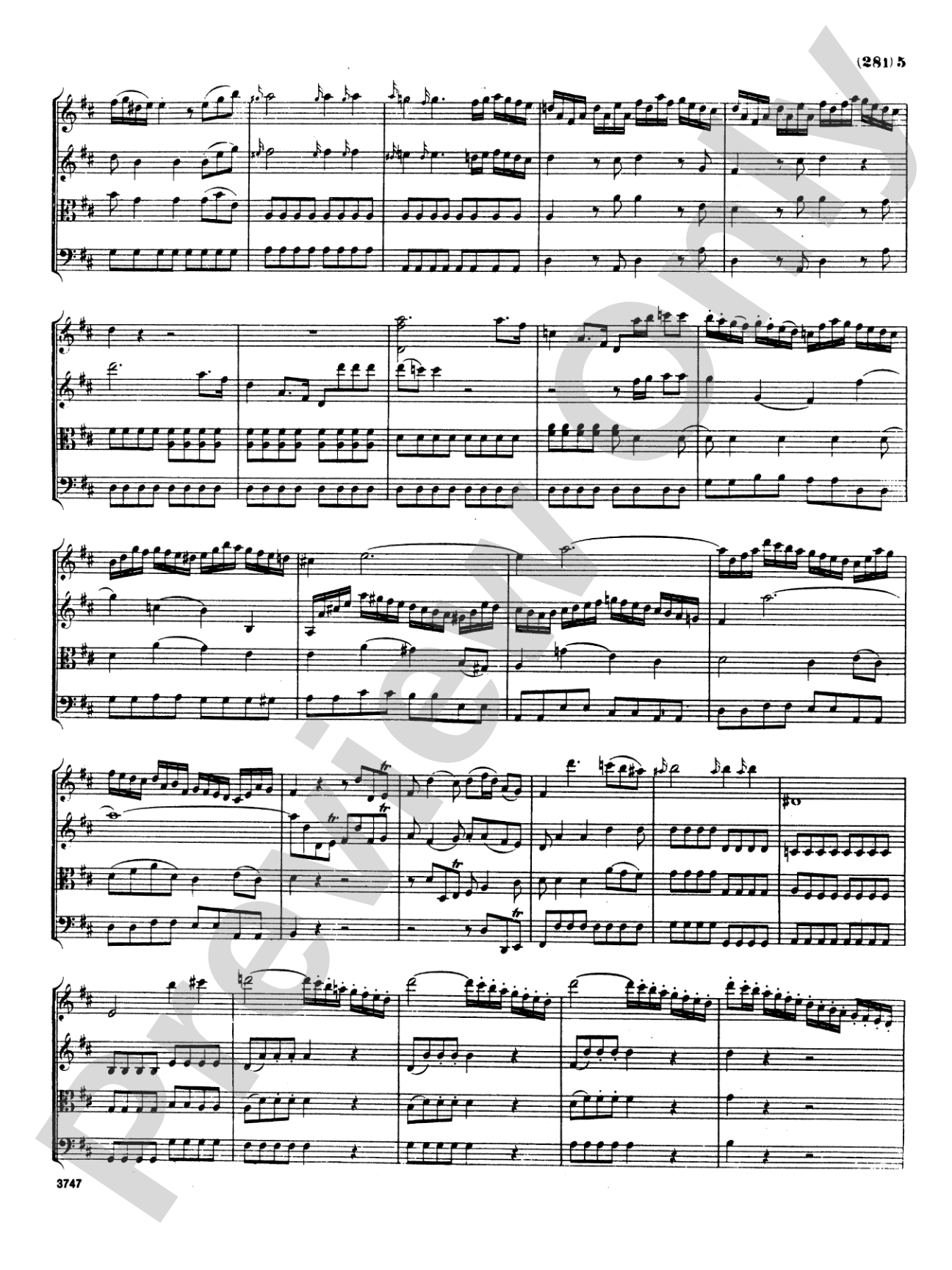
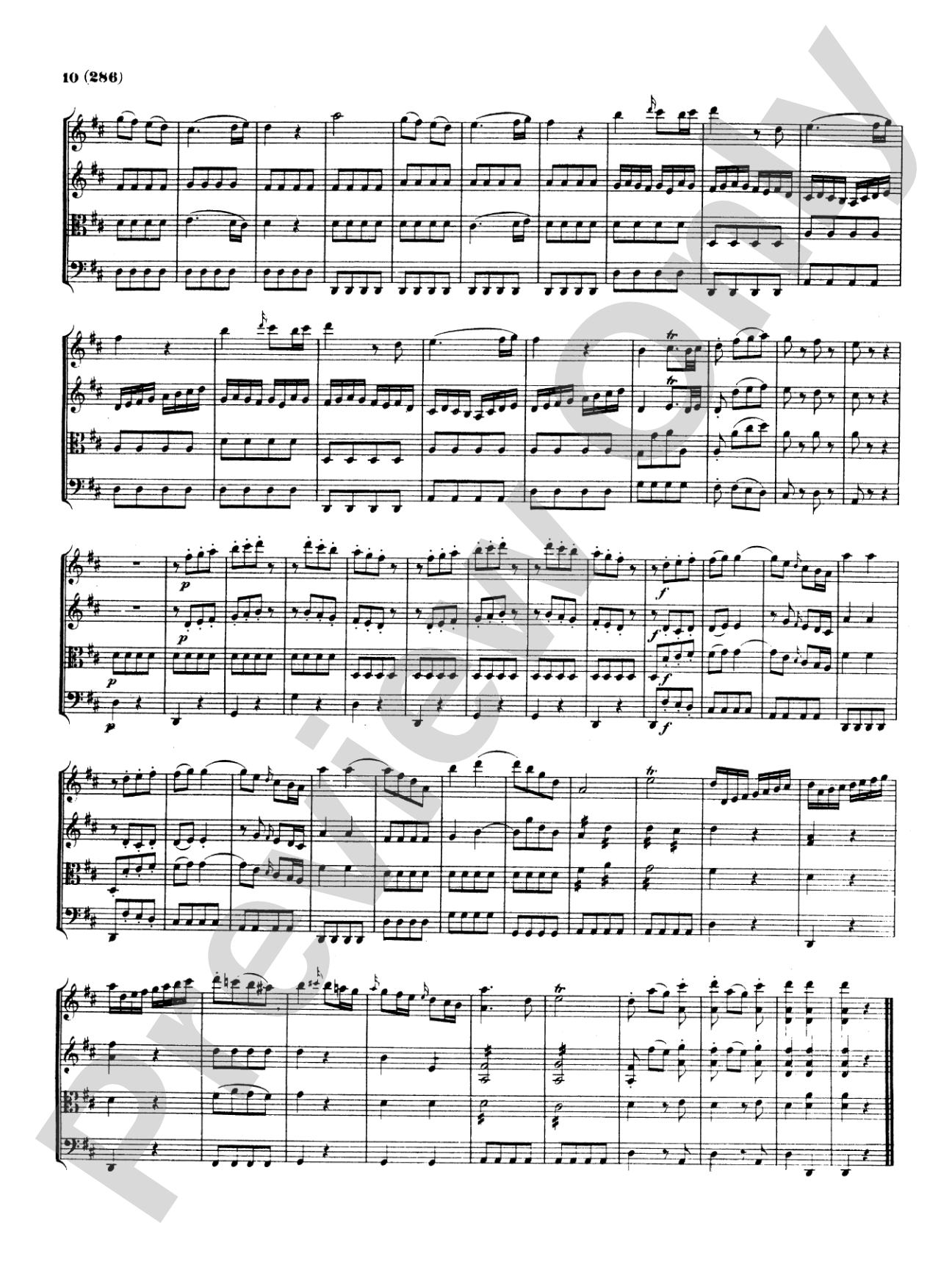

Mozart: Three Divertimenti: String Quartet Book
By Wolfgang Amadeus Mozart
Item: 00-PK-0003265

$15.99
Pickup currently not available
Buy Extra Parts (Digital PDF Download)
| Product | Price | Quantity |
|---|---|---|
| Mozart: Three Divertimenti | $4.99 | |
| Mozart: Three Divertimenti | $4.99 | |
| Mozart: Three Divertimenti | $4.99 |
Parts Added to Cart!
Related Items
Divertimenti, K. 136, 137, 138: String Quartet Book |
$15.95
|
View |
Description
A string quartet, composed by Wolfgang Amadeus Mozart.


Don't just read it, hear it, play along with it, and watch your students grow with it. In MakeMusic Cloud, Mozart: Three Divertimenti: String Quartet Book comes alive with professional accompaniment, adjustable tempo, and built-in practice tools that turn solo practice into real progress.
Open in the Player
Jump straight in and assign it today.
Start Your Free Trial
Open this title and explore the full library in minutes.
Sample Audio
No sample audio found.
Sample Video
No sample videos found.
Additional Details
Series:
Kalmus Edition
Publisher:
Alfred Music
Page Count:
68
SKU:
00-PK-0003265
More about this title
About the Composer: Wolfgang Amadeus Mozart
Wolfgang Amadeus Mozart (1756-1791) composed across every major genre of his era and wrote with a facility that astonished his contemporaries. His string quartets represent some of the most refined chamber music ever written, balancing architectural clarity with emotional depth and inventive counterpoint. Mozart's influence on the development of the string quartet form itself cannot be overstated; these works guided later composers in understanding how to write idiomatically for the ensemble while maintaining dramatic and harmonic sophistication.
For music educators, Mozart's quartets offer an unmatched laboratory for teaching voice leading, dialogue between parts, and the logic of Classical form. His melodies are memorable without being simplistic, and his textures reward careful listening and ensemble discipline. These divertimenti occupy a special place in his output: lighter in character than his mature quartets yet still containing the musical substance that makes Mozart essential repertoire.
Why we love this
These three divertimenti sit at exactly the right difficulty level for advanced student quartets preparing for festivals and competitions. Mozart's transparency of texture means intonation problems are immediately audible, which forces the ensemble to listen intently and refine their blend. The music rewards that work with passages of genuine beauty and moments of wit that audiences recognize instantly.
What to expect
A conversation between four equals, where each voice has something worth saying. The music balances lightness and elegance with moments of genuine pathos and surprising harmonic turns. There is humor in these divertimenti, yet never at the expense of musical substance; you emerge from playing them with a clearer understanding of how melody, harmony, and ensemble playing work together.
Who it's for
Advanced high school quartets and undergraduate chamber ensembles preparing for festival performance or competition. Musicians with solid intonation, rhythmic accuracy, and ensemble experience will find these works both rewarding and appropriately challenging without requiring virtuosic technique.
How to get the most out of it
- Observe the dynamic markings with precision; Mozart's contrasts between piano and forte define the architecture of each phrase and prevent the music from sounding one-dimensional.
- Shape the melodic lines with a singing tone rather than a detached articulation. Even in the lighter divertimenti style, these melodies deserve the same careful phrasing you would give a Brahms quartet.
- Balance the texture so that whoever carries the primary material stands out naturally without requiring a dramatic dynamic shift. This teaches interdependent listening across all four players.
- Pay attention to the rhythmic precision in the lower voices; sloppy accompanying figures will undermine Mozart's clarity and make the ensemble sound amateurish.
How to use it
Feature one of these divertimenti as the centerpiece of a chamber music concert or festival performance to demonstrate your quartet's refinement and intonation. Pair them with a work from the Romantic era to show stylistic range, or program all three as a cohesive set if your festival schedule allows. These works signal that your ensemble has moved beyond student arrangements into serious musical territory.
Skills your students will build
- Intonation adjustment in homophonic textures and contrapuntal passages
- Classical phrase structure and understanding of period form
- Balance and transparency in four-part writing
- Interpretive choices within Classical style constraints
- Ensemble listening and coordinated dynamic shaping