

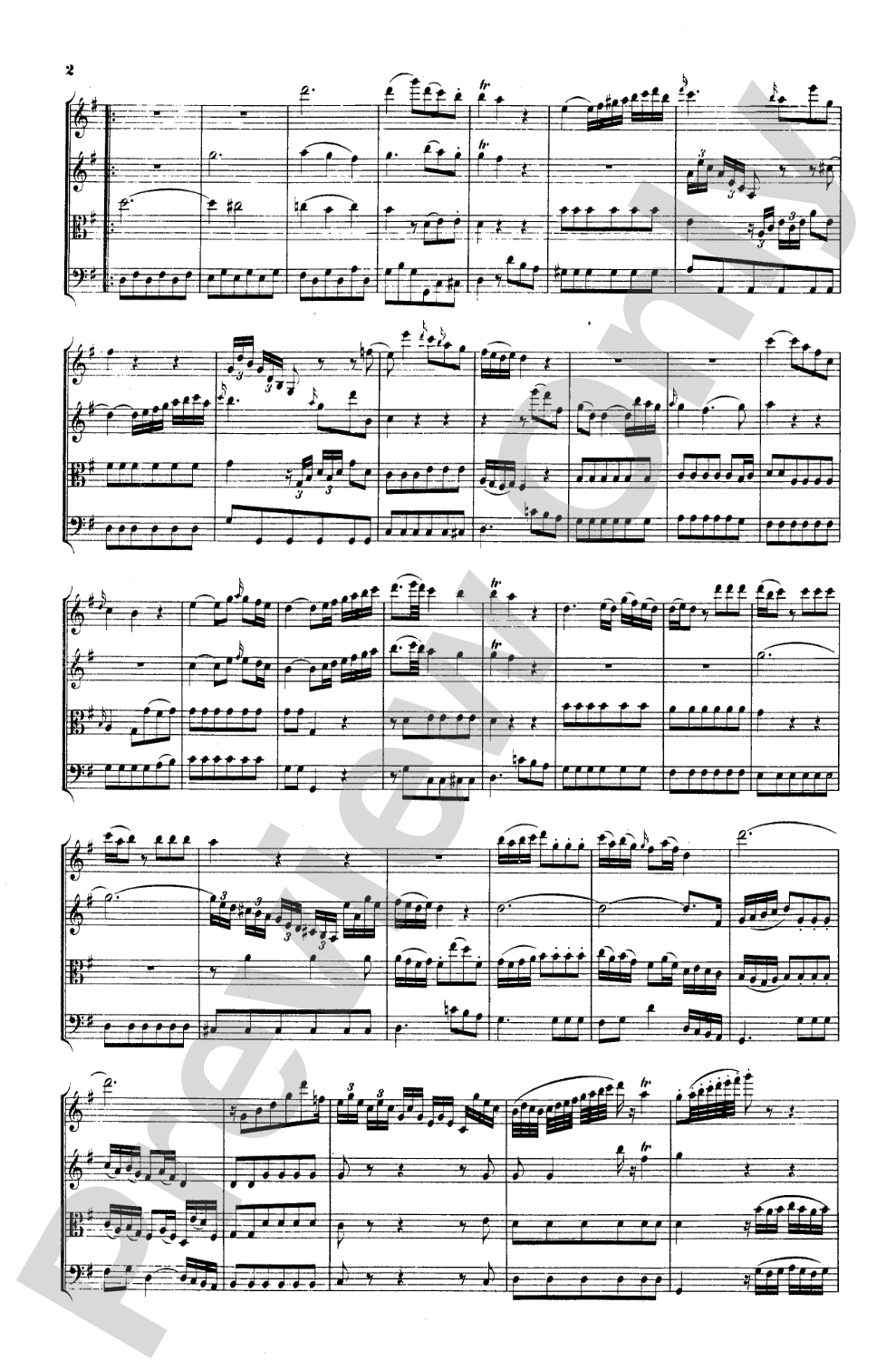

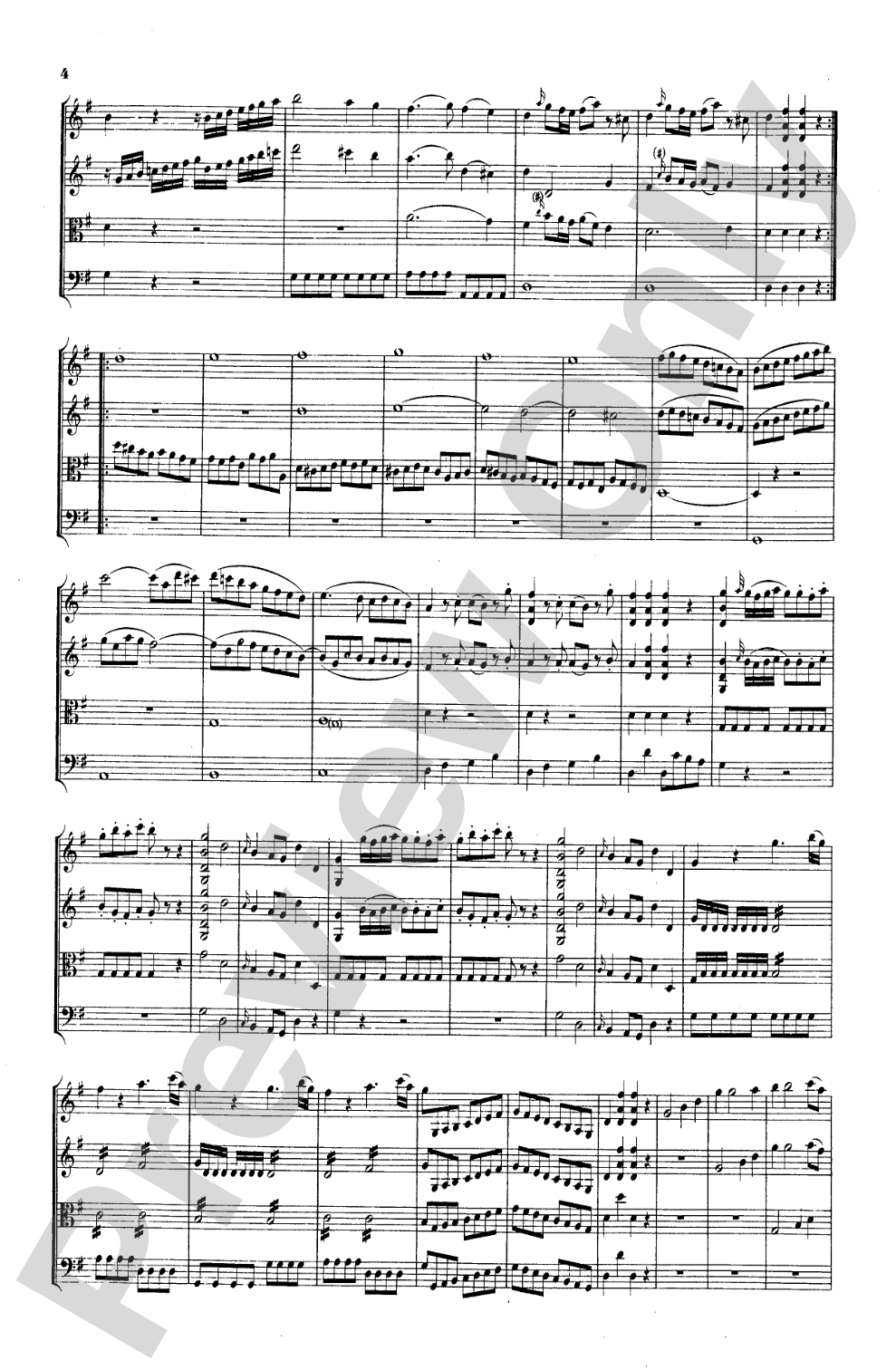
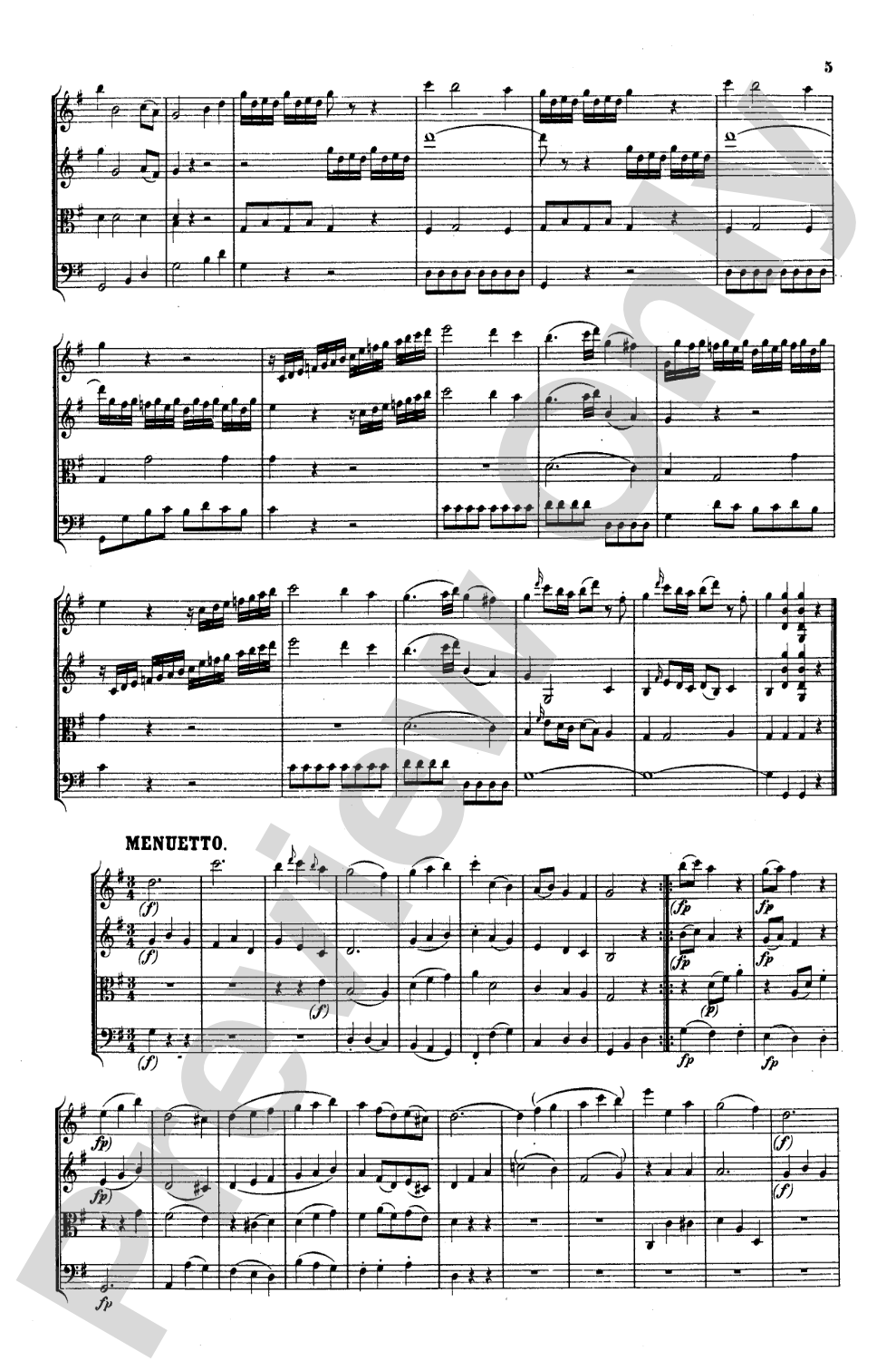

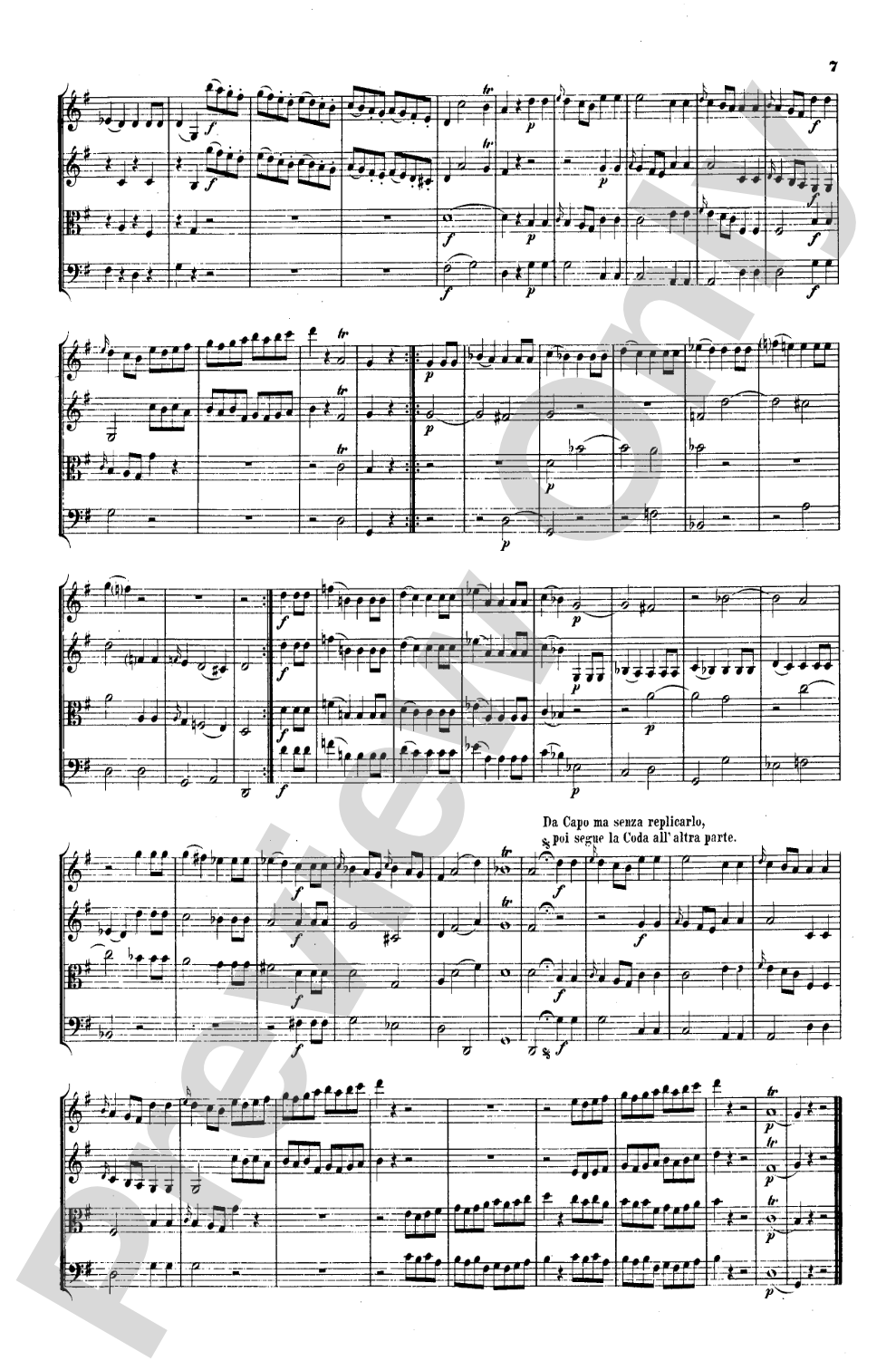

Mozart: String Quartets: String Quartet Miniature Score
By Wolfgang Amadeus Mozart
Item: 00-PK-0002697

$14.99
Pickup currently not available
Buy Extra Parts (Digital PDF Download)
| Product | Price | Quantity |
|---|---|---|
| Mozart: String Quartets | $0.99 | |
| Mozart: String Quartets | $0.99 | |
| Mozart: String Quartets | $0.99 | |
| Mozart: String Quartets | $0.99 | |
| Mozart: String Quartets | $0.99 | |
| Mozart: String Quartets | $0.99 | |
| Mozart: String Quartets | $0.99 | |
| Mozart: String Quartets | $0.99 | |
| Mozart: String Quartets | $0.99 | |
| Mozart: String Quartets | $0.99 | |
| Mozart: String Quartets | $0.99 | |
| Mozart: String Quartets | $0.99 |
Parts Added to Cart!
Related Items
String Quartets: K. 80, 155, 156, 157, 158, 159, 160, 168, 169, 170, 171, 172, 173: String Quartet Miniature Score |
$14.95
|
View |
Description
A collection of string quartets, composed by Wolfgang Amadeus Mozart.


Don't just read it, hear it, play along with it, and watch your students grow with it. In MakeMusic Cloud, Mozart: String Quartets: String Quartet Miniature Score comes alive with professional accompaniment, adjustable tempo, and built-in practice tools that turn solo practice into real progress.
Open in the Player
Jump straight in and assign it today.
Start Your Free Trial
Open this title and explore the full library in minutes.
Sample Audio
No sample audio found.
Sample Video
No sample videos found.
Additional Details
Series:
Kalmus Edition
Publisher:
Alfred Music
Page Count:
112
SKU:
00-PK-0002697
More about this title
About the Composer: Wolfgang Amadeus Mozart
Wolfgang Amadeus Mozart (1756-1791) composed over 600 works across every major genre, establishing himself as one of the most prolific and influential composers in Western music history. His string quartets represent a pinnacle of Classical chamber music writing, combining formal sophistication with lyrical elegance. Mozart wrote 23 string quartets spanning his career, each one a masterwork of counterpoint, harmonic innovation, and emotional depth that continues to define the string quartet repertoire.
Why we love this
Mozart's string quartets sit at the heart of the ensemble's canon, offering your students access to music of unmatched structural clarity and expressive range. The miniature score format makes these works practical for rehearsal and study, while the Kalmus Edition provides reliable, performance-ready texts. Programming these quartets signals serious artistic intent and gives musicians of genuine musicianship something worthy of sustained attention.
What to expect
Mozart's string quartets embody Classical elegance: precise, balanced, and intellectually transparent, yet rich with sudden harmonic shifts and moments of surprising emotional depth. The music moves with rhythmic clarity and melodic grace, inviting performers to shape phrases with both structural awareness and lyrical singing. These are works that reveal new layers with each rehearsal, rewarding both ensemble cohesion and individual interpretive insight.
Who it's for
String quartet ensembles preparing for festivals, competitions, or chamber recitals will find essential repertoire in this collection. Students pursuing music study at the university level need Mozart's quartets as foundational works in their repertoire. Advanced high school quartets ready for serious concert programming will find music that challenges their musicianship and rewards careful preparation.
How to get the most out of it
- Balance the first violin line against the supporting voices; Mozart distributes thematic material across all four parts, and clarity depends on voices sharing equal responsibility for the musical narrative.
- Shape phrases with long-line breathing in mind. These quartets demand bow control and sustain that mirrors the arc of a vocal line rather than choppy, section-by-section phrasing.
- Approach the harmonic language with precision. Mozart's chromaticism and key modulations require clean intonation and attentive listening from all four players to maintain harmonic integrity.
- Use the miniature score to study the full texture before rehearsal. Understanding how voices interact prepares you to hear balance issues early and solve them in ensemble rather than in parts.
How to use it
Feature one of these quartets on a chamber concert or festival appearance to establish your ensemble's serious engagement with the core repertoire. Pairing Mozart with a Baroque quartet and a contemporary work creates a coherent programming arc that traces the genre's development. These pieces work equally well in an intimate recital setting or as a feature on a larger concert alongside other Classical works.
Skills your students will build
- Balancing voices in contrapuntal textures
- Executing clean harmonic intonation across key modulations
- Shaping long melodic phrases with structural awareness
- Reading and interpreting Classical-era performance conventions
- Ensemble coordination and independent part-writing awareness
- Recognizing thematic material distributed across multiple voices