

Mozart: Sonatas (Urtext)
By Wolfgang Amadeus Mozart
Item: 00-PC-0008591
$0.99
Pickup currently not available
Description
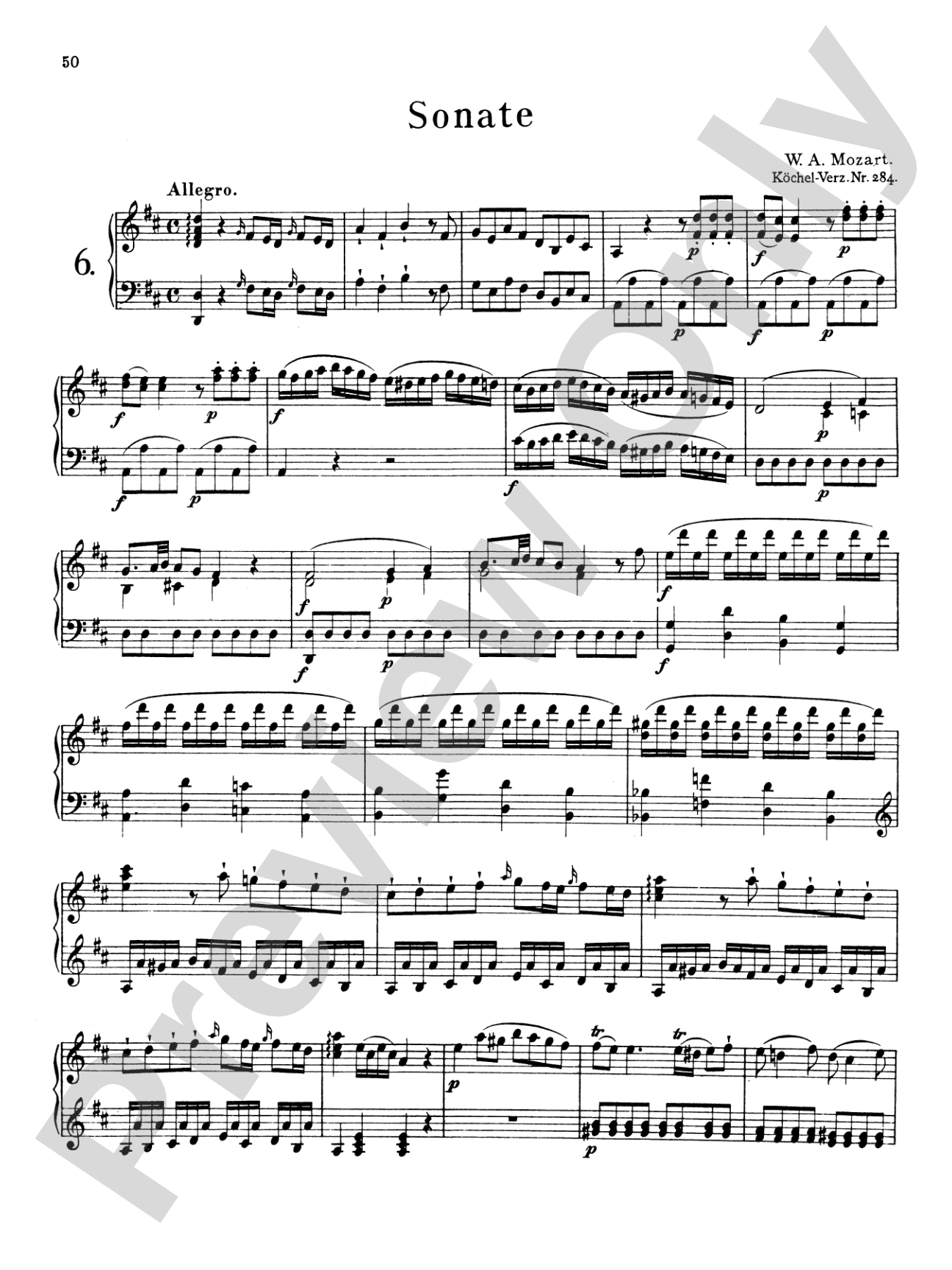
Titles: No. 1, Sonata in C Major * No. 2, Sonata in F Major * No. 3, Sonata in B Major * No. 4, Sonata in E-Flat Major * No. 5, Sonata in G Major * No. 6, Sonata in D Major * No. 7, Sonata in C Major * No. 8, Sonata in A Major * No. 9, Sonata in D Major * No. 10, Sonata in C Major * No. 11, Sonata in A Major (Turkish March) * No. 12, Sonata in F Major * No. 13, Sonata in B Major * No. 14a, Fantasy No. 4 * No. 14b, Sonata in C Minor * No. 15, Sonata in C Major * No. 16, Sonata in B Major * No. 17, Sonata in D Major * No. 18, Fantasy No. 1 with Fugue in C Major * No. 19, Fantasy No. 2 in C Minor * No. 20, Fantasy No. 3 in D Minor.


Don't just read it, hear it, play along with it, and watch your students grow with it. In MakeMusic Cloud, Mozart: Sonatas (Urtext) comes alive with professional accompaniment, adjustable tempo, and built-in practice tools that turn solo practice into real progress.
Open in the Player
Jump straight in and assign it today.
Start Your Free Trial
Open this title and explore the full library in minutes.
Sample Audio
No sample audio found.
Sample Video
No sample videos found.
Additional Details
Series:
Kalmus Edition
Publisher:
Alfred Music
Page Count:
240
SKU:
00-PC-0008591
More about this title
About the Composer: Wolfgang Amadeus Mozart
Wolfgang Amadeus Mozart (1756-1791) composed over 600 works across every major genre during his 35 years, establishing himself as one of the most prolific and influential composers in Western music. His piano sonatas, written across multiple decades, show his evolution from youthful virtuosity toward increasing harmonic sophistication and emotional depth, making them essential documents of Classical keyboard writing.
Why we love this
This Urtext edition gives students direct access to Mozart's original intentions without editorial interventions that can cloud interpretation. The 20 sonatas plus three fantasies span his compositional life, offering a natural progression from accessible early works through genuine structural challenges, which means teachers can assign from this single volume across multiple years of study.
What to expect
These sonatas range from galant charm and wit in the early works to introspection and architectural ambition in the later ones. The fantasias introduce darker harmonic territories and improvisatory textures that contrast sharply with the sonatas' formal clarity, creating emotional breadth across the collection.
Who it's for
Intermediate to advanced pianists preparing for conservatory entrance exams, music theory coursework, or serious recital study will find this comprehensive edition essential. Teachers seeking authentic texts for students exploring Classical sonata form and keyboard technique across multiple levels of difficulty benefit from having all 20 sonatas in one volume.
How to get the most out of it
- Approach the fantasias (Nos. 14a, 18, 19, 20) as interpretive opportunities rather than display pieces; Mozart's harmonic language here is more ambiguous and emotionally complex than the sonatas, requiring careful listening to phrase architecture.
- Balance Alberti bass patterns with rhythmic clarity rather than allowing them to become purely accompaniment; the hand independence expected across these works sharpens precision and control.
- Study the key relationships across sonatas to understand how Mozart uses major and minor tonalities; notice how the same key can feel entirely different across different works (C Major appears in Nos. 1, 7, 10, 15, and 18).
- Pay attention to articulation and pedaling markings as critical interpretive guides; Mozart's sparse notation contrasts with later Romantic practice, and restraint often serves the music better than added color.
How to use it
Assign individual sonatas from this collection as recital anchors at different levels; a student performing Sonata No. 16 or No. 17 offers audiences a substantial yet manageable Classical centerpiece. The fantasias work well as encore material or as bridge pieces in recitals pairing Mozart with Romantic-era composers, since they hint at harmonic language to come.
Skills your students will build
- Reading and interpreting Urtext scores without editorial apparatus
- Sonata form analysis through hands-on performance
- Hand independence and control in Alberti bass accompaniment patterns
- Dynamic shaping and phrasing in Classical context
- Harmonic listening and voice leading awareness
- Interpretation of sparse notation and minimal articulation markings
- Comparative study across works in the same key