
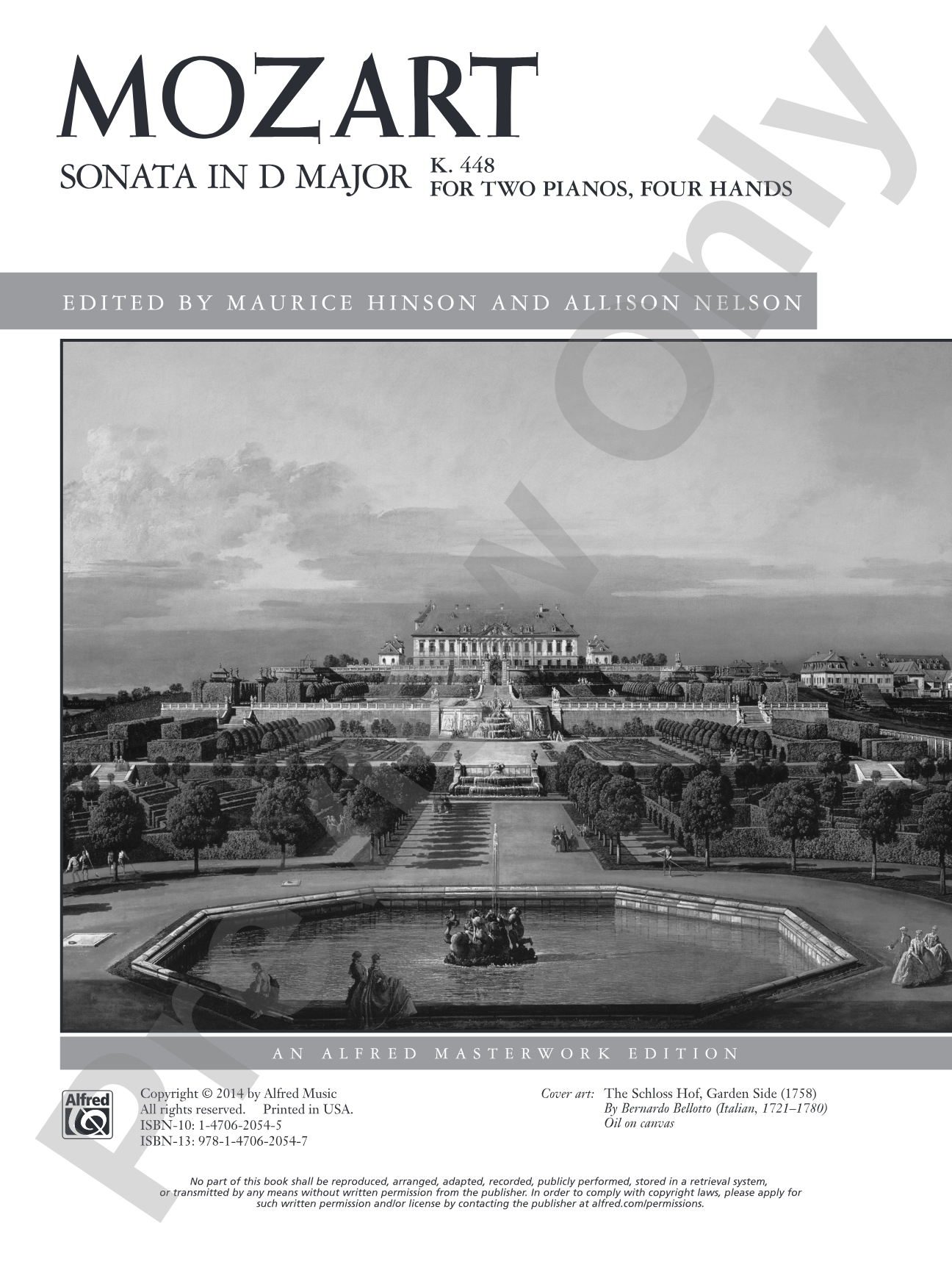
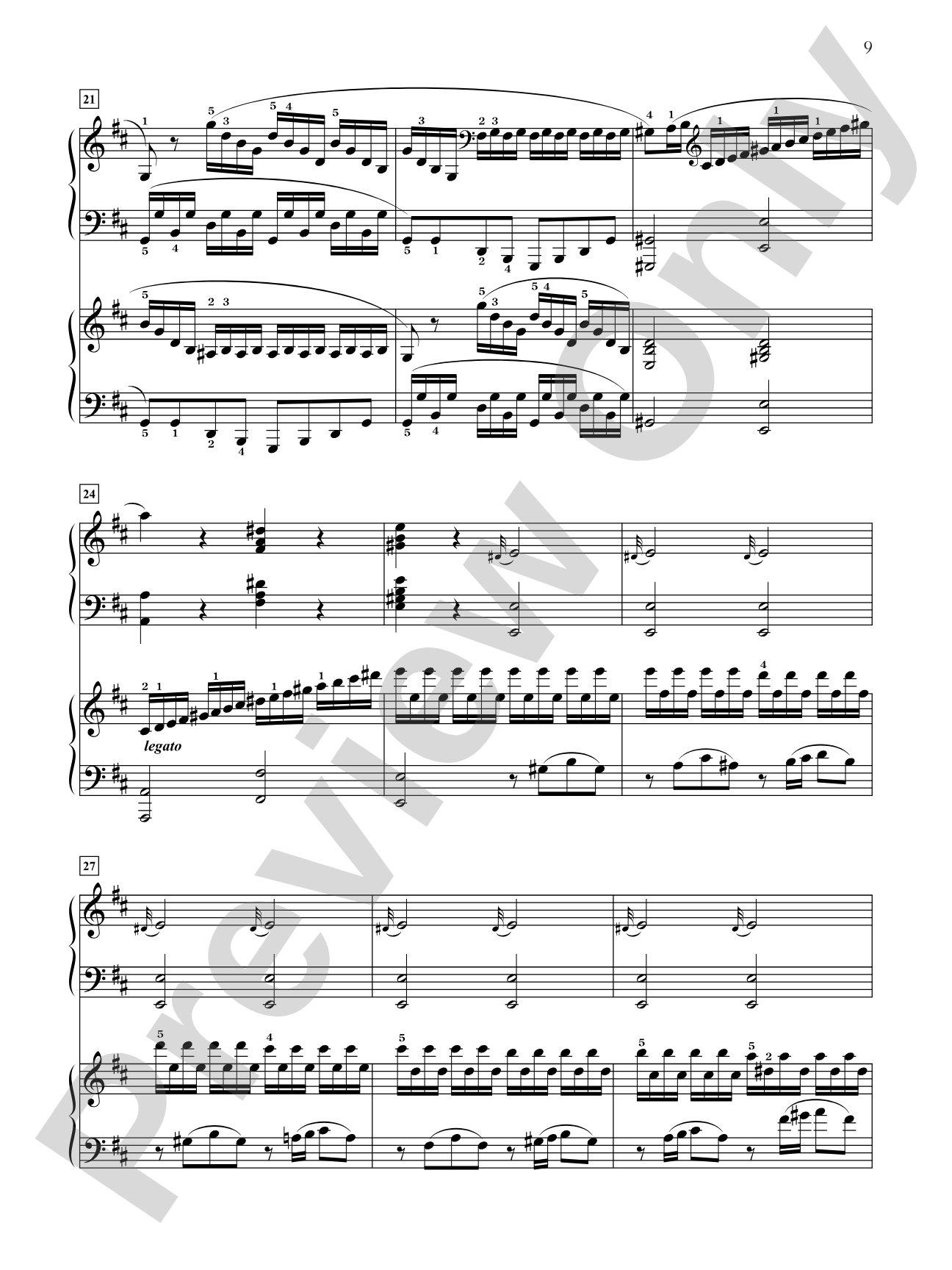
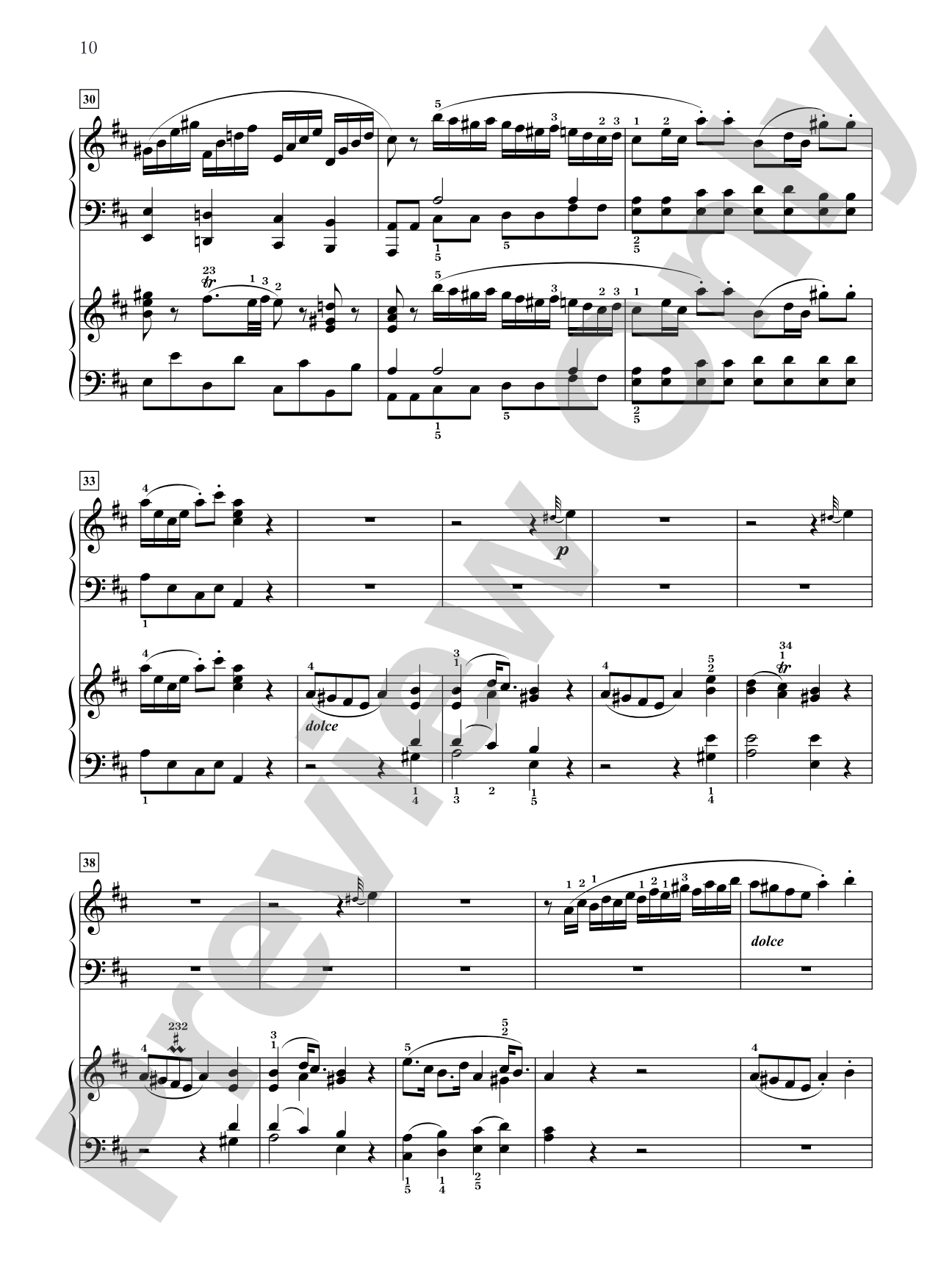
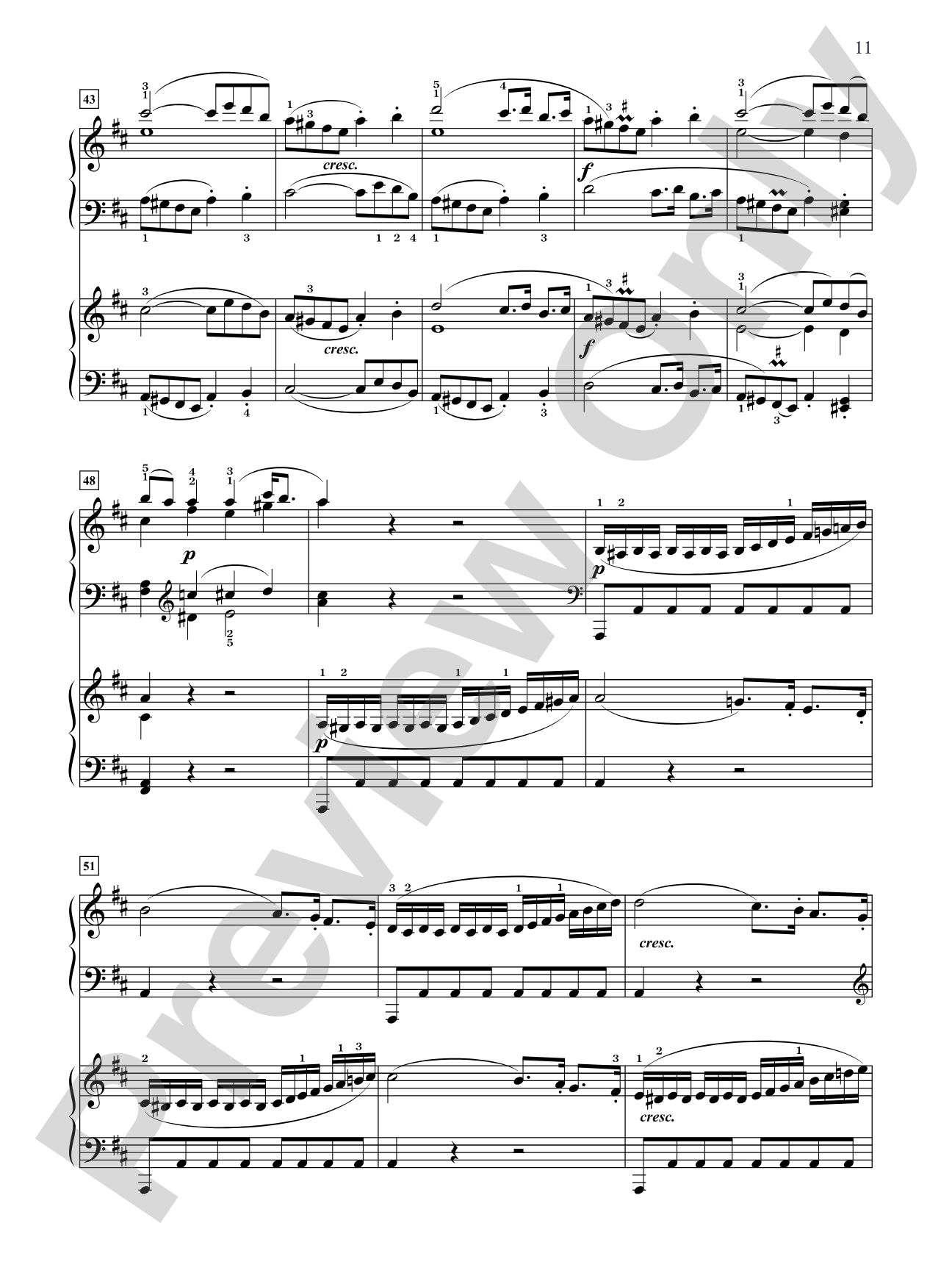
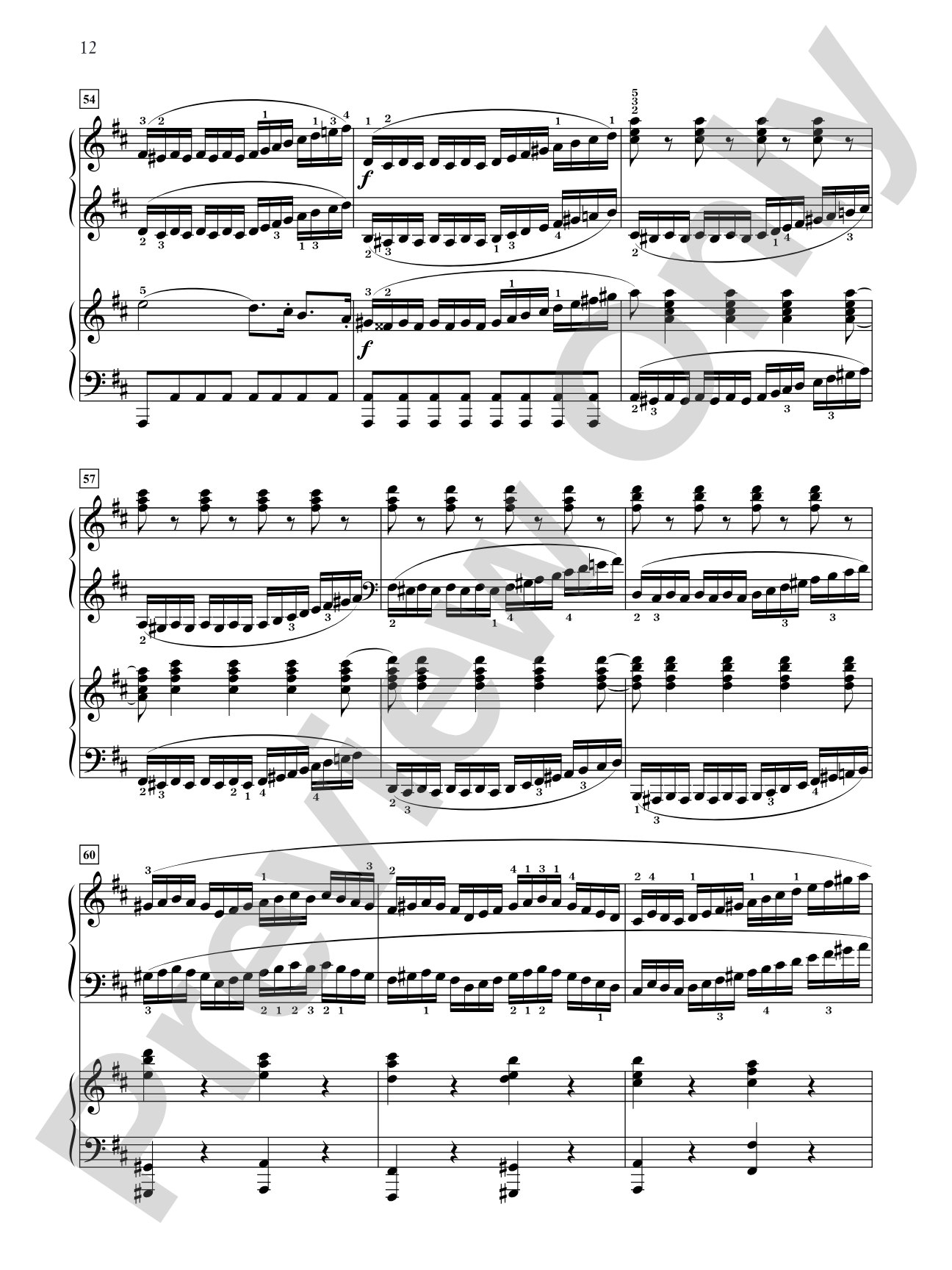

Mozart: Sonata in D Major, K. 448 - Piano Duo (2 Pianos, 4 Hands): Piano Duets & Four Hands
By Wolfgang Amadeus Mozart / ed. Maurice Hinson and Allison Nelson
Level: Advanced
Item: 00-PB-0000625
$11.99
Pickup currently not available
Related Items
Mozart: Sonata in D Major, K. 448: Piano Duo (2 Pianos, 4 Hands) Book (2 copies required) |
$11.99
|
View |
Description
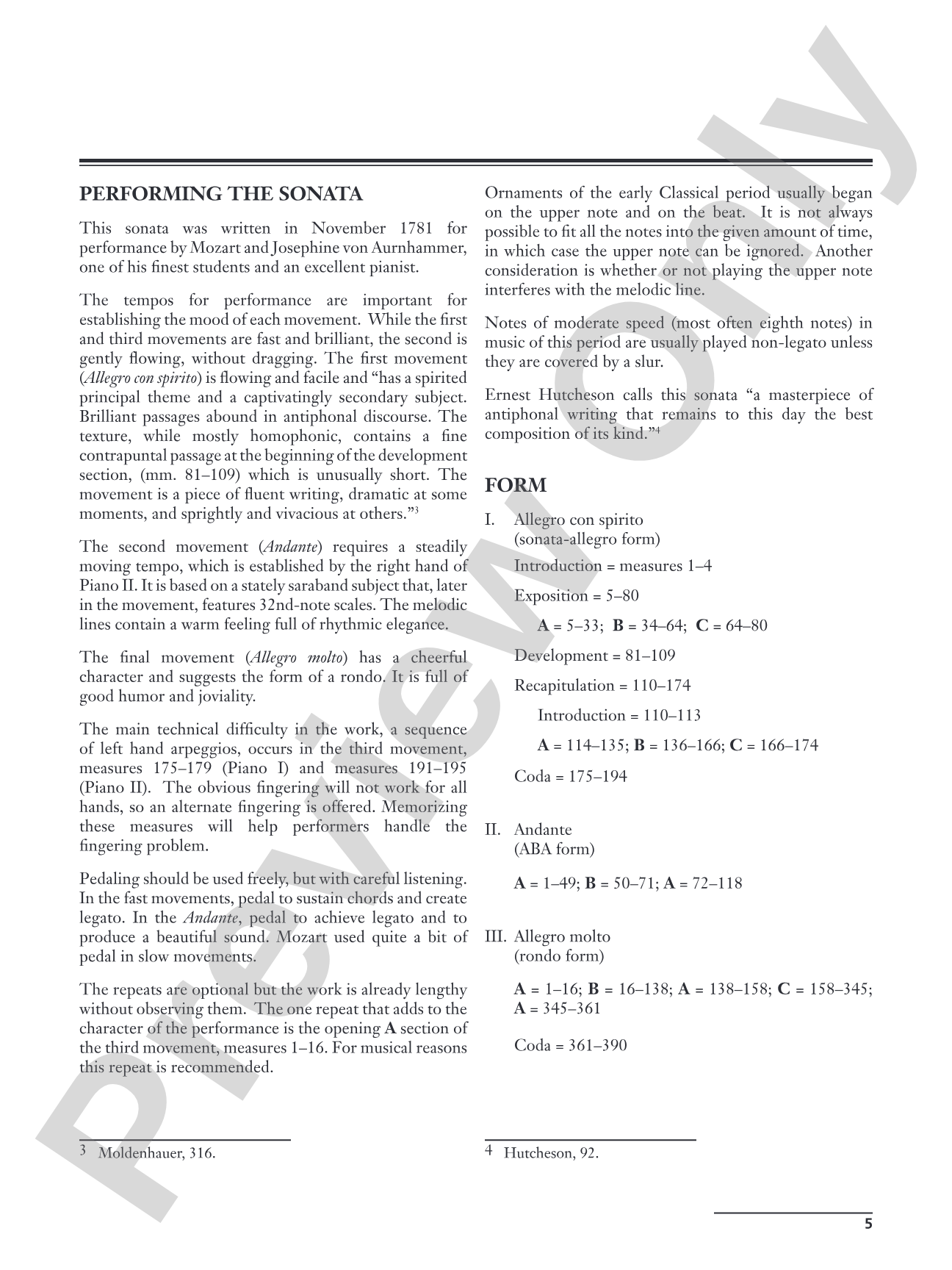
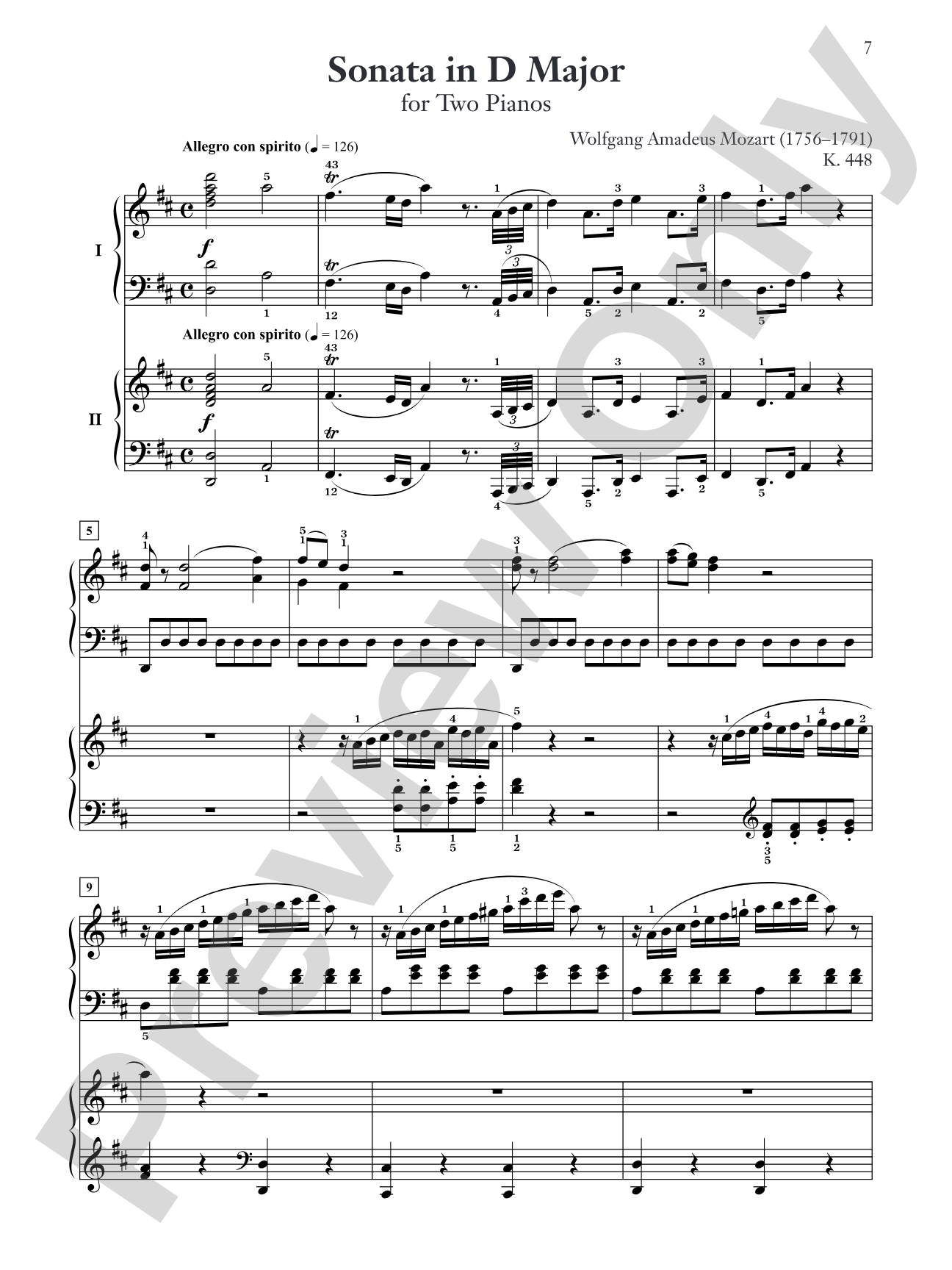
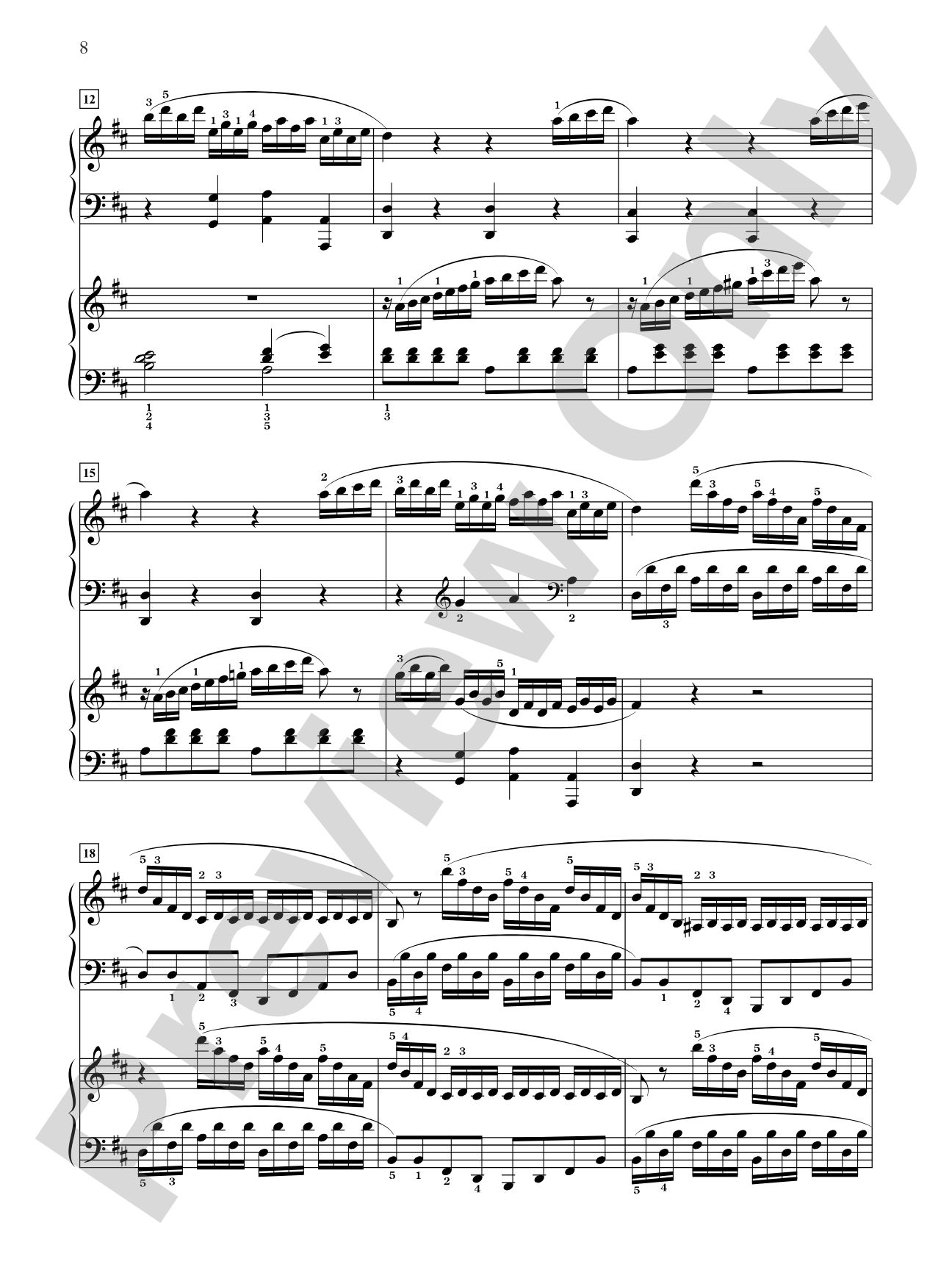
This sonata for two pianos, four hands was written in 1781 for performance by Mozart and Josephine von Aurnhammer, one of his finest students. The first and third movements are fast and brilliant, contrasted by a gently flowing second movement. This edition includes editorial fingering and performance suggestions. A Federation Festivals 2024-2028 selection.


Mozart: Sonata in D Major, K. 448 - Piano Duo (2 Pianos, 4 Hands): Piano Duets & Four Hands isn't in MakeMusic Cloud just yet...but it could be. Let us know you'd like to see it, and you'll help shape what comes next. In the meantime, start a free trial and dive into thousands of interactive titles your students can play along with today.
Request This Title
Tell us you want it.
Start Your Free Trial
Explore everything that's ready to play right now.
Sample Audio
No sample audio found.
Sample Video
Additional Details
Series:
Alfred Masterwork Edition
Publisher:
Alfred Music
Page Count:
60
SKU:
00-PB-0000625
More about this title
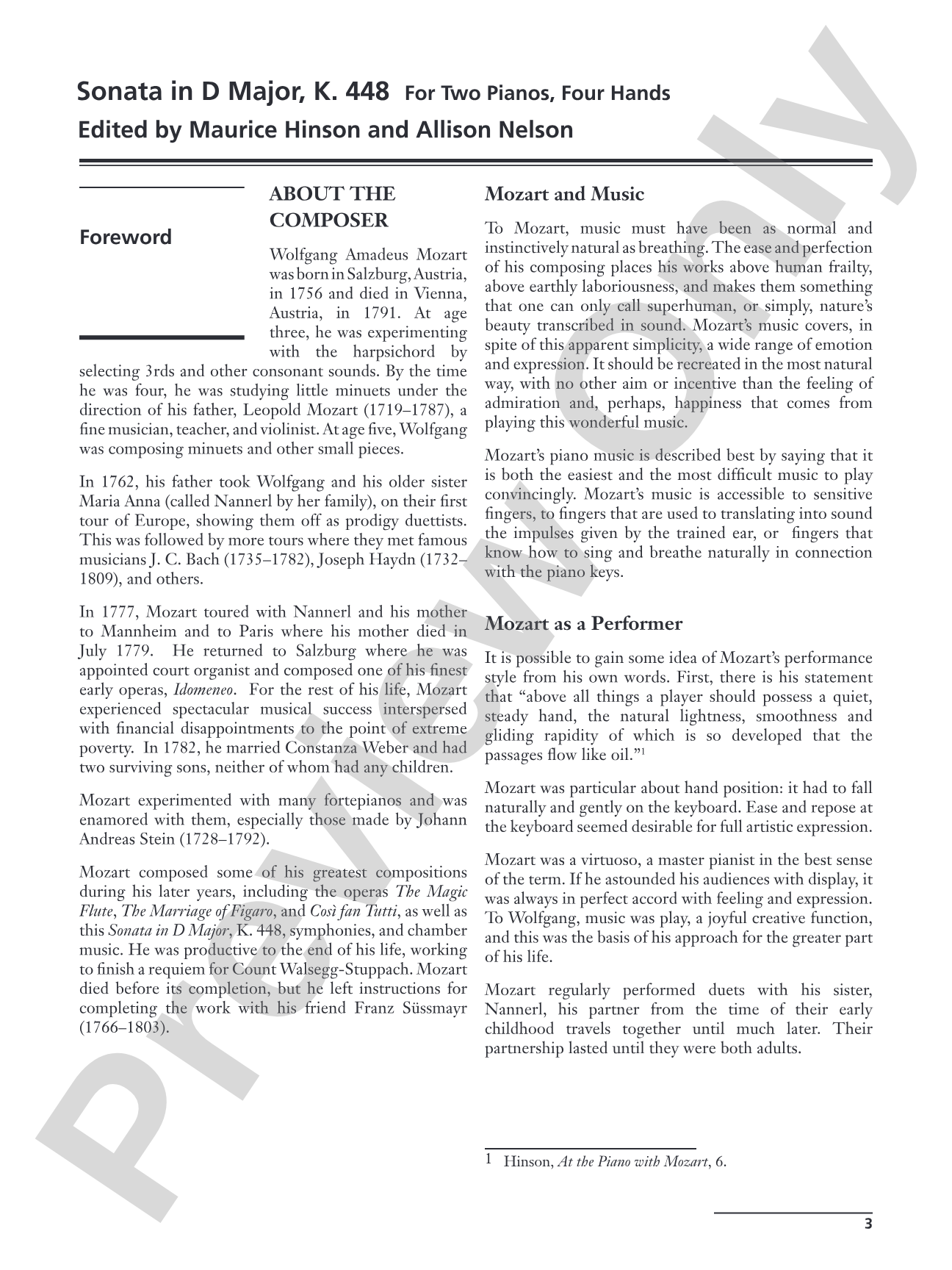
About the Composer: Wolfgang Amadeus Mozart
Mozart composed this sonata in 1781 during his Vienna years, a period of remarkable productivity and artistic maturity. Written for himself and his gifted student Josephine von Aurnhammer, the work showcases Mozart's mastery of the duo medium, balancing two equally important pianists while maintaining the brilliance and clarity that define his style.
Why we love this
Mozart's two-piano sonatas occupy a unique space in the pedagogical repertoire: they're genuinely substantial works that demand serious musicianship without the weight of a concerto. The outer movements deliver genuine virtuosity and excitement for advanced students, while the middle movement offers a chance to explore sensitive, collaborative playing. This Alfred edition's editorial fingerings and performance notes remove guesswork and let pianists focus on ensemble balance and phrasing.
What to expect
The opening movement crackles with classical wit and clean articulation, the two pianos trading brilliant figurations that feel almost conversational. The Andante settles into a warm, intimate tenderness that rewards both players' attention to tone color and line. A return to virtuosic brightness closes the work with the same elegant clarity it began.
Who it's for
Advanced pianists preparing for competitions, festivals, or chamber recitals will find this work both musically rewarding and technically appropriate. This piece suits students ready to navigate the demands of four-hand partnership while building interpretive maturity with a Masterwork.
How to get the most out of it
- Establish clear leadership in the opening themes of the first movement, but remember that Mozart designed both parts as soloists. Resist the urge to let one piano dominate; instead, think of it as two conversations happening simultaneously.
- The Andante requires absolute listening to each other. Begin by playing much slower than you think necessary, letting the melodic line breathe and the harmonic support settle naturally.
- Track the textural shifts between the two pianos throughout the work. When one piano has rapid passage work, the other often carries harmonic weight. These roles trade frequently, so mark them clearly in rehearsal.
- Use the Federation Festivals recording or other authoritative performances as a reference for tempo relationships between movements, but trust your ears for the specific acoustics of your performance space.
How to use it
This sonata works beautifully on a chamber concert that includes other piano duets or collaborative works, offering something more substantial than lighter four-hand pieces. Its Federation Festivals selection status makes it an obvious choice for competition preparation or a final recital project for advanced students. Consider pairing it with a shorter duet or solo work to create a mixed program that showcases both polish and range.
Skills your students will build
- Balancing two independent melodic lines while maintaining ensemble unity
- Coordinating attacks and releases across two instruments
- Reading and interpreting editorial fingerings in a performing edition
- Sustaining musical phrases across four hands
- Navigating rapid passage work in classical idiom with clarity and precision
- Communicating interpretive choices with a collaborating pianist