
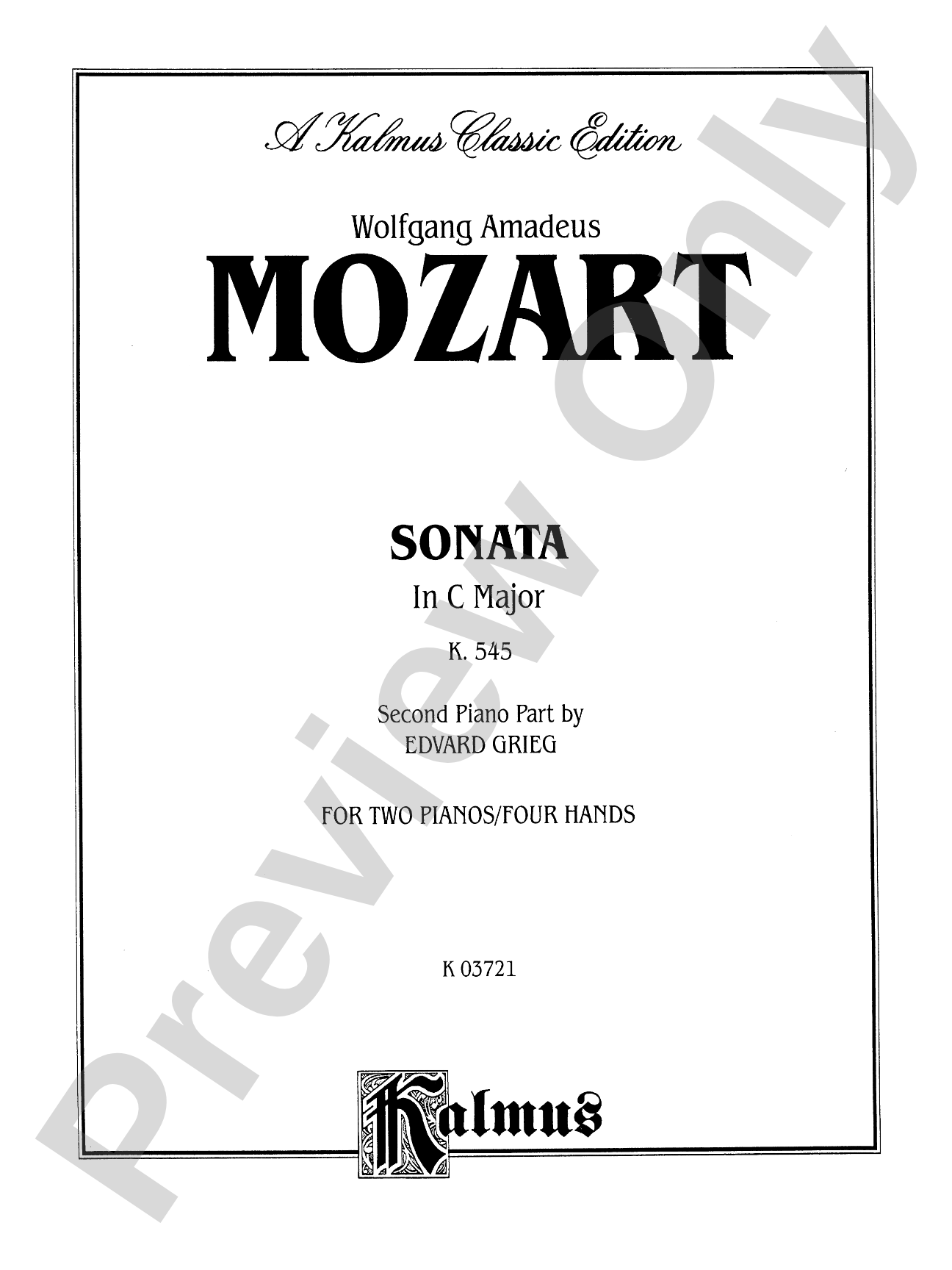
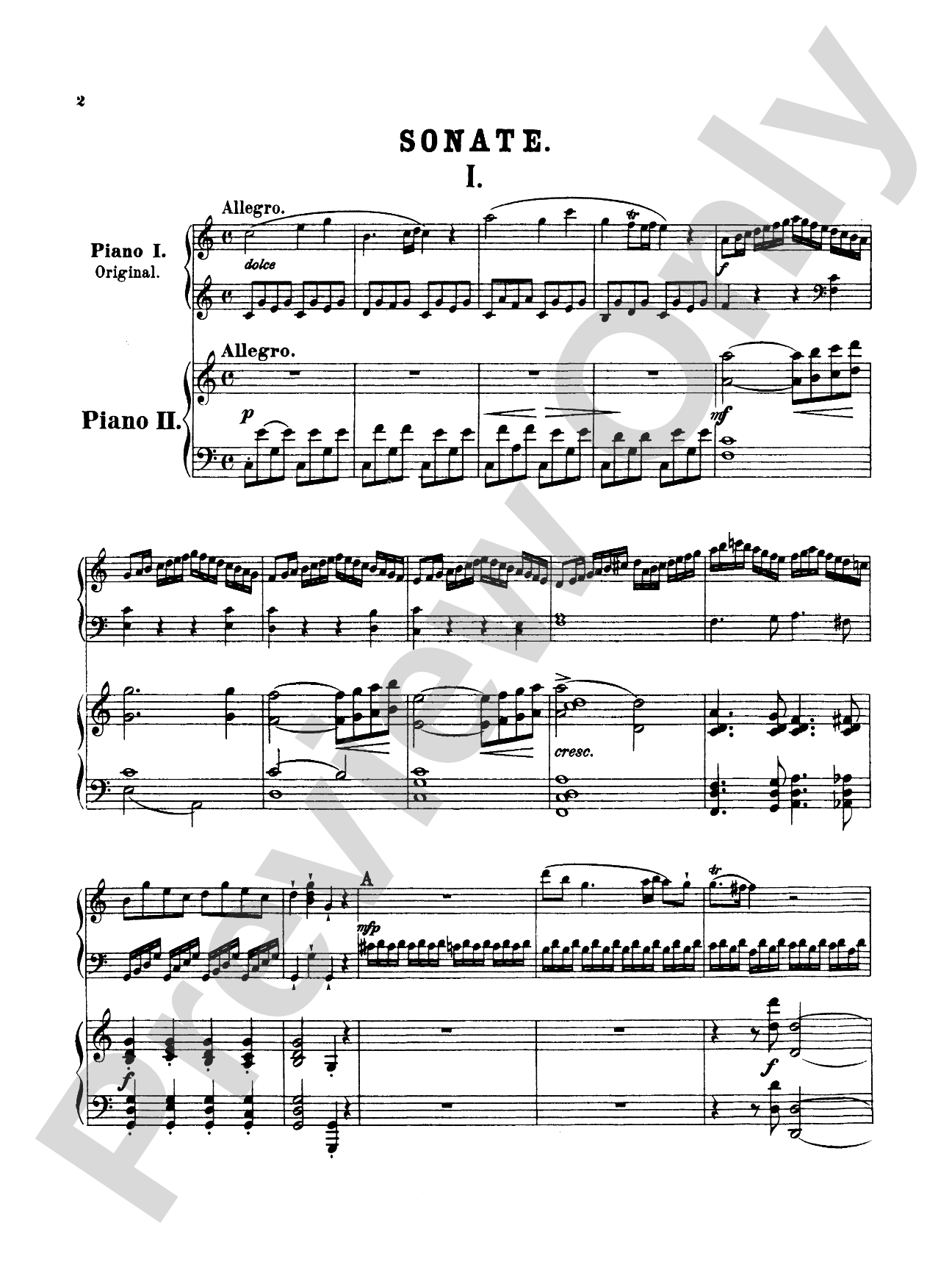
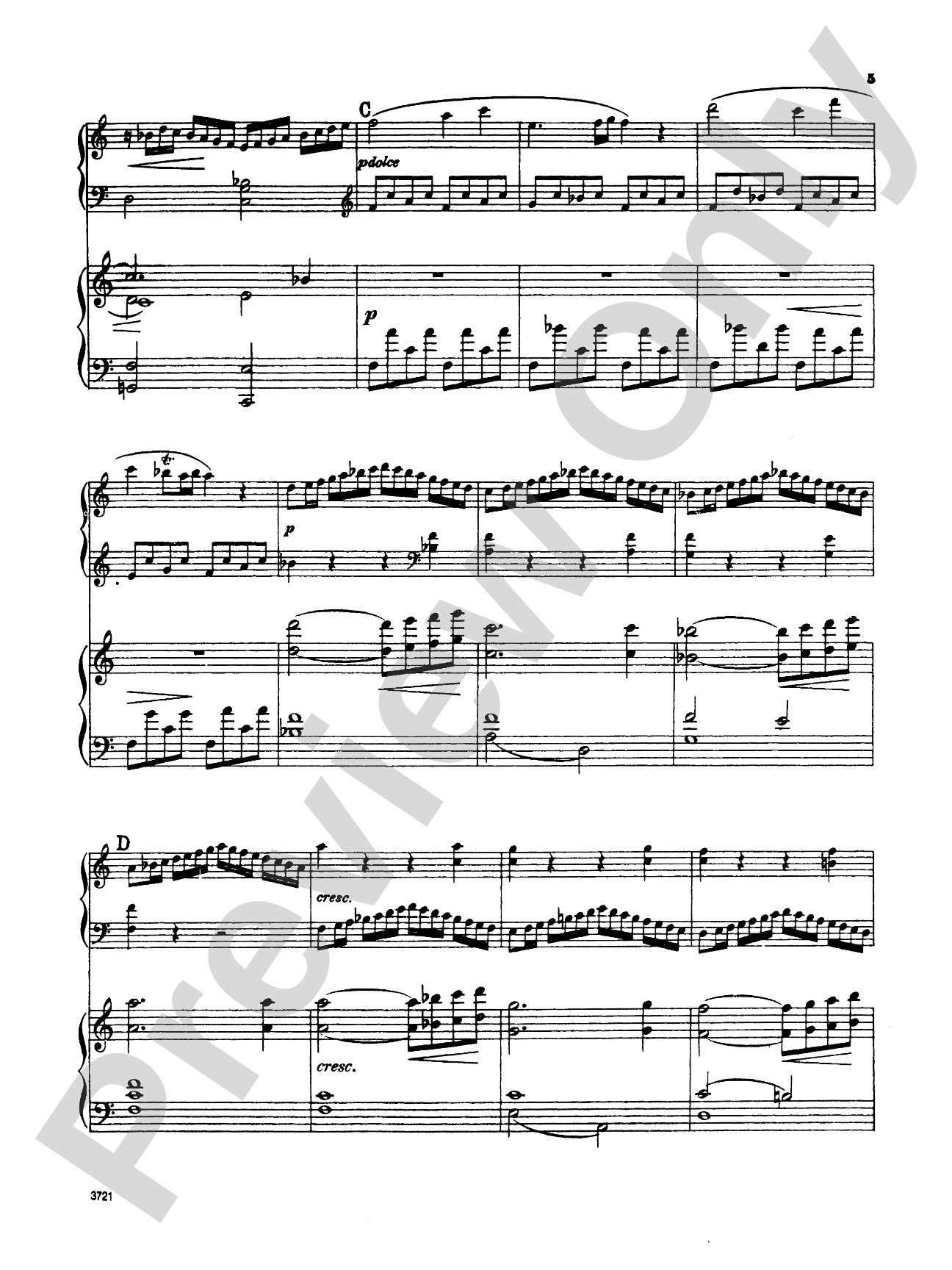
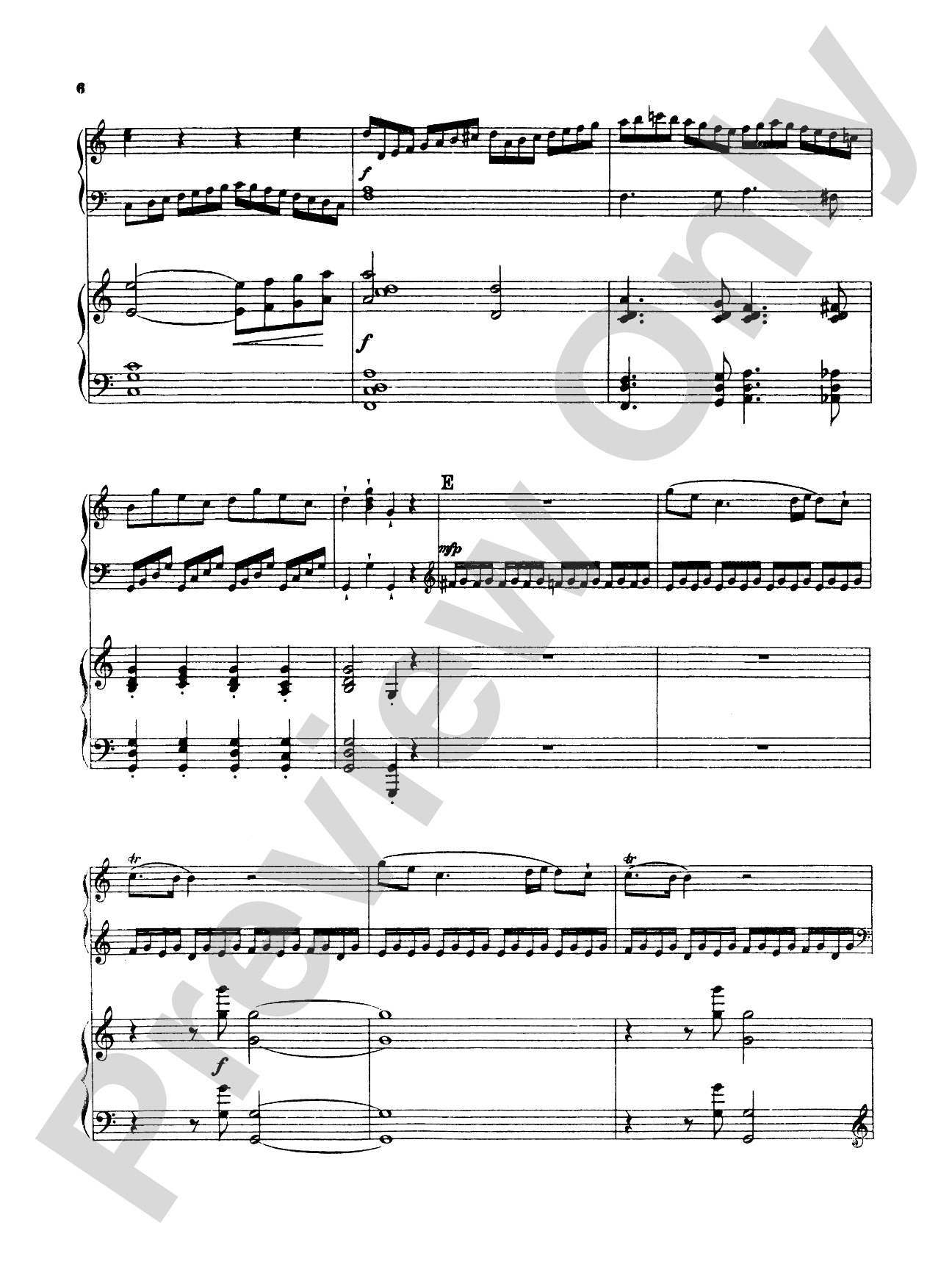
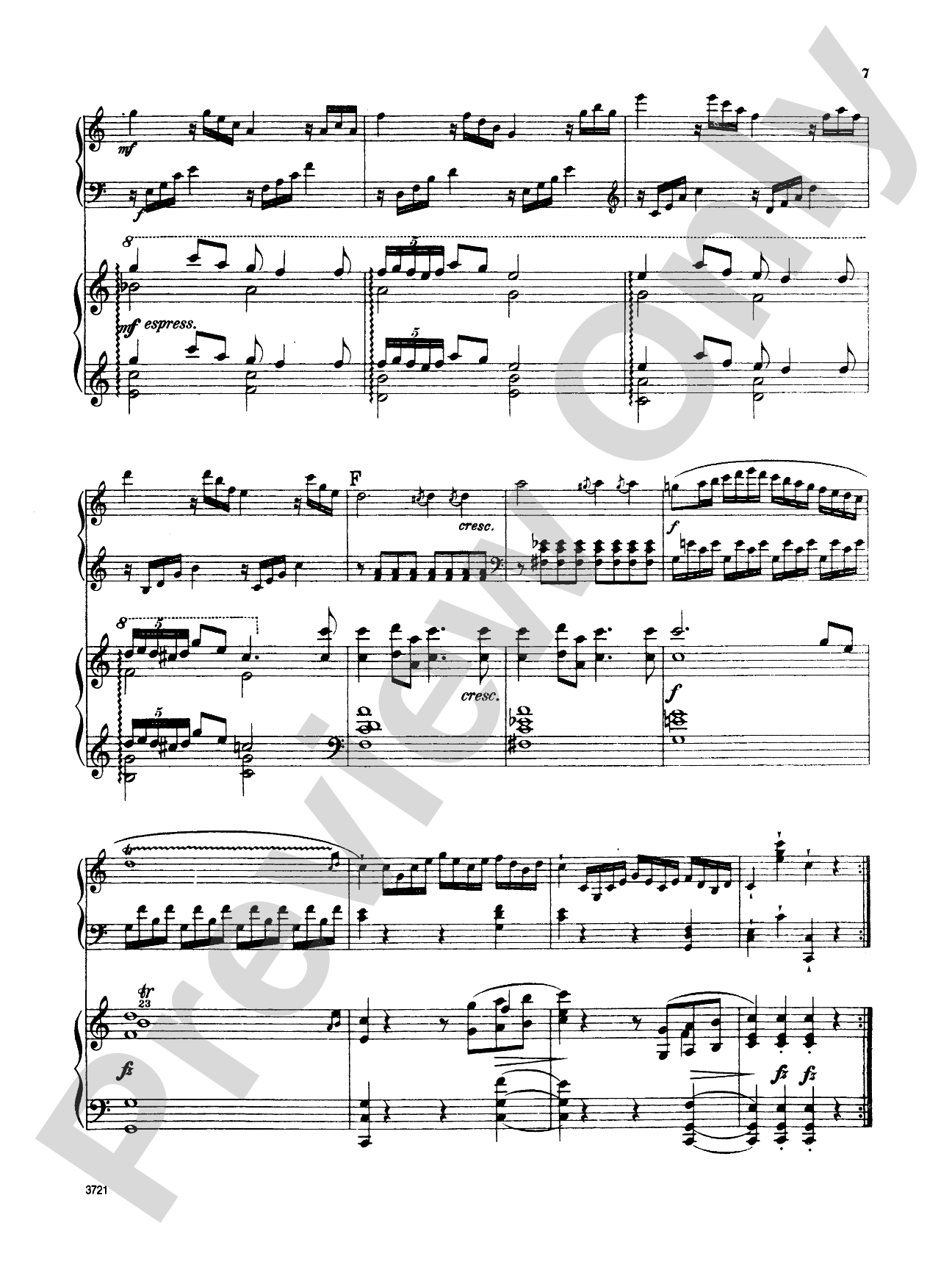
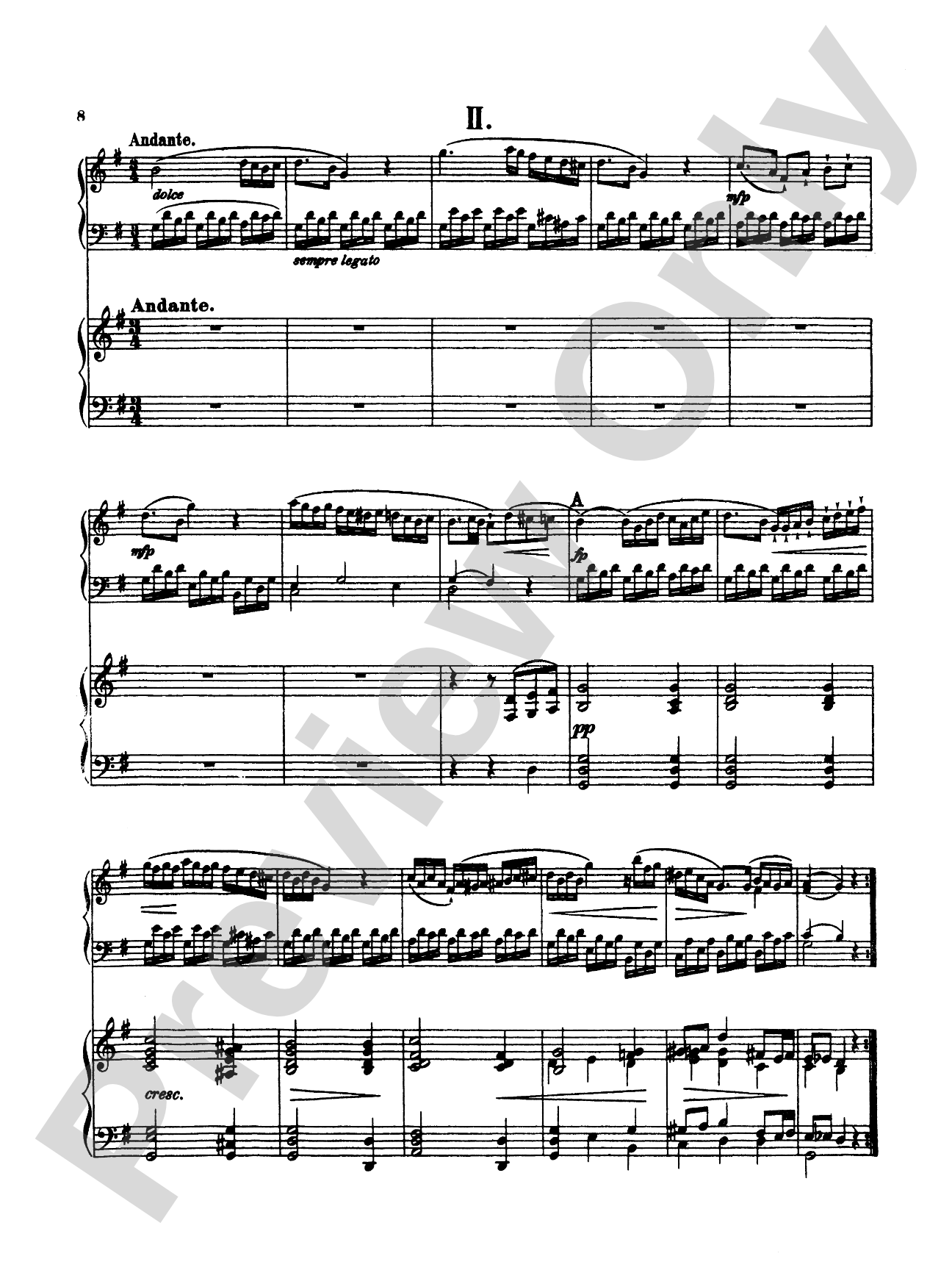
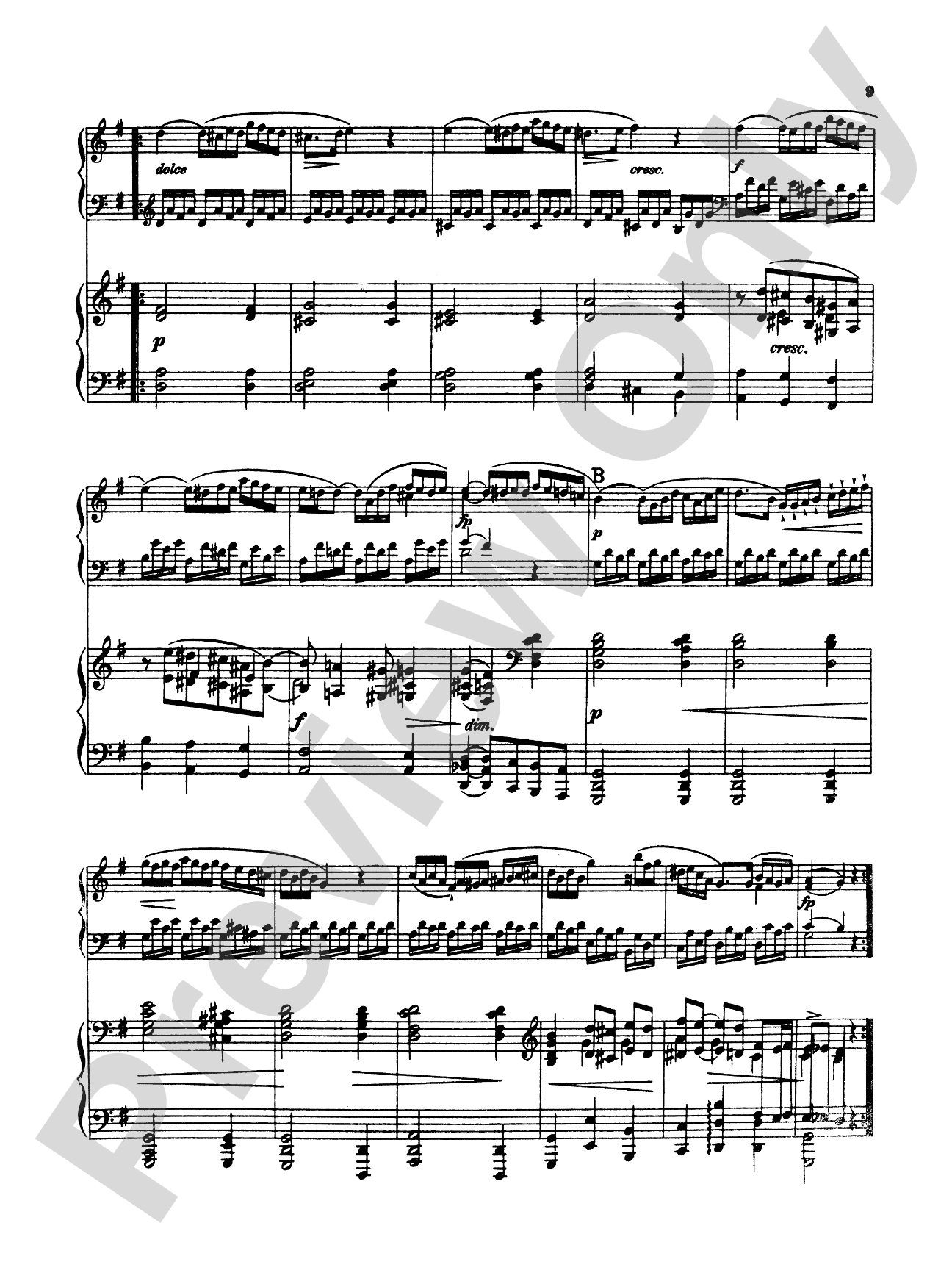
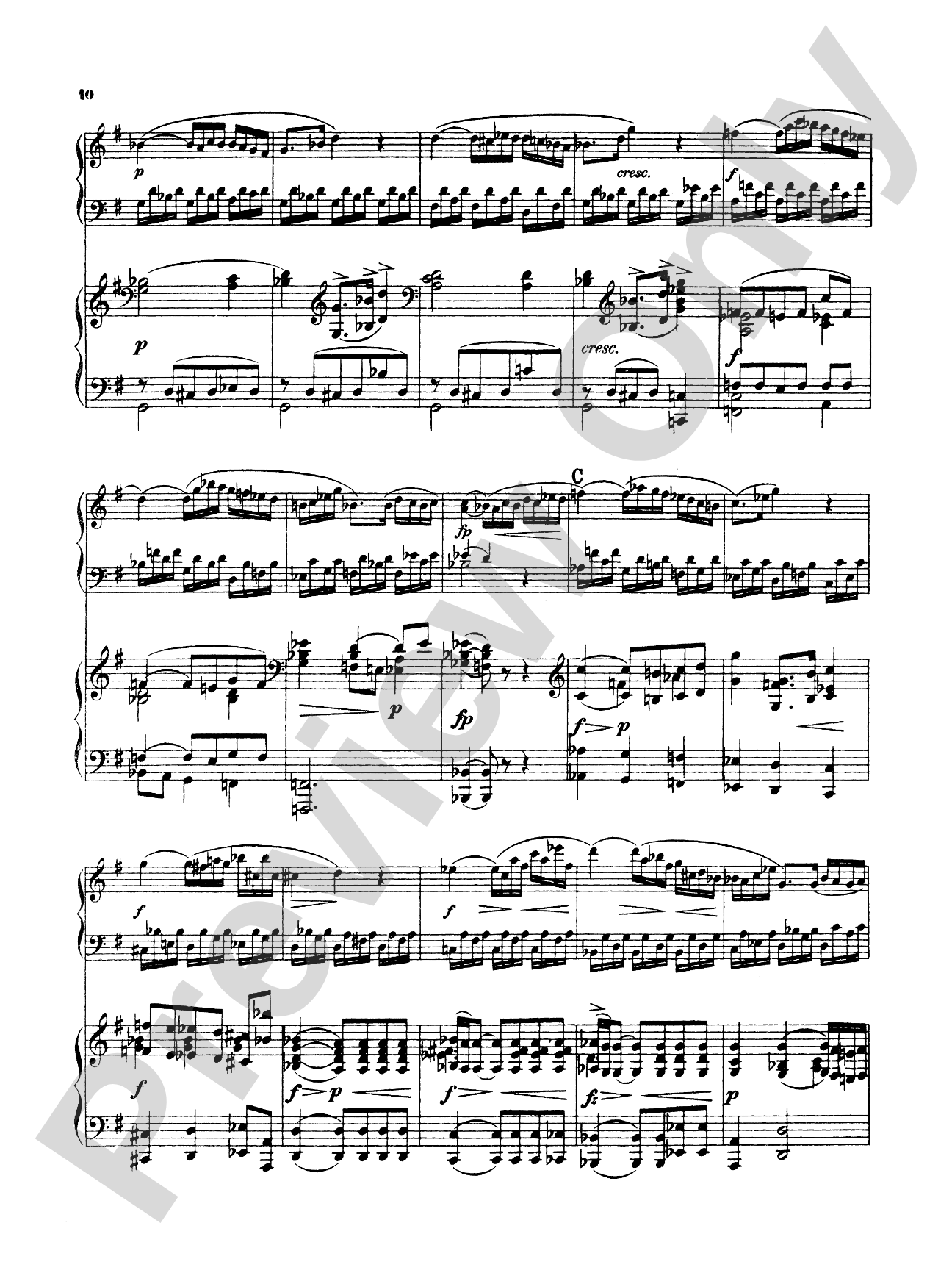
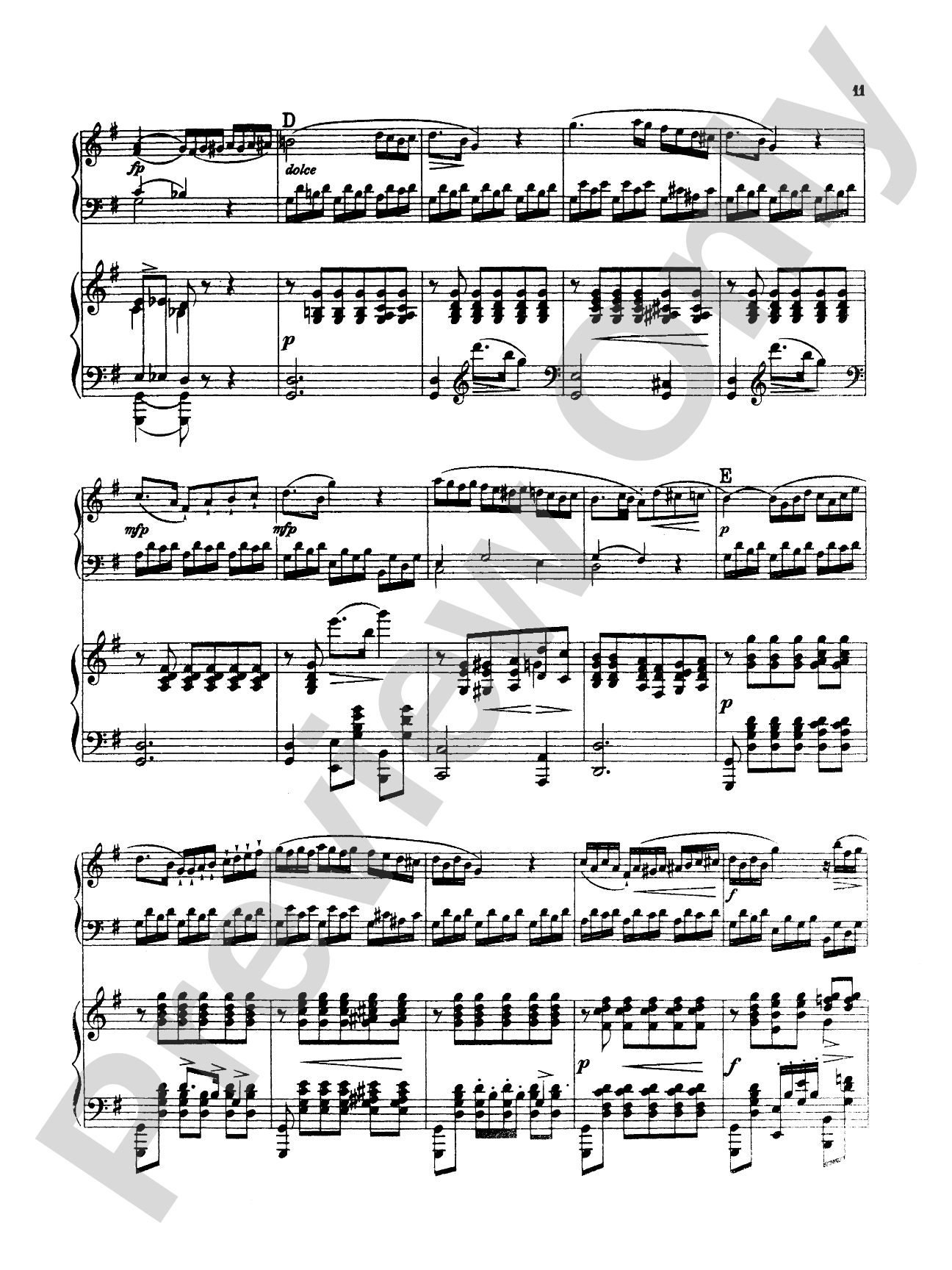
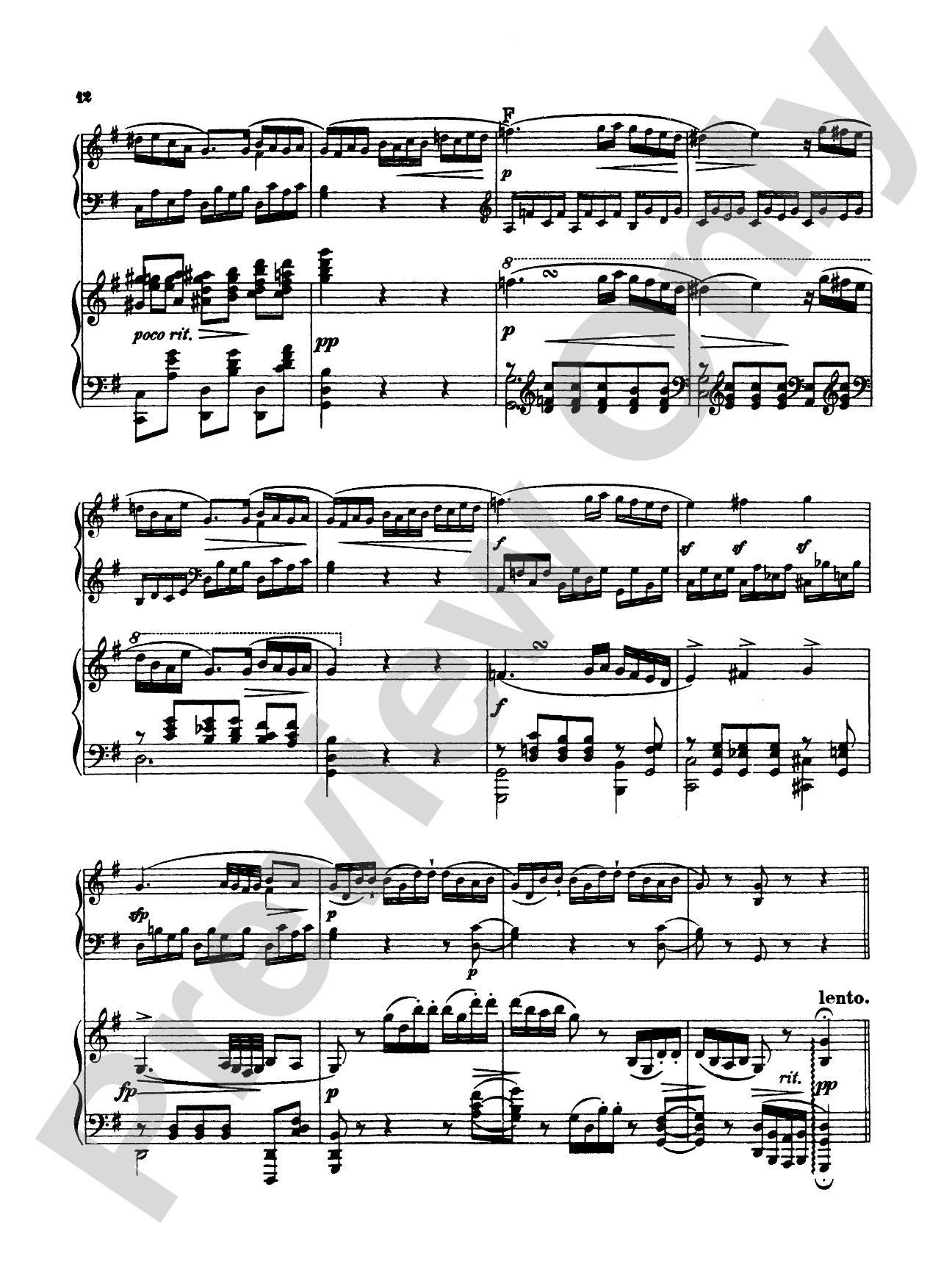
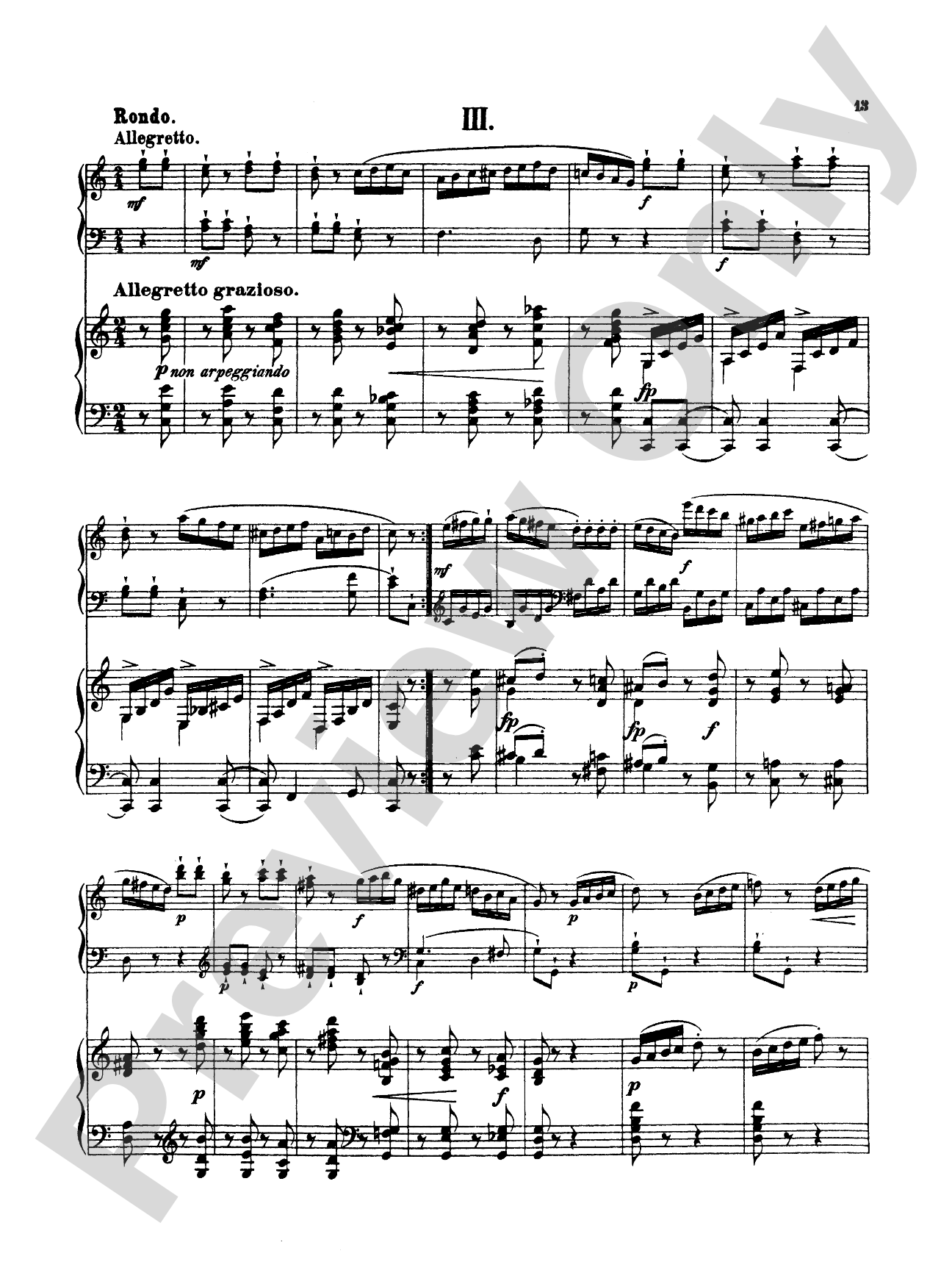
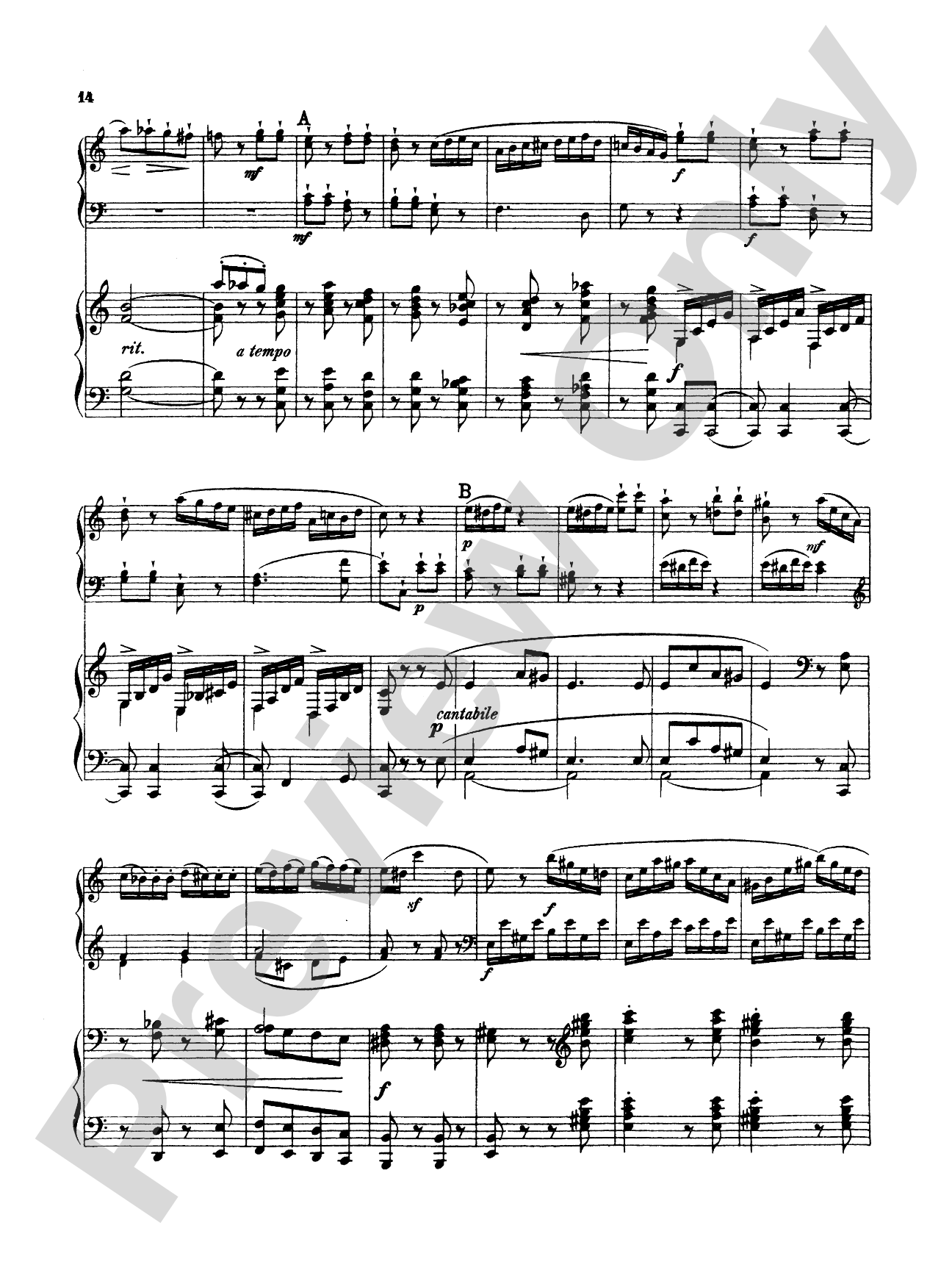
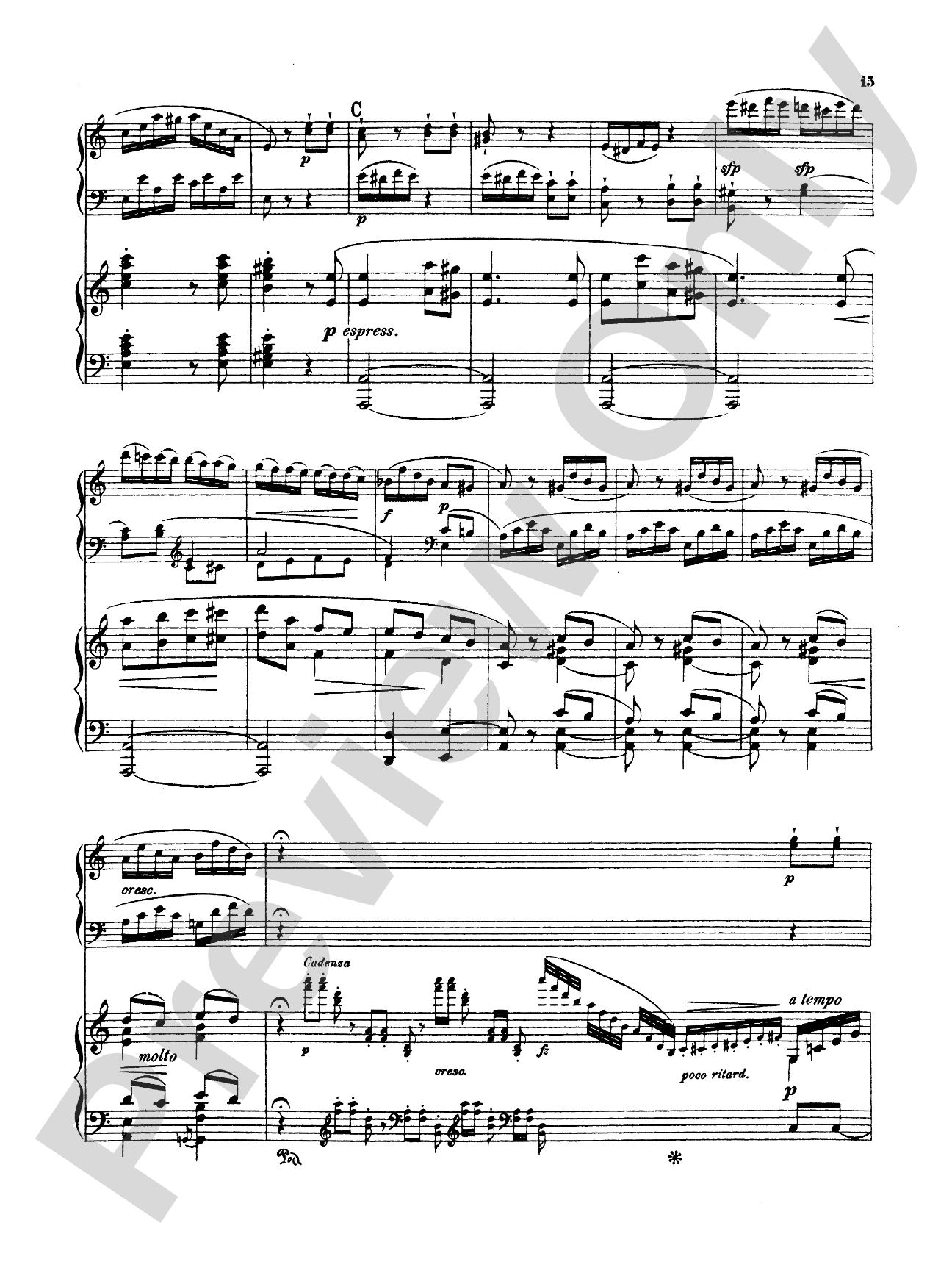
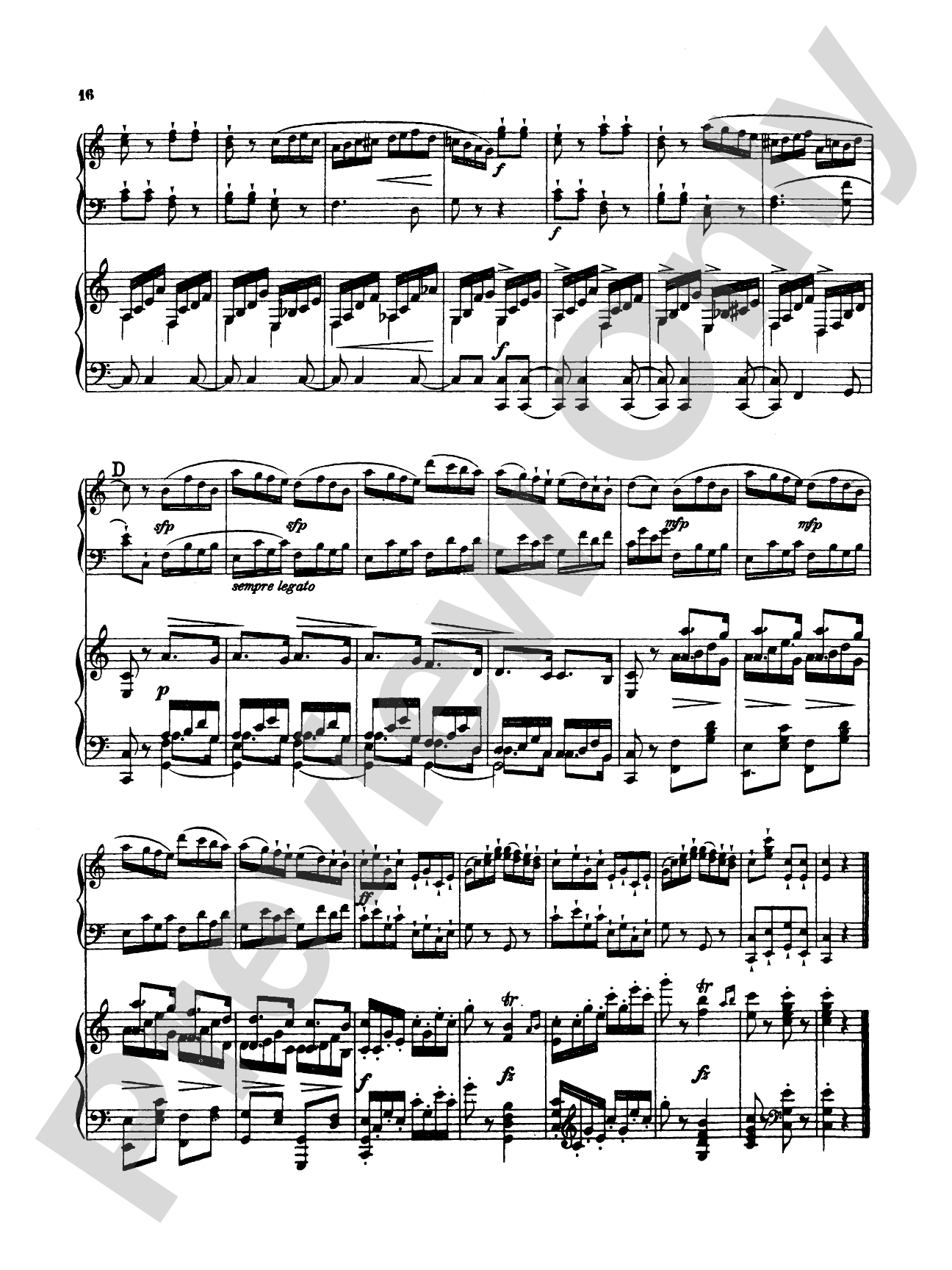

Mozart: Sonata in C Major, K. 545 (Arr. Edvard Grieg): Piano Duo (2 Pianos, 4 Hands) Book (2 copies required)
By Wolfgang Amadeus Mozart / arr. Edvard Grieg
Level: Advanced
Item: 00-PK-0003254

$8.99
Pickup currently not available
Buy Extra Parts (Digital PDF Download)
| Product | Price | Quantity |
|---|---|---|
| Mozart: Sonata in C Major, K. 545 (Arr. Edvard Grieg) | $7.99 |
Parts Added to Cart!
Related Items
Sonata in C Major, K. 545: Piano Duo (2 Pianos, 4 Hands) Book (2 copies required) |
$8.95
|
View |
Description
A Piano Duet for 2 pianos, 4 hands, composed by Wolfgang Amadeus Mozart and arranged by Edvard Grieg.


Don't just read it, hear it, play along with it, and watch your students grow with it. In MakeMusic Cloud, Mozart: Sonata in C Major, K. 545 (Arr. Edvard Grieg): Piano Duo (2 Pianos, 4 Hands) Book (2 copies required) comes alive with professional accompaniment, adjustable tempo, and built-in practice tools that turn solo practice into real progress.
Open in the Player
Jump straight in and assign it today.
Start Your Free Trial
Open this title and explore the full library in minutes.
Sample Audio
No sample audio found.
Sample Video
No sample videos found.
Additional Details
Series:
Kalmus Edition
Publisher:
Alfred Music
Page Count:
16
SKU:
00-PK-0003254
More about this title
About the Composer: Wolfgang Amadeus Mozart
Wolfgang Amadeus Mozart (1756-1791) composed across every genre of his era with remarkable fluency and invention. His Sonata in C Major, K. 545, stands among the most frequently performed keyboard works in the classical repertoire, prized for its clarity of form, elegant melody, and accessibility to intermediate and advanced pianists alike.
Why we love this
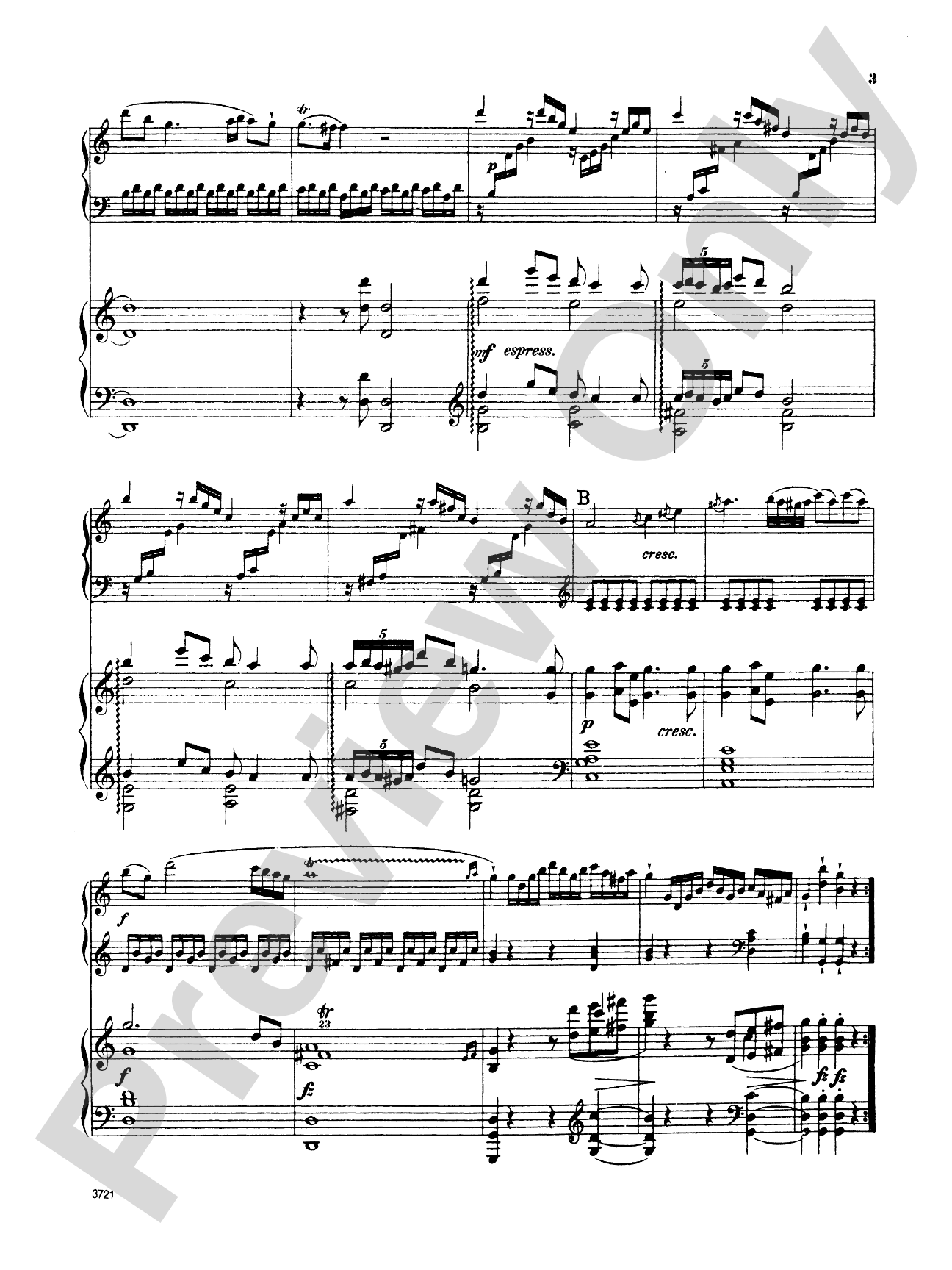
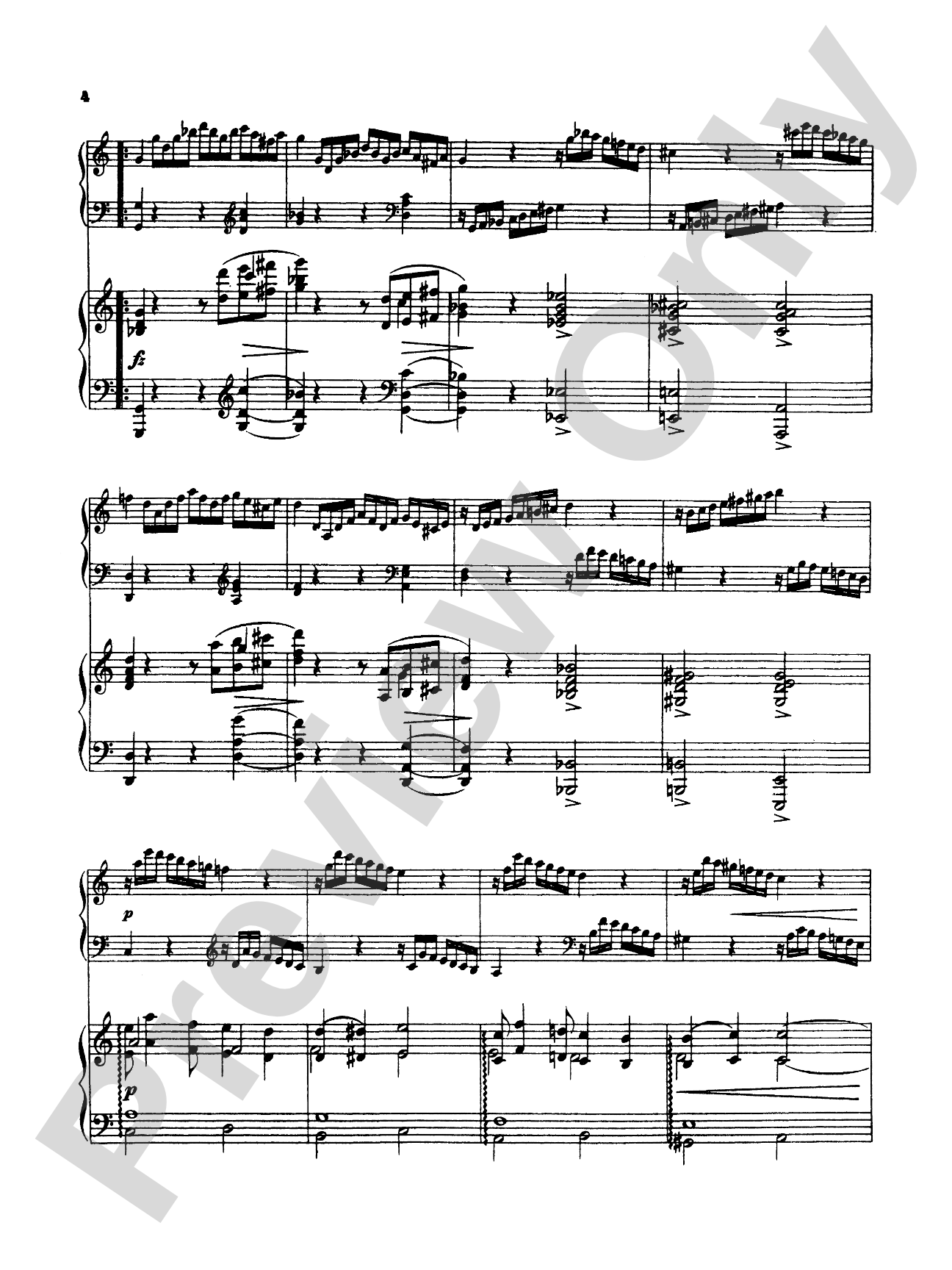
Grieg's arrangement transforms Mozart's intimate keyboard sonata into a brilliant conversation between two pianos, doubling the textural possibilities while preserving the transparent classical architecture. This duet format energizes the opening Allegro with antiphonal exchanges and enriches the slow movement with sustained harmonic support, making it an ideal choice for advanced duet partners who want to explore the sonata literature beyond traditional four-hand writing.
What to expect
The sonata opens with crystalline brightness, two pianos weaving a dialogue of classical restraint and wit. The slow movement deepens into introspective beauty, where sustained harmonies create an intimate warmth that single-instrument performance cannot achieve, before the finale returns to the assured elegance of Mozart's original design.
Who it's for
Advanced pianists seeking duet repertoire that bridges classical and romantic sensibilities will find this arrangement both musically rewarding and technically engaging. It suits studio teachers preparing ambitious students for recital performance or chamber music festivals, as well as collegiate pianists exploring the two-piano repertoire.
How to get the most out of it
- Balance the dialogue between pianos carefully in the opening theme; the secondary piano should support rather than shadow the primary voice, allowing each instrument its own acoustic space.
- Coordinate pedaling across both instruments, particularly in the Andante, where sustain and decay become part of the harmonic structure.
- Use the fuller sonority of two pianos to shape longer phrases with subtle dynamic shaping rather than abrupt changes; this maintains Mozart's formal elegance.
- Practice the rhythmic synchronization in rapid passage work without sacrificing the natural flow of the line; precision serves style rather than dominating it.
How to use it
Program this in a recital context where you want to showcase the range and virtuosity of two accomplished pianists while grounding the program in canonical repertoire. The work pairs well with other two-piano arrangements or romantic duet literature, and its moderate length (16 pages) makes it suitable as a centerpiece in a mixed recital featuring both solo and ensemble piano works.
Skills your students will build
- Coordinating ensemble balance and texture across two independent pianos
- Sustaining long classical phrases while maintaining independence of line
- Interpreting articulation and agogic timing in dialogue writing
- Managing pedal coordination in two-piano context
- Performing works that blend classical formal clarity with expanded sonority