
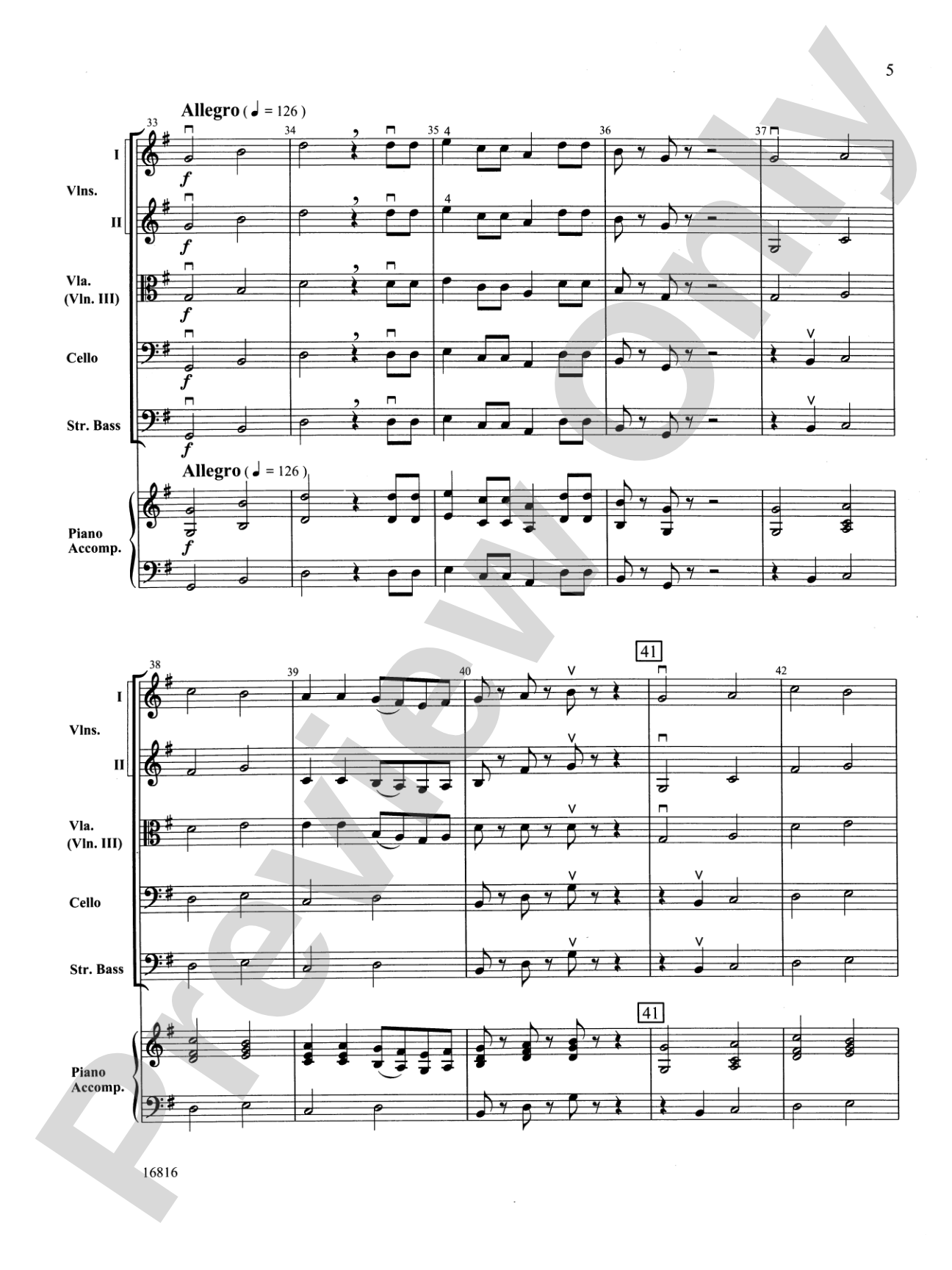
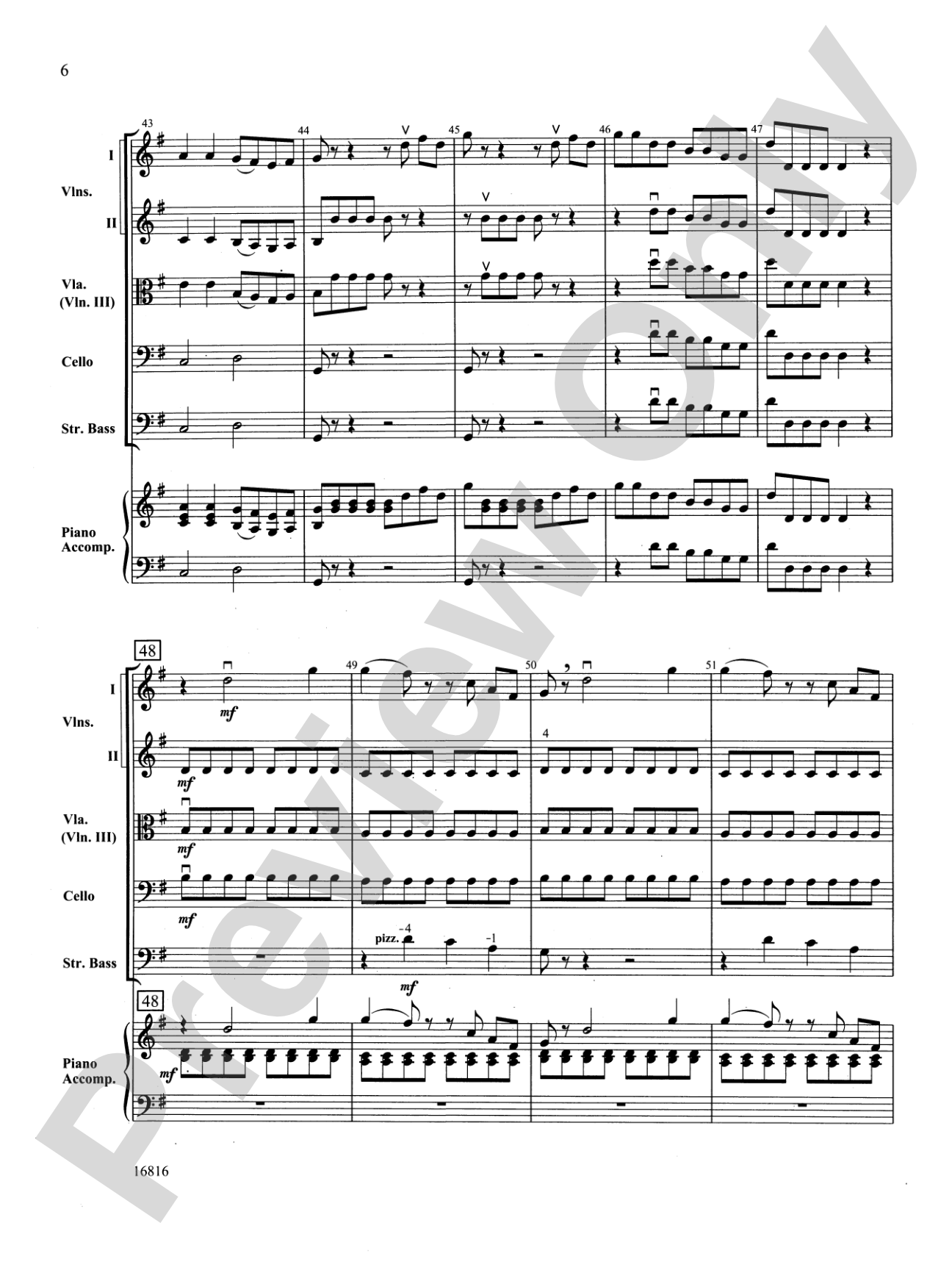
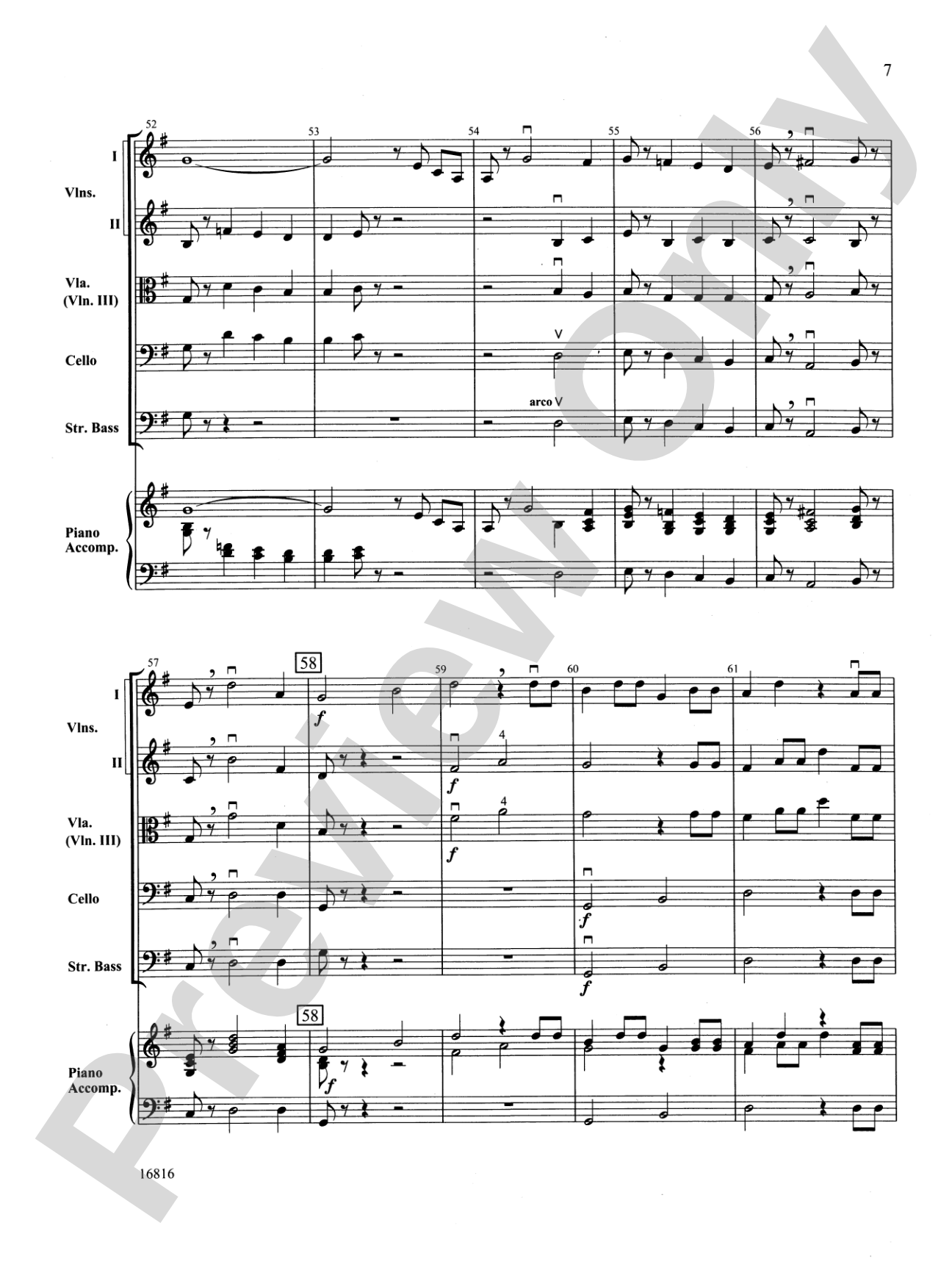
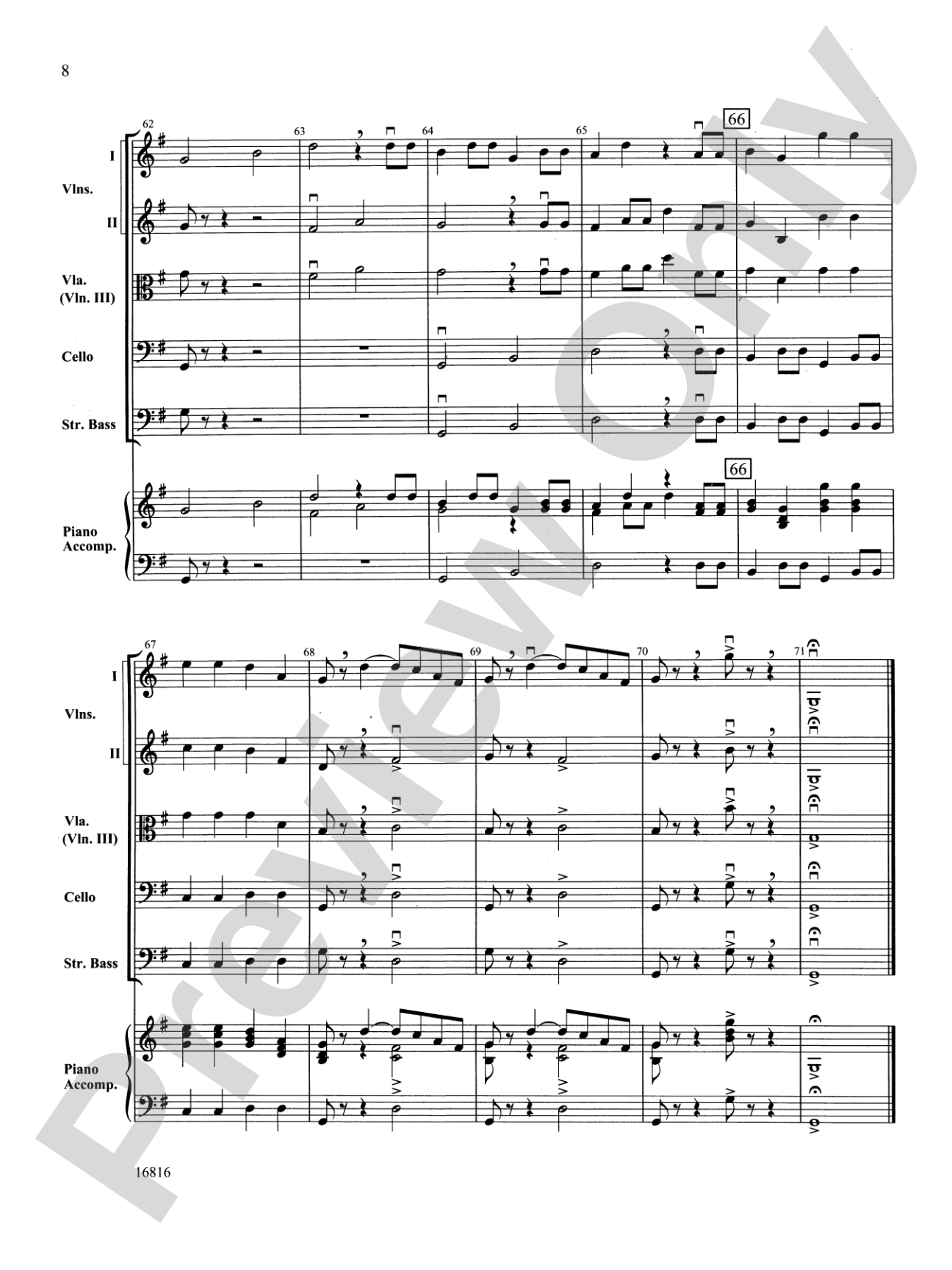

Mozart Serenade and Dance: String Orchestra Conductor Score & Parts
[Wolfgang Amadeus Mozart] / arr. John O'Reilly
Grade: 1
Item: 00-PK-0000195

$46.00
Pickup currently not available
Buy Extra Parts (Digital PDF Download)
| Product | Price | Quantity |
|---|---|---|
| Mozart Serenade and Dance: Score | $8.00 | |
| Mozart Serenade and Dance: 1st Violin | $5.99 | |
| Mozart Serenade and Dance: 2nd Violin | $5.99 | |
| Mozart Serenade and Dance: 3rd Violin (Viola [TC]) | $5.99 | |
| Mozart Serenade and Dance: Viola | $5.99 | |
| Mozart Serenade and Dance: Cello | $5.99 | |
| Mozart Serenade and Dance: String Bass | $5.99 | |
| Mozart Serenade and Dance: Piano Accompaniment | $5.99 |
Parts Added to Cart!
Description
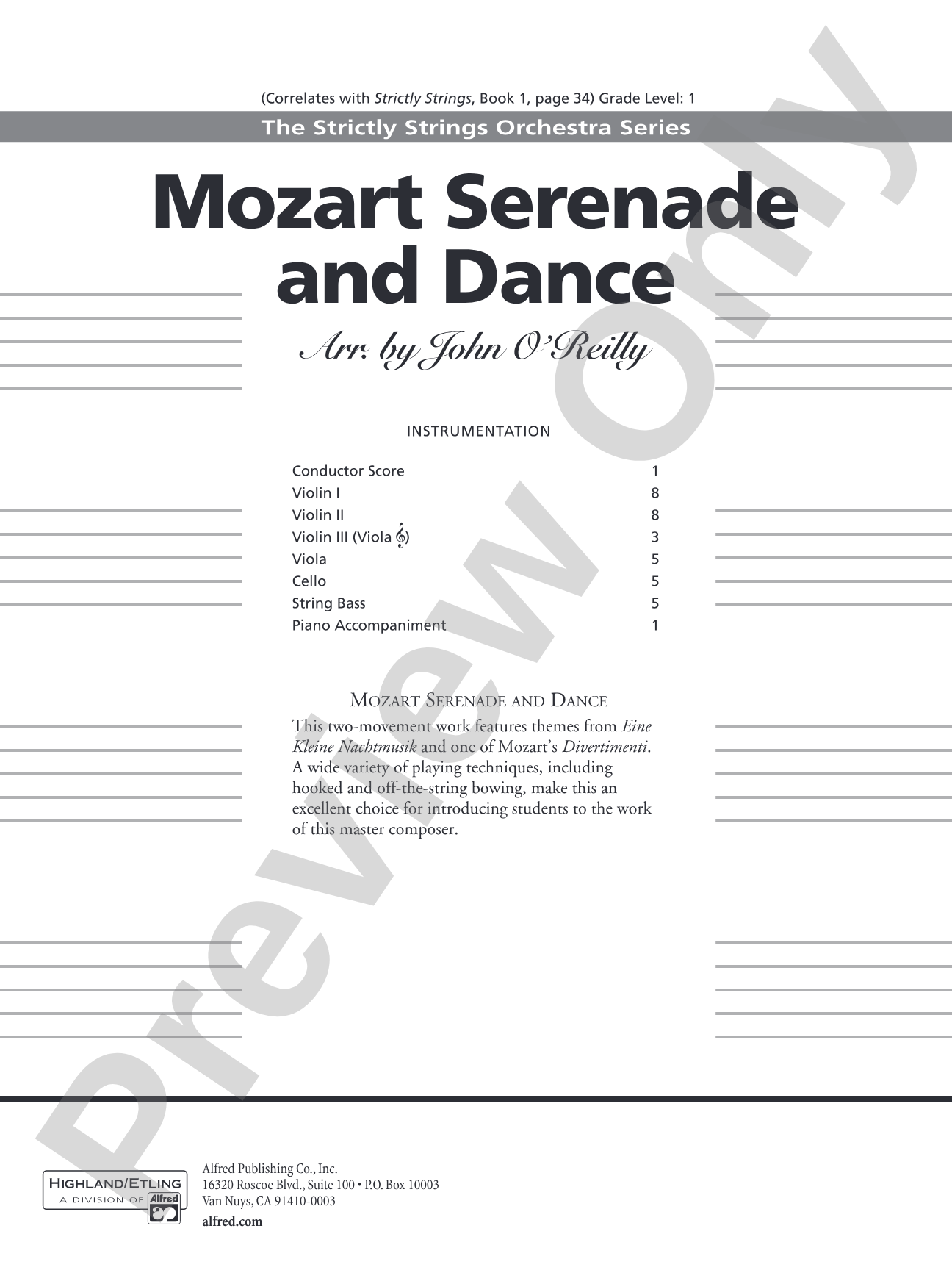
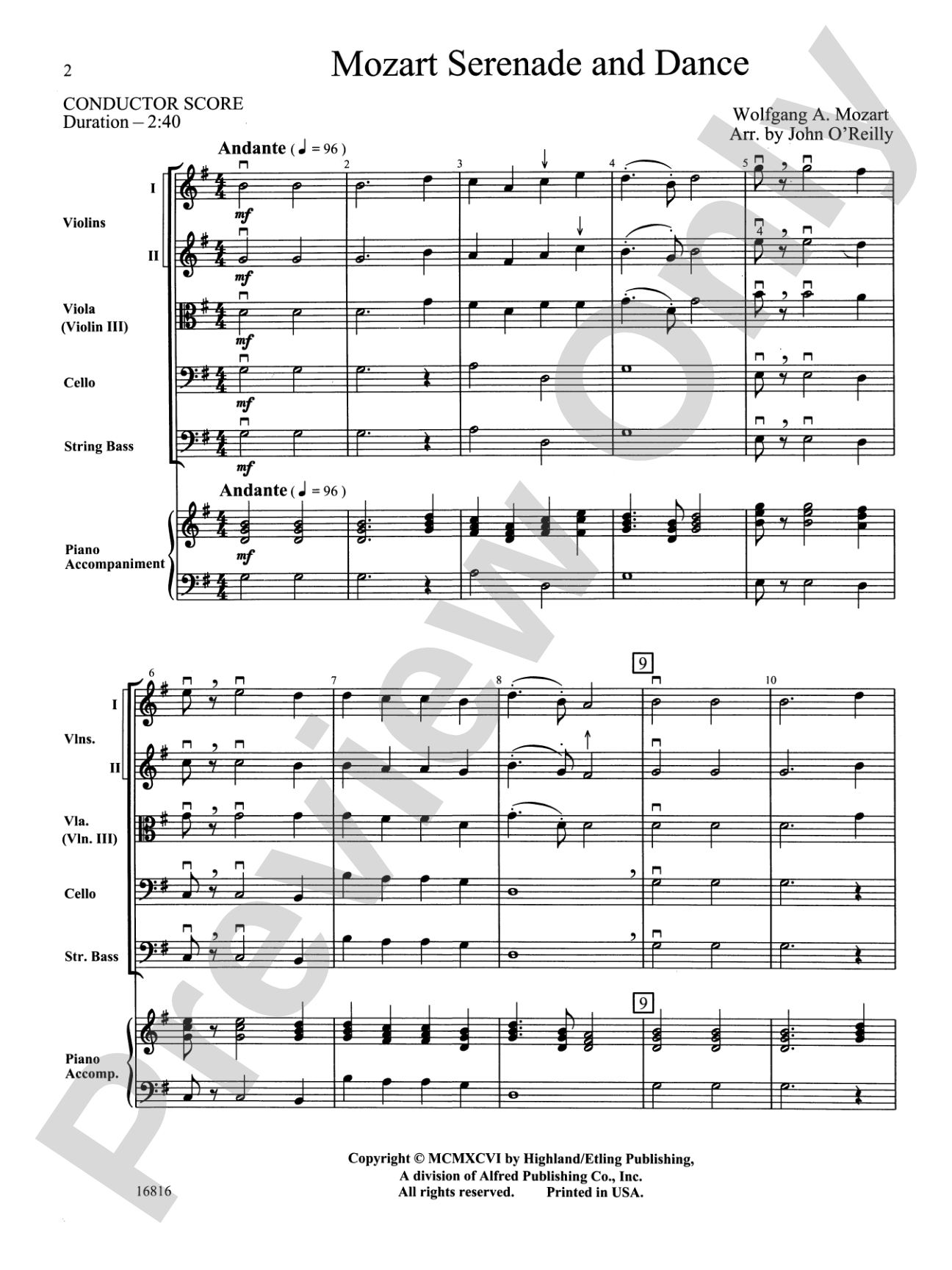
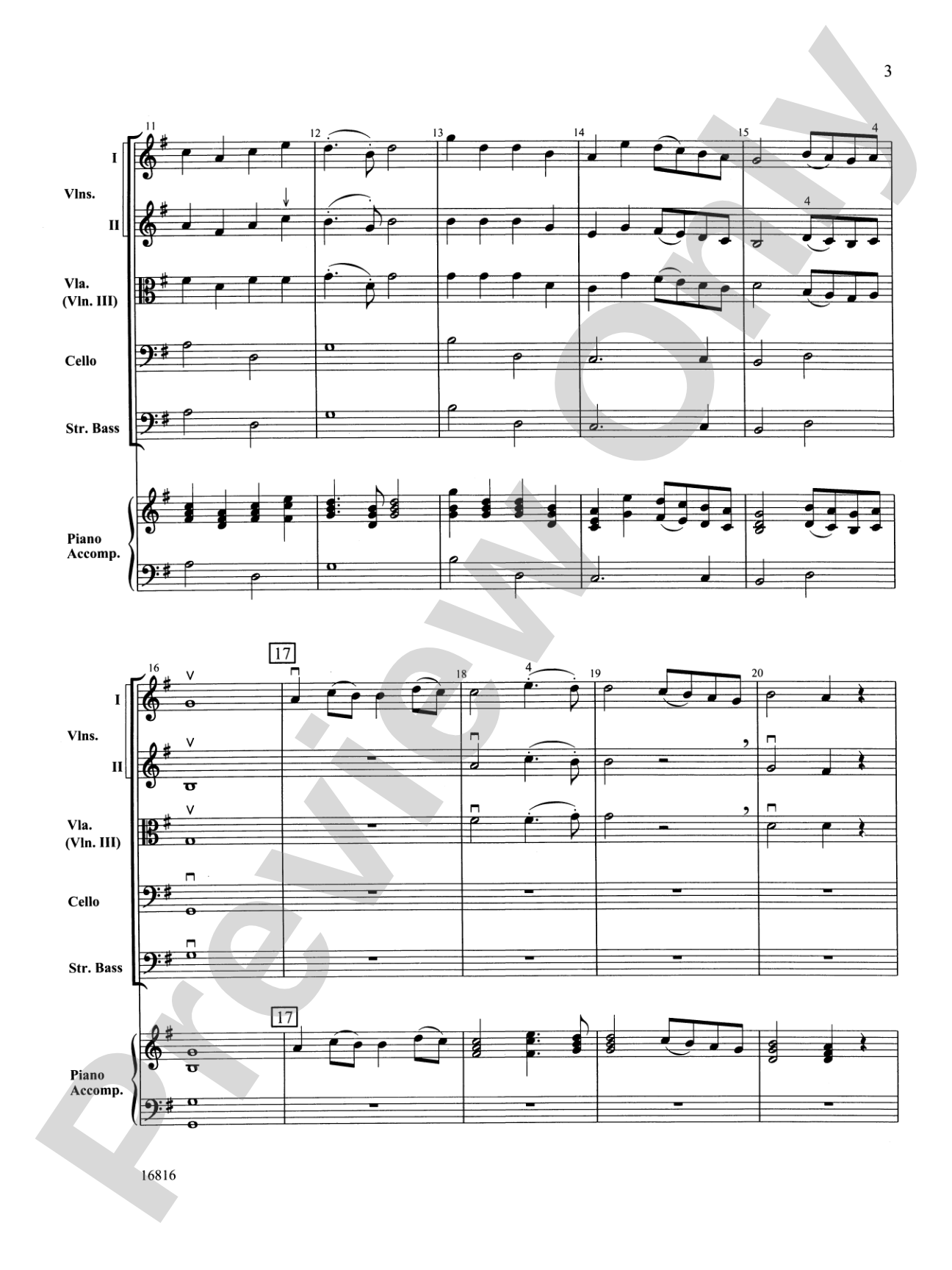
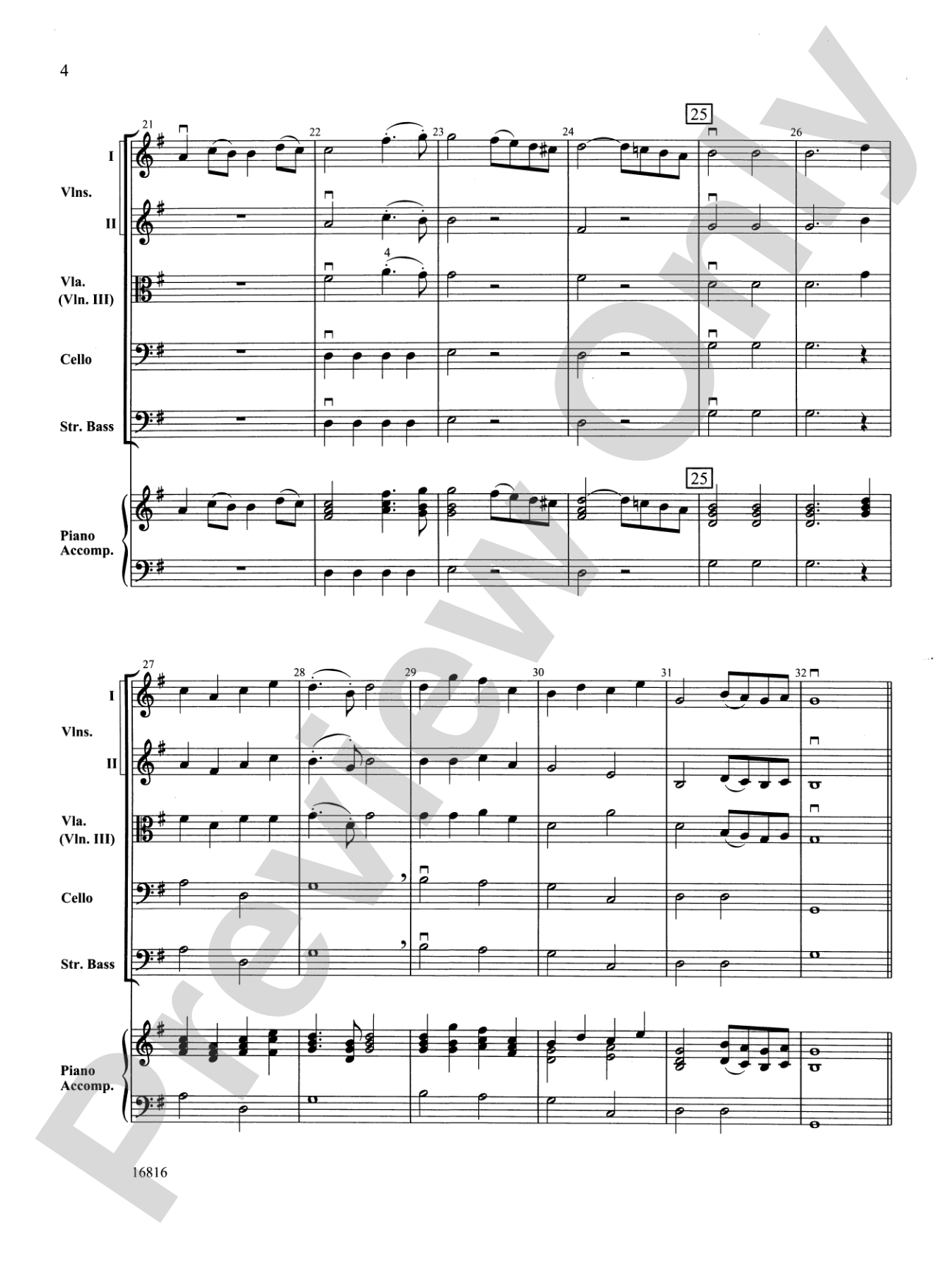
This two-movement work features a theme from Eine Kleine Nachtmusik and one of Mozart's Wind Divirtimenti. A wide variety of playing techniques including hooked and off-the-string bowing, make this an excellent choice for introducing students to the work of this master composer. (Grade 1 - Correlates with Strictly Strings, Book 1, page 34) This title is available in MakeMusic Cloud.


Don't just read it, hear it, play along with it, and watch your students grow with it. In MakeMusic Cloud, Mozart Serenade and Dance: String Orchestra Conductor Score & Parts comes alive with professional accompaniment, adjustable tempo, and built-in practice tools that turn solo practice into real progress.
Open in the Player
Jump straight in and assign it today.
Start Your Free Trial
Open this title and explore the full library in minutes.
Sample Audio
1
Audio File
--:--
0:00
0:00
Sample Video
No sample videos found.
Additional Details
Series:
Highland/Etling Strictly Strings
Publisher:
Alfred Music
Page Count:
72
SKU:
00-PK-0000195
More about this title
About the Composer: Wolfgang Amadeus Mozart
Wolfgang Amadeus Mozart (1756-1791) composed over 600 works across every genre during his remarkably brief life. His mastery of melody, harmonic clarity, and structural elegance established the Classical style and continue to define what we mean by musical perfection in the concert hall. For string students, Mozart's orchestral works offer the clearest possible models of phrase shape, textural balance, and the expressive possibilities of the string section.
Why we love this
John O'Reilly's arrangement brings two of Mozart's most recognizable melodies within reach of Grade 1 ensembles without losing the elegance that makes this music timeless. The variety of bowing techniques woven throughout the parts keeps every stand engaged and builds technical foundation while students play something genuinely beautiful.
What to expect
The opening serenade unfolds with the grace and poise of 18th-century elegance; its familiar theme feels instantly rewarding to play. The transition to the dance brings energy and rhythmic vitality, inviting students to discover that Classical music moves and breathes with as much character as any contemporary work.
Who it's for
String orchestras at the Grade 1 level seeking masterwork literature that develops bow control while remaining musically substantial. This is an ideal choice for students progressing through the Strictly Strings curriculum and ready to experience Mozart's voice as an orchestrator.
How to get the most out of it
- Pay attention to the hooked bowing markings; they're not just technique builders but essential to articulating Mozart's characteristic phrase shapes. Use them to create lift and separation between melodic gestures.
- Balance the texture carefully when the theme passes between violin sections and lower strings. The melody should always sing through, but accompanying voices need enough presence to support the harmonic foundation.
- Approach the off-the-string passages with controlled bounce rather than rapid attack; this maintains the Classical elegance and prevents the sound from becoming percussive.
- Shape the two movements as contrasting entities. The serenade has breadth and ceremony; the dance needs forward motion and rhythmic clarity.
How to use it
Program this in a concert celebrating classical composers or as a bridge piece between beginning and intermediate levels; it works equally well in a festival setting where its technical and musical clarity will stand out. Its two-movement structure and moderate length make it an excellent complement to a varied string orchestra program.
Skills your students will build
- Hooked bowing and separation techniques
- Off-the-string bowing control
- Melodic phrasing within a Classical framework
- Textural balance between melody and accompaniment
- Reading and executing articulation markings accurately