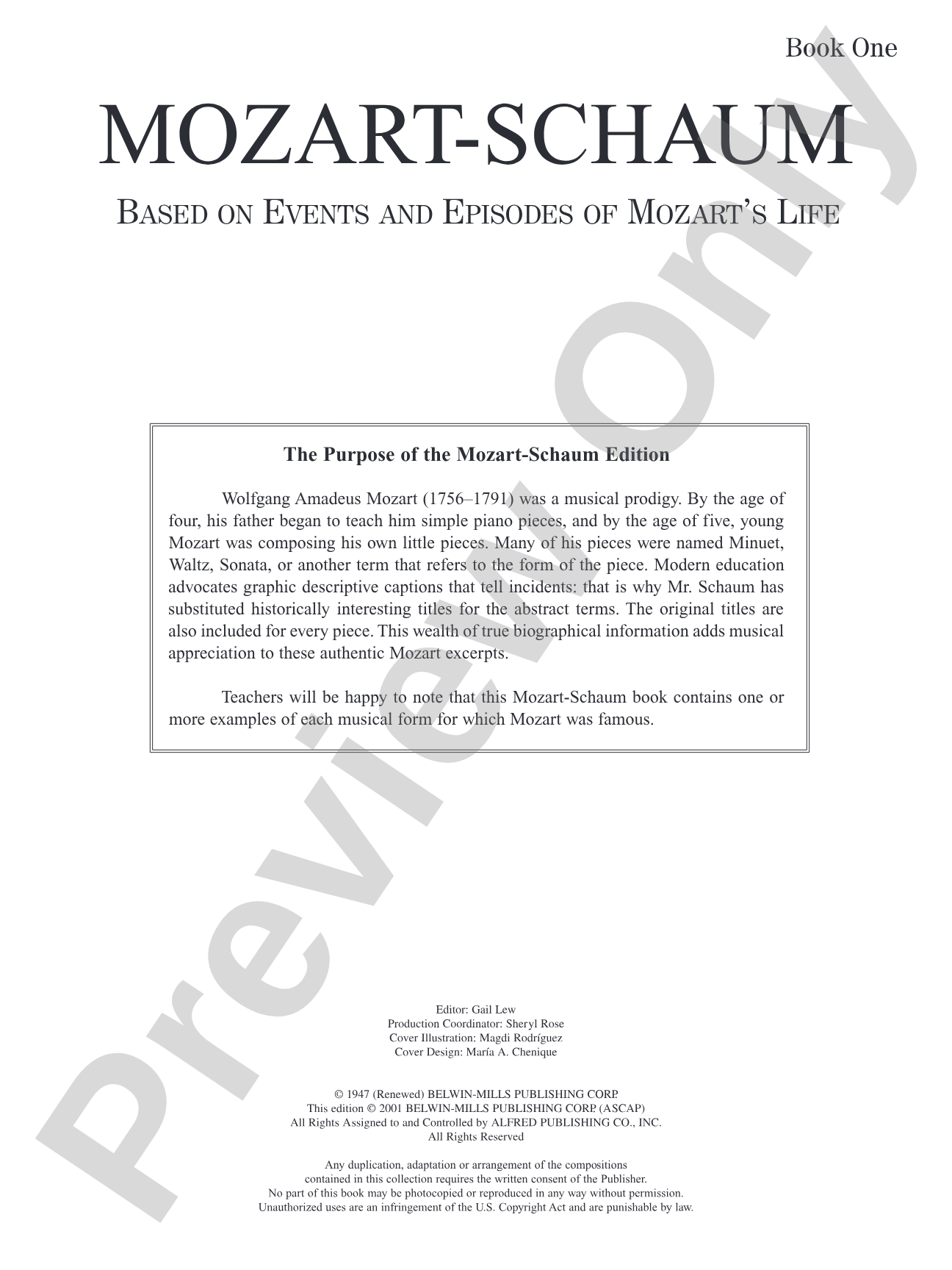
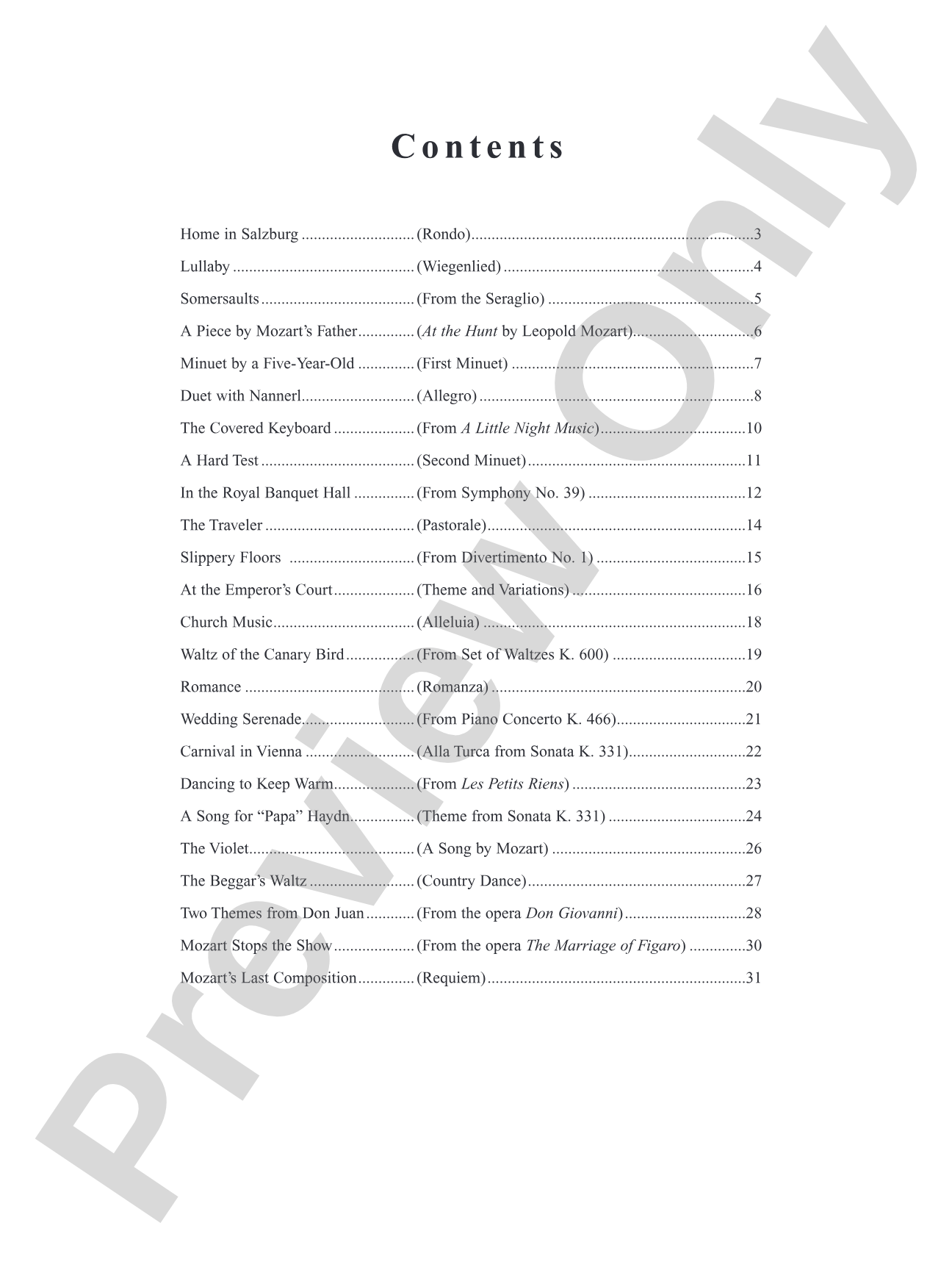
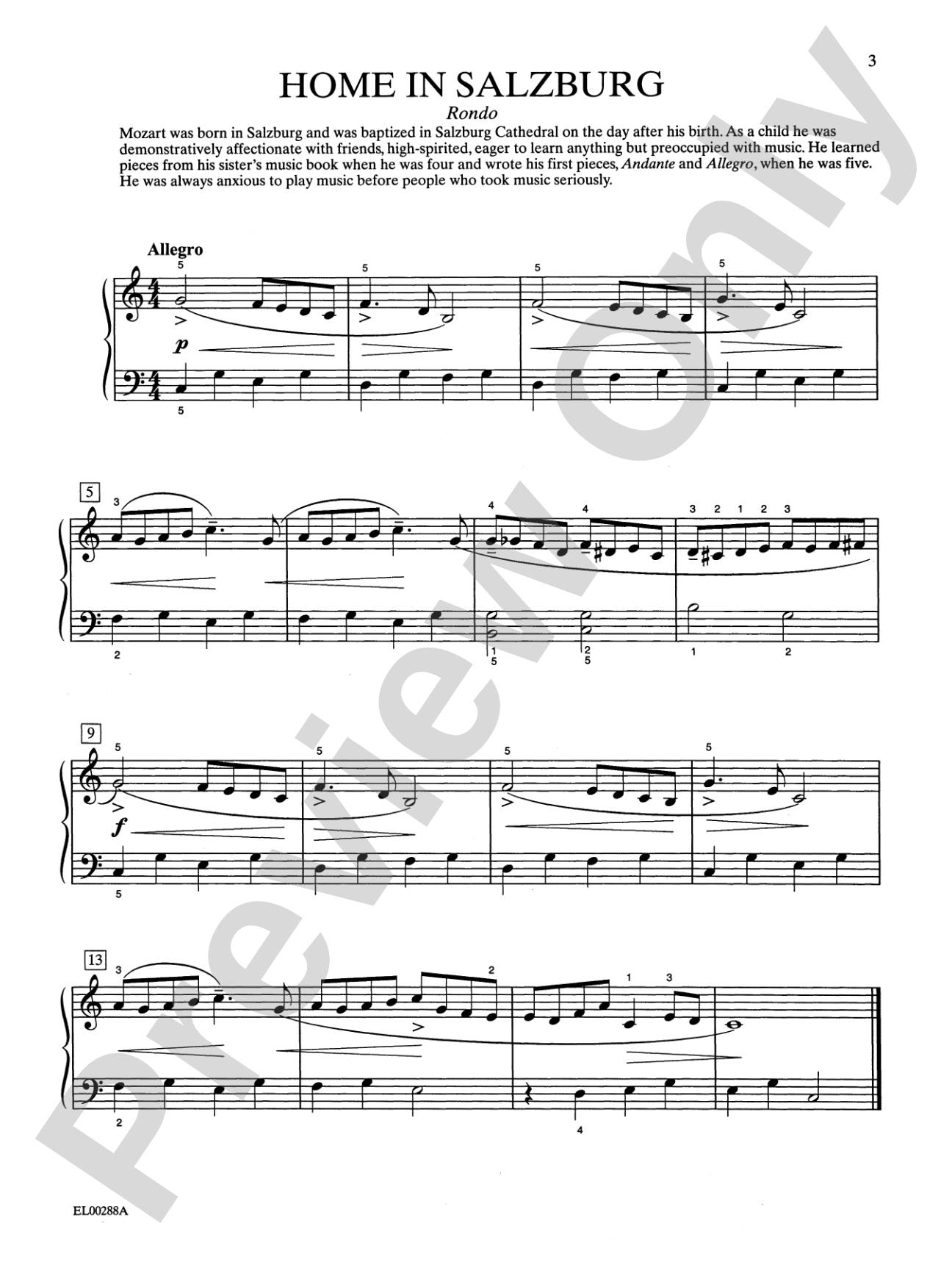
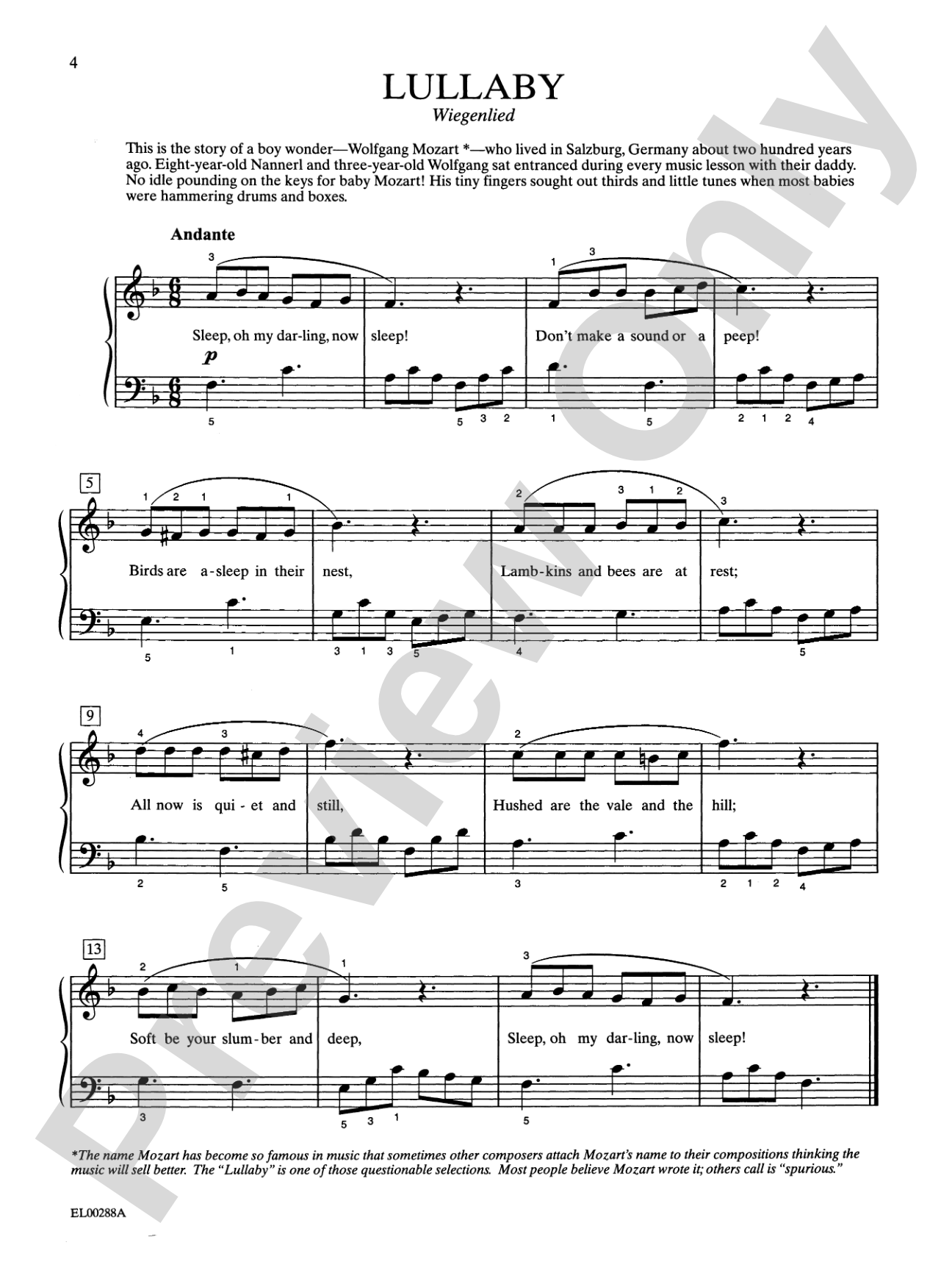
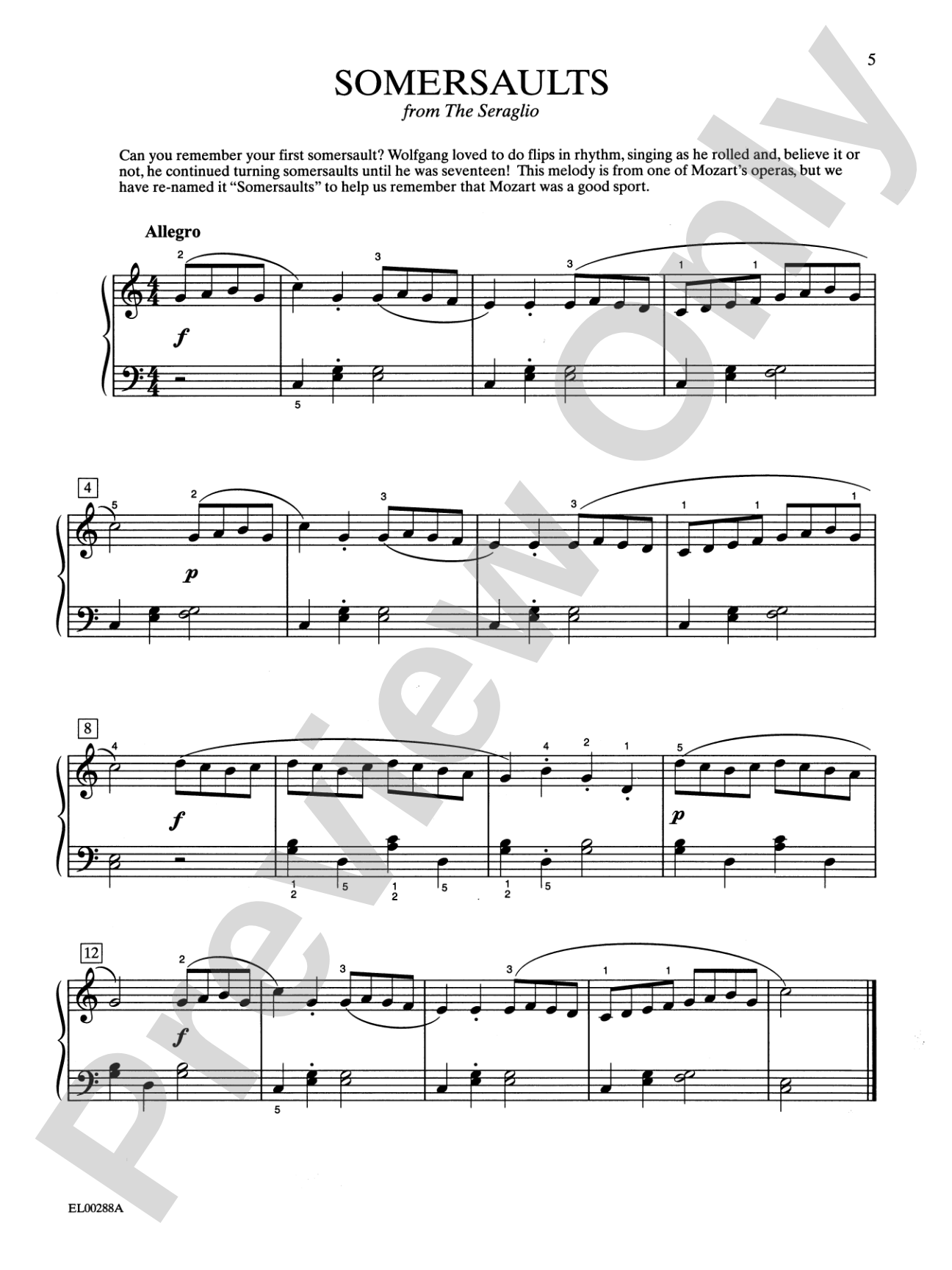
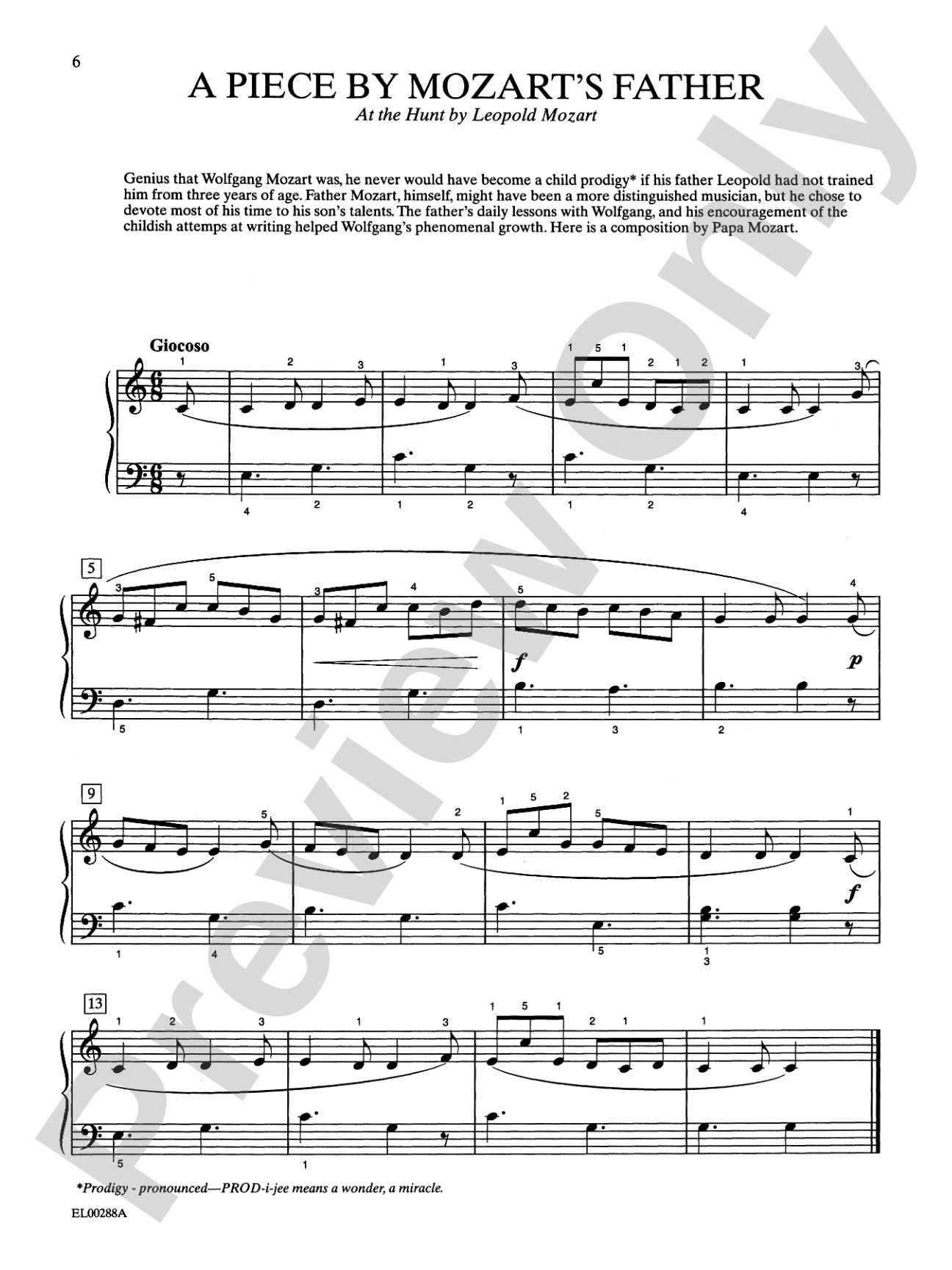
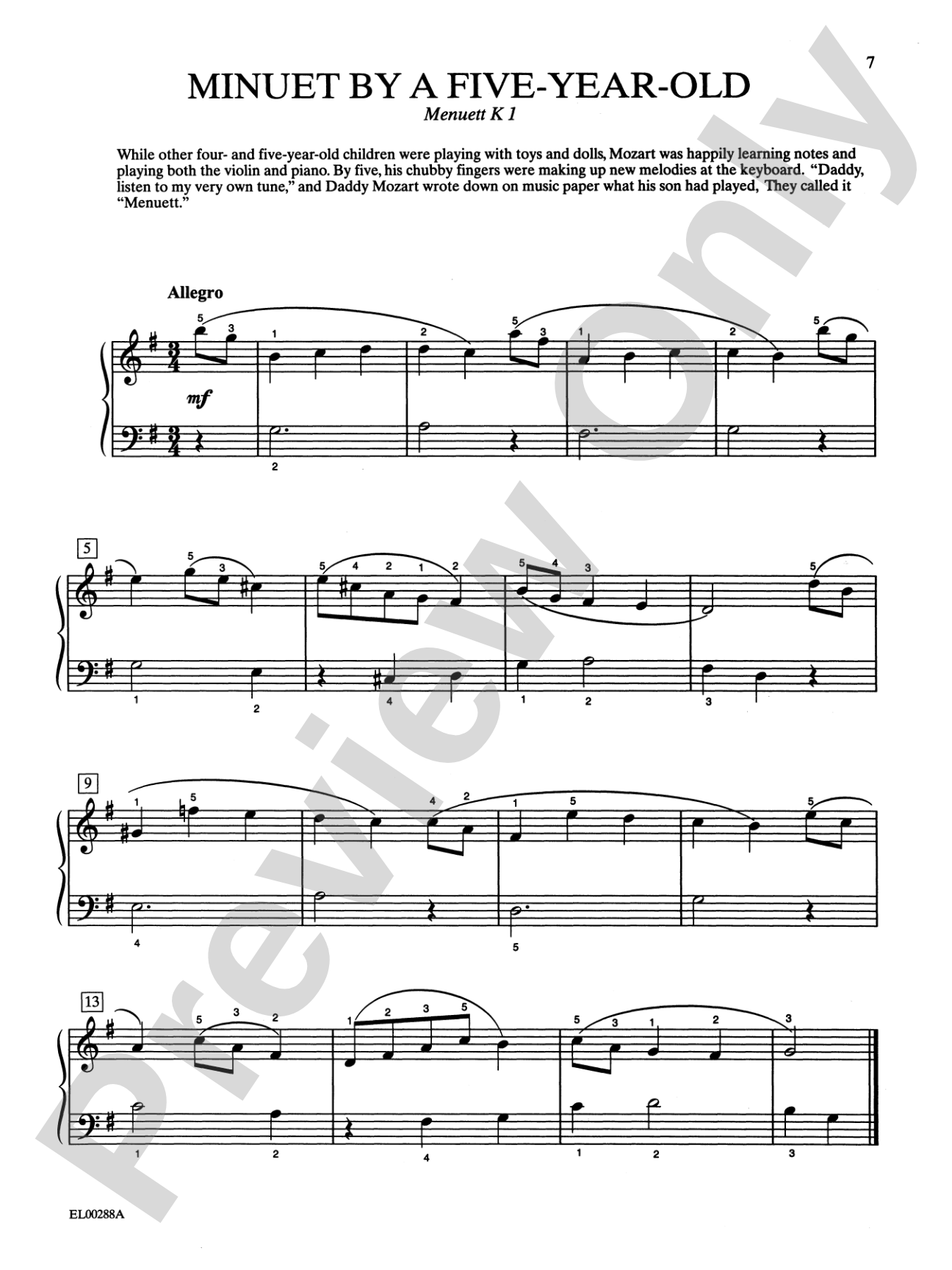
The music of Mozart is now more popular than ever before! John W. Schaum's arrangements of symphonic works, concertos, and difficult piano solos make these timeless works easy to play. Based on events and episodes of Mozart's life, this collection may be used as supplementary literature with any piano method. Mozart wrote over six hundred pieces without titles and now Mr. Schaum has created descriptive titles, describing incidents from Mozart's life. His historically appropriate captions add color and life, the biographical sketches add musical appreciation, and Mr. Schaum's arrangements make teaching easier.
Discover MakeMusic Cloud: thousands of interactive titles your students can play along with today.
Wolfgang Amadeus Mozart (1756-1791) composed over 600 works across nearly every genre, from symphonies and concertos to chamber music and operas, all before his death at thirty-five. His prolific output and harmonic sophistication made him a central figure of the Classical period, and his music remains foundational to piano pedagogy. For young pianists, Mozart's clarity of form and elegant melodies offer an ideal introduction to the Classical aesthetic without requiring advanced technical facility.
Why we love this
Schaum's biographical framing transforms abstract pieces into stories that students remember long after they finish playing. Arranging genuine Mozart material at late elementary level means students encounter real Classical compositional practices, not simplified approximations, while the historical scaffolding deepens their musical understanding.
What to expect
Elegant and purposeful. Mozart's melodies unfold with natural grace, supported by harmonies that feel both inevitable and surprising. The pieces carry the refinement of the concert hall into a form that early pianists can actually play.
Who it's for
Late elementary pianists ready for repertoire beyond method book exercises but not yet prepared for unabridged Classical works. This book serves both students following the Schaum method and those in other curricula seeking historically grounded supplementary material.
How to get the most out of it
Treat phrase endings with phrase weight rather than diminishing into silence; Mozart's melodies breathe but never collapse.
Balance the accompaniment figures so they support rather than overshadow the main theme, particularly in pieces built on Alberti bass patterns.
Let the descriptive titles guide your interpretation: knowing the biographical context helps you shape dynamics and tempo relationships organically.
How to use it
Integrate this collection into a thematic student recital exploring composers' lives, or use individual pieces as encore materials that introduce audiences to Mozart's range. The biographical sketches make these works excellent choices for programs that pair music with spoken introductions.
Skills your students will build
Playing Classical phrase structure with proper weight and direction
Executing Alberti bass and other Baroque-derived accompaniment patterns
Recognizing and responding to harmonic function in tonal progressions
Interpreting historically informed ornamentation and articulation
Connecting musical content to biographical and historical contexts
You May Also Like
Scan to Complete Your Purchase
Use your phone's camera to scan the code below
You'll log in on your phone and the order will be added to your account