
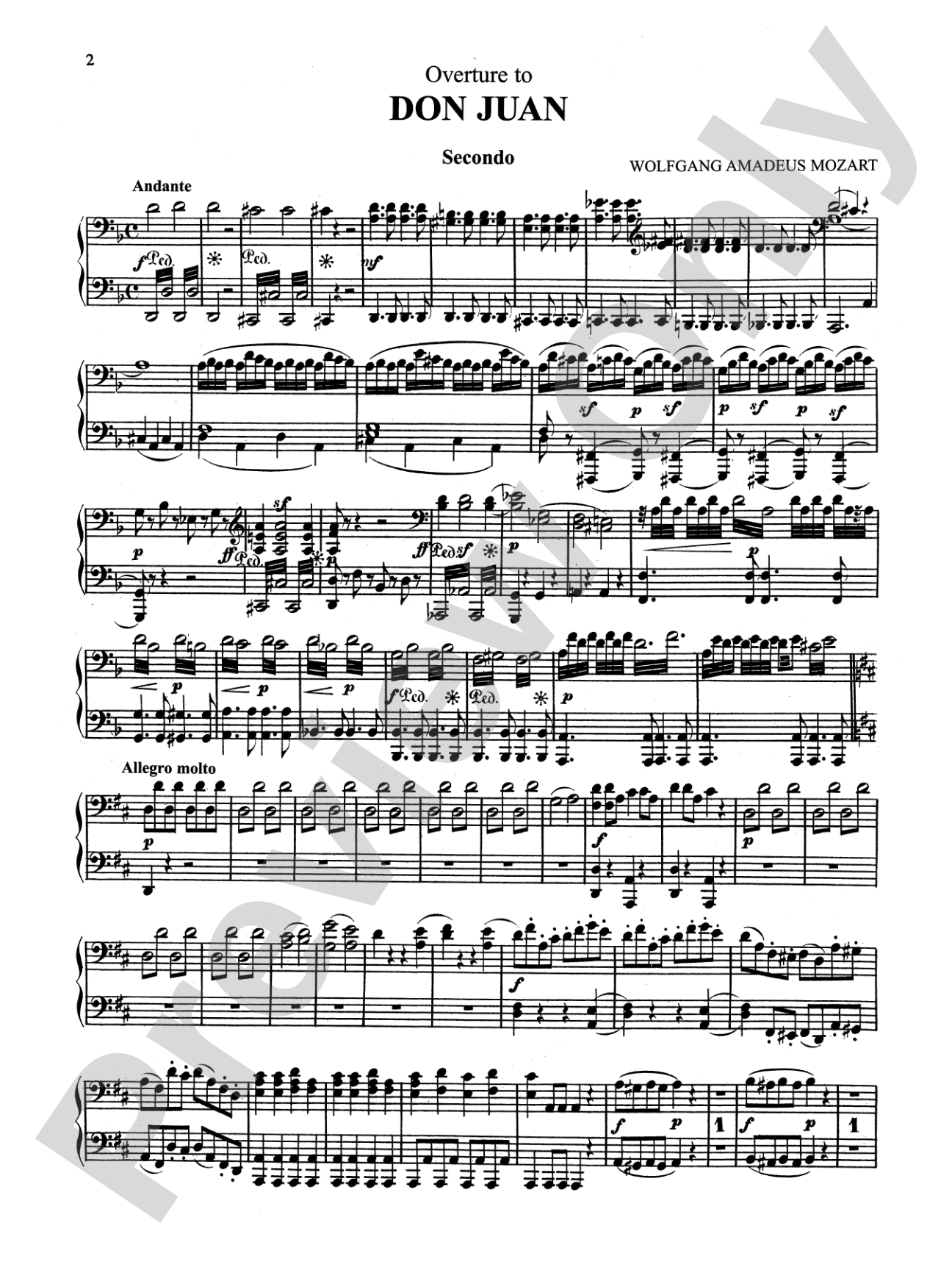
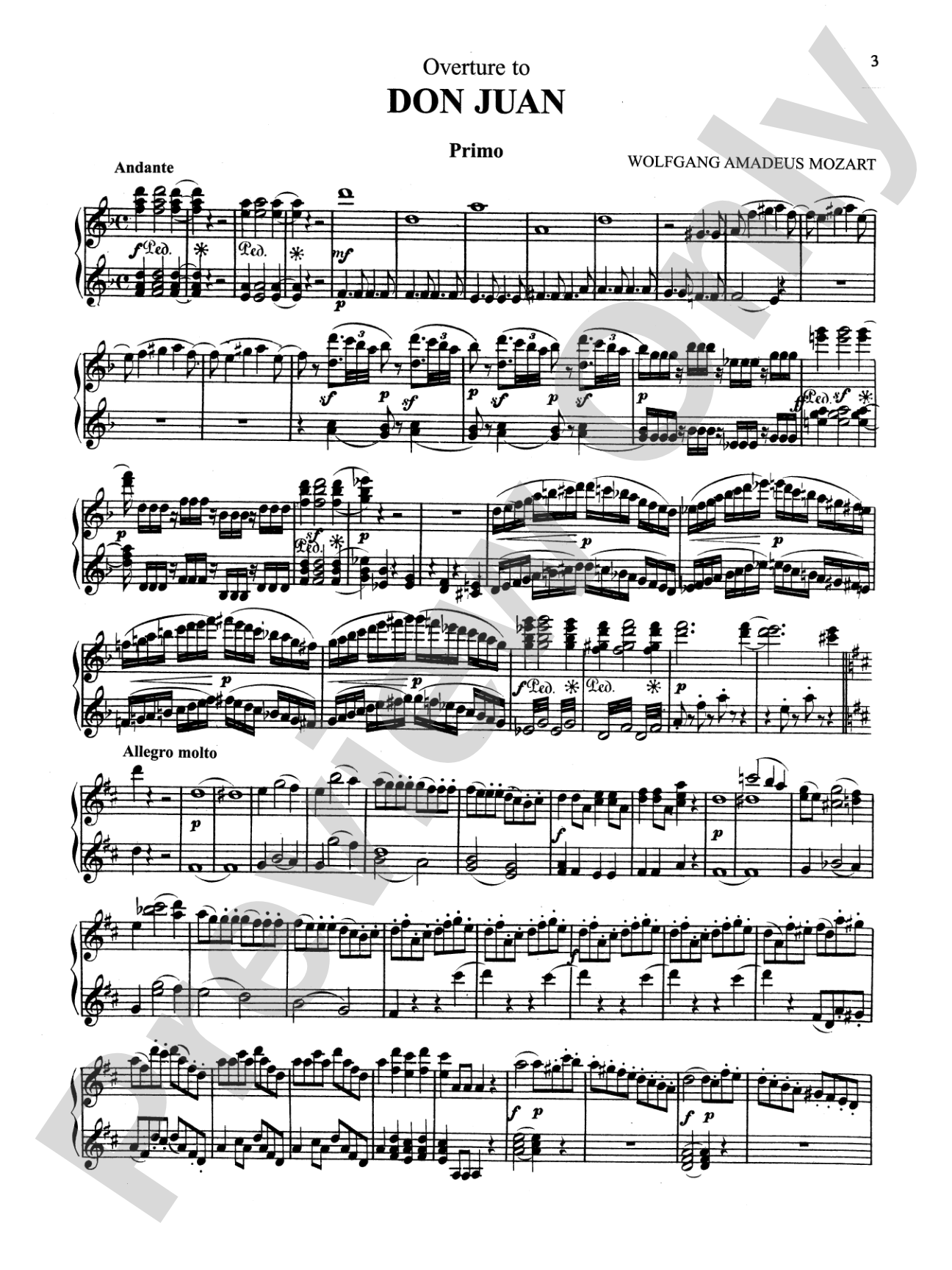
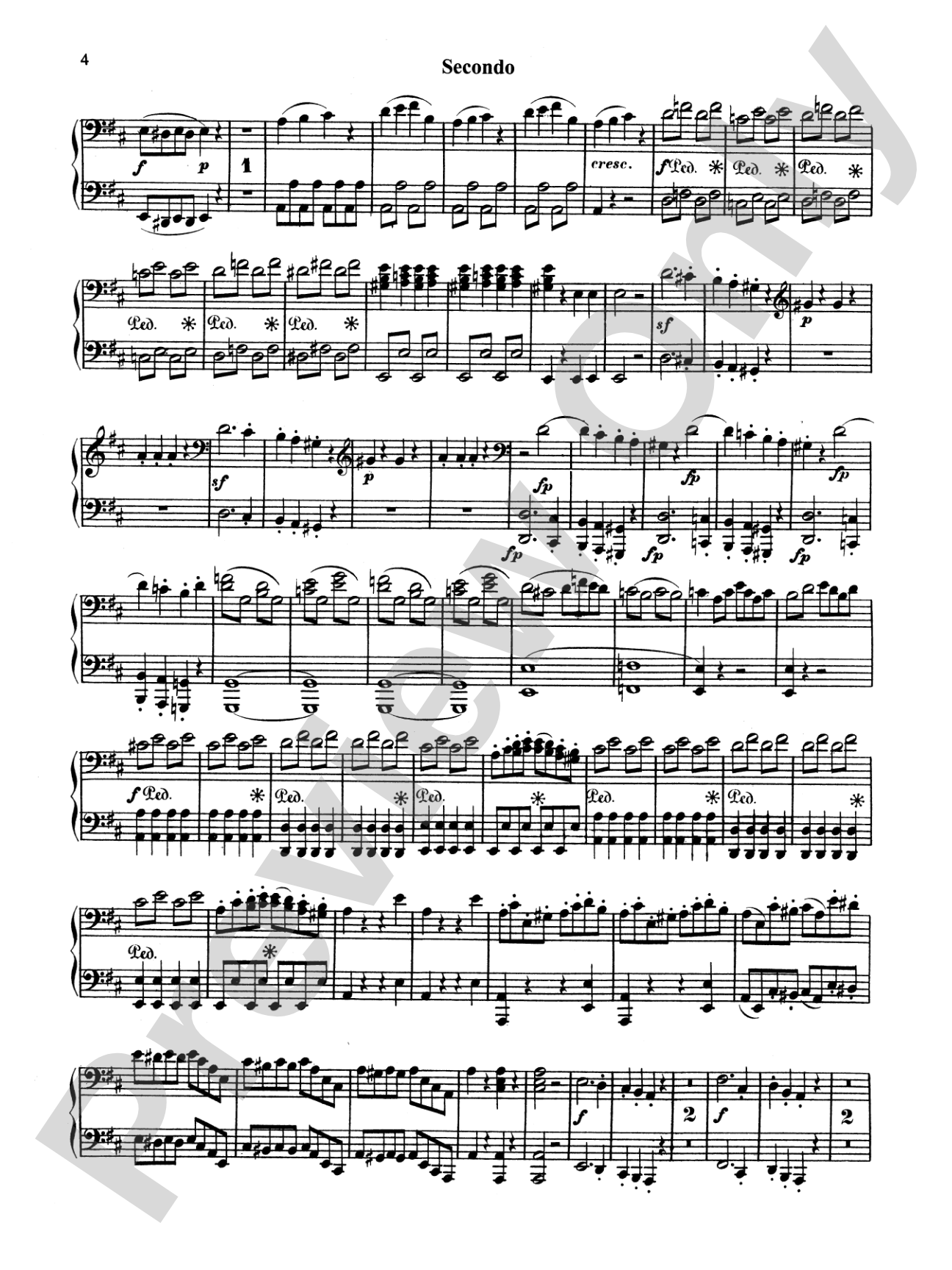
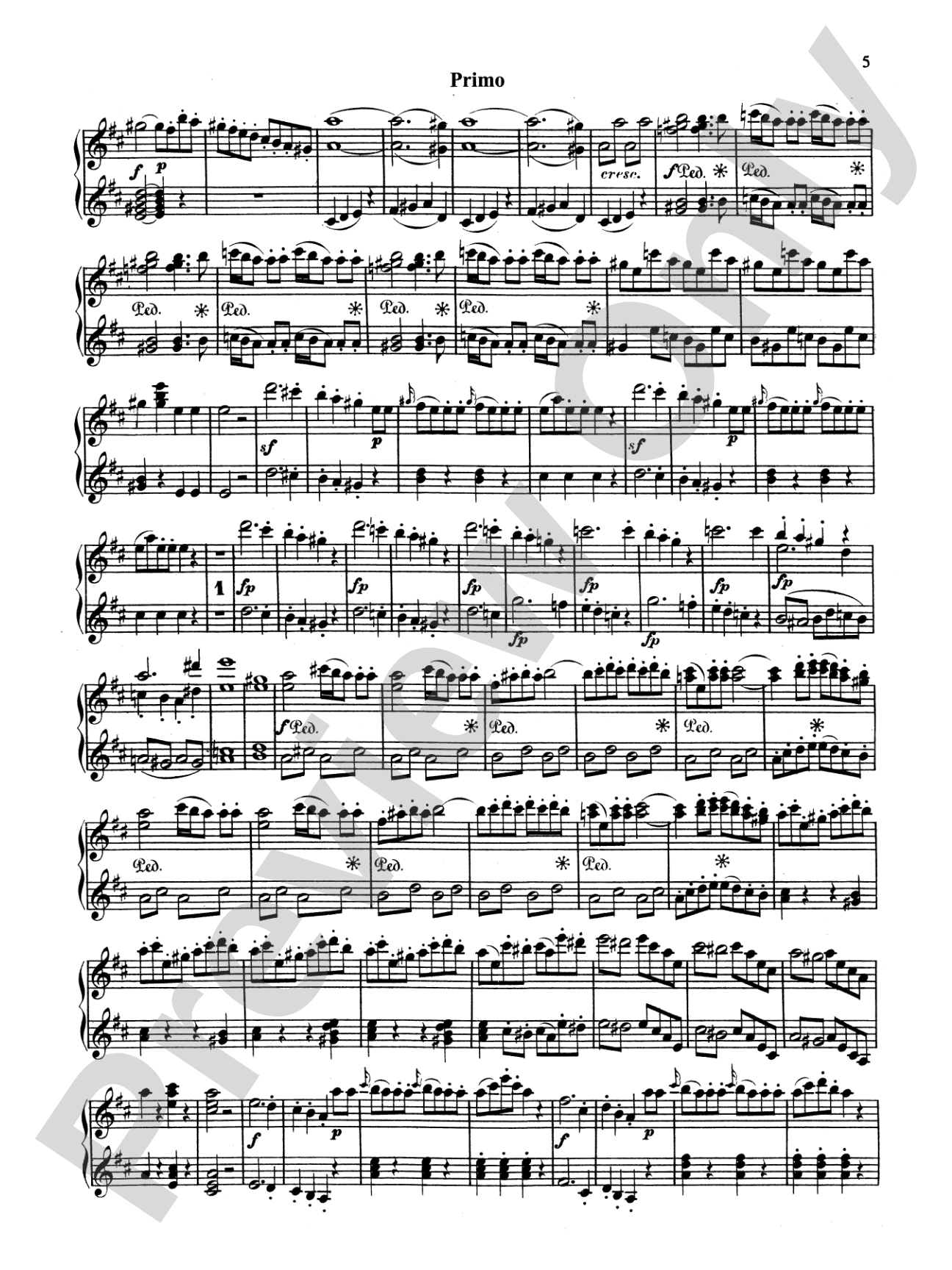
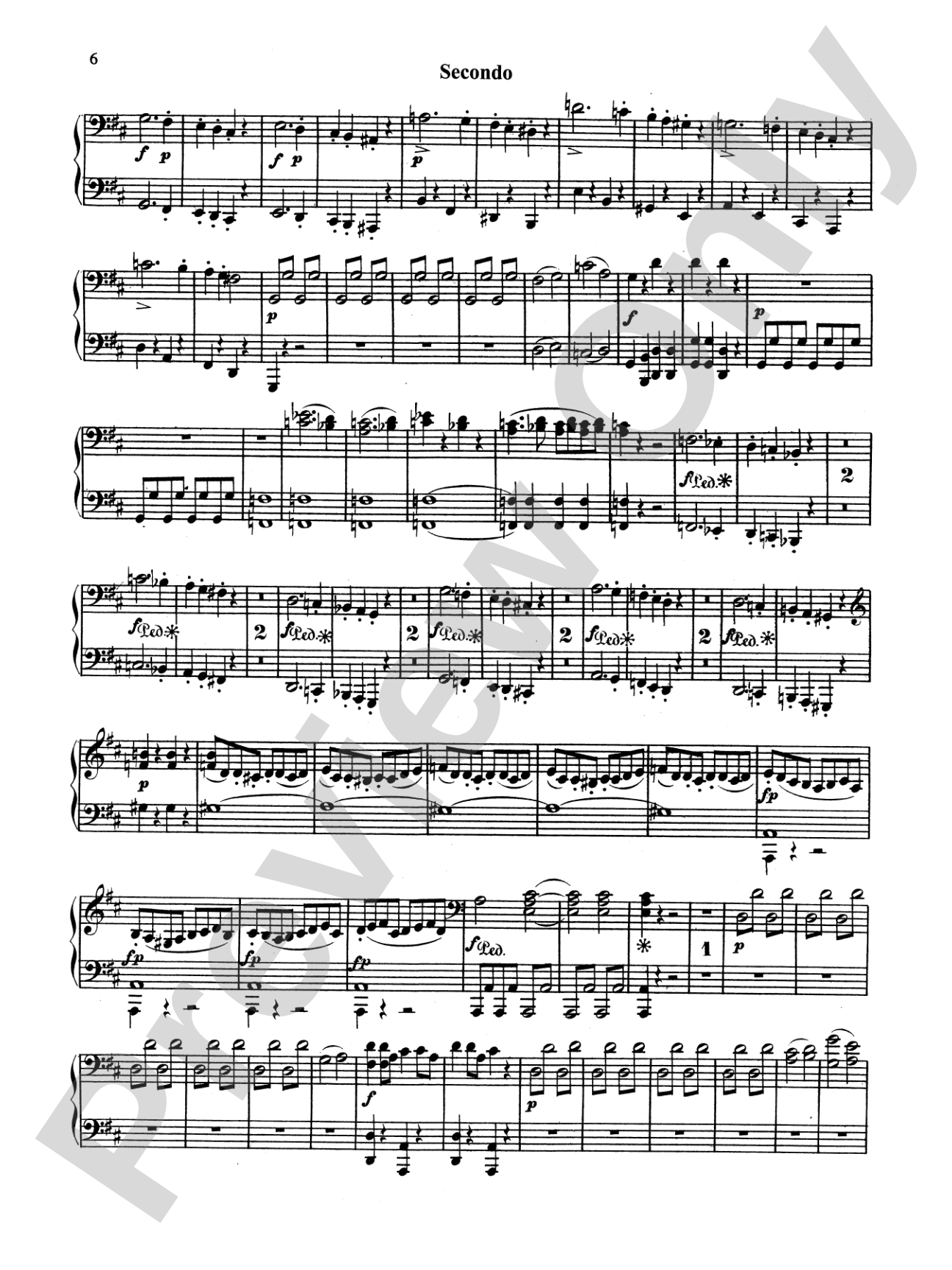
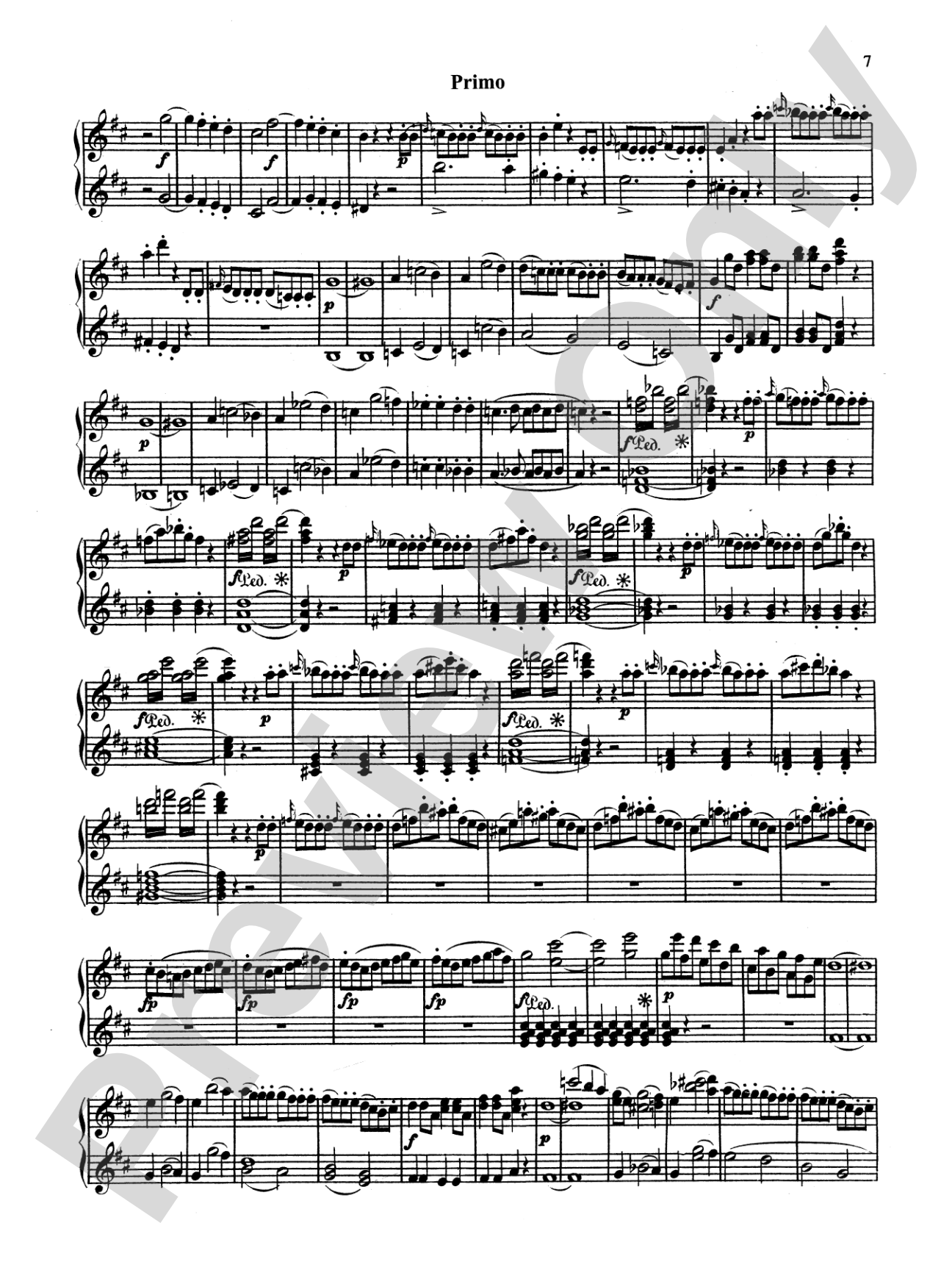
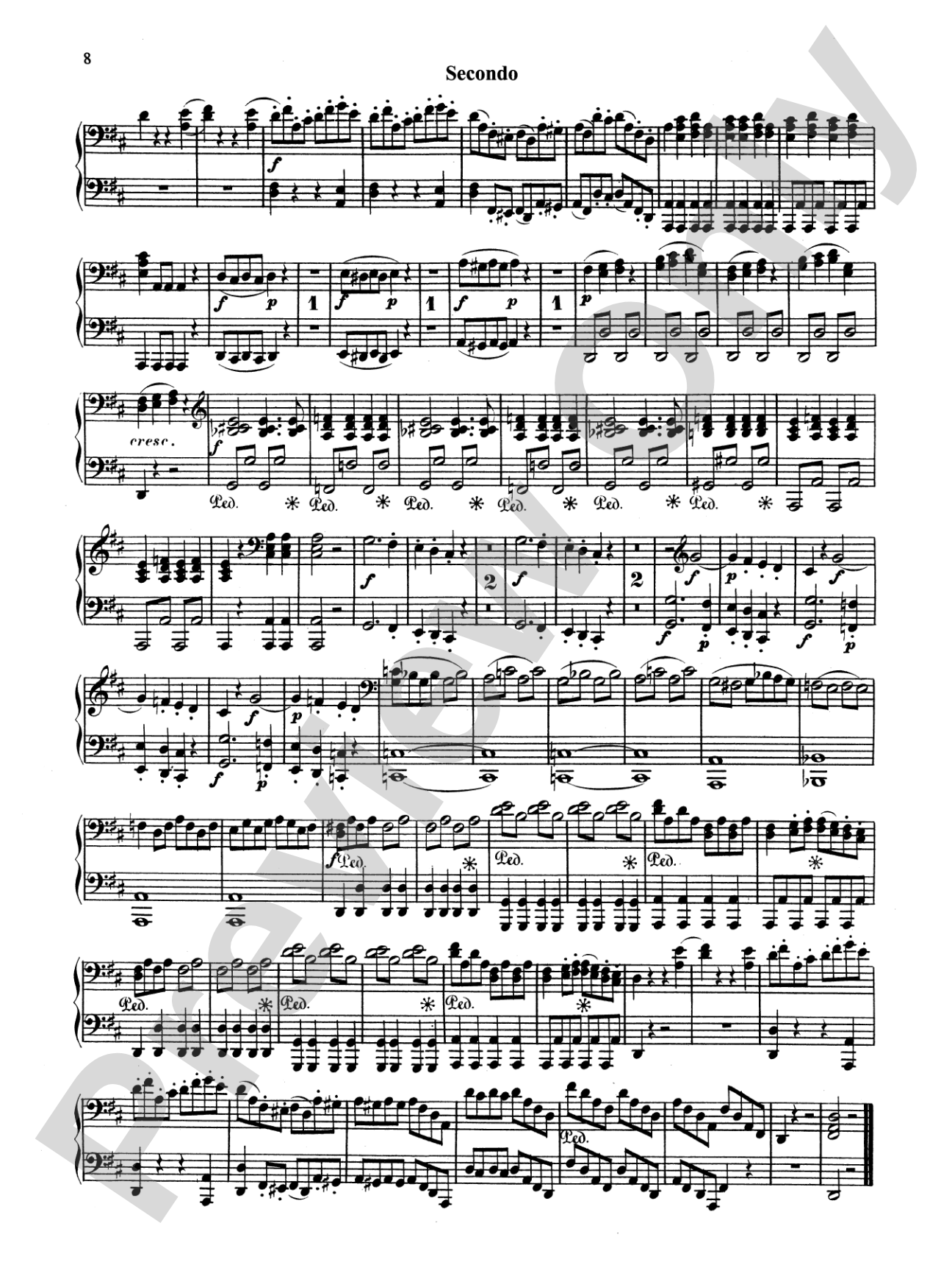
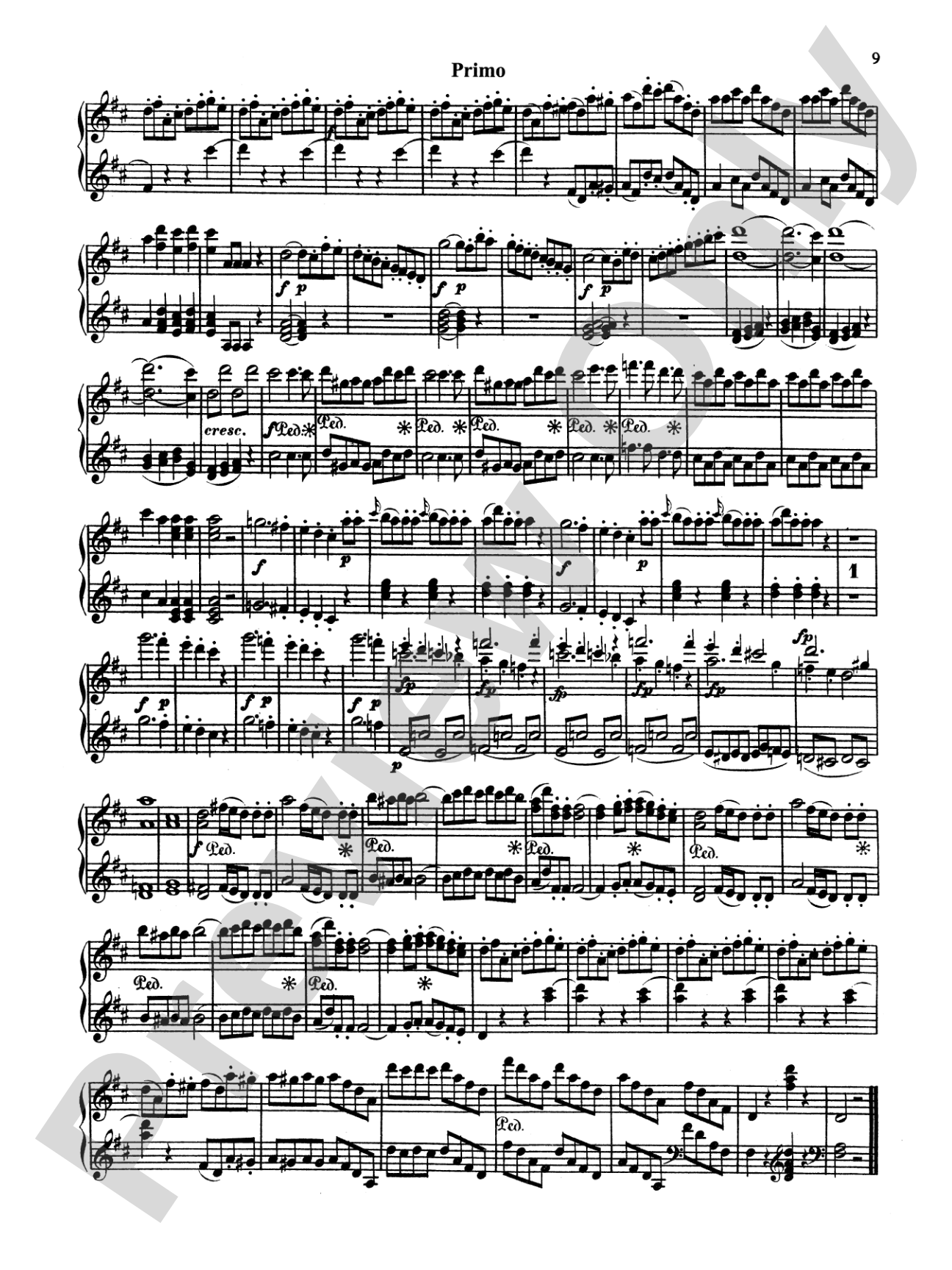

Mozart: Opera Overtures (Arrangements): Piano Duet (1 Piano, 4 Hands) Book
By Wolfgang Amadeus Mozart
Item: 00-PK-0002752

$9.99
Pickup currently not available
Buy Extra Parts (Digital PDF Download)
| Product | Price | Quantity |
|---|---|---|
| Mozart: Opera Overtures (Arrangements) | $0.99 | |
| Mozart: Opera Overtures (Arrangements) | $0.99 | |
| Mozart: Opera Overtures (Arrangements) | $0.99 | |
| Mozart: Opera Overtures (Arrangements) | $0.99 | |
| Mozart: Opera Overtures (Arrangements) | $0.99 | |
| Mozart: Opera Overtures (Arrangements) | $0.99 | |
| Mozart: Opera Overtures (Arrangements) | $0.99 | |
| Mozart: Opera Overtures (Arrangements) | $0.99 |
Parts Added to Cart!
Related Items
Opera Overtures: Piano Duet (1 Piano, 4 Hands) Book |
$9.95
|
View |
Description
Titles: Don Juan * The Magic Flute * The Marriage of Figaro * La Clemenza di Tito * Cose fan Tutte * The Abduction from the Seraglio * Idomeneo * L'Impresario.


Don't just read it, hear it, play along with it, and watch your students grow with it. In MakeMusic Cloud, Mozart: Opera Overtures (Arrangements): Piano Duet (1 Piano, 4 Hands) Book comes alive with professional accompaniment, adjustable tempo, and built-in practice tools that turn solo practice into real progress.
Open in the Player
Jump straight in and assign it today.
Start Your Free Trial
Open this title and explore the full library in minutes.
Sample Audio
No sample audio found.
Sample Video
No sample videos found.
Additional Details
Series:
Kalmus Edition
Publisher:
Alfred Music
Page Count:
64
SKU:
00-PK-0002752
More about this title
About the Composer: Wolfgang Amadeus Mozart
Wolfgang Amadeus Mozart (1756-1791) composed 22 operas across his career, establishing many conventions of Classical opera that composers still follow today. His theatrical genius lay in his ability to capture human character through music, moving seamlessly between comedy and pathos, ensemble complexity and solo brilliance. For musicians studying orchestral writing and dramatic pacing, Mozart's opera overtures remain unmatched examples of how a few minutes of instrumental music can introduce an entire dramatic world.
Why we love this
These eight overtures give pianists direct access to Mozart's most theatrical and energetic writing without requiring a full orchestra or singers. The four-hand format preserves the dramatic sweep and textural richness of the originals while making them genuinely playable for intermediate-to-advanced duet partnerships, and the collection's breadth means you can program anything from the brilliant comedy of Figaro to the exotic drama of Abduction from the Seraglio in a single recital.
What to expect
These overtures capture Mozart at his most theatrical: sparkling wit in Figaro's scheming orchestration, enchanted otherworldliness in Magic Flute's shimmering passages, exotic grandeur in Abduction from the Seraglio's Turkish-inflected harmonies, and the courtly formality of Tito and Idomeneo. The four-hand writing shimmers with light and layers texture across the keyboard in ways that single pianists cannot achieve alone.
Who it's for
Pianists in intermediate-to-advanced duet partnerships preparing repertoire for recitals, competitions, or ensemble concerts will find eight of Mozart's most celebrated theatrical works in one collection. Music teachers and private studio instructors can use these pieces to develop students' understanding of Classical form, operatic convention, and the relationship between instrumental and vocal writing.
How to get the most out of it
- Balance the primo and secondo parts dynamically rather than treating them as equal voices; the primo typically carries melodic or harmonic foreground while the secondo anchors rhythm and texture, but this relationship shifts throughout each piece.
- Pay close attention to Mozart's articulation markings (staccato, legato, accent) as guides to character; a single passage played with crisp separation versus sustained singing tone completely changes the dramatic mood.
- Shape phrases by listening across both hands at the keyboard rather than within your individual part; where one pianist has a rhythmic figure and the other carries melody, the phrasing belongs to the piece, not the individual line.
- Establish tempo before you begin and maintain it with confidence through key changes and textural transitions; Mozart's forms depend on harmonic momentum, and rubato should be minimal and shared between both players.
How to use it
Program one or two overtures on a recital as standalone concert pieces, or use them as openers to set dramatic tone before shifting to lyrical solo repertoire. A chamber ensemble concert that includes strings or winds can feature these duets as bridge pieces between purely instrumental works and vocal music, showing how Mozart moved between genres.
Skills your students will build
- Reading Classical formal structures (sonata, rondo, and hybrid forms) in their most essential state
- Balancing and shaping two independent parts simultaneously while maintaining ensemble cohesion
- Identifying and executing articulation and phrasing as dramatic tools rather than merely technical details
- Managing textural clarity when both hands navigate rapid passagework or dense harmonic movement
- Coordinating tempo and expression across two players without a conductor