
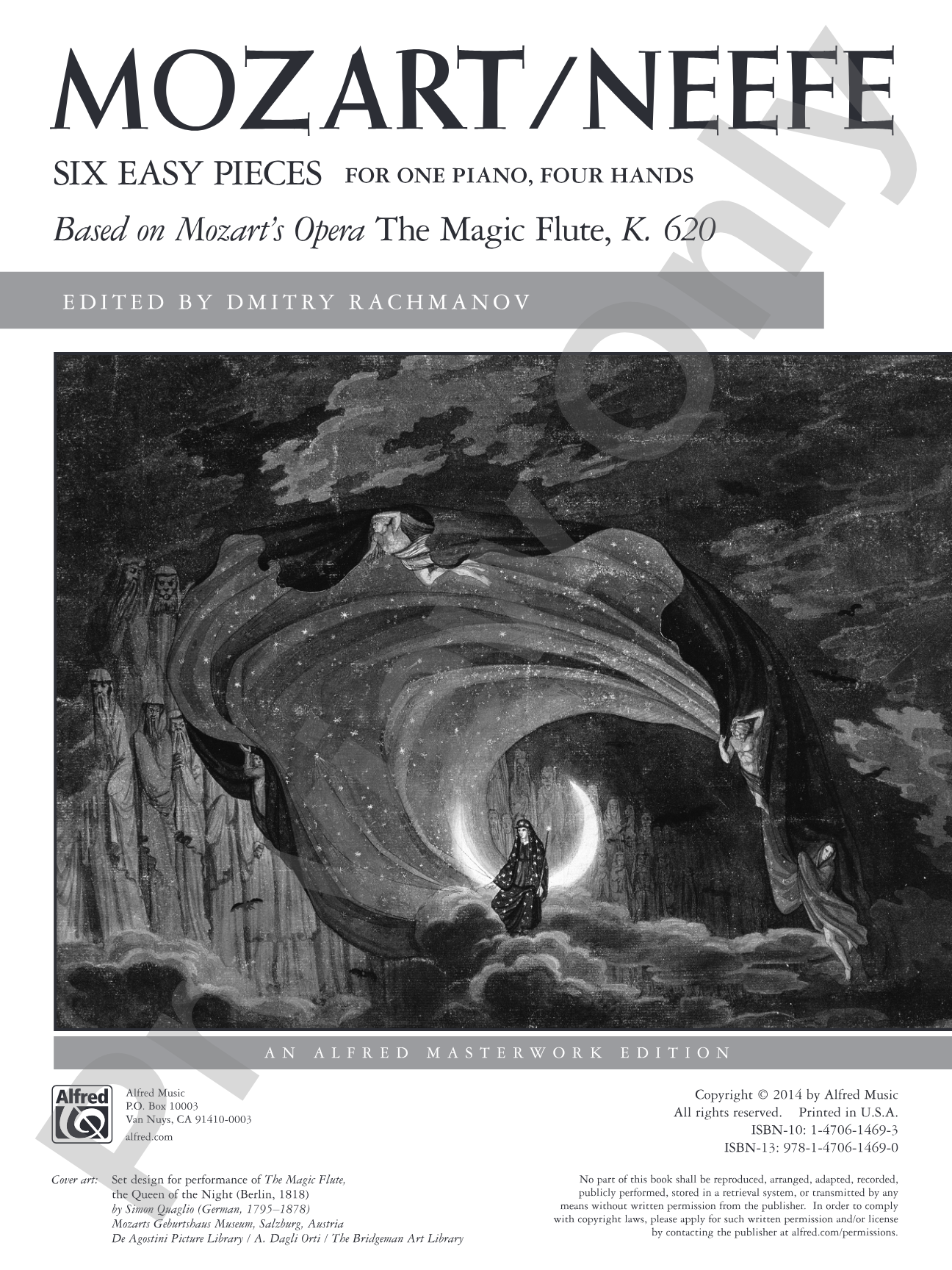

Mozart/Neefe: Six Easy Pieces for One Piano, Four Hands: Based on Mozart's Opera The Magic Flute, K. 620: Piano Duets & Four Hands
Based on Mozart's Opera The Magic Flute, K. 620
By Christian Gottlob Neefe [Wolfgang Amadeus Mozart] / ed. Dmitry Rachmanov
Level: Advanced
Item: 00-PB-0000619
$10.99
Pickup currently not available
Related Items
Mozart/Neefe: Six Easy Pieces for One Piano, Four Hands: Piano Duet (1 Piano, 4 Hands) Book |
$10.99
|
View |
Description
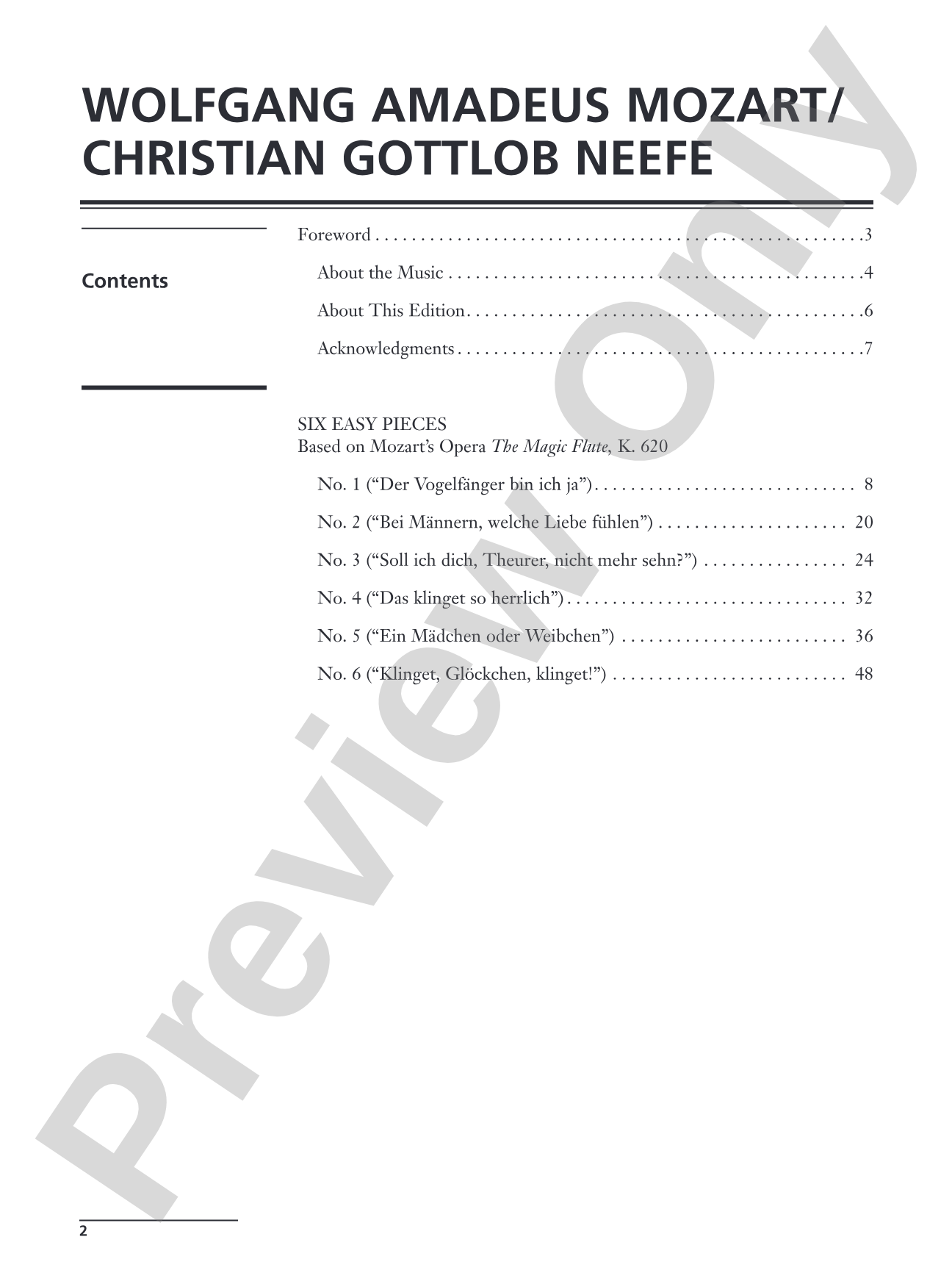
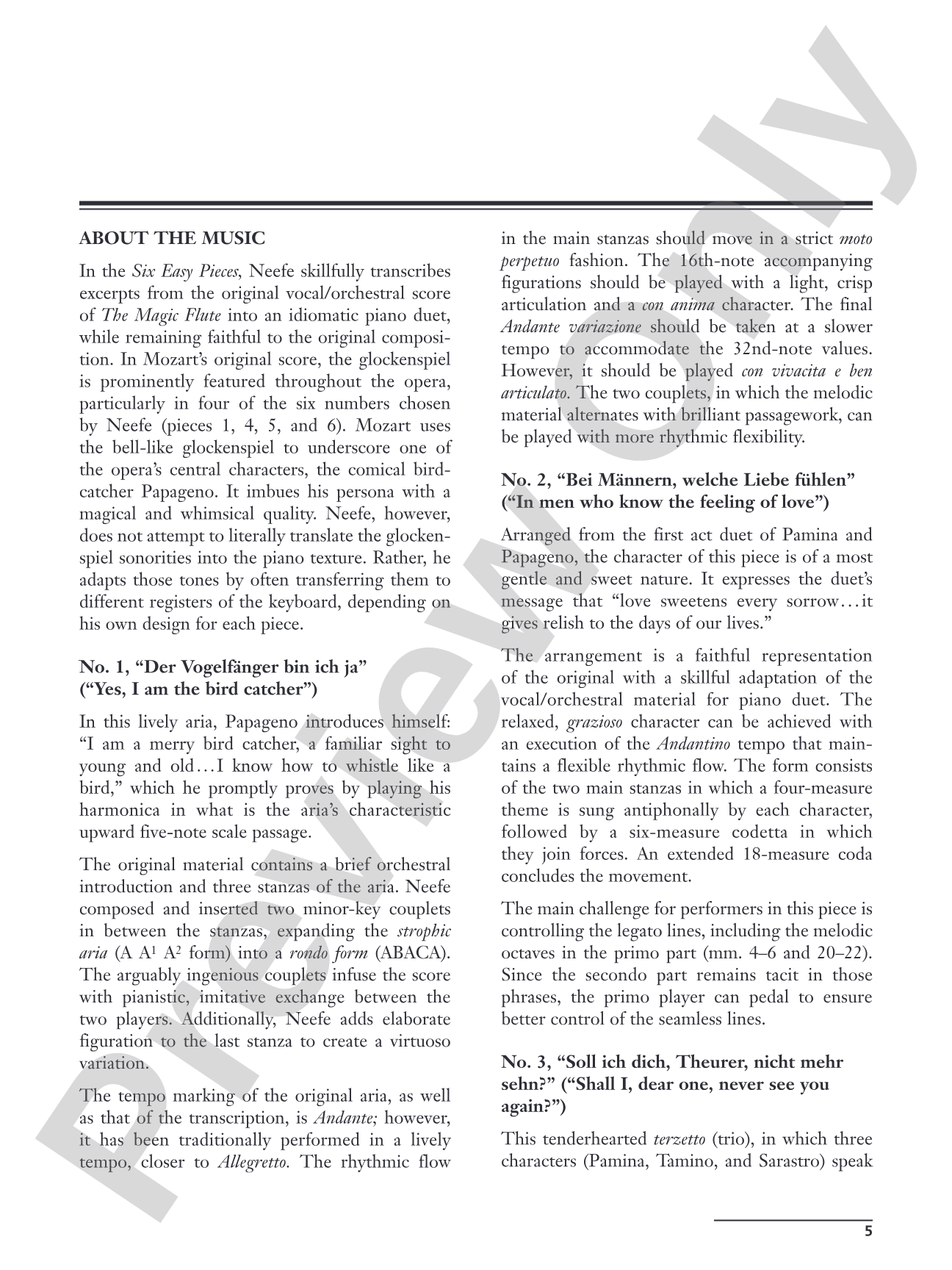
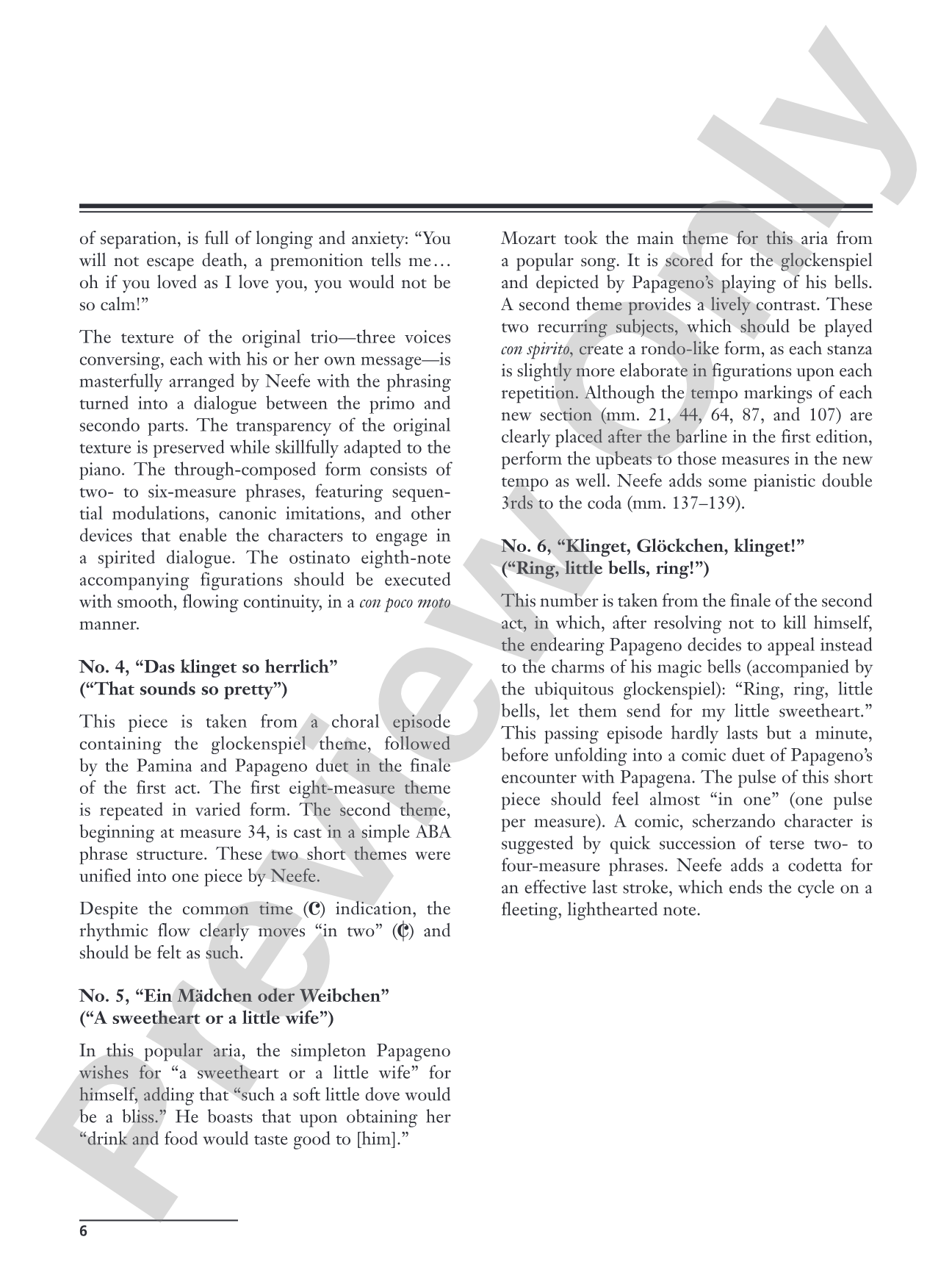
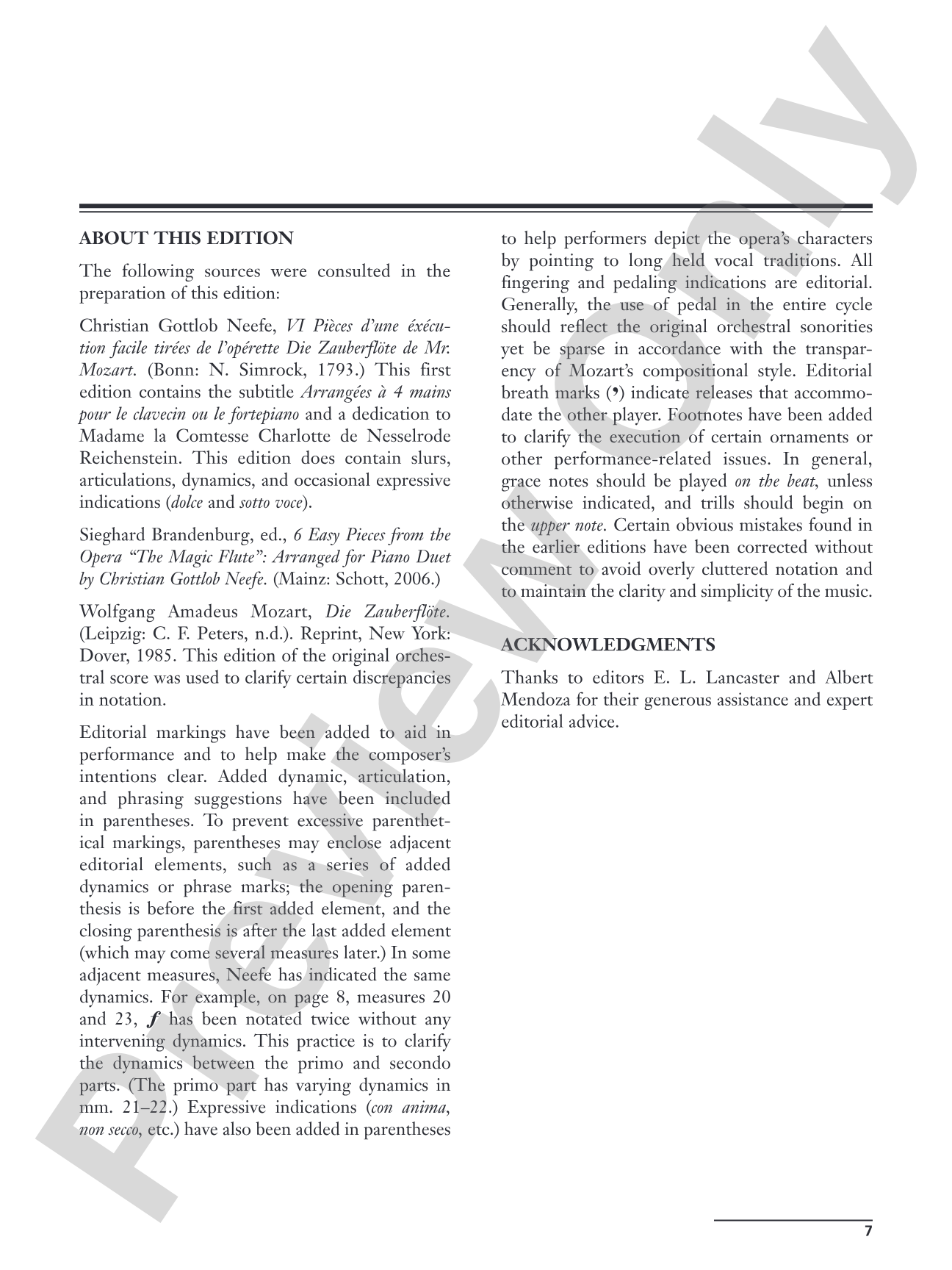
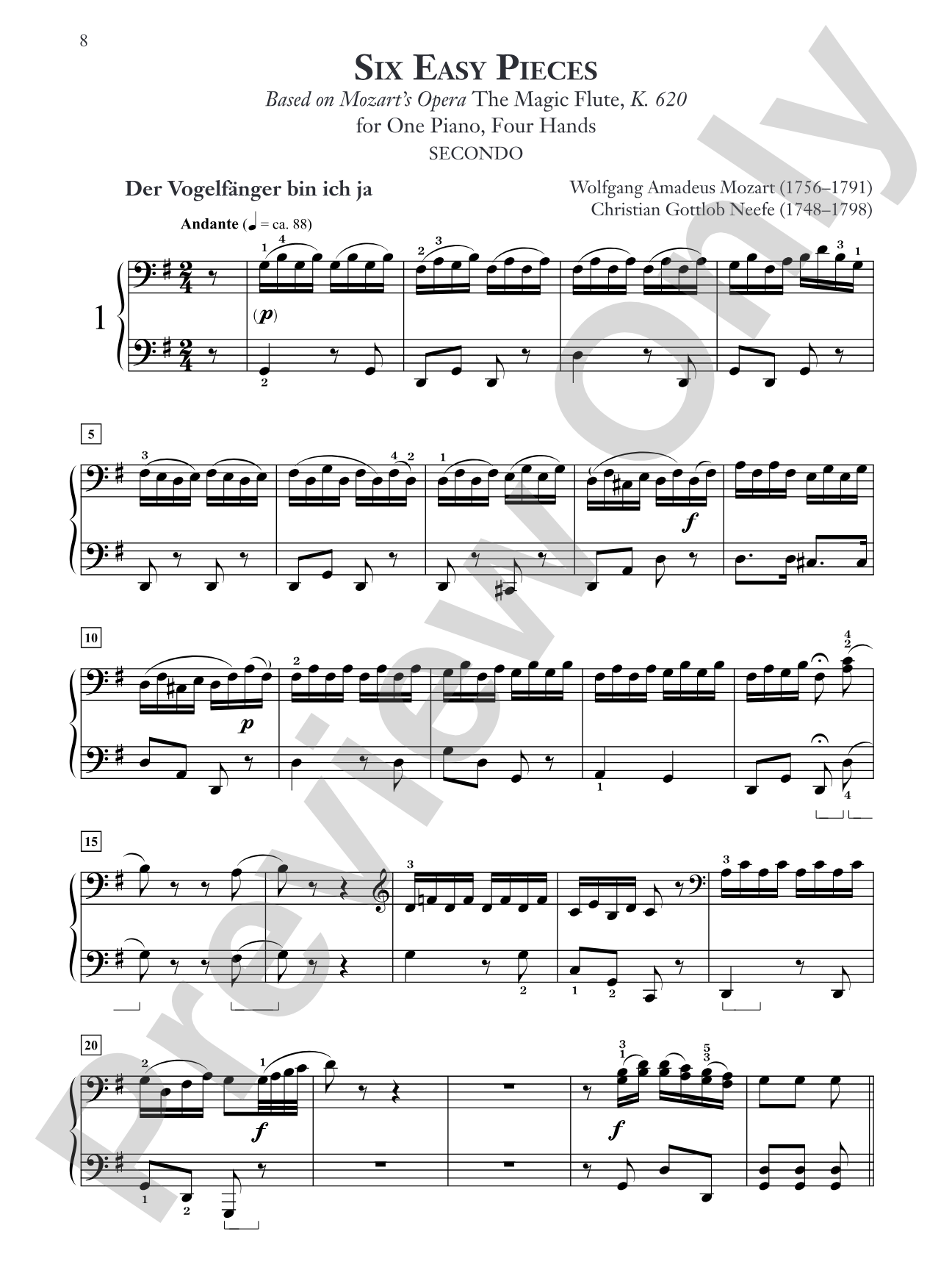
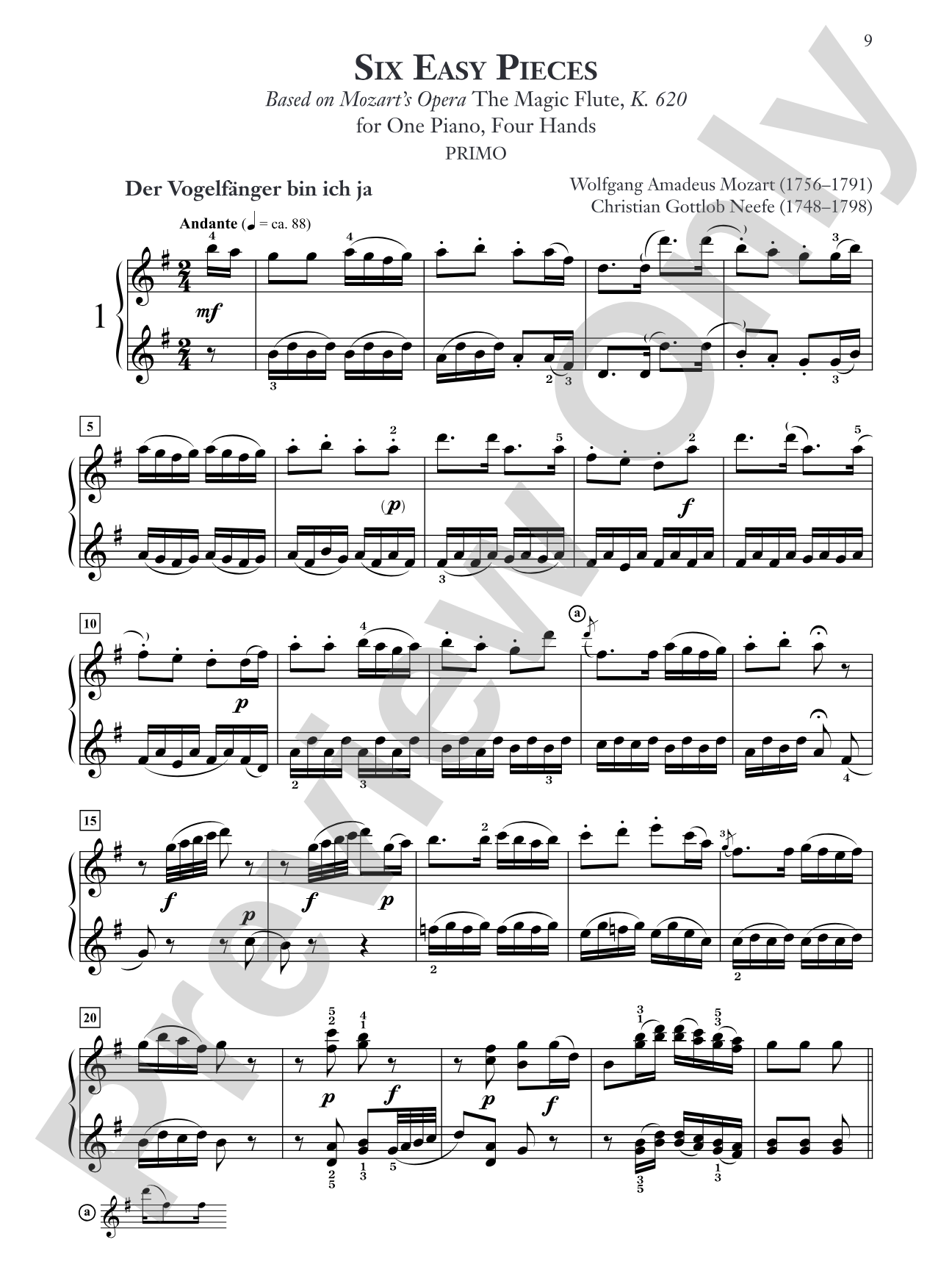
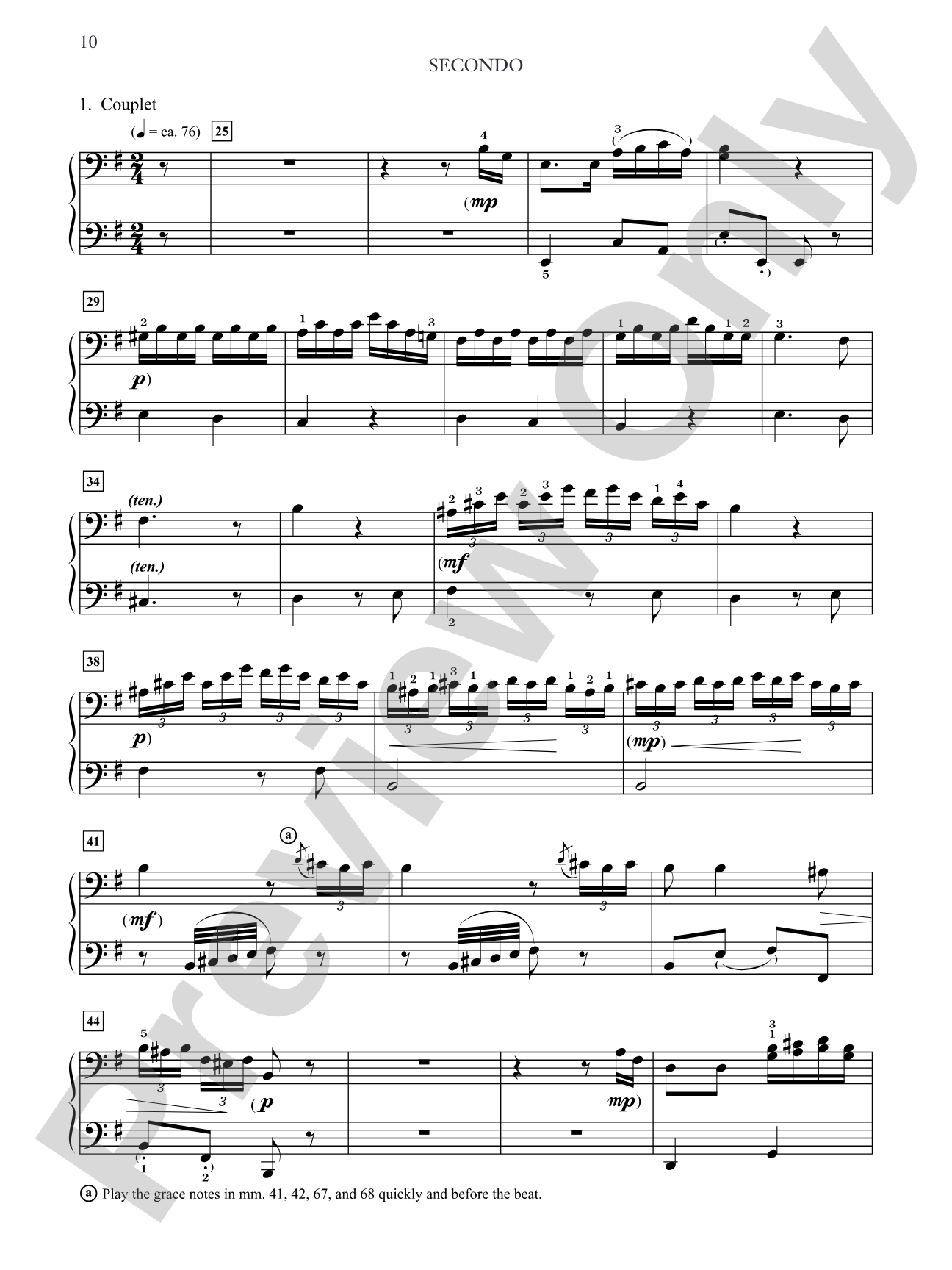
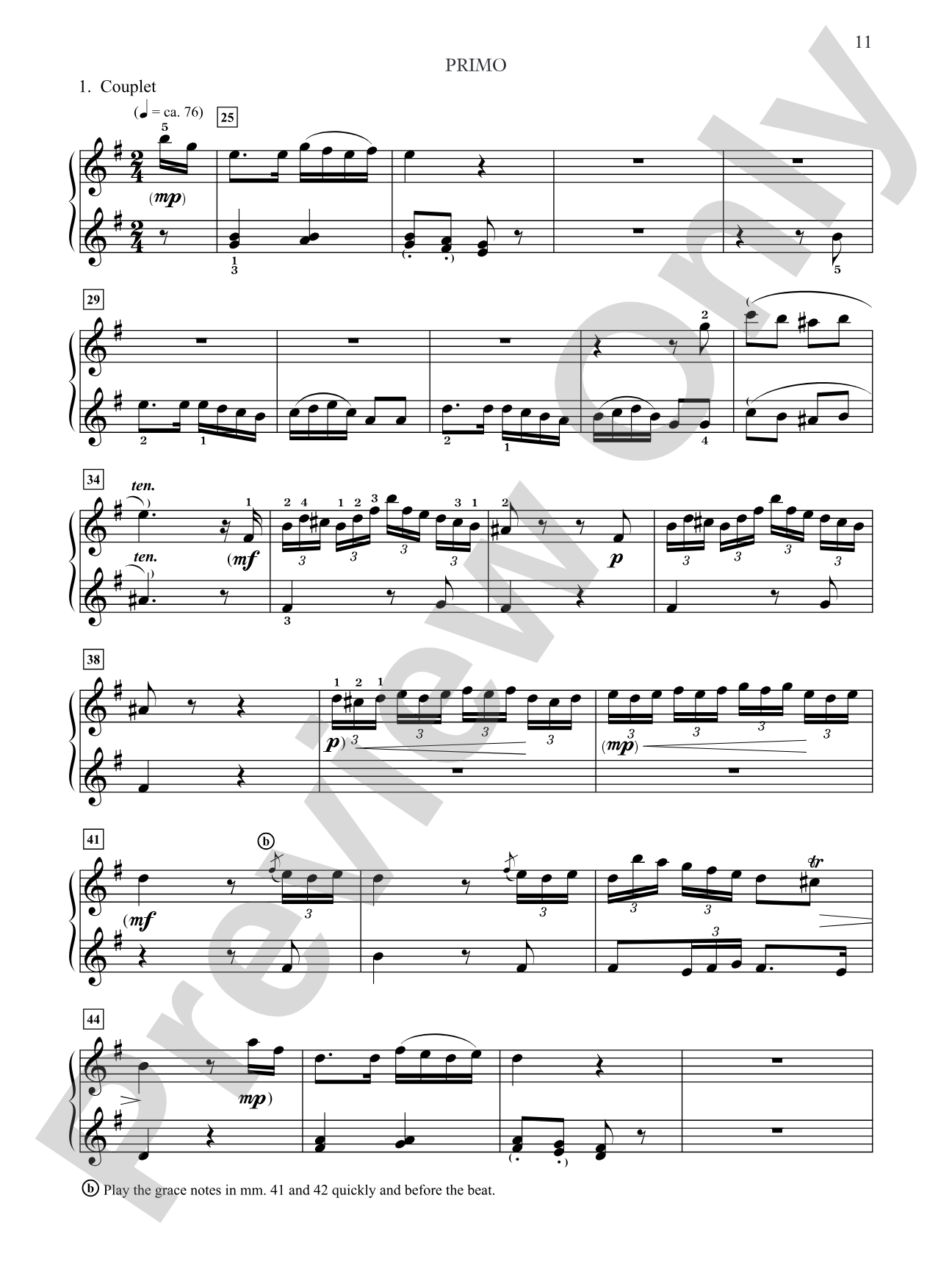
The Six Easy Pieces arranged by German composer, conductor, and organist Christian Gottlob Neefe (1748--1798) are inspired by the original vocal/orchestral score of The Magic Flute. These pieces are idiomatic piano duets (one piano, four hands) that remain faithful to the original composition. Filled with wit and charm, they contain many of the memorable elements of the opera: Papageno's magic bells, gentle love duets, tenderhearted trios, and lively arias. Based on the 1793 first edition, Neefe's dynamics, articulations, and phrase marks have been preserved. Editorial suggestions have been given in parentheses and footnotes to aid in performance. Titles: No. 1 ("Der Vogelfänger bin ich ja" / "Yes, I am the bird catcher") * No. 2 ("Bei Männern, welche Liebe fühlen" / "In men who know the feeling of love") * No. 3 ("Soll ich dich, Theurer, nicht mehr sehn?" / "Shall I, dear one, never see you again?") * No. 4 ("Das klinget so herrlich" / "That sounds so pretty") * No. 5 ("Ein Mädchen oder Weibchen" / "A sweetheart or a little wife") * No. 6 ("Klinget, Glöckchen, klinget!" / "Ring, little bells, ring!"). A Federation Festivals 2020-2024 selection.


Mozart/Neefe: Six Easy Pieces for One Piano, Four Hands: Based on Mozart's Opera The Magic Flute, K. 620: Piano Duets & Four Hands isn't in MakeMusic Cloud just yet...but it could be. Let us know you'd like to see it, and you'll help shape what comes next. In the meantime, start a free trial and dive into thousands of interactive titles your students can play along with today.
Request This Title
Tell us you want it.
Start Your Free Trial
Explore everything that's ready to play right now.
Sample Audio
No sample audio found.
Sample Video
Additional Details
Series:
Alfred Masterwork Edition
Publisher:
Alfred Music
Page Count:
52
SKU:
00-PB-0000619
More about this title
About the Composer: Christian Gottlob Neefe
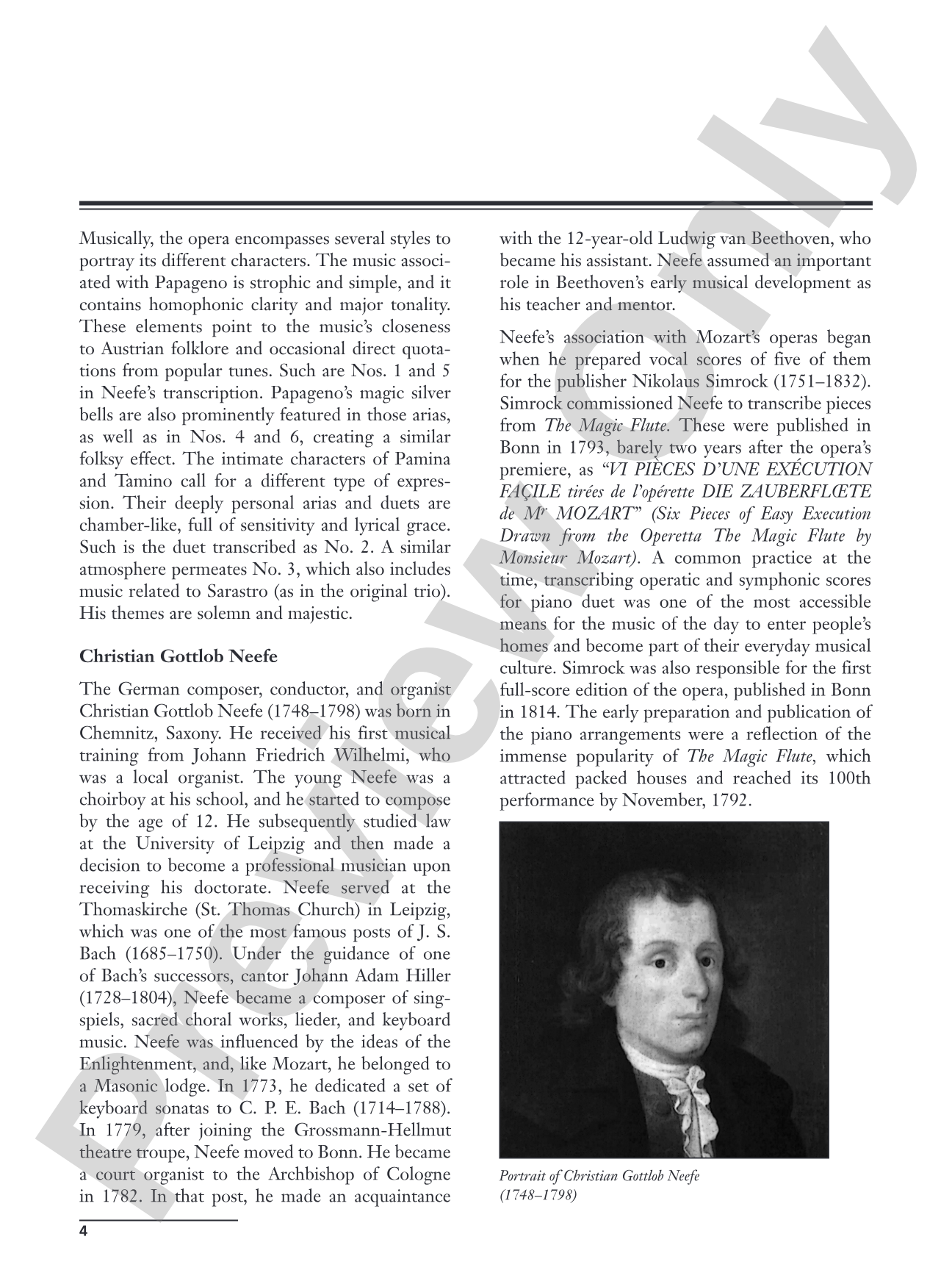
Christian Gottlob Neefe (1748, 1798) was a German composer, conductor, and organist whose career spanned the Classical era during its most fertile period. He worked across multiple genres and held significant posts in German musical institutions, but his legacy in music education centers on his gift for making sophisticated music accessible without sacrificing musical substance. Neefe understood how to preserve the essence of a composition while reshaping it for different performers and contexts, a skill that made him a natural choice for arranging Mozart's most beloved opera.
Why we love this
Neefe's arrangements unlock the theatrical brilliance of The Magic Flute for duet players without resorting to simplified piano reductions. Each piece captures a distinct moment from the opera, Papageno's cheerful bird-catching, the tenderness between lovers, the magic bells, so students aren't just playing notes, they're telling a story together. The edition preserves Neefe's original articulation and dynamics from the 1793 first edition, giving students an authentic window into Classical-era performance practice.
What to expect
These pieces sparkle with the same wit and humanity that make The Magic Flute endure. You'll encounter moments of genuine tenderness in the love duets, the playful infectious energy of Papageno's sections, and the crystalline clarity of Classical melody at its most memorable. Playing them feels less like practicing exercises and more like being let in on an operatic secret.
Who it's for
Advanced pianists preparing for competitions or recitals who want to explore chamber playing without requiring a second pianist. This collection also serves teachers looking for high-quality duet literature that connects to the orchestral repertoire students already know.
How to get the most out of it
- Balance the primo and secondo parts as if they were two different instrumental colors in the orchestra; the secondo shouldn't simply accompany but should maintain its own melodic integrity.
- Reference Mozart's original opera score when preparing these pieces. Knowing which characters sing which lines and what happens onstage at that moment will inform your phrasing and character choices.
- Pay close attention to Neefe's original dynamic markings and articulations, printed in the score itself, since they reflect how Classical composers actually conceived piano texture.
- Take time to coordinate hand positions and shifts between players; with 52 pages of duet writing, comfort and communication between primo and secondo will directly affect musical cohesion.
How to use it
Feature these pieces as a complete cycle in a recital, or select individual movements to create a thematic program around opera and orchestral transcription. They work especially well on festivals or competitions that value both technical polish and musical storytelling, and pairing them with other Classical duets creates a coherent concert statement.
Skills your students will build
- Coordinating hand independence between primo and secondo parts
- Voicing Classical melodic lines with appropriate phrasing and character
- Reading and interpreting 18th-century performance markings and articulations
- Ensemble listening and balance within a single instrument
- Connecting programmatic content (opera narrative) to instrumental performance choices