

Mozart: First Book for Pianists: Piano
By Wolfgang Amadeus Mozart / ed. Willard A. Palmer
Level: Intermediate
Item: 00-PB-0000870
$6.99
Pickup currently not available
Related Items
Mozart: First Book for Pianists: Piano Book |
$6.95
|
View |
Description
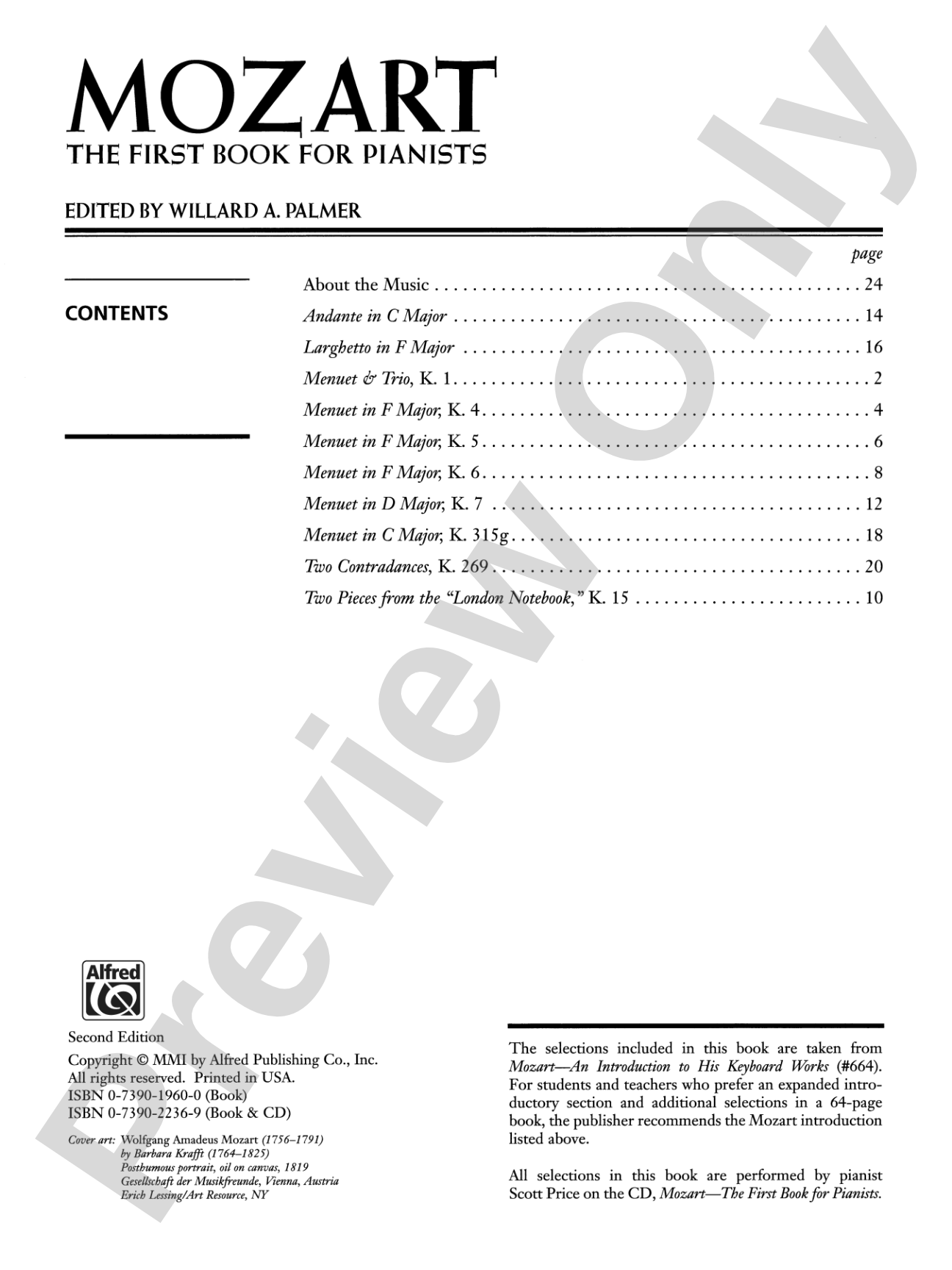
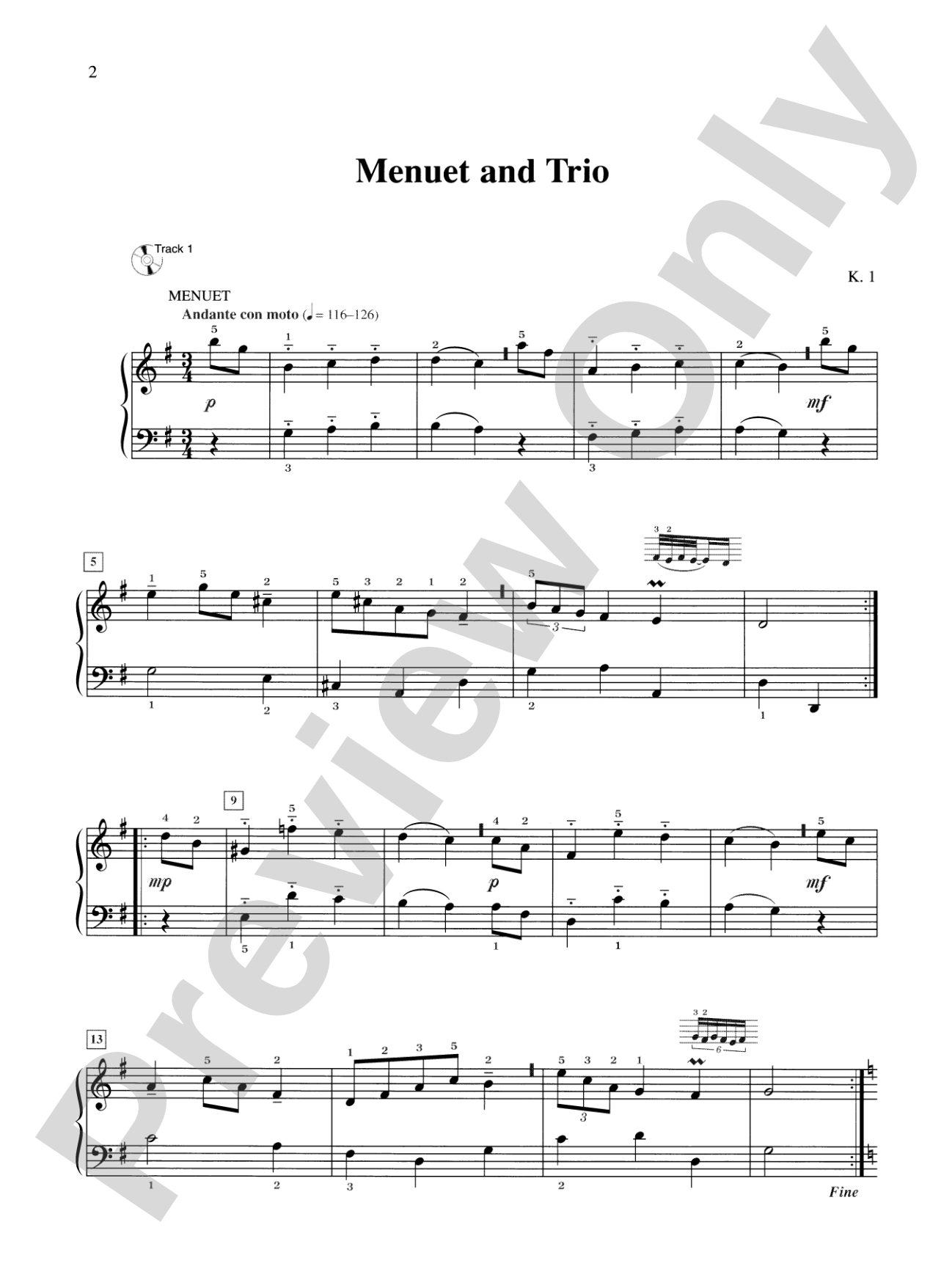
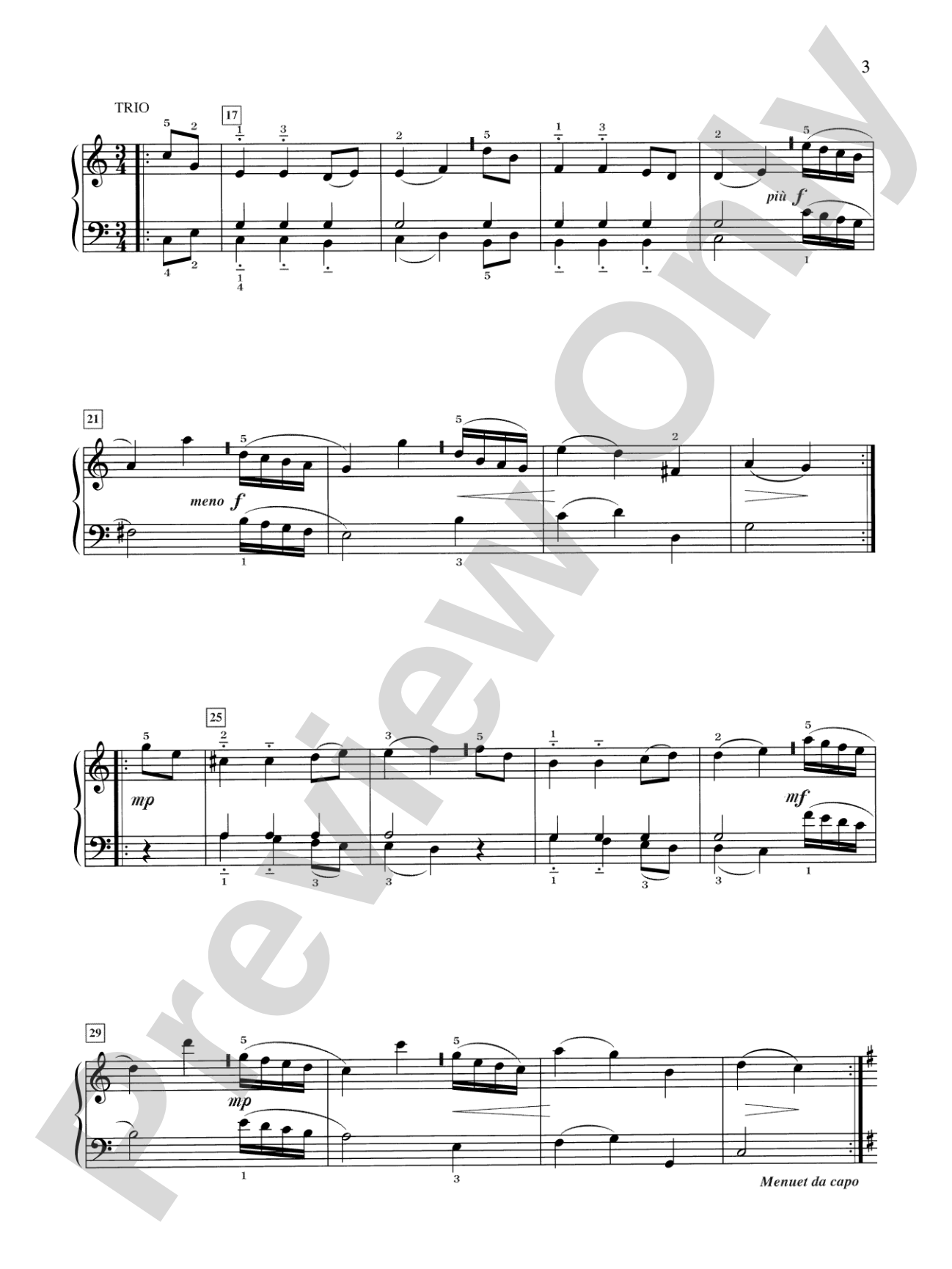
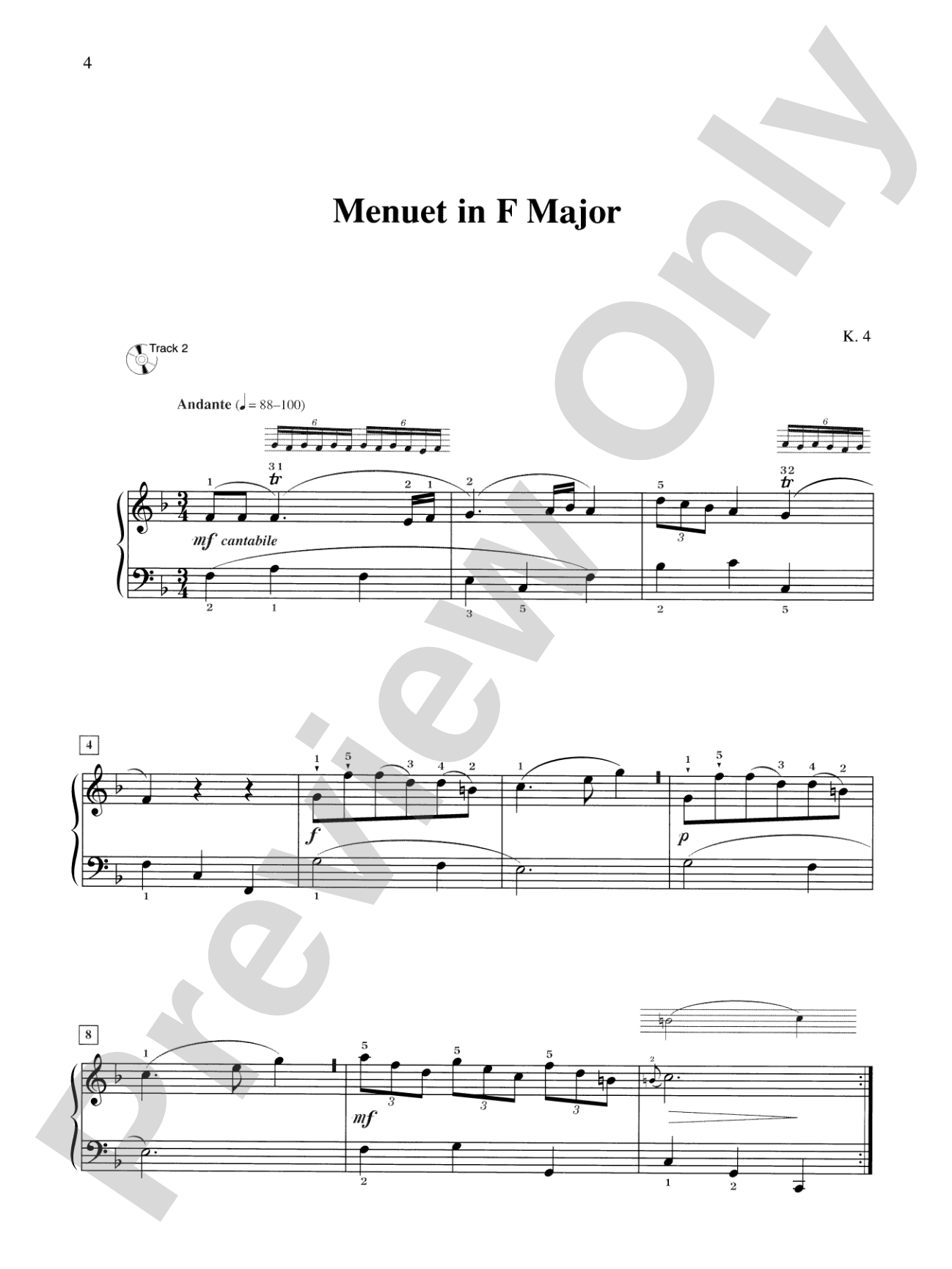
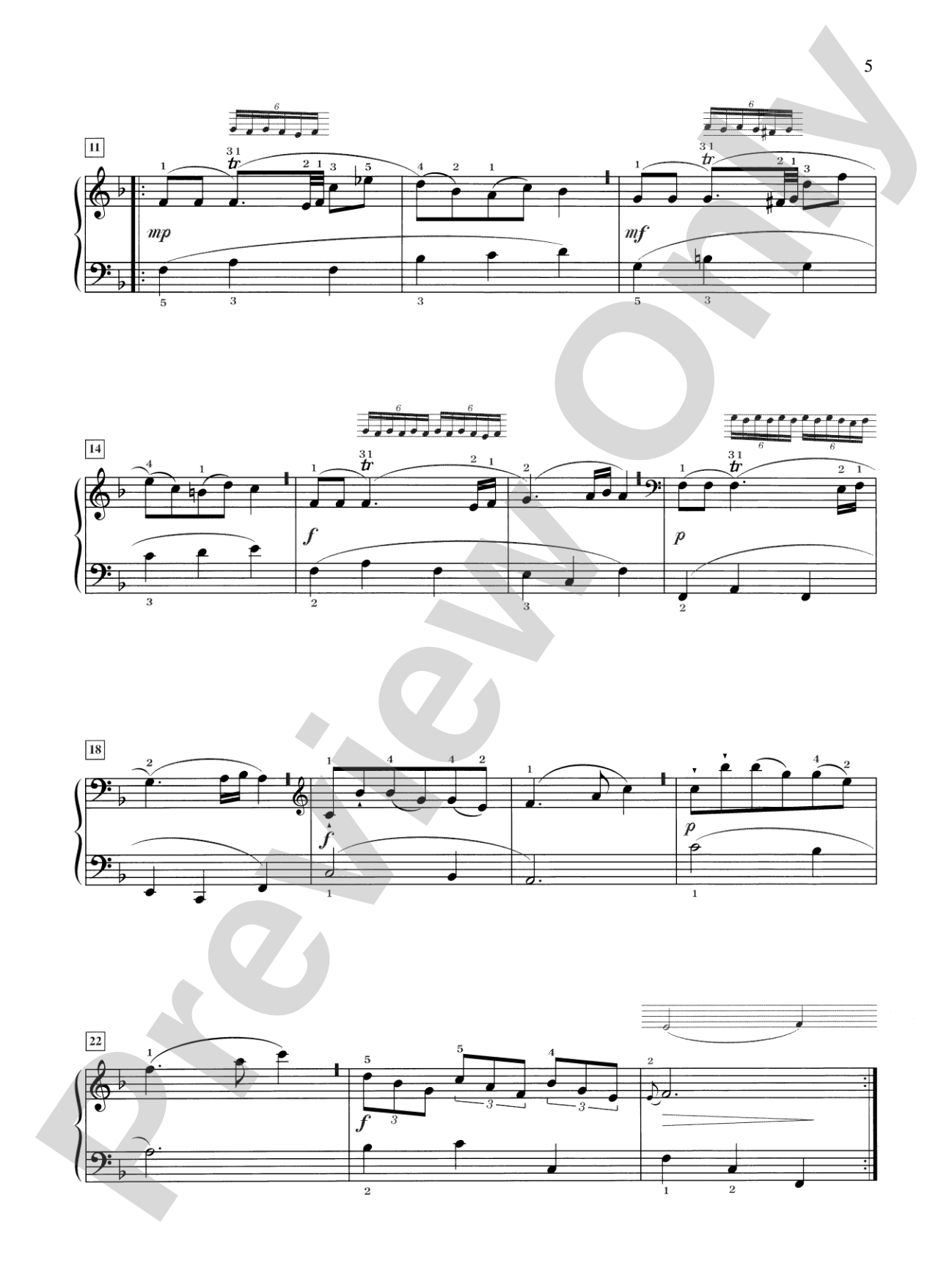
Thoroughly researched from original sources, this volume contains 12 works in dance and other traditional keyboard forms. Mozart's easiest works from the early- and mid-compositional periods are included, together with Dr. palmer's discussion of ornamentation, staccato and legato in the composer's music. Editorial suggestions appear in the score in gray print. This is an excellent collection that introduces intermediate pianists to the mature Classical style typified in Mozart's works. This title is available in MakeMusic Cloud. A Federation Festivals 2020-2024 selection.


Mozart: First Book for Pianists: Piano isn't in MakeMusic Cloud just yet...but it could be. Let us know you'd like to see it, and you'll help shape what comes next. In the meantime, start a free trial and dive into thousands of interactive titles your students can play along with today.
Request This Title
Tell us you want it.
Start Your Free Trial
Explore everything that's ready to play right now.
Sample Audio
No sample audio found.
Sample Video
No sample videos found.
Additional Details
Series:
Alfred Masterwork Edition
Publisher:
Alfred Music
Page Count:
24
SKU:
00-PB-0000870
More about this title
About the Composer: Wolfgang Amadeus Mozart
Wolfgang Amadeus Mozart (1756-1791) composed across every major genre of his era and left a catalog of over 600 works. His keyboard music spans from student pieces to virtuosic concertos, and his early compositions reveal how systematically he absorbed and refined the emerging Classical idiom. For pianists, Mozart's works serve as a direct connection to how composers thought about balance, phrasing, and ornament in the late 18th century.
Mozart's approach to keyboard writing emphasizes clarity of line and harmonic logic over mere technical display. His dance forms and shorter works remain essential teaching repertoire because they demand control of articulation and voicing rather than speed, making them ideal for building a mature interpretive foundation.
Why we love this
This collection distills Mozart's compositional voice into pieces that intermediate pianists can actually perform musically without years of preparation. Palmer's editorial notes on ornamentation and articulation choices are invaluable for students learning to navigate Classical style conventions, and the gray-print suggestions keep the score readable while offering concrete guidance.
What to expect
These pieces embody the elegance and balance that define the mature Classical style. Each work invites careful listening to harmonic progression and melodic phrasing, rewarding the pianist who attends to the inherent logic of Mozart's designs rather than surface difficulty.
Who it's for
Intermediate pianists ready to engage with Classical-era masterworks without requiring virtuosic technique. Students preparing for festivals or recitals benefit from the variety of forms and the editorial guidance on period style. Teachers seeking authentic, accessible Mozart repertoire for advancing students will find this collection efficient and pedagogically sound.
How to get the most out of it
- Observe the distinction between staccato and legato markings with precision; in Classical style, articulation shape carries as much phrase information as dynamics.
- Approach the ornaments (trills, turns, mordents) as integral to the melodic line, not embellishment applied afterward. Palmer's notes clarify Mozart's conventions.
- Balance both hands carefully in the dance forms; the accompaniment figures should support, not overshadow, the melody.
- Practice hands separately to lock in the rhythmic character of each form (minuet, allemande, rondo) before joining them.
How to use it
Program individual selections from this collection as recital items, pairing them with contemporary works or later Romantic pieces to illustrate stylistic evolution. The dances function well as shorter concert openers or closing pieces, and the variety of forms allows programmers to build a coherent Mozart set across a season.
Skills your students will build
- Articulation control in Classical style (distinguishing staccato from legato)
- Reading and executing ornaments (trills, turns, mordents) in period-appropriate style
- Voice leading and hand independence in two-part keyboard textures
- Rhythmic clarity and phrasing in dance forms (minuet, allemande, rondo)
- Harmonic awareness through listening to functional progressions