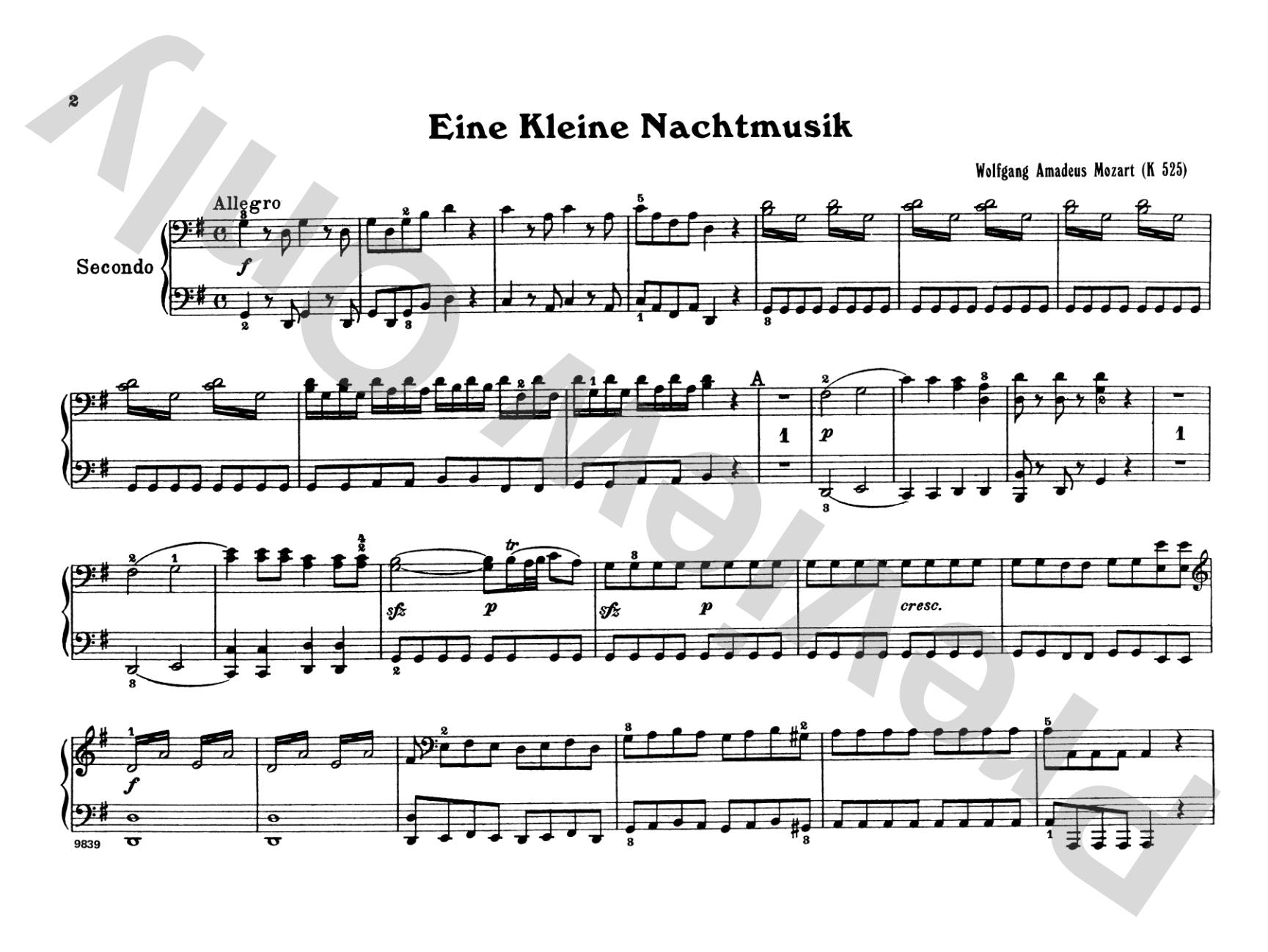
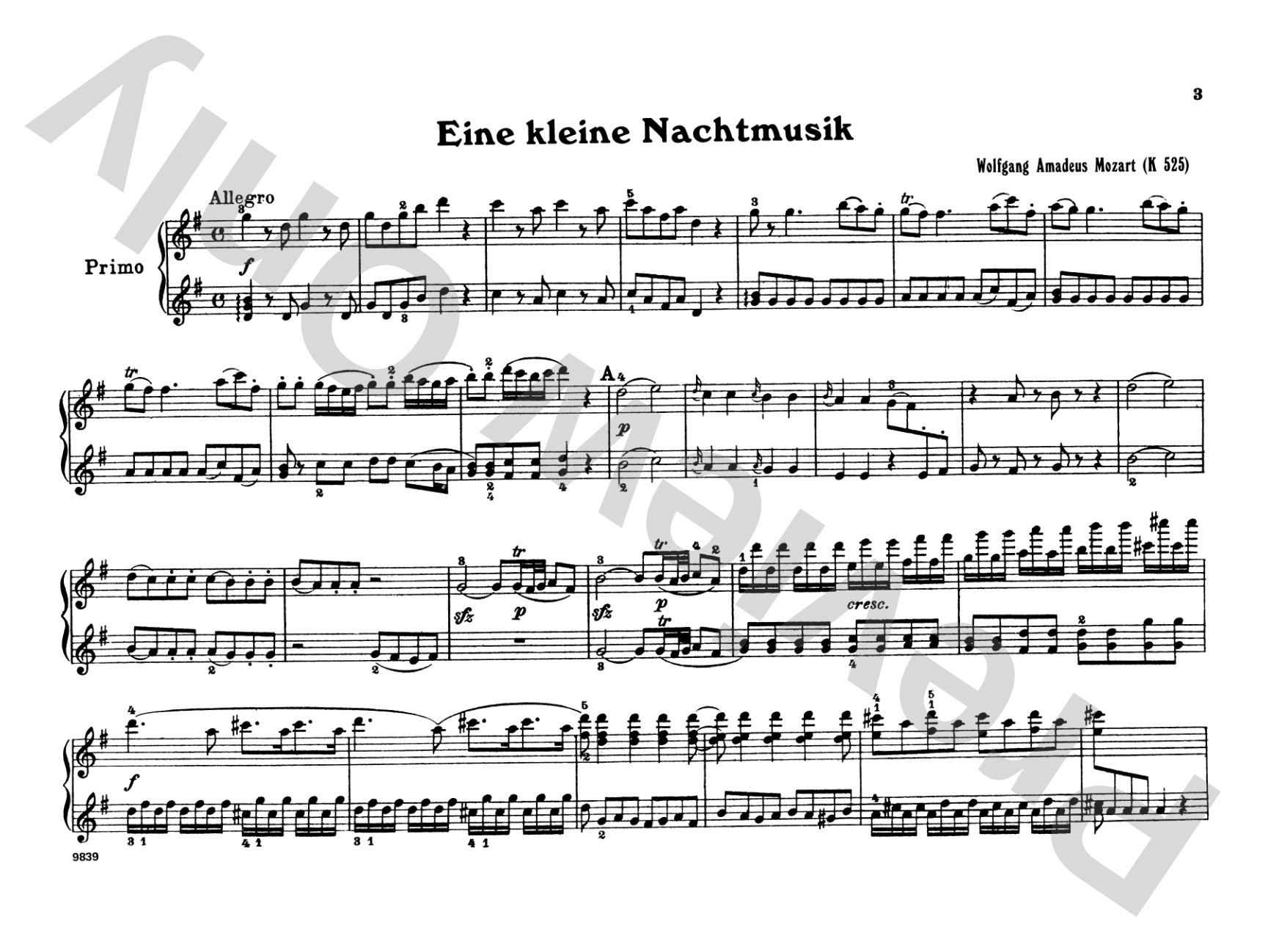
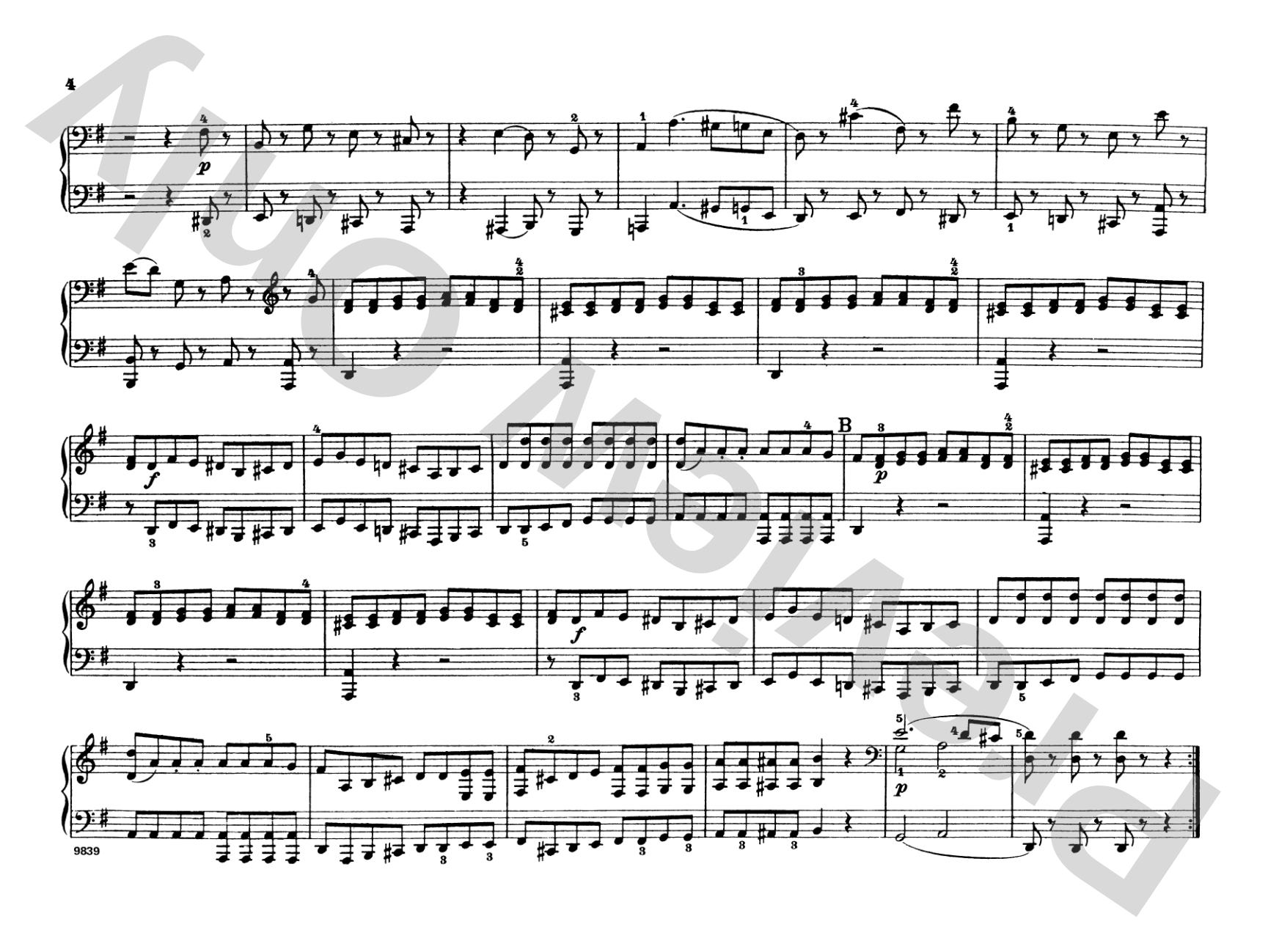
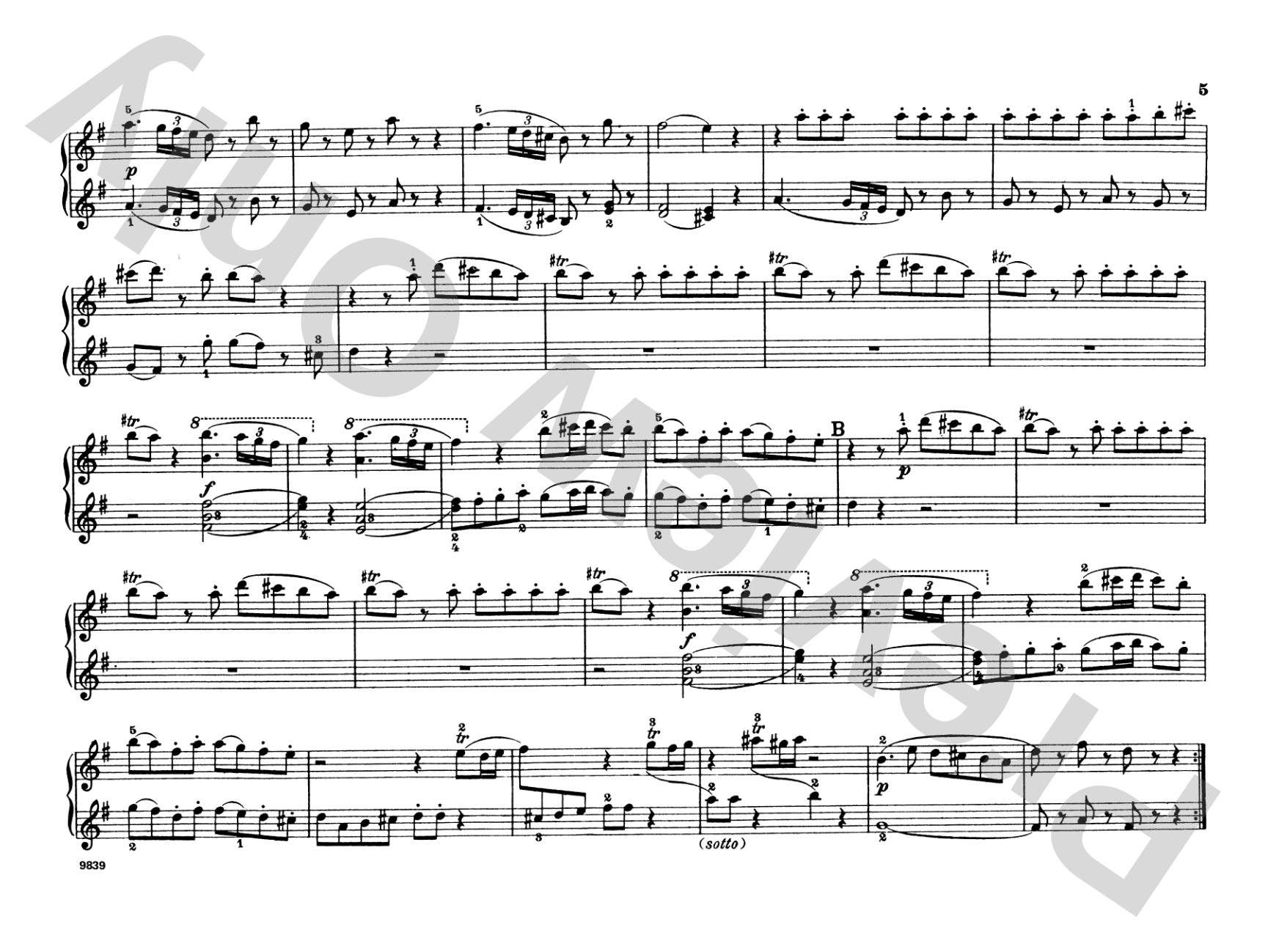
Mozart: Eine Kleine Nachtmusik (K.525) Sheet Music Preview

Mozart: Eine Kleine Nachtmusik (K.525)

By Wolfgang Amadeus Mozart

Item: 00-PC-0013298

Digital Download
$8.95
Description
Wolfgang Amadeus Mozart's popular serenade for strings arranged for one piano, four hands. The comb binding creates a lay-flat book that is perfect for study and performance.

Don't just read it, hear it, play along with it, and watch your students grow with it. In MakeMusic Cloud, Mozart: Eine Kleine Nachtmusik (K.525) comes alive with professional accompaniment, adjustable tempo, and built-in practice tools that turn solo practice into real progress.

Sample Audio
No sample audio found.
Sample Video
Additional Details
Series: Kalmus Edition
Publisher: Alfred Music
Page Count: 24
SKU: 00-PC-0013298

More about this title

About the Composer: Wolfgang Amadeus Mozart

Wolfgang Amadeus Mozart (1756–1791) was an Austrian composer whose prolific output across every major genre defined the Classical era. Born in Salzburg, he showed prodigious musical talent from childhood and spent his career composing symphonies, concertos, operas, chamber music, and sacred works that combined structural clarity with emotional depth and melodic brilliance.

Mozart's music remains central to music education because it demonstrates perfect balance between technical accessibility and artistic substance. His works reward careful study of form, phrasing, and orchestration, making them invaluable models for understanding how to write music that is both intellectually satisfying and immediately engaging.

Why we love this

Eine kleine Nachtmusik is one of the most recognizable works in the Classical canon, and this piano duet arrangement makes it accessible to pianists who want to perform it without assembling a string ensemble. The comb binding lies flat during rehearsal and performance, a practical detail that matters when you're coordinating two players at one keyboard.

What to expect

Light, graceful, and perfectly proportioned. The opening theme unfolds with an almost conversational elegance, alternating between the two players in a way that feels both orderly and animated. Even in quieter passages, there's a sense of refined sophistication that reflects Mozart's ability to achieve emotional depth through restraint and clarity.

Who it's for

This duet works well for intermediate to advanced piano students who want collaborative performance experience without the logistics of chamber ensemble rehearsal. It also suits teachers preparing for student recitals, piano pedagogues seeking standard repertoire showcases, and duet partners looking for Romantic-era masterworks that stay engaging across repeated hearings.

How to get the most out of it

  • Establish a clear pulse before you begin; the primo player often carries the melodic line, so the secondo player's steady accompaniment pattern anchors the tempo.
  • Balance the four hands by having the primo voice sit slightly forward in dynamic level, especially in the opening theme where the melody dominates.
  • Coordinate hand positions carefully where players cross or sit close together; rehearse transitions slowly to avoid collisions and maintain visual contact.
  • Shape phrases with gentle dynamic swells rather than sudden changes; Mozart's elegant style rewards understated musicianship and legato phrasing.

How to use it

Program this as a recital opener to establish an elegant tone, or pair it with other Classical-era duets to create a focused program segment. It also works well as a teaching demonstration of how string orchestration translates to the piano keyboard, especially if you're introducing students to arrangement principles or the history of the serenade genre.

Skills your students will build

  • Coordinating independent melodic and accompaniment lines between two players
  • Reading and executing Classical-era phrase shapes and articulation conventions
  • Maintaining rhythmic precision while managing hand independence across the keyboard
  • Balancing dynamic levels between primo and secondo voices
  • Sustaining musical line through repeated accompaniment patterns
  • Managing shared keyboard space and technical coordination with a duet partner

You May Also Like