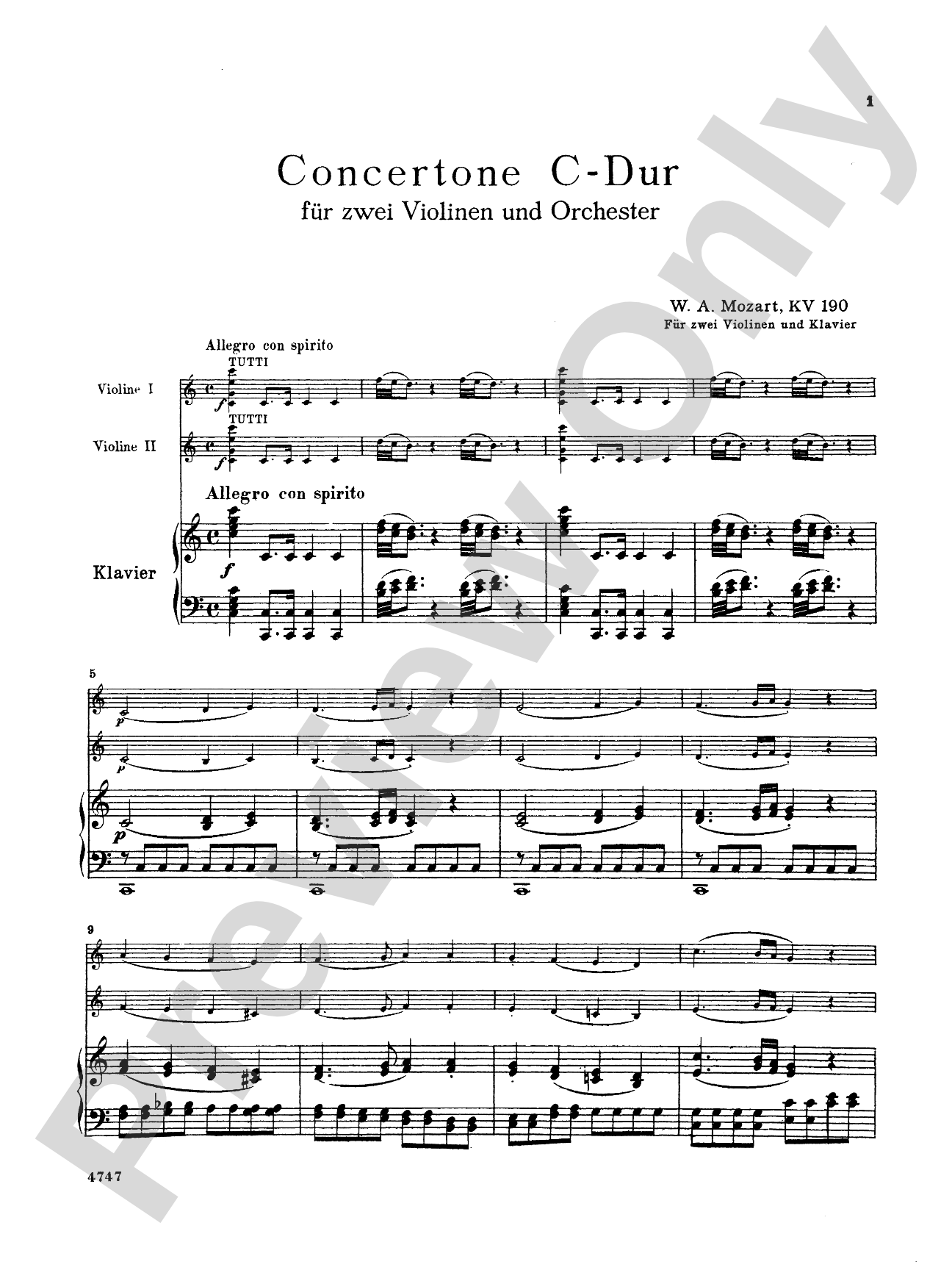
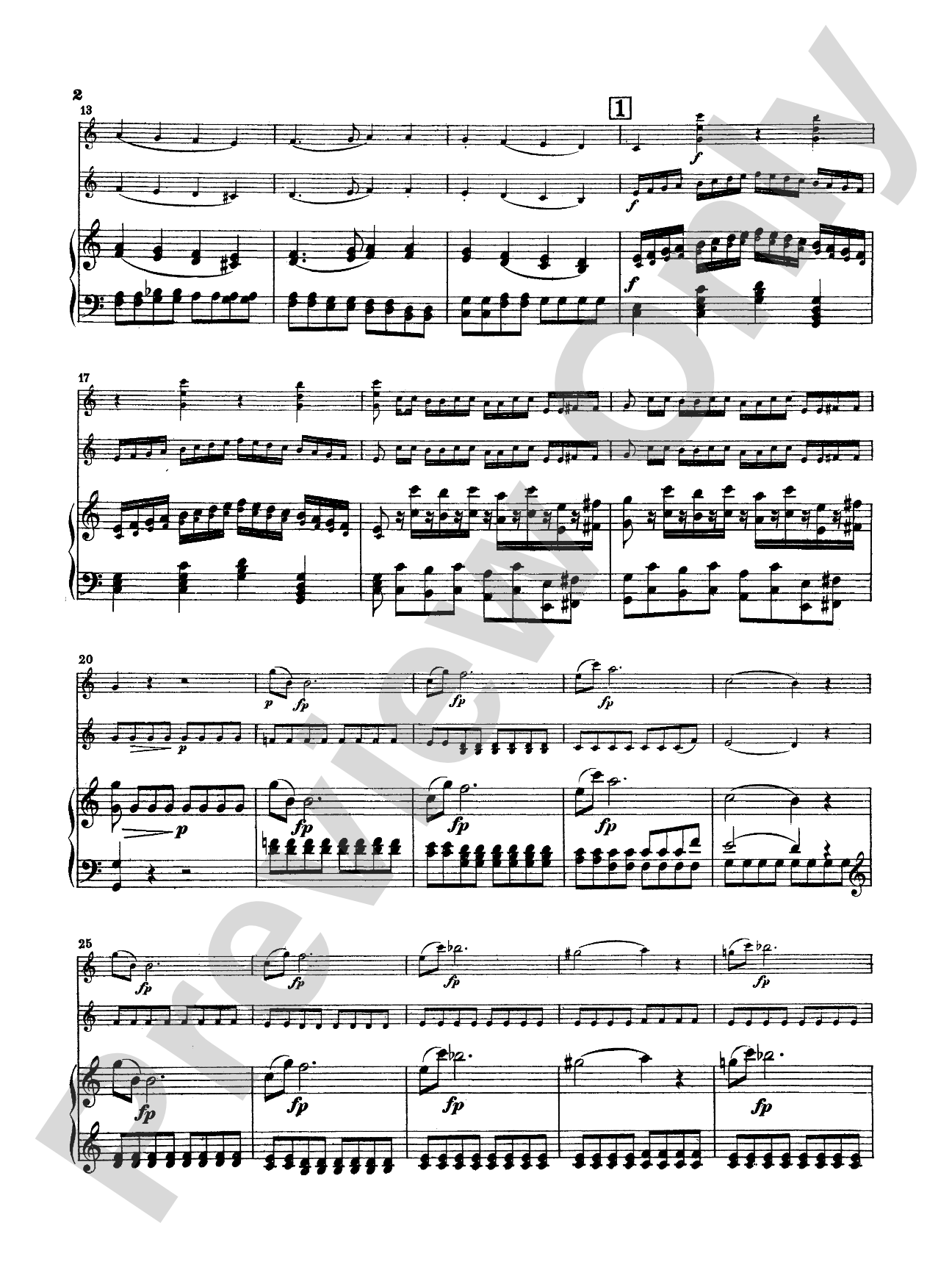
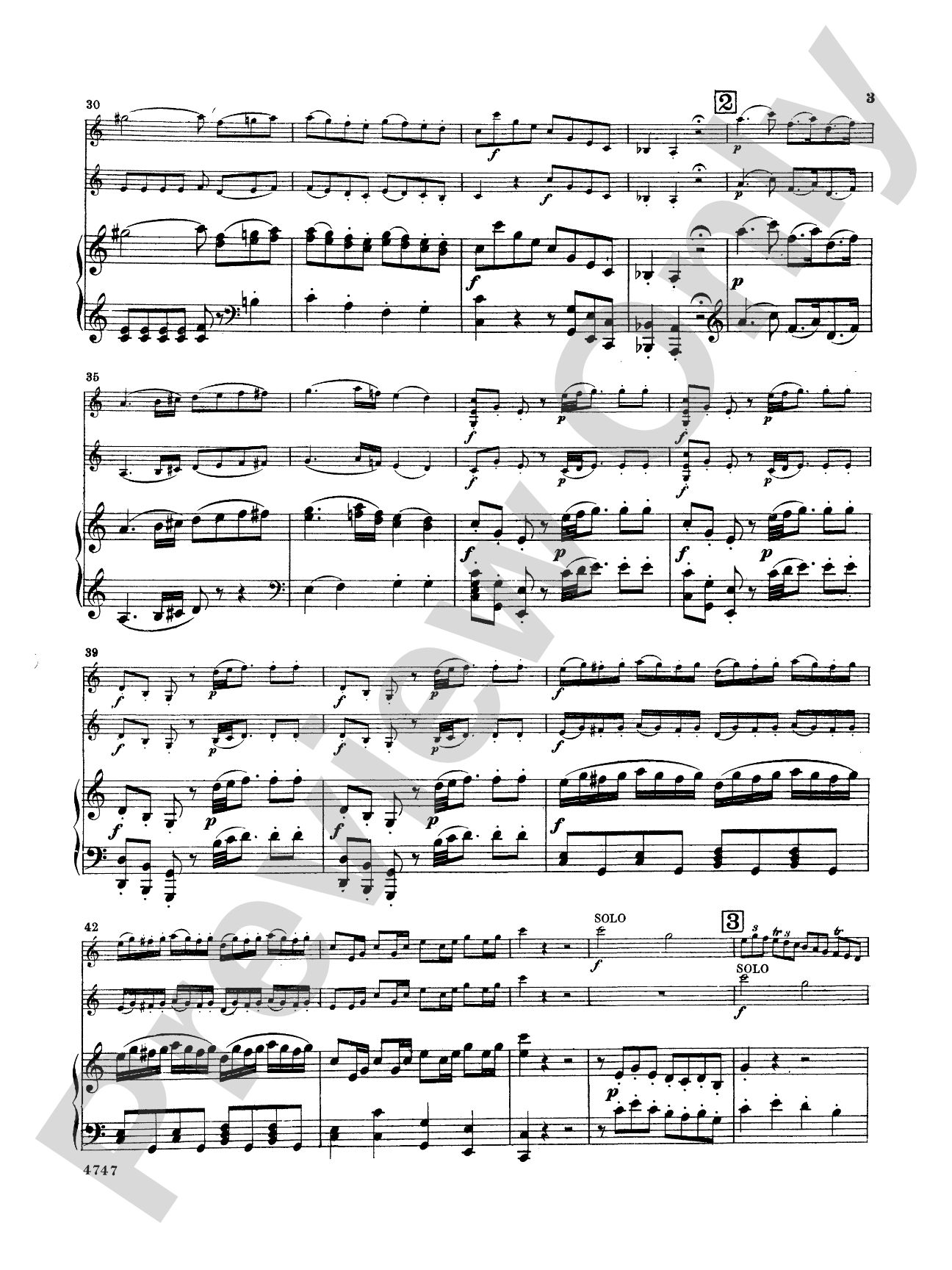
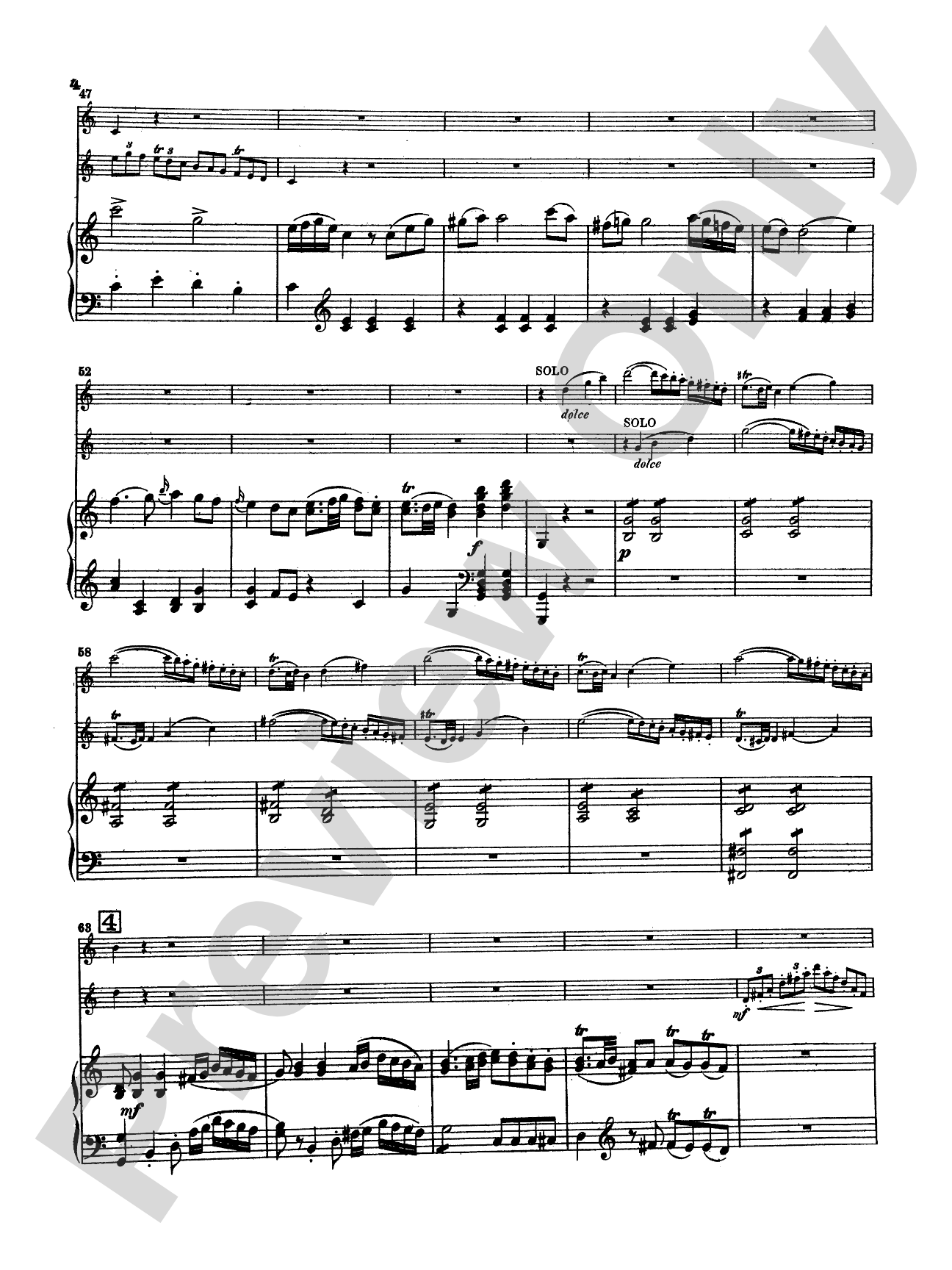
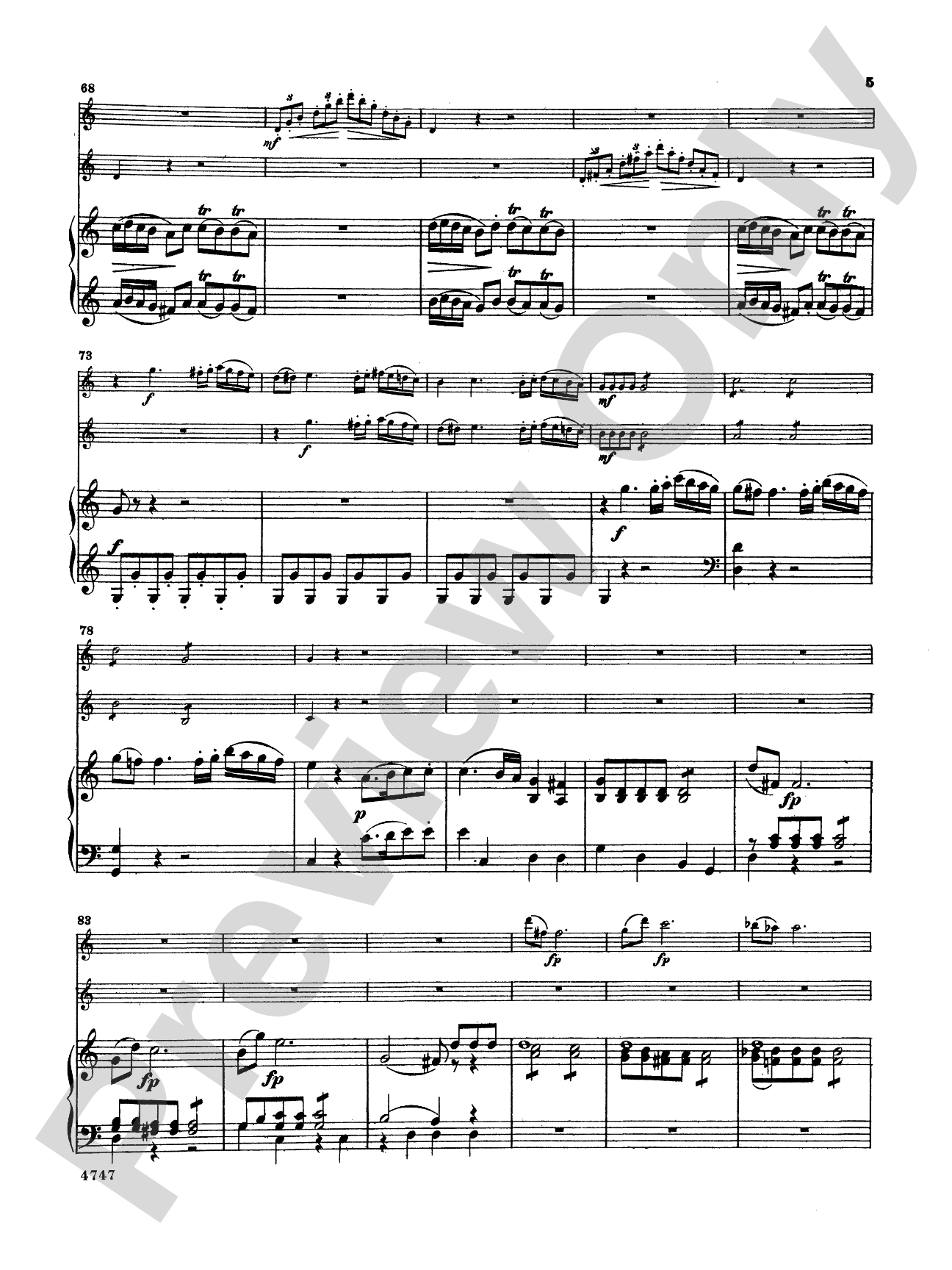
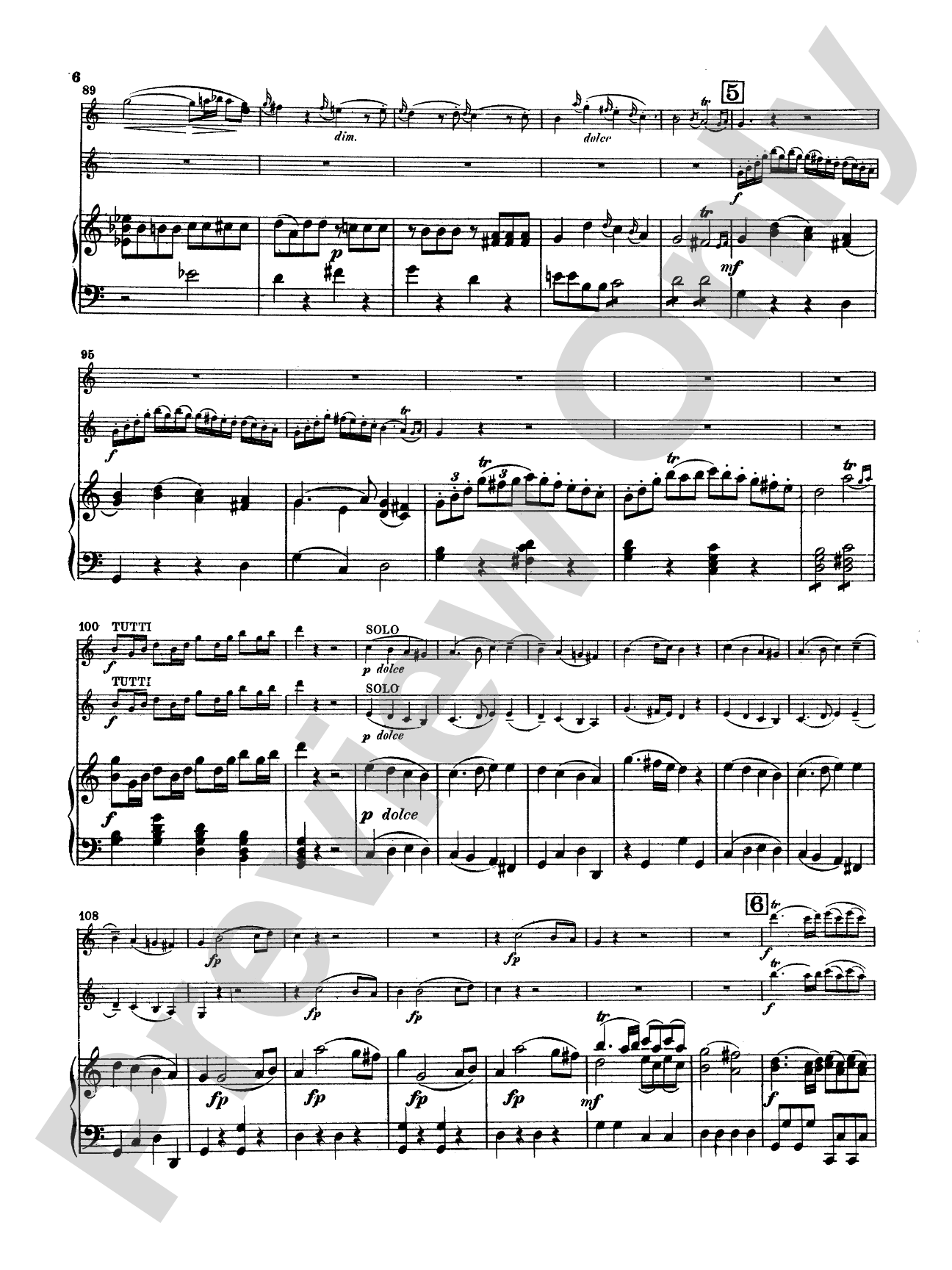
Mozart: Concertone in C Major Sheet Music Preview

Mozart: Concertone in C Major

By Wolfgang Amadeus Mozart

Item: 00-PC-0011040

Digital Download
$4.95
Description

Don't just read it, hear it, play along with it, and watch your students grow with it. In MakeMusic Cloud, Mozart: Concertone in C Major comes alive with professional accompaniment, adjustable tempo, and built-in practice tools that turn solo practice into real progress.

Sample Audio
No sample audio found.
Sample Video
Additional Details
Series: Kalmus Edition
Publisher: Alfred Music
Page Count: 52
SKU: 00-PC-0011040

More about this title

About the Composer: Wolfgang Amadeus Mozart

Wolfgang Amadeus Mozart (1756-1791) was an Austrian composer whose prolific output across every major genre shaped the Classical era. His instrumental works balance technical brilliance with lyrical beauty, and his violin compositions remain central to the repertoire for their melodic grace and structural clarity.

Mozart's concertante works for strings reveal his deep understanding of the instrument. The Concertone, with its dual violin writing, showcases his gift for weaving two equally important melodic lines while maintaining formal coherence and harmonic sophistication.

Why we love this

This work pairs the brilliance of Mozart's harmonic language with practical, rewarding writing for two soloists. Advanced violinists will find genuine musical substance here, not showpiece padding; the dialogue between the two violin parts is genuinely conversational, and the piano part supports without overwhelming.

What to expect

The Concertone unfolds with the elegant poise of a courtly conversation. Lyrical phrases bloom and intertwine, giving way to passages of sparkling passagework that never feel frantic or gratuitous. There's an inherent warmth to the harmonic language and a satisfying sense of structural inevitability.

Who it's for

This Concertone suits advanced high school violinists and college students ready to tackle substantive Classical chamber repertoire. It works equally well for private studio pairs preparing for competition or recital, or for chamber ensembles needing a showcase piece that demands real musicianship.

How to get the most out of it

  • Establish the character of each theme in the opening tutti. The piano should voice the exposition with clarity so both violinists hear exactly where to enter and what harmonic ground they're standing on.
  • Attend to the balance between the two violin parts. Neither should consistently sit beneath the other; the musical interest shifts between them, and this should be audible.
  • Use Mozart's natural phrase lengths as your guide for breathing and bow distribution. Phrases that feel complete often end at cadential moments; resist the urge to rebow mid-phrase.
  • Shape the virtuosic passage work by emphasizing first and third beats lightly. Sixteenth-note runs need air and buoyancy, not mechanical evenness.

How to use it

Program this as the anchor of a Mozart recital or chamber concert, paired with a single-violin piece to vary the texture. It also serves as a polished vehicle for introducing advanced students to the concertante principle, where multiple soloists share equal musical weight rather than one soloist dominating.

Skills your students will build

  • Ensemble coordination between two equal melodic lines
  • Stylistic phrasing in Classical form
  • Balance and blend in a chamber setting
  • Interpretation of Alberti bass accompaniment patterns
  • Navigation of key modulations typical of Classical architecture

You May Also Like