
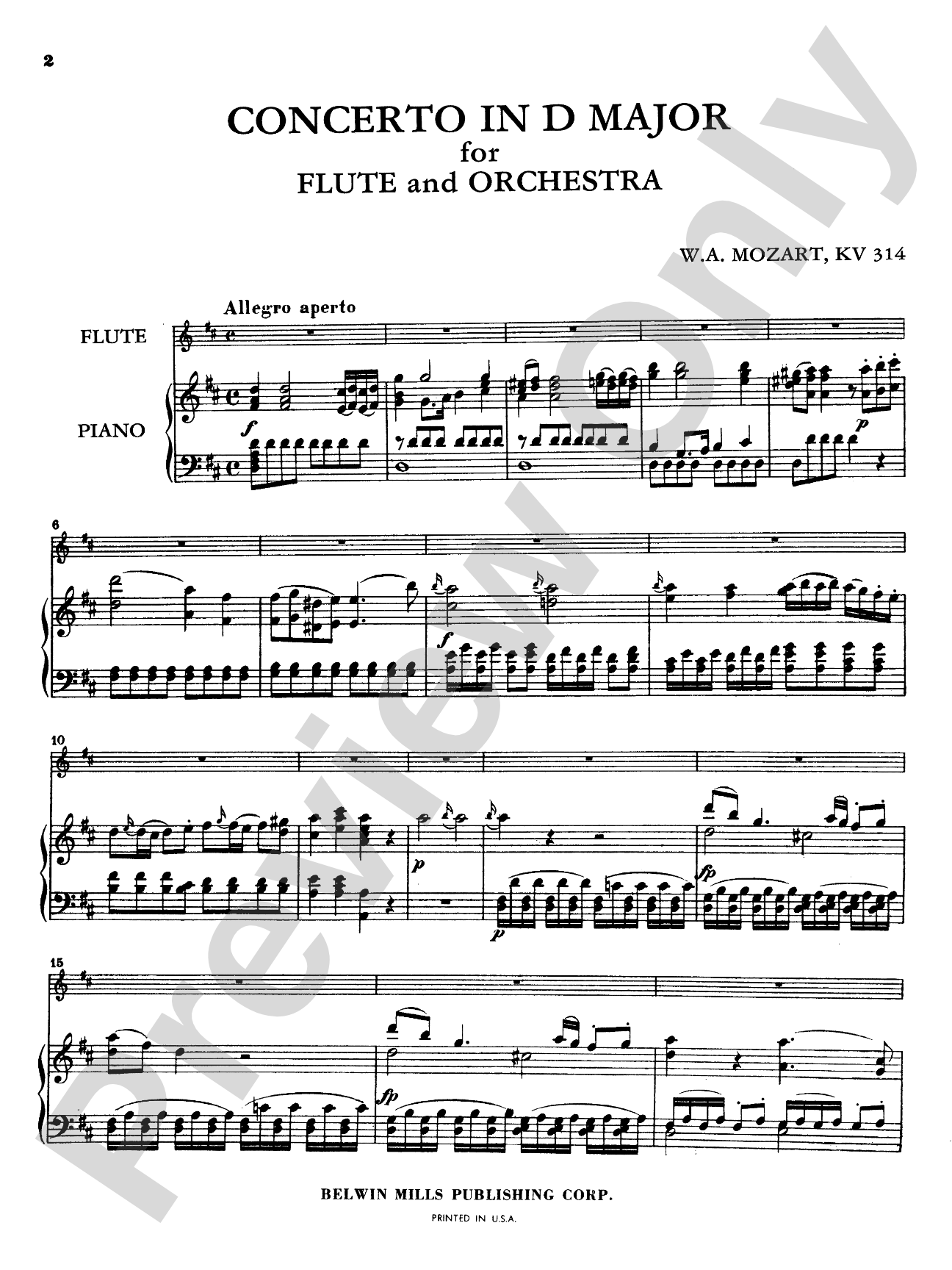
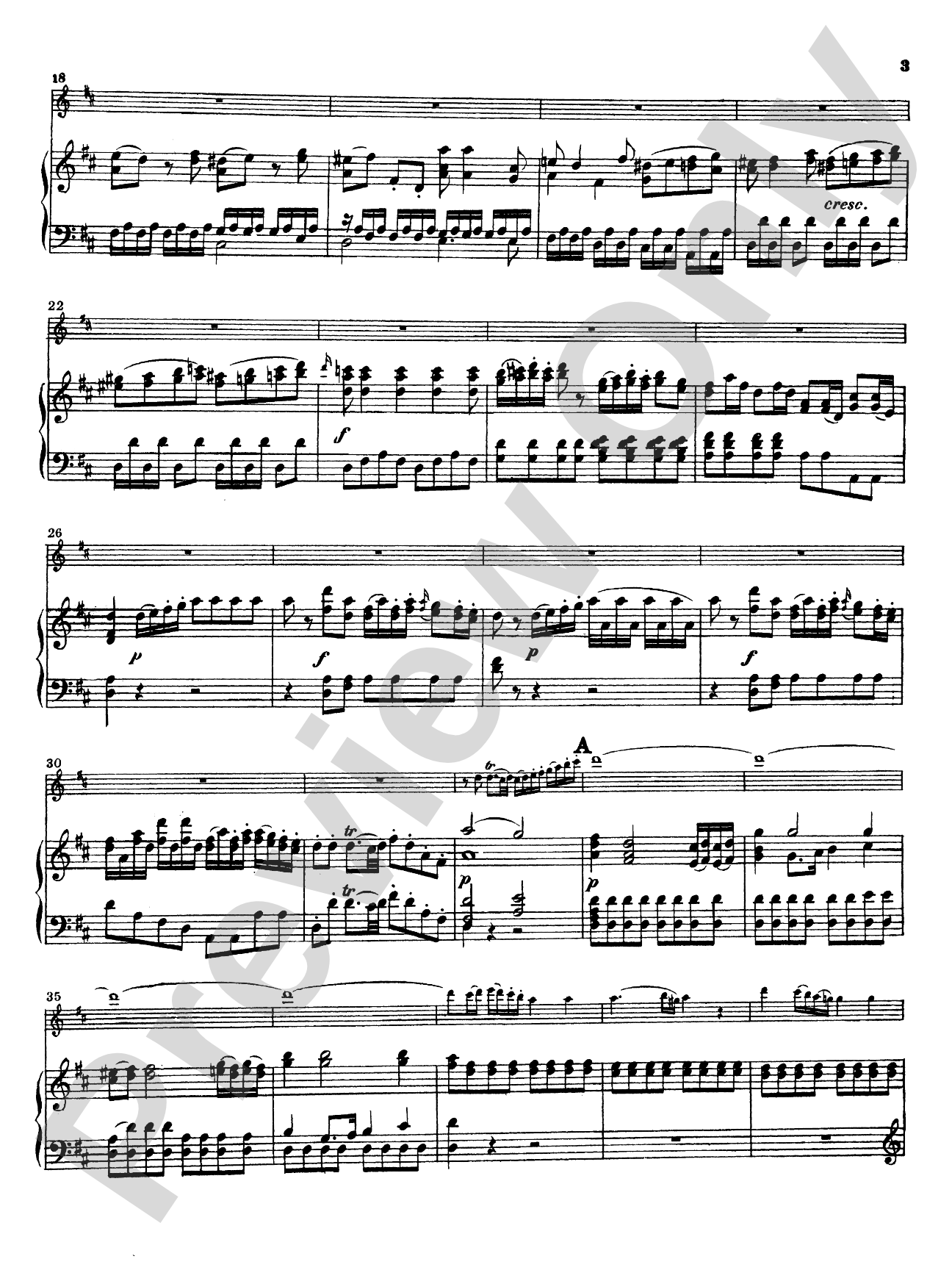
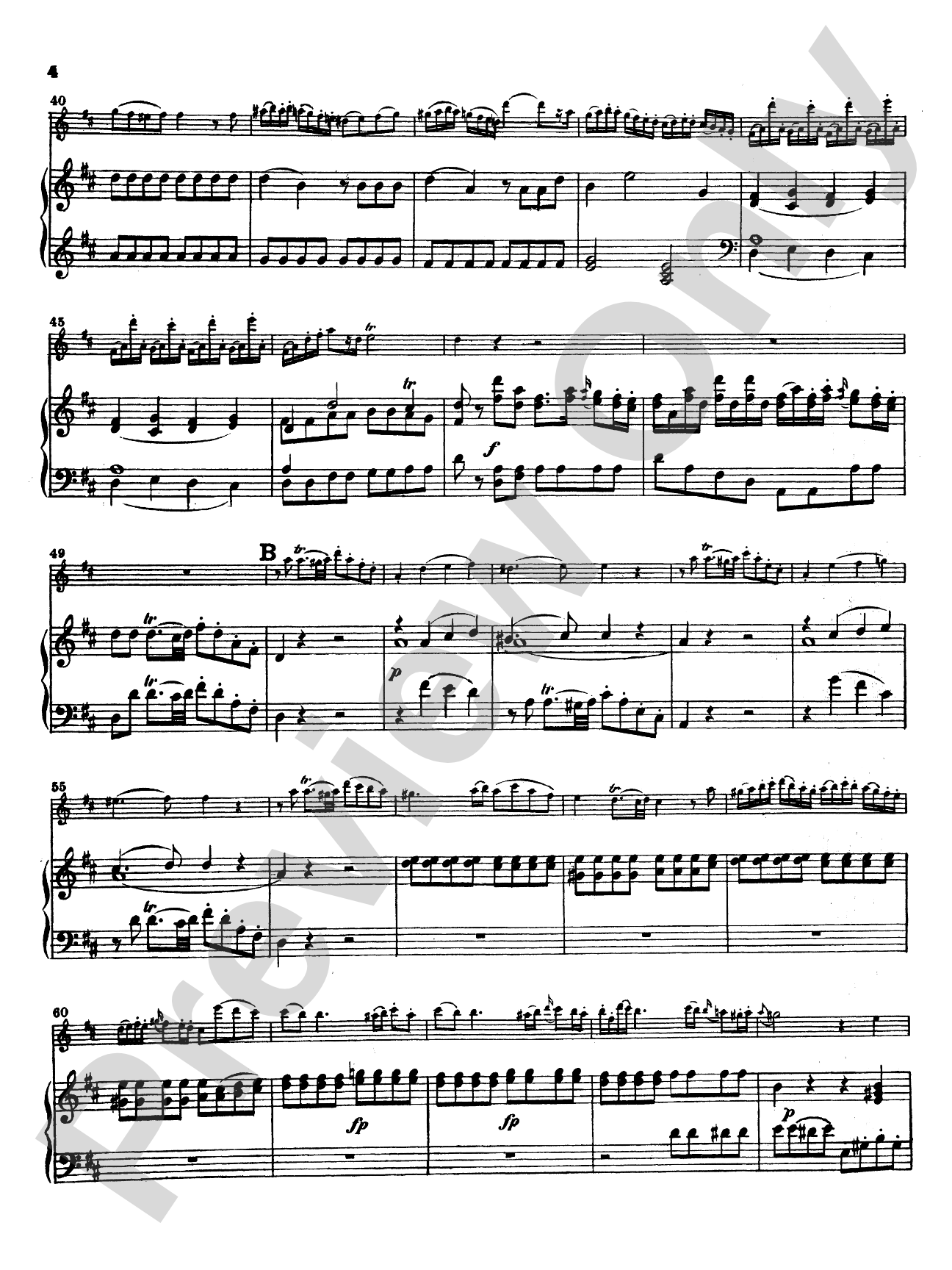
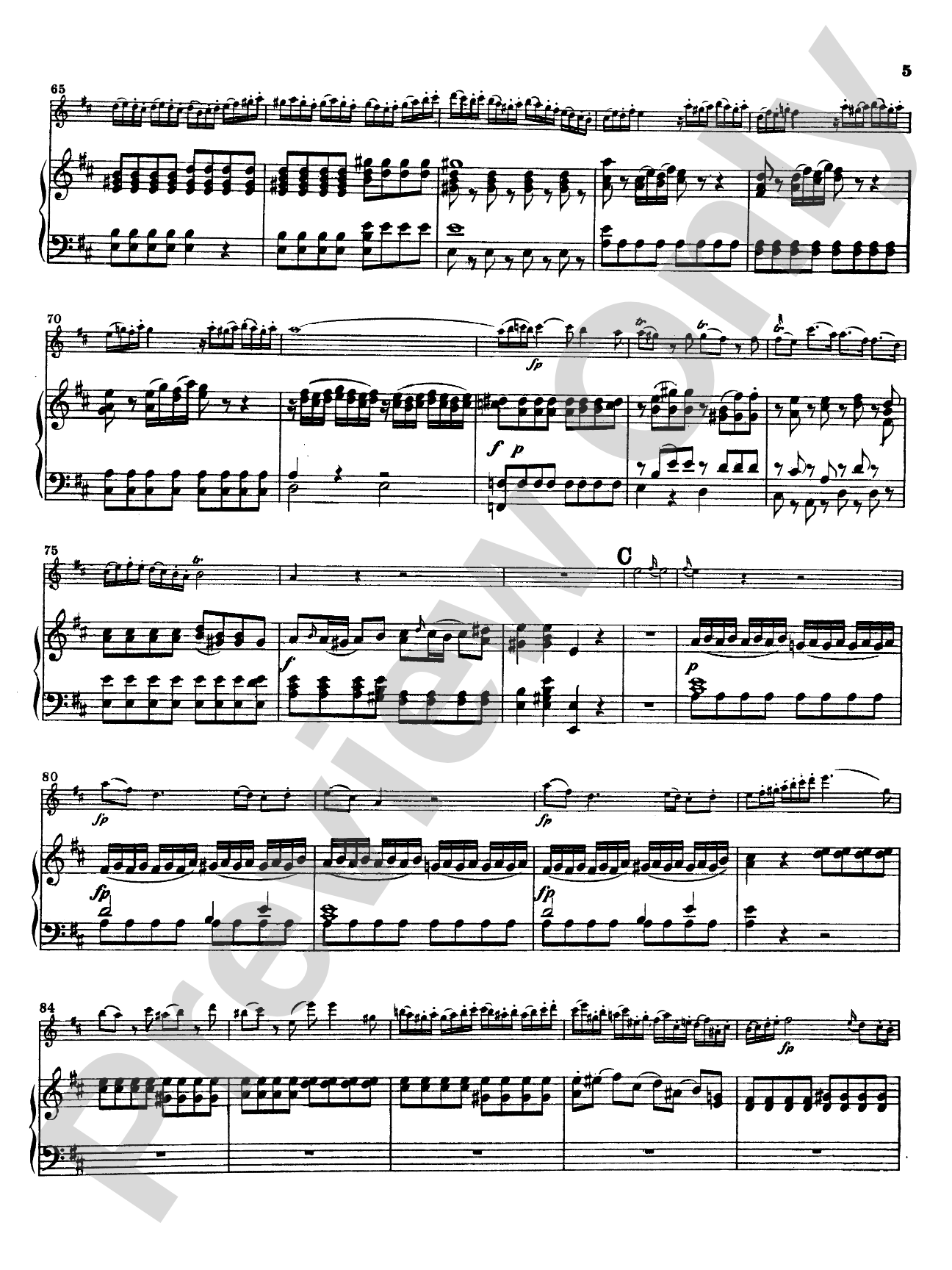

Mozart: Concerto No. 2 in D Major, K. 314
By Wolfgang Amadeus Mozart
Item: 00-PC-0008785
$8.95
Pickup currently not available
Description
Expertly arranged Flute Solo by Wolfgang Amadeus Mozart from the Kalmus Edition series. This is from the Classical era.


Don't just read it, hear it, play along with it, and watch your students grow with it. In MakeMusic Cloud, Mozart: Concerto No. 2 in D Major, K. 314 comes alive with professional accompaniment, adjustable tempo, and built-in practice tools that turn solo practice into real progress.
Open in the Player
Jump straight in and assign it today.
Start Your Free Trial
Open this title and explore the full library in minutes.
Sample Audio
No sample audio found.
Sample Video
No sample videos found.
Additional Details
Series:
Kalmus Edition
Publisher:
Alfred Music
Page Count:
32
SKU:
00-PC-0008785
More about this title
About the Composer: Wolfgang Amadeus Mozart
Wolfgang Amadeus Mozart (1756–1791) was an Austrian composer whose prolific output across every major genre shaped the trajectory of Western classical music. His instrumental works, particularly his concertos for wind instruments, remain cornerstones of the solo repertoire and continue to define what performers expect from music written for their instruments.
Mozart's wind concertos were composed primarily during his years in Salzburg and Vienna, often for specific performers he knew personally. These works showcase his gift for lyrical melody, transparent orchestration, and writing that sits naturally under the fingers while demanding real musical sophistication from the soloist. His influence on flute pedagogy and performance practice runs deep; teachers return to his Concerto No. 2 in D Major again and again because it rewards careful attention to phrasing, tone control, and musical storytelling.
Why we love this
This concerto strikes the ideal balance between accessibility and artistry for advancing flutists. The D major key sits comfortably under the fingers, the passagework is idiomatic without being gratuitous, and the three-movement structure offers enough structural variety to keep both player and audience engaged. It's a natural choice for competitions and festivals because it allows genuine musicianship to emerge rather than obscuring it beneath technical difficulty.
What to expect
Graceful and conversational, with the character of a courtly dance. The D major tonality brings brightness and optimism, while the Andante reveals an intimate, song-like quality that demands expressive restraint. Fast outer movements sparkle with figuration that feels less like display and more like the composer thinking aloud.
Who it's for
Advanced intermediate to early advanced flutists seeking repertoire that sounds substantial without requiring virtuosic technique. This work appeals to students entering high school solos competitions, adults working toward recital performances, and players looking to deepen their understanding of Classical form and style.
How to get the most out of it
- Shape the long melodic lines with attention to harmonic rhythm rather than simply sustaining from note to note; Mozart's accompanying voices often move beneath your melody, and acknowledging them adds dimension to your phrasing.
- Approach the fast passagework with clarity and independence between the hands; resist the temptation to bind notes together rhythmically, as the Classical style demands articulation that defines the line.
- Find the sweet spot in your tone for the Andante cantabile movement by focusing on breath support rather than physical tension; this movement exposes every wavering note, so consistency matters more than volume.
- Listen carefully to how the accompaniment enters and responds; your sense of ensemble awareness will elevate the performance from a solo vehicle to a genuine conversation between instruments.
How to use it
Program this as a centerpiece in a solo recital, where its three-movement arc provides a satisfying arc without overstaying its welcome. It pairs naturally with smaller Baroque works (Telemann, Quantz) on the first half and Romantic-era character pieces on the second, allowing audiences to hear how the Classical style sits between these two musical worlds.
Skills your students will build
- Shaping Classical phrase structures across multi-measure spans
- Maintaining technical clarity in rapid scalar and figural passages
- Balancing song-like lyricism with harmonic awareness
- Reading and performing idiomatic flute writing from the 18th century
- Sustaining consistent tone quality over varying dynamic and technical demands