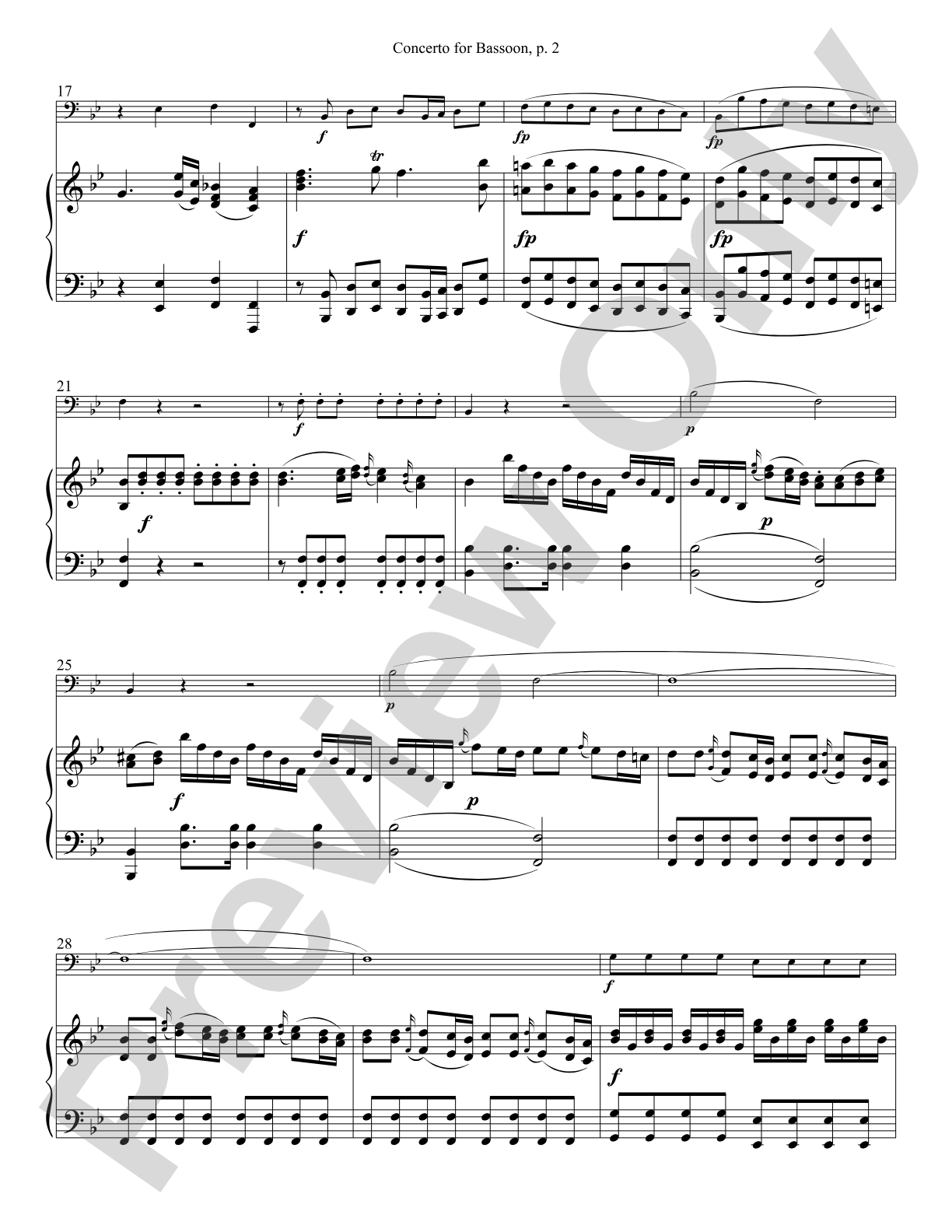
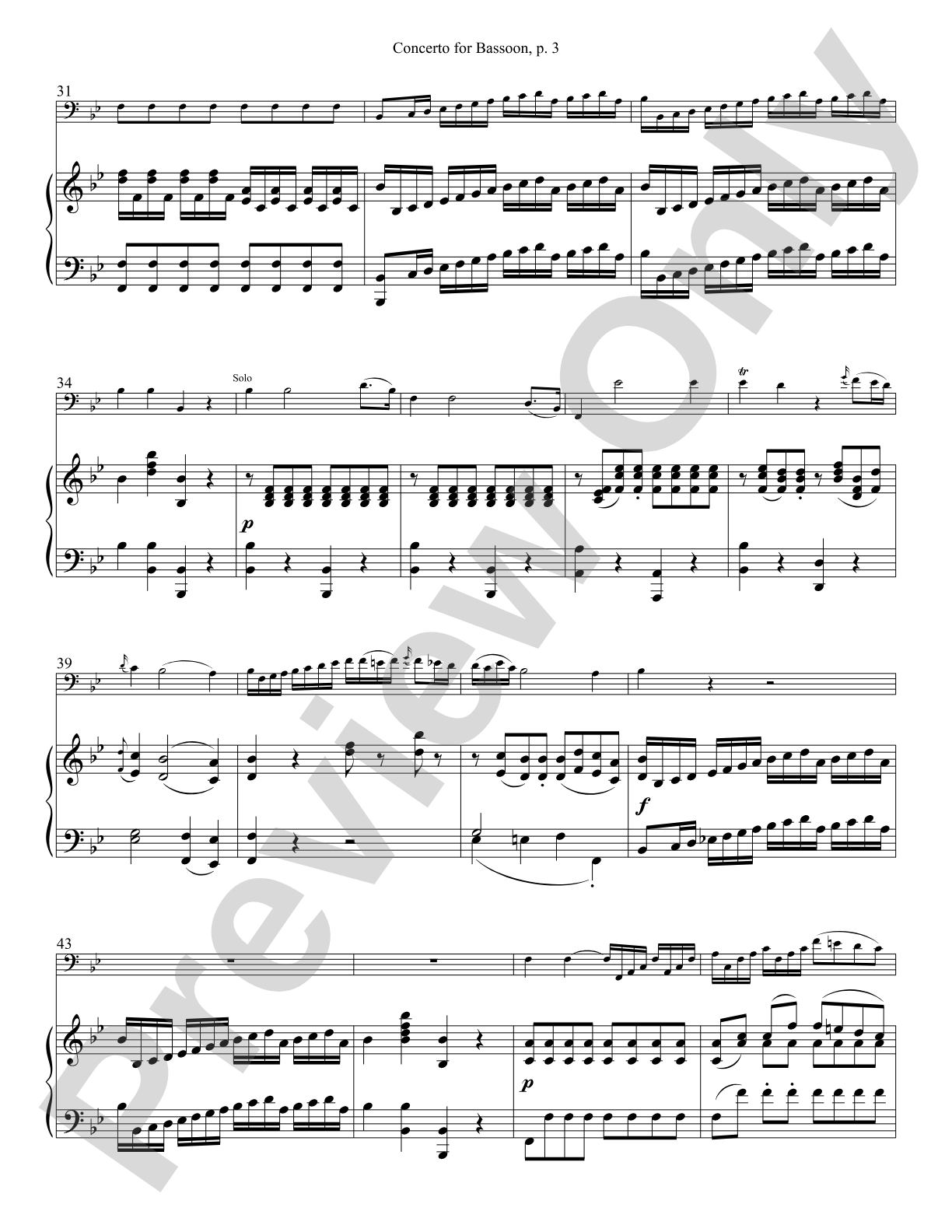
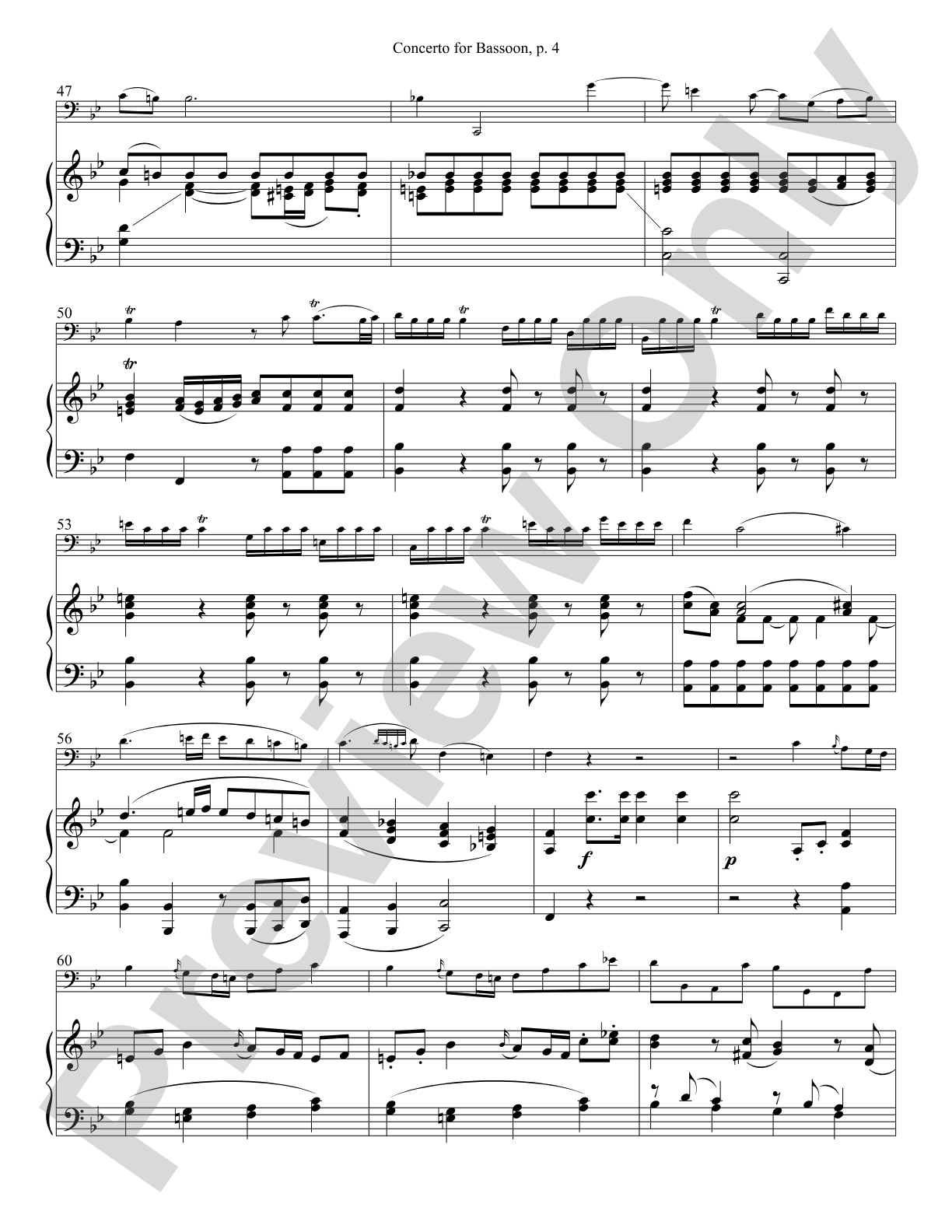
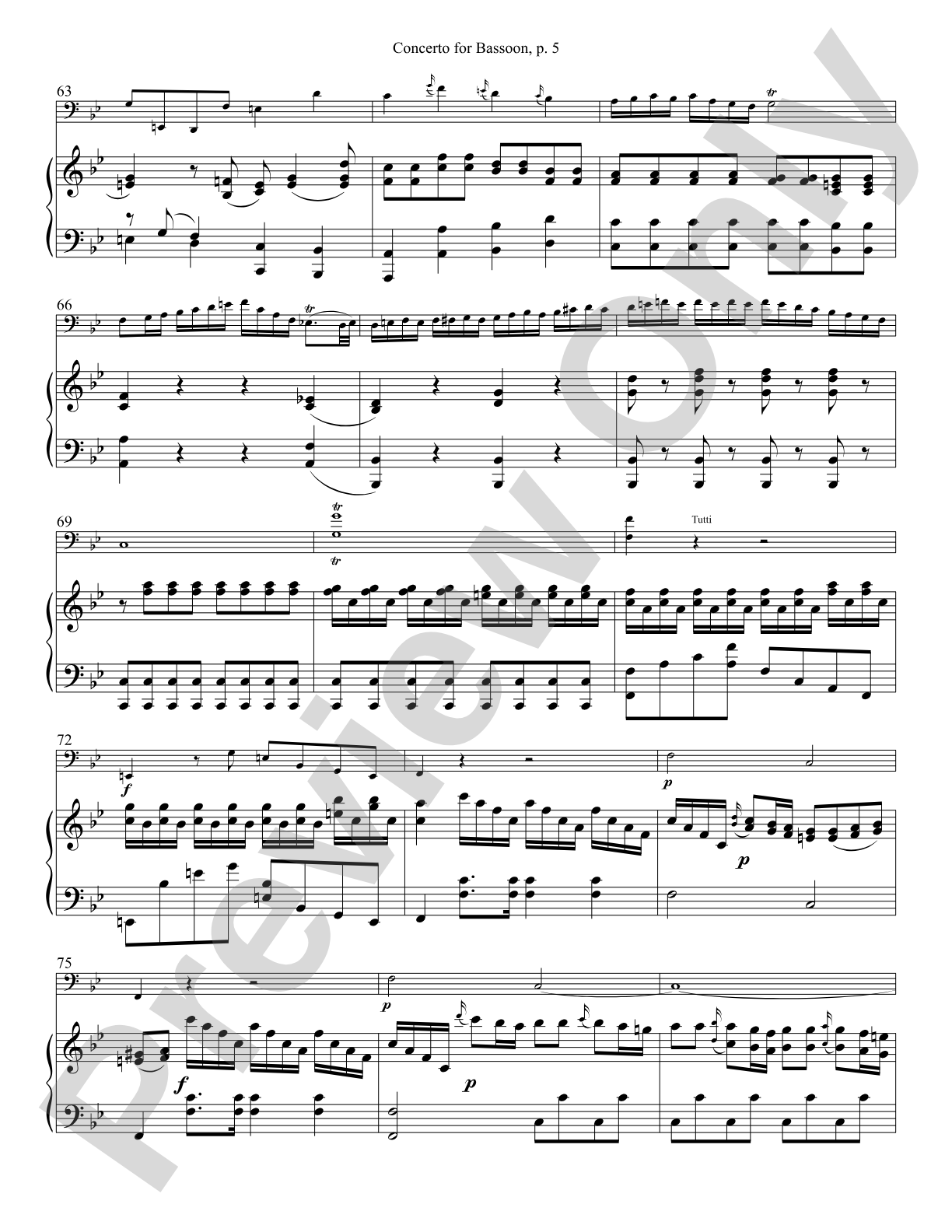
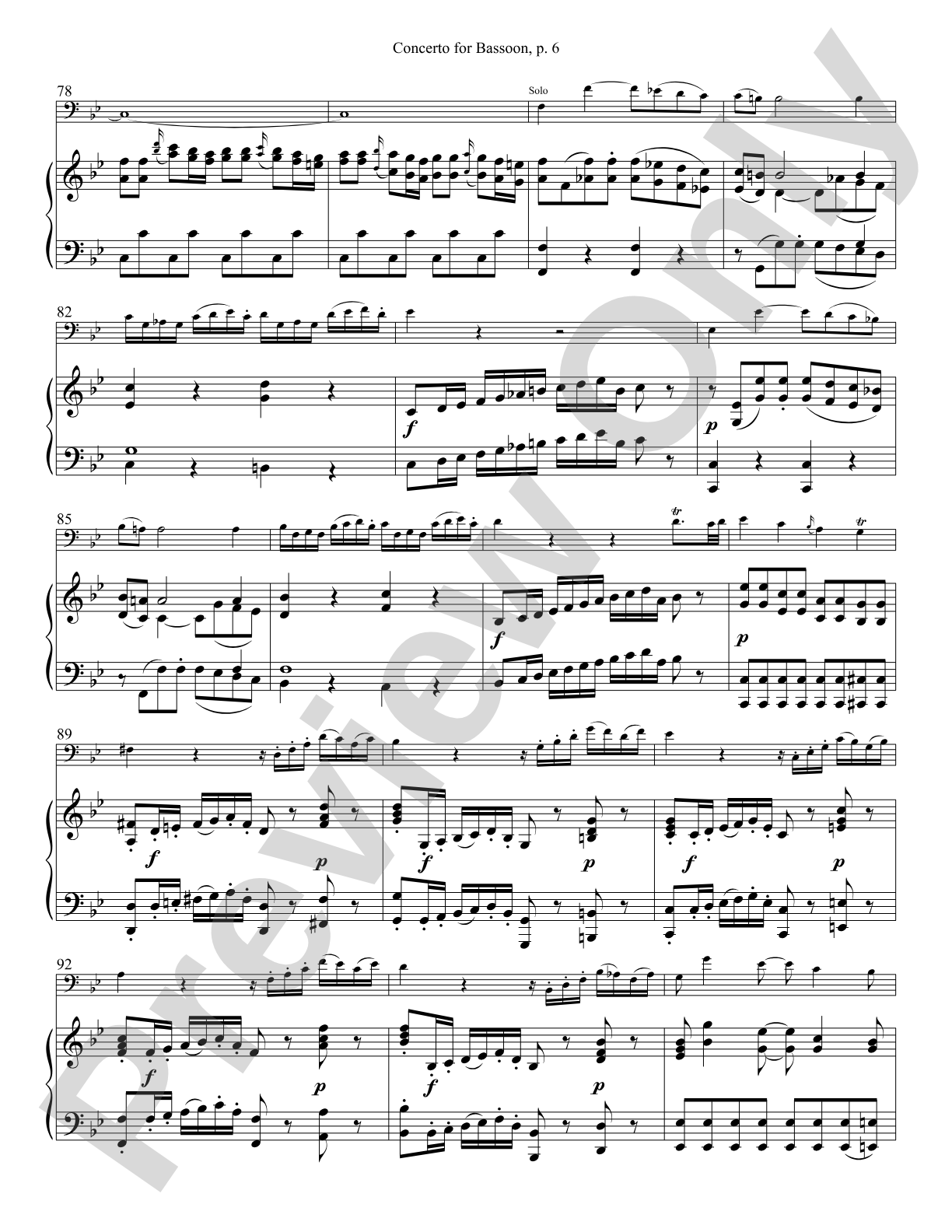
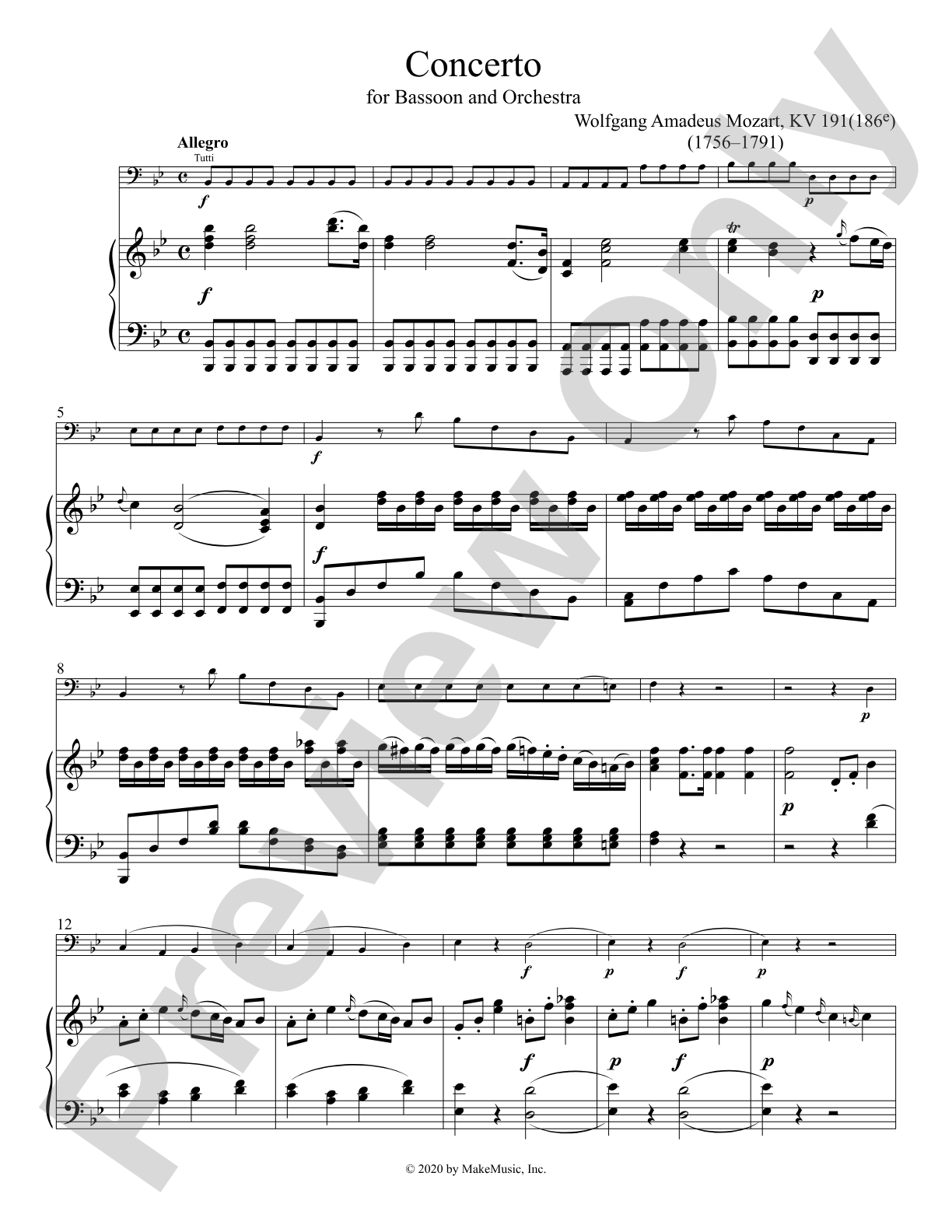
Mozart Concerto in B-flat Major for Bassoon and Piano KV 191 (186E) Sheet Music Preview

Mozart Concerto in B-flat Major for Bassoon and Piano KV 191 (186E): Solo & Small Ensemble

Wolfgang Amadeus Mozart

Item: 00-PS-0016145

Digital Download
$5.99
Description
This Classical-era concerto is a staple of the bassoon repertoire. This newly edited MakeMusic edition includes parts for solo bassoon and piano accompaniment.

Mozart Concerto in B-flat Major for Bassoon and Piano KV 191 (186E): Solo & Small Ensemble isn't in MakeMusic Cloud just yet...but it could be. Let us know you'd like to see it, and you'll help shape what comes next. In the meantime, start a free trial and dive into thousands of interactive titles your students can play along with today.

Sample Audio
No sample audio found.
Sample Video
Additional Details
SKU: 00-PS-0016145

More about this title

About the Composer: Wolfgang Amadeus Mozart

Wolfgang Amadeus Mozart (1756-1791) composed across every major genre of his era, from symphonies and concertos to operas and chamber music. His output shaped the Classical style itself, and his concertos remain touchstones for performers seeking clarity, elegance, and architectural balance. Mozart wrote the Bassoon Concerto in B-flat Major late in his career, crafting a work that balances technical brilliance with lyrical warmth, cementing the bassoon's place as a solo instrument worthy of the concert stage.

For music education, Mozart's concertos model the discipline of form and the art of writing idiomatically for each instrument. Teachers and students return to his works repeatedly because they reward both rigorous study and genuine musical expression. This concerto continues to serve as a gateway to advanced Classical repertoire for serious bassoon students.

Why we love this

This concerto stands apart because Mozart avoids the bass-register stereotypes that plagued earlier bassoon writing. Instead, he crafts lyrical, soaring lines that sit comfortably across the bassoon's range, giving soloists material that feels genuinely gratifying to perform. The work remains a standard on contest and festival programs, and its three-movement structure provides the ideal testing ground for students ready to master Classical form at a high level.

What to expect

Mozart writes with transparency and grace. The opening theme arrives with effortless elegance, and even the rapid passagework carries a sense of forward motion rather than strain. The middle movement offers a moment of intimate reflection before the finale returns with charm and witty rhythmic play, making this a rewarding journey from start to finish.

Who it's for

Advanced bassoon students preparing for college auditions, competitions, or recitals will find this concerto essential. Solo performers and musicians in chamber or educational settings seeking authoritative, newly edited Classical repertoire can rely on this edition for clarity and musical integrity.

How to get the most out of it

  • Shape phrases with the piano accompaniment as a collaborative partner rather than background support; Mozart's scoring invites the pianist to echo and amplify your musical ideas, so listen closely to those echoes and respond to them
  • Balance technical clarity in passages with consistent tone quality; the runs and articulated figures are most effective when they emerge from a warm, secure foundation rather than feeling rushed or thin
  • Approach ornamentation as a means of expression, not mere decoration; trills and turns should feel intentional and connected to the phrase arc, particularly in the slower second movement

How to use it

Feature this concerto as the centerpiece of a solo recital or as a standalone concert offering that showcases the soloist's range and maturity. It pairs naturally with other Classical woodwind concertos or chamber works by Mozart and his contemporaries, creating a coherent program that spans the breadth of the era's refinement.

Skills your students will build

  • Navigating three-movement Classical concerto form (fast-slow-fast)
  • Sustaining lyrical phrasing across technical passages
  • Ensemble coordination between soloist and piano accompaniment
  • Stylistically informed articulation and ornamentation in the Classical era
  • Breath management across extended melodic lines without losing musicality

You May Also Like