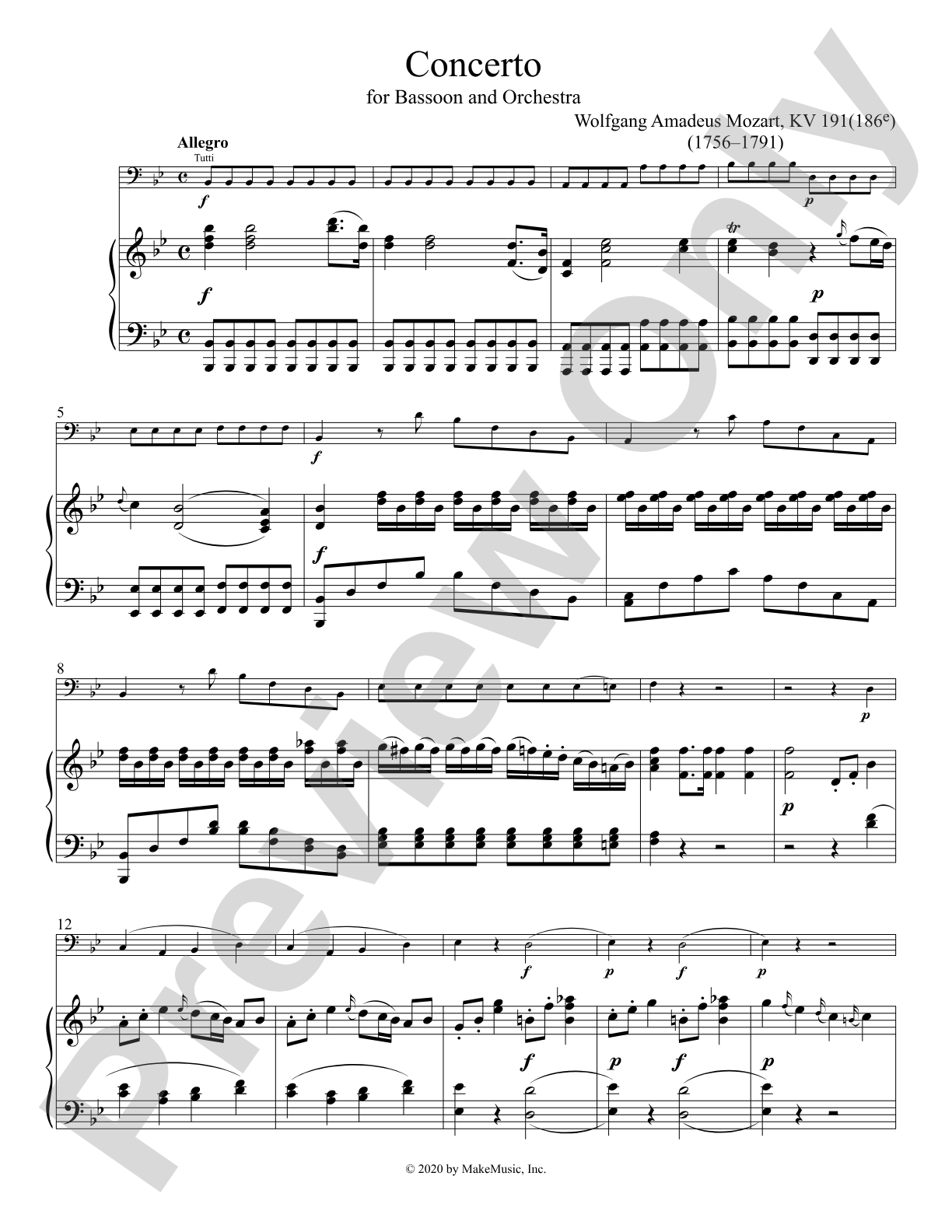
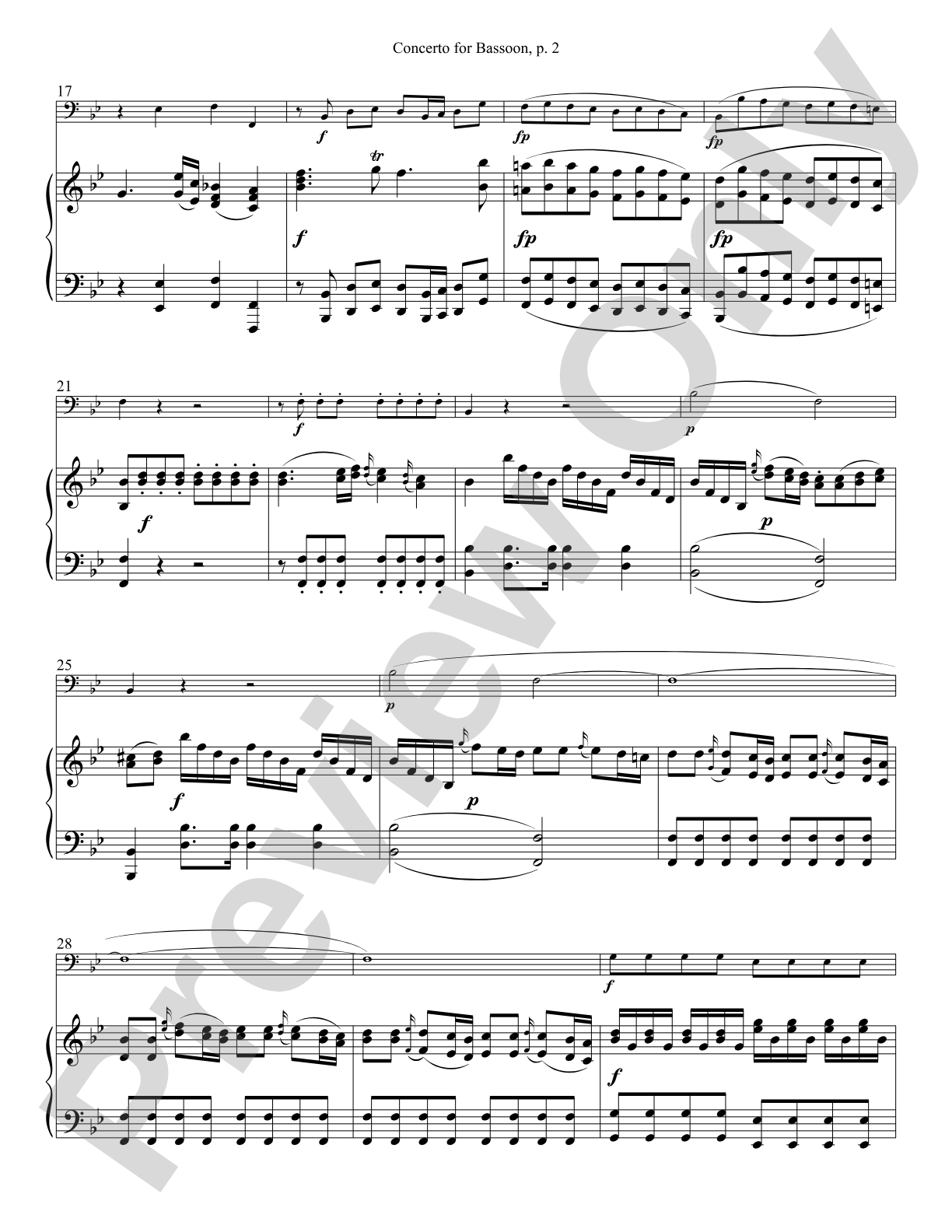
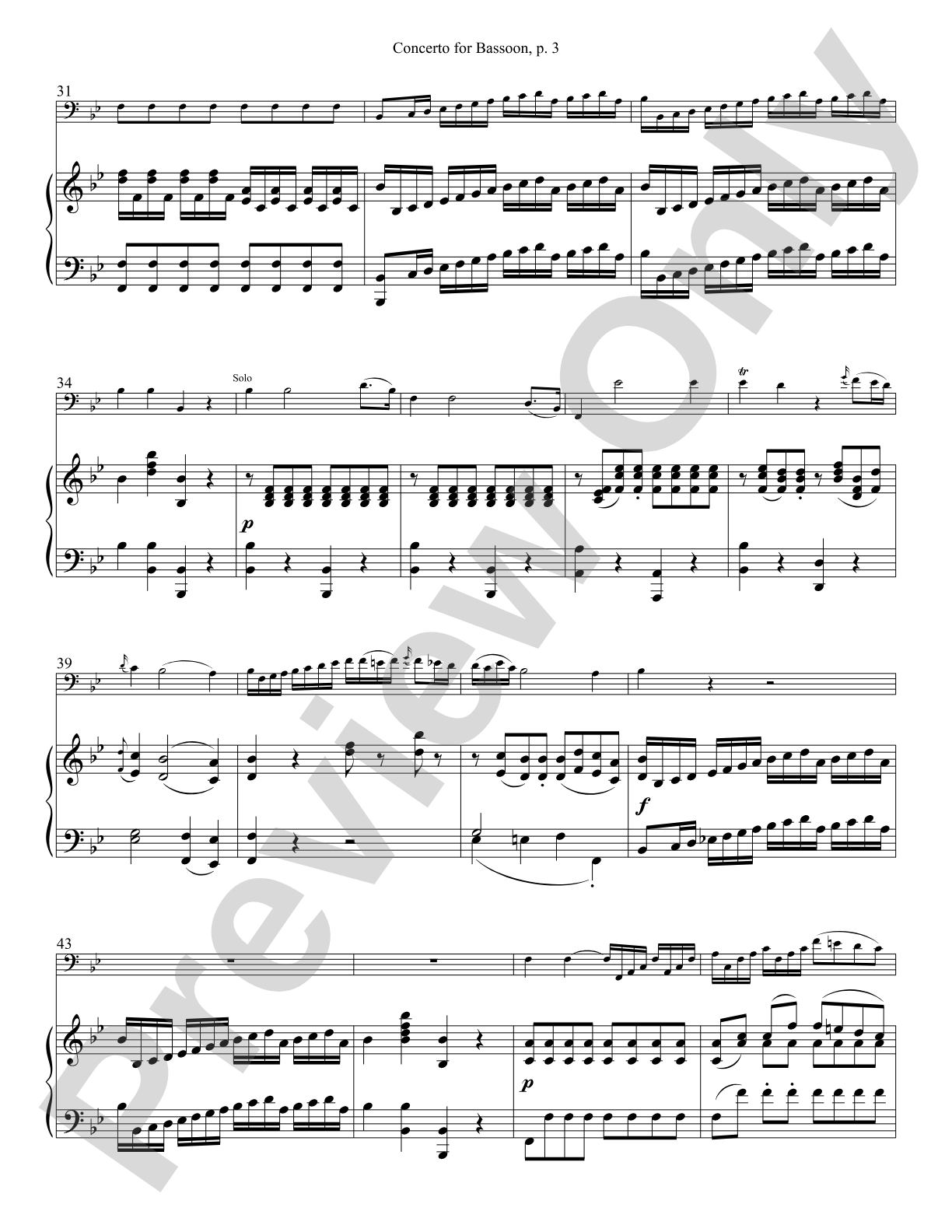
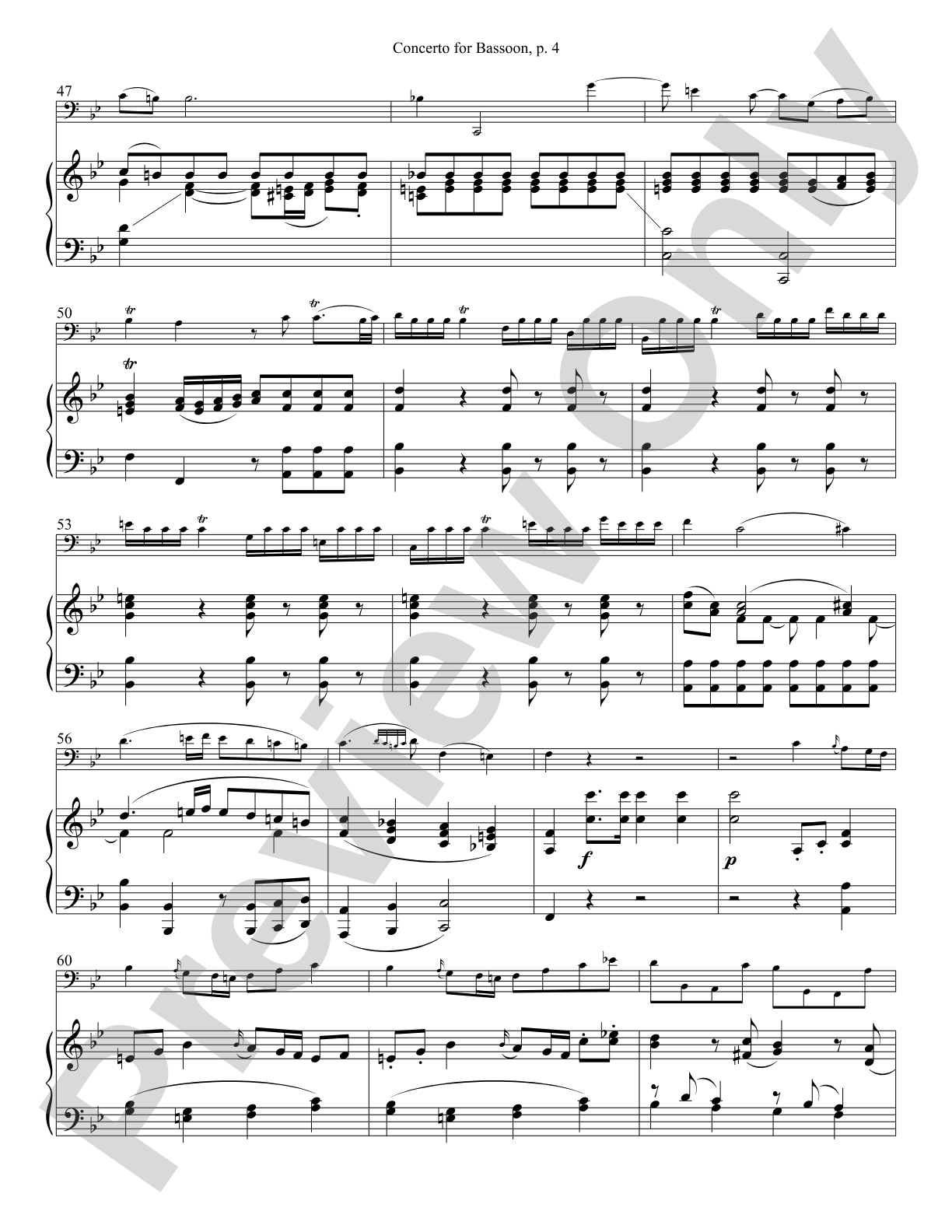
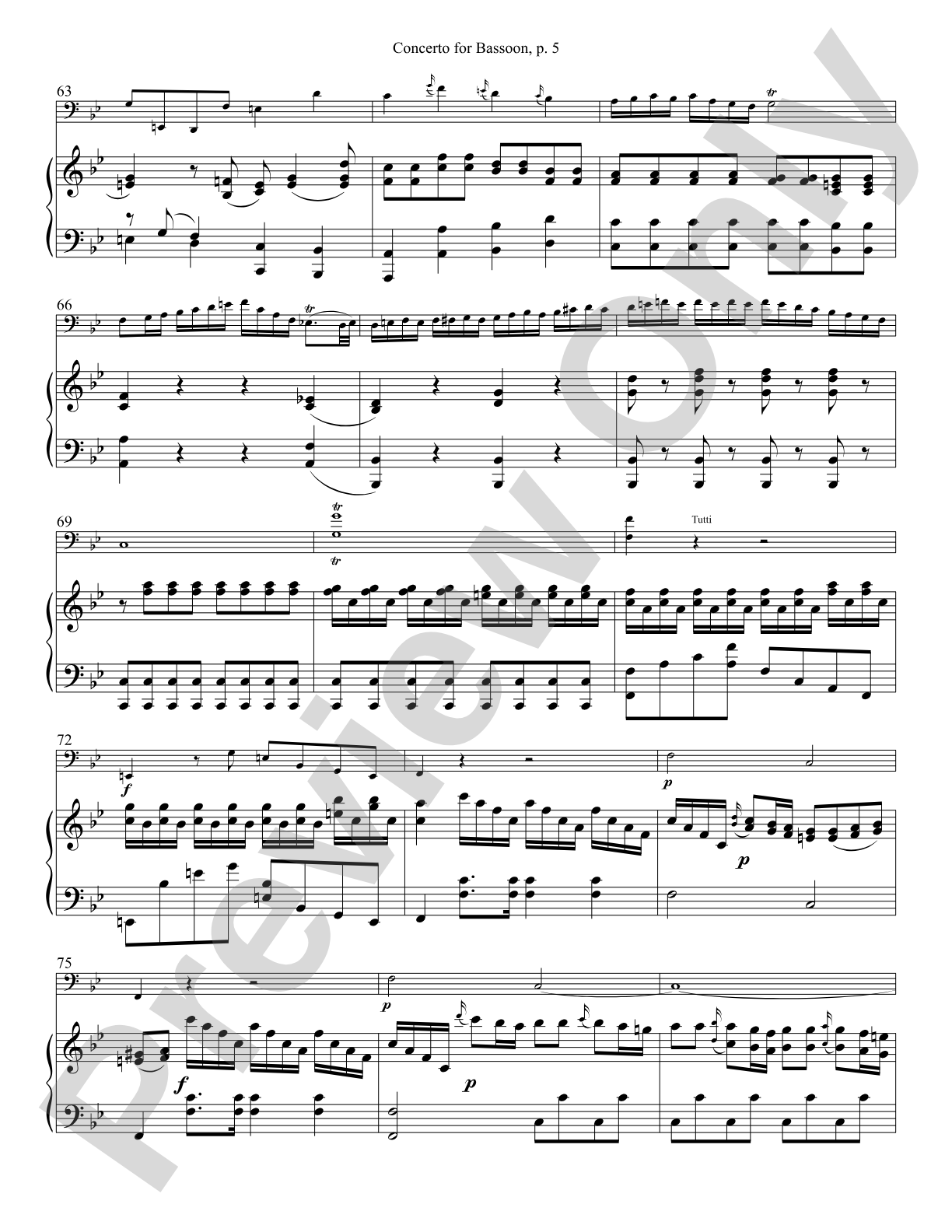
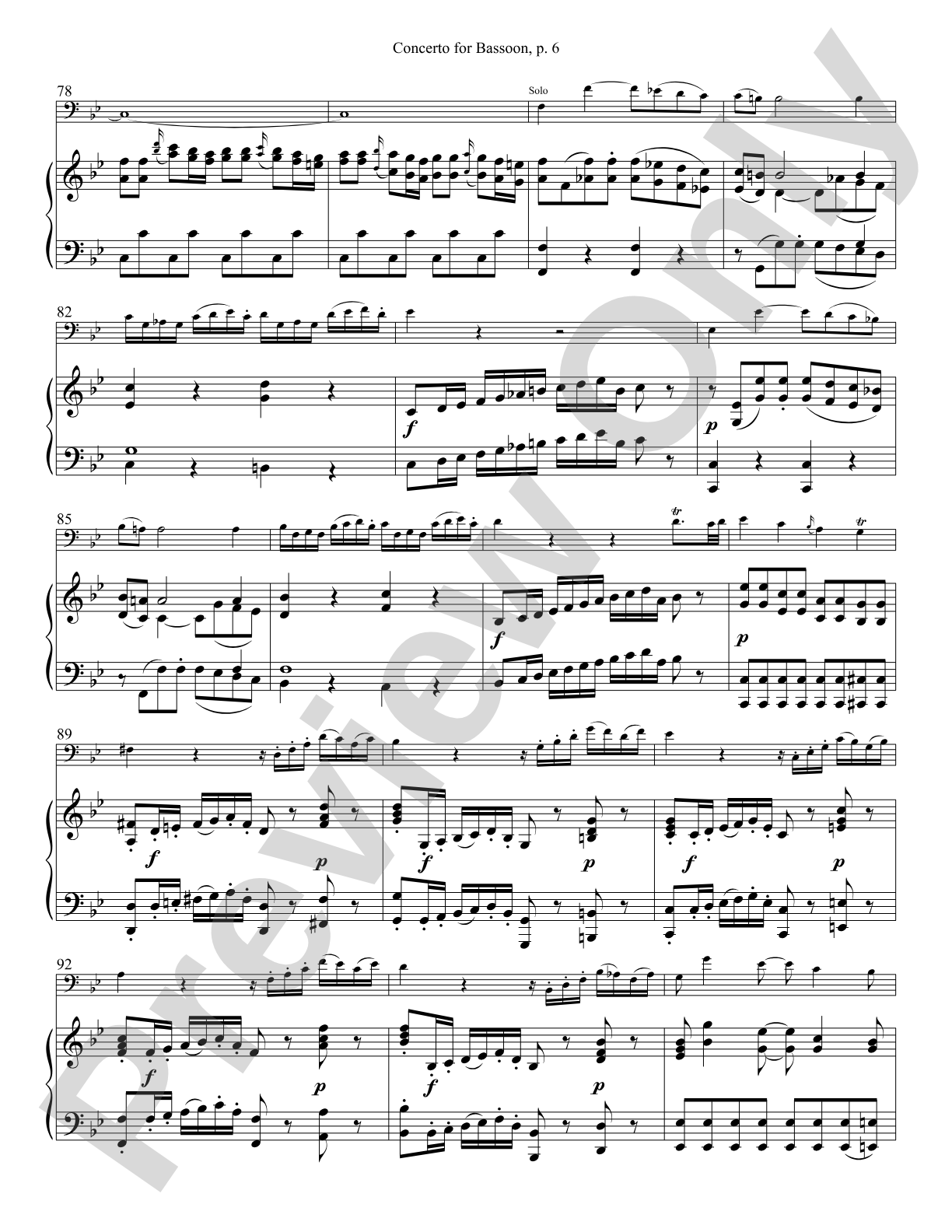
Wolfgang Amadeus Mozart (1756-1791) composed across every major genre of his era, from symphonies and concertos to operas and chamber music. His output shaped the Classical style itself, and his concertos remain touchstones for performers seeking clarity, elegance, and architectural balance. Mozart wrote the Bassoon Concerto in B-flat Major late in his career, crafting a work that balances technical brilliance with lyrical warmth, cementing the bassoon's place as a solo instrument worthy of the concert stage.
For music education, Mozart's concertos model the discipline of form and the art of writing idiomatically for each instrument. Teachers and students return to his works repeatedly because they reward both rigorous study and genuine musical expression. This concerto continues to serve as a gateway to advanced Classical repertoire for serious bassoon students.