
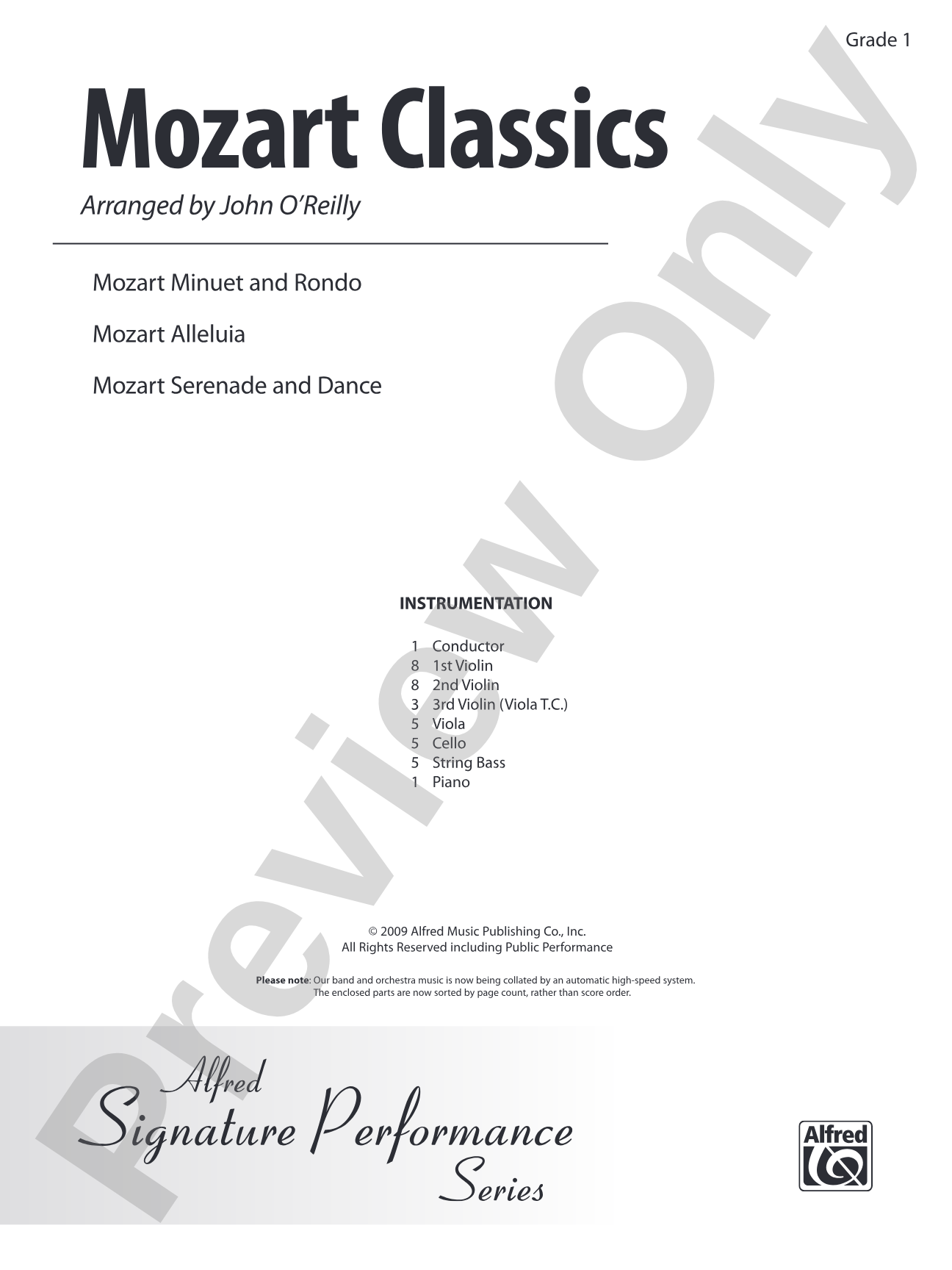
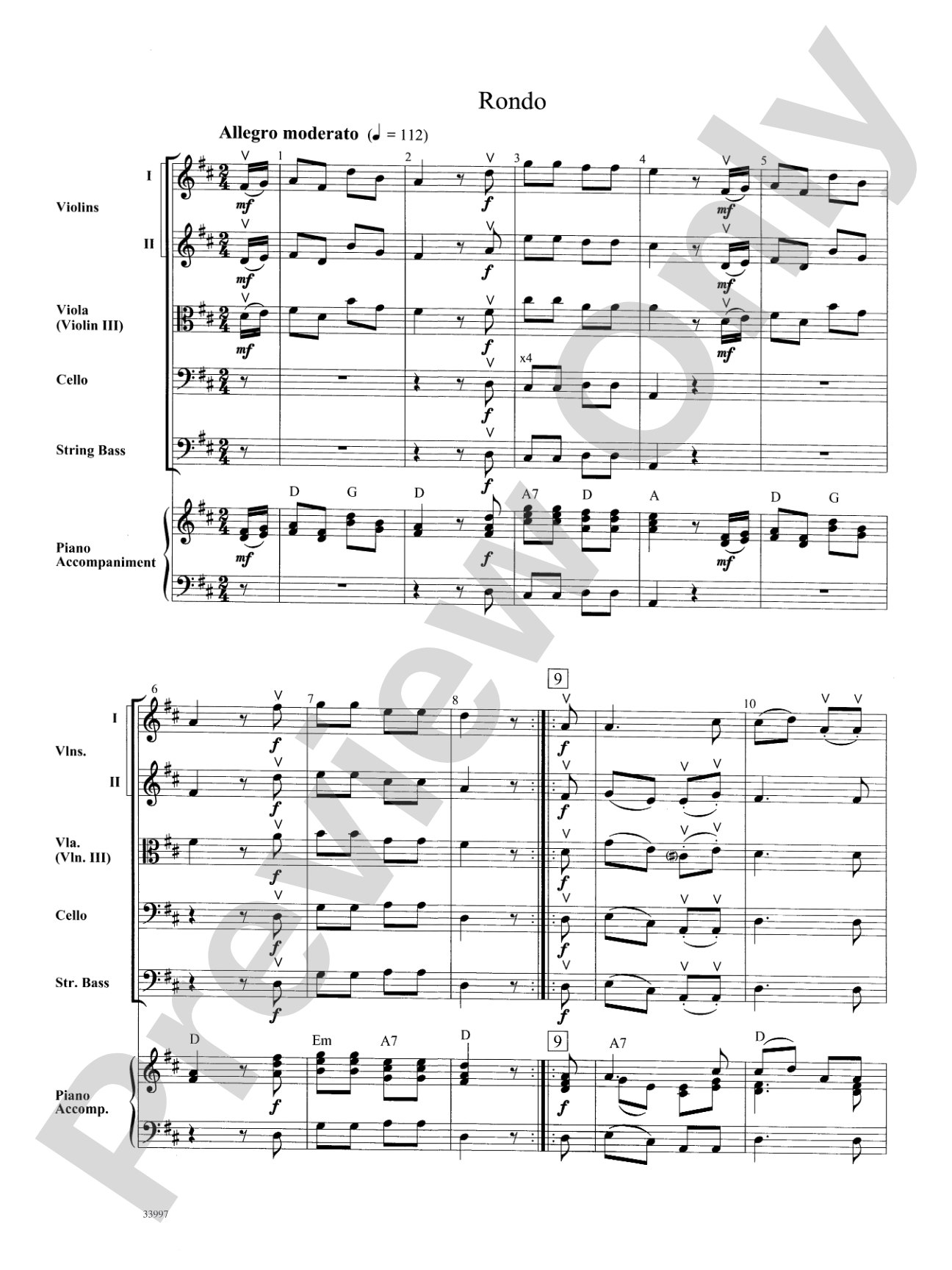
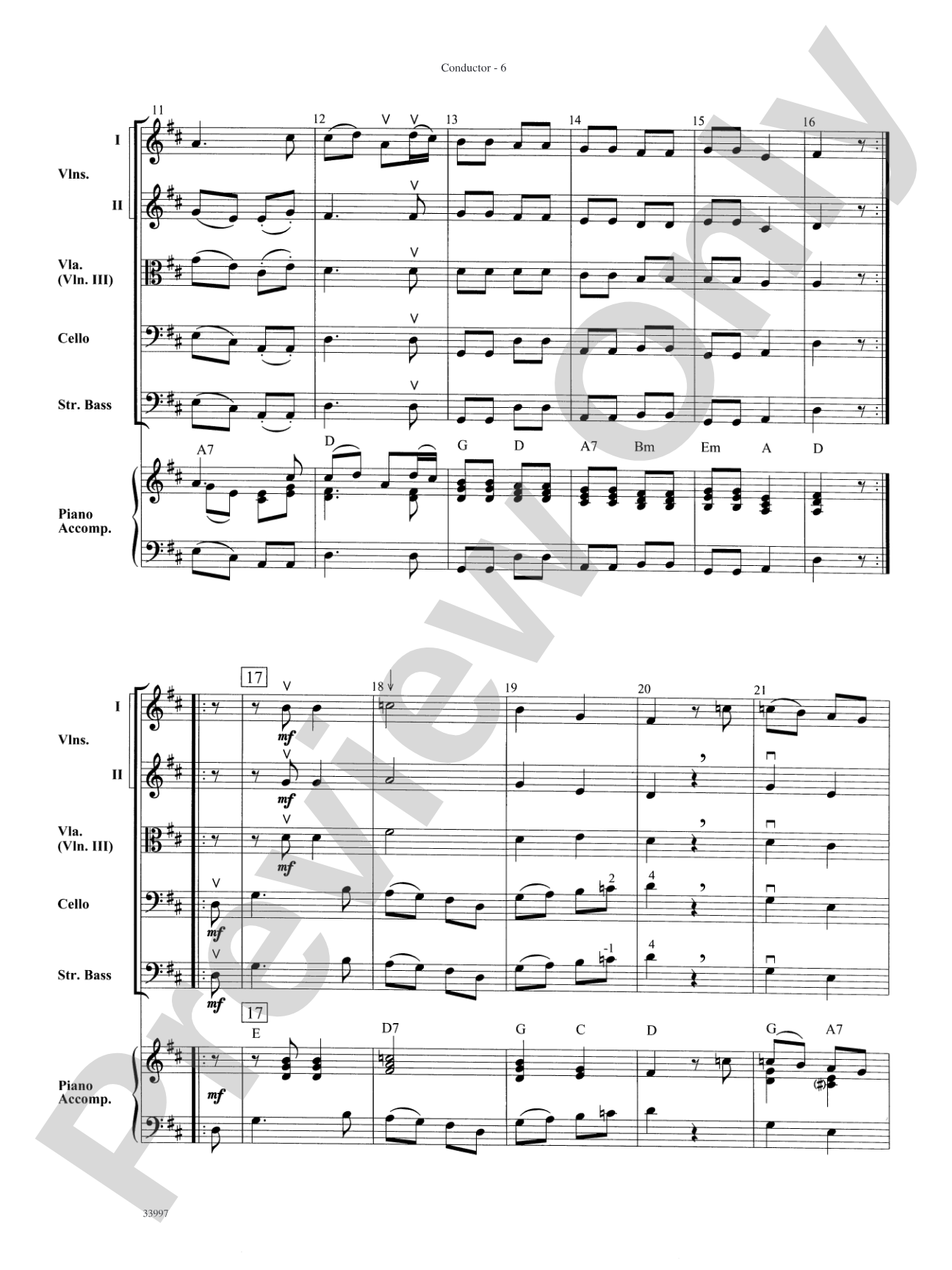
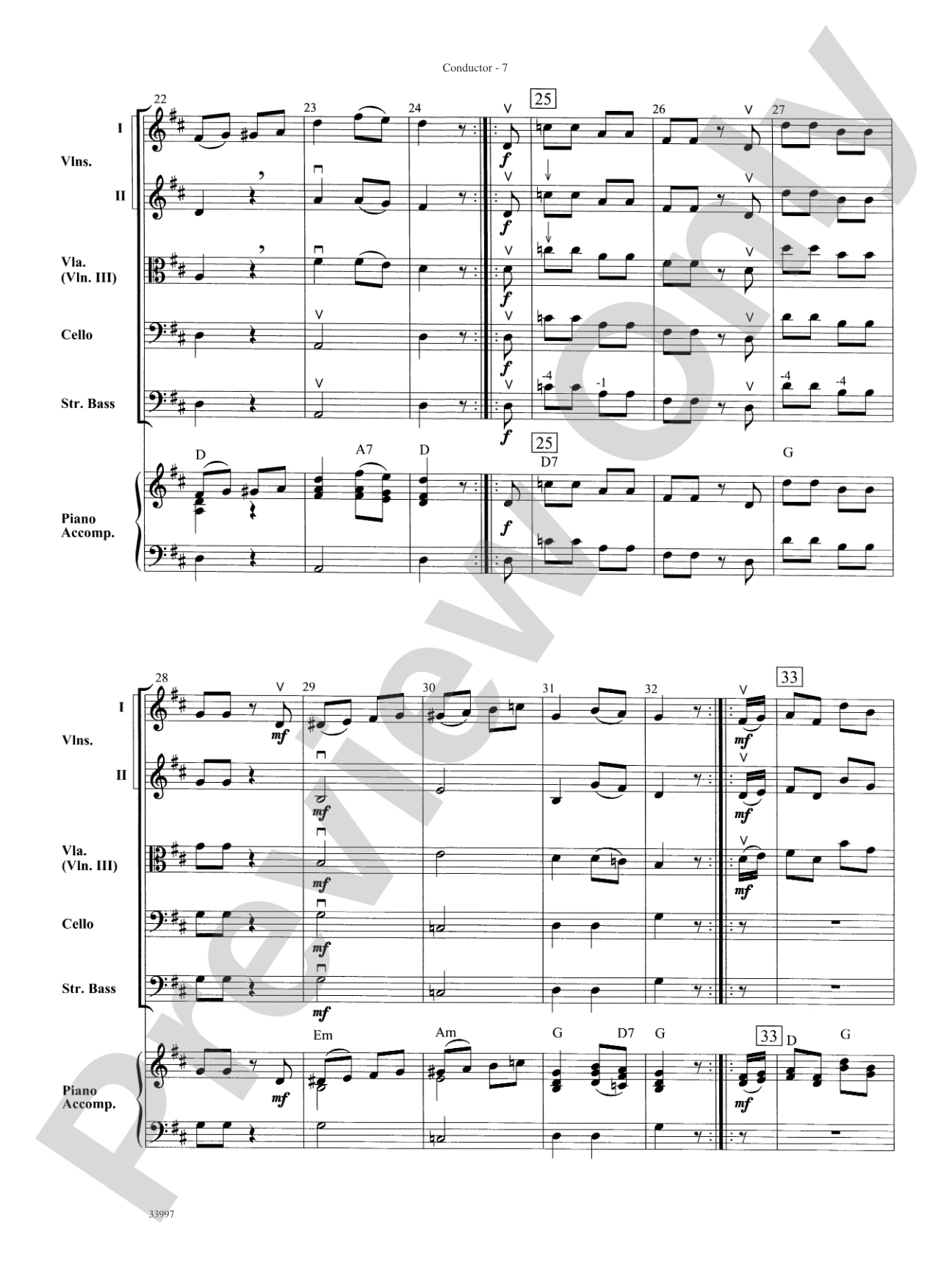
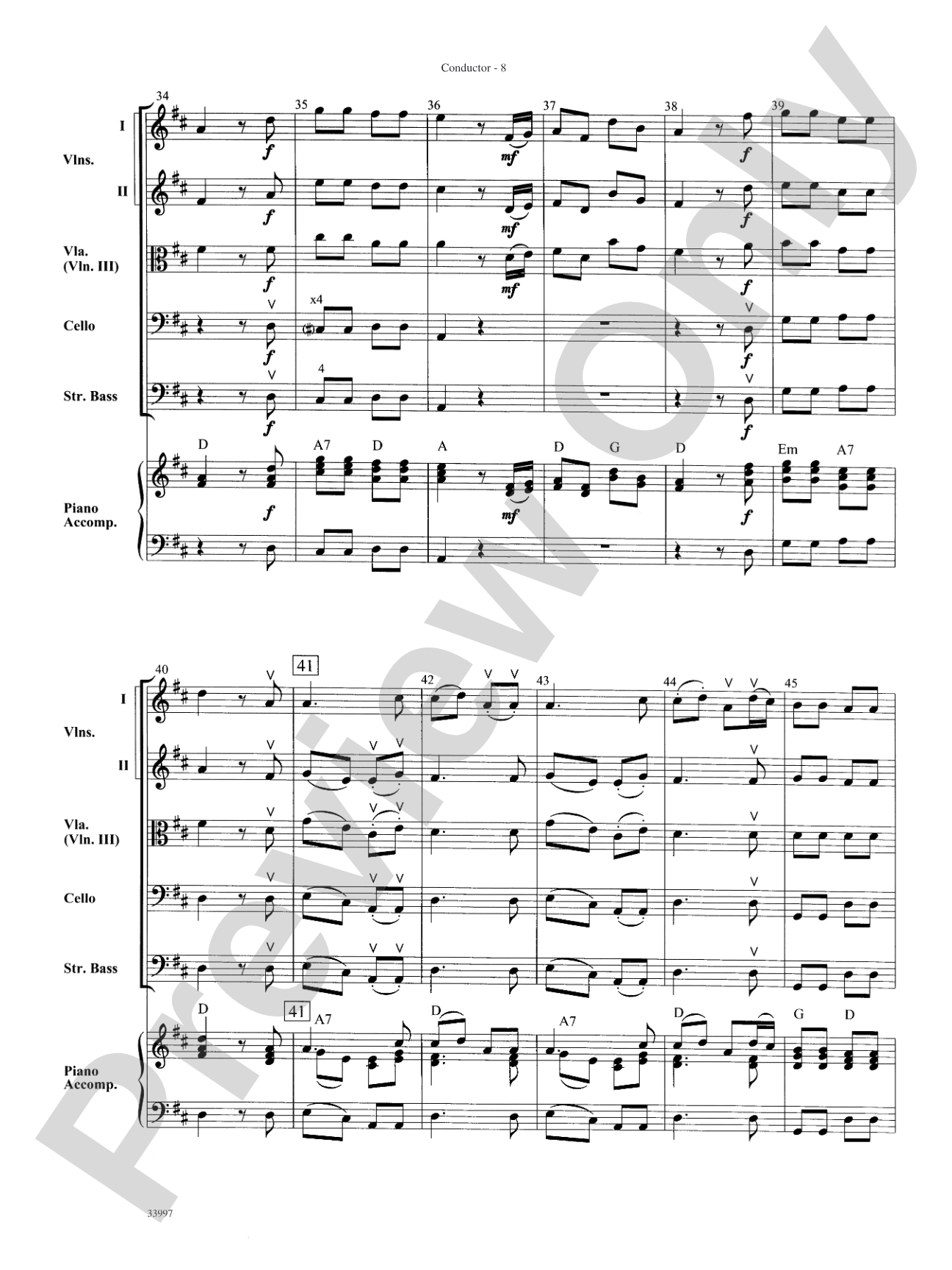
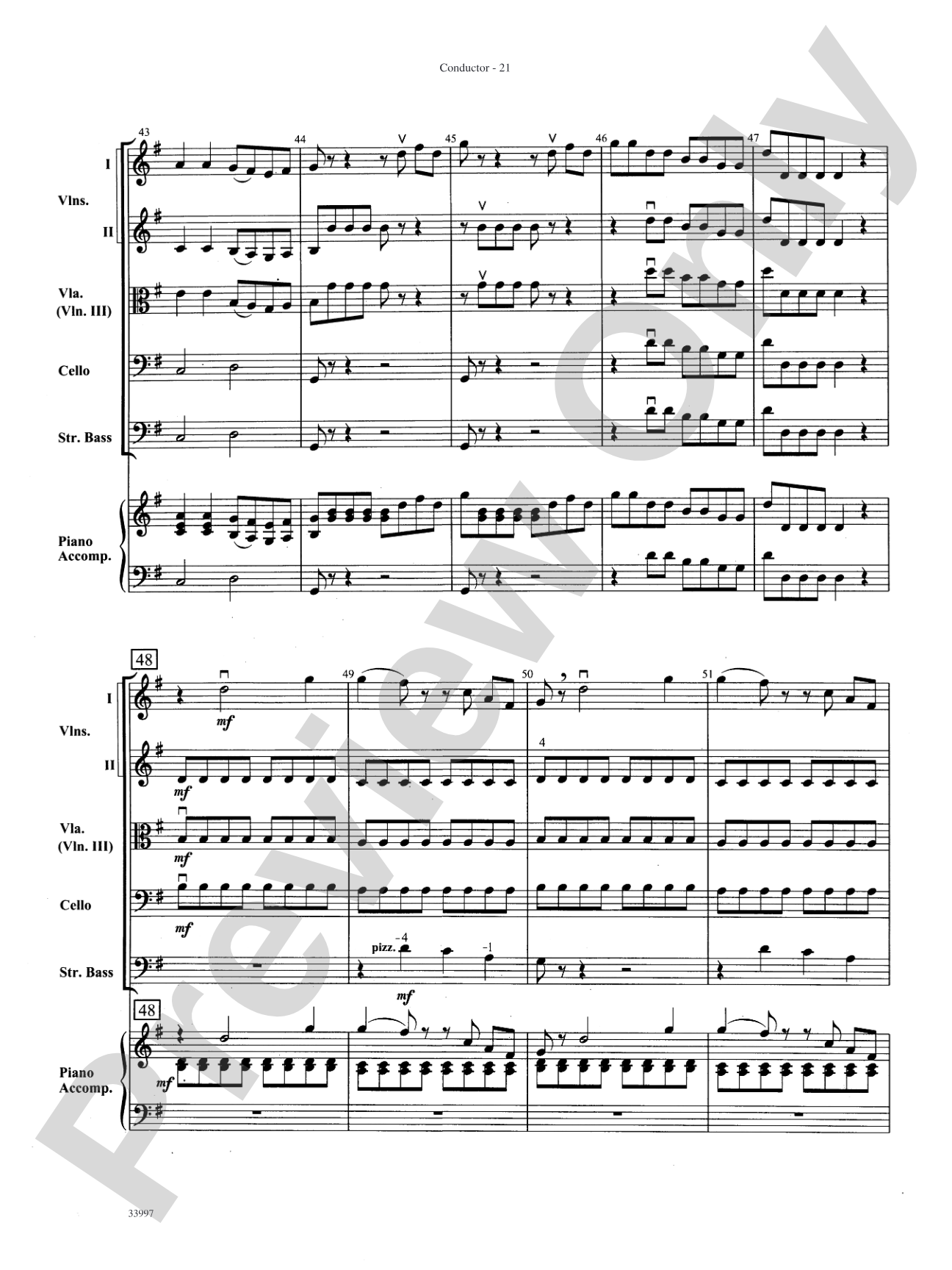
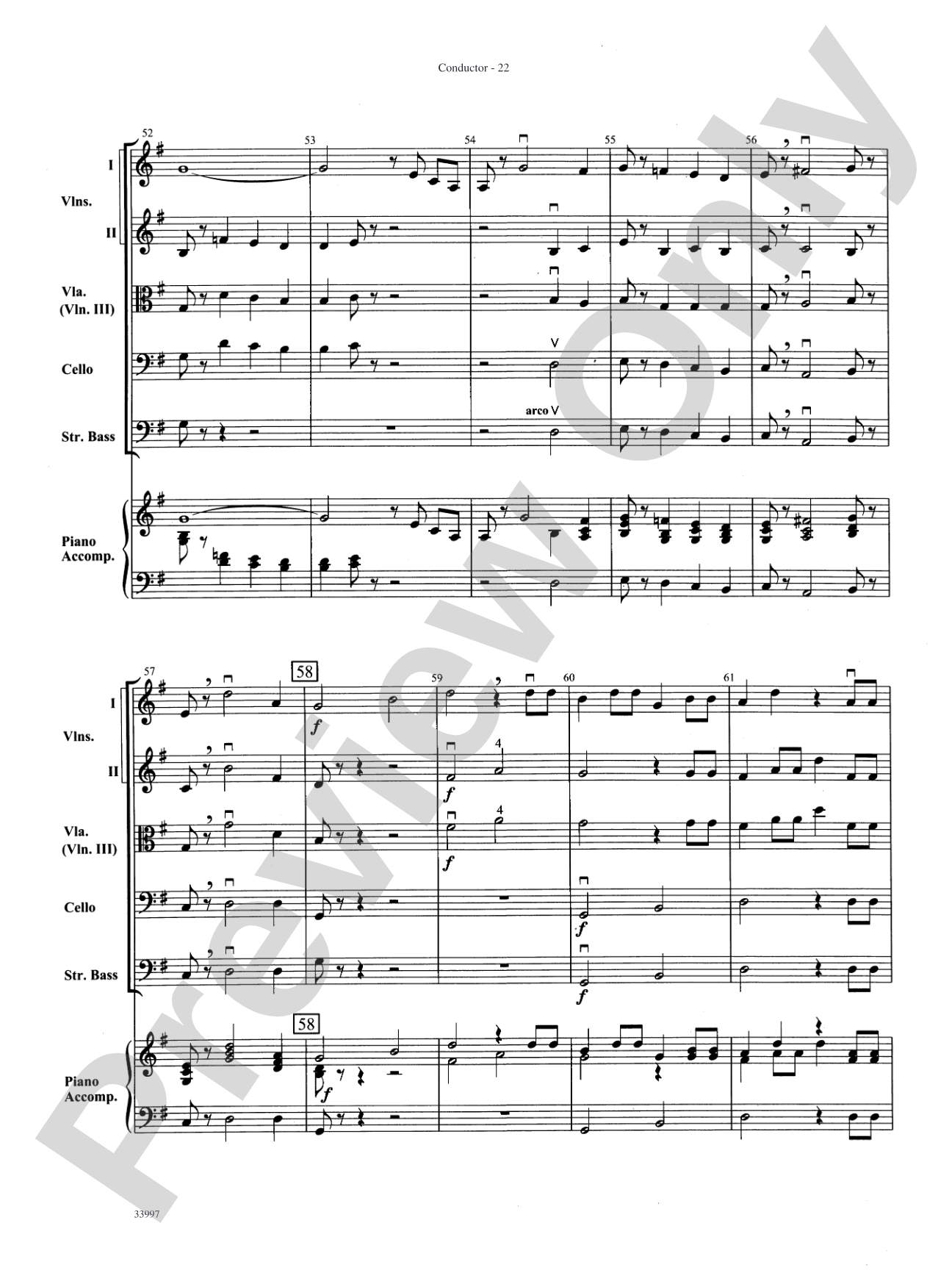
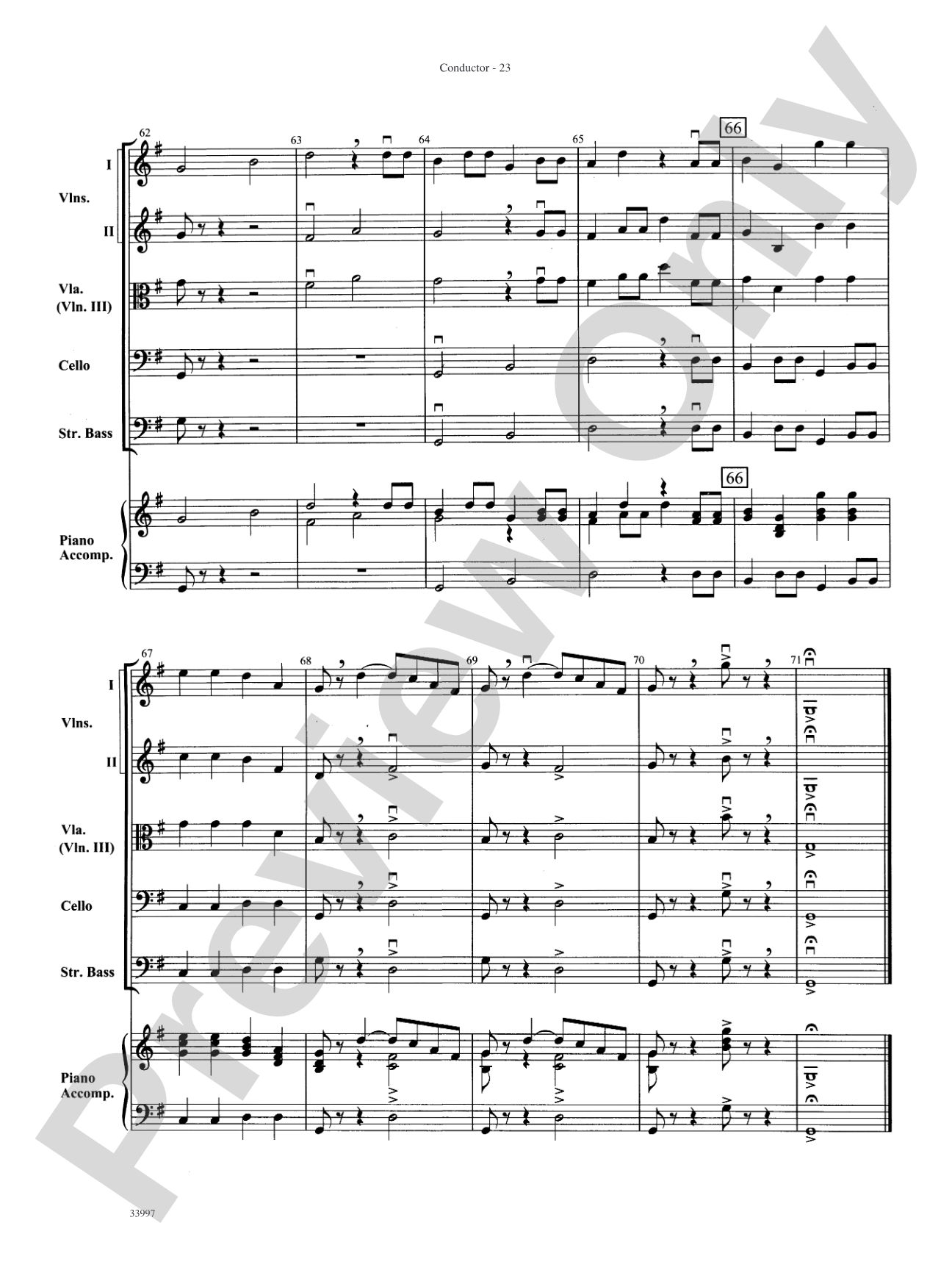


Mozart Classics: String Orchestra Conductor Score & Parts
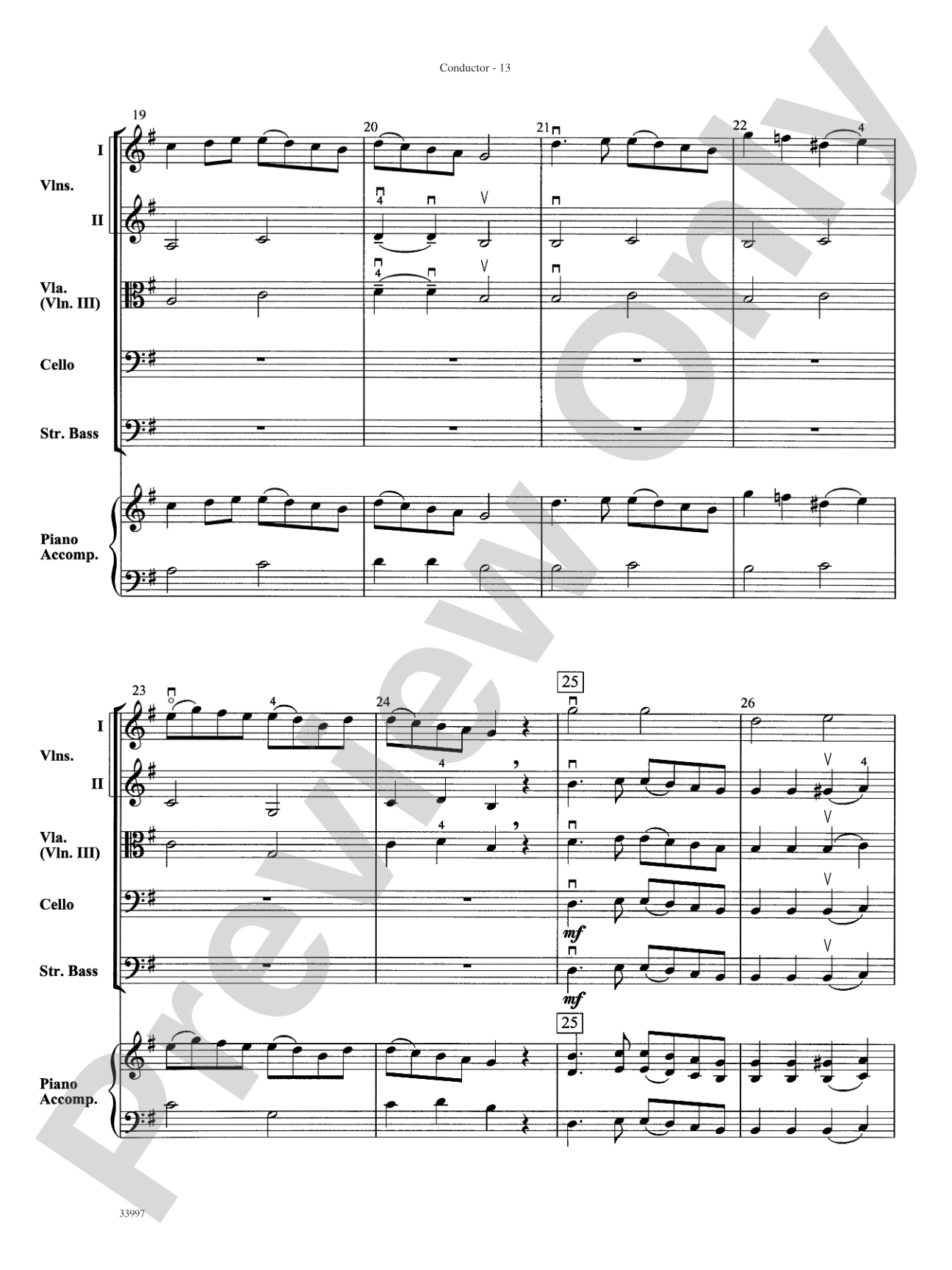
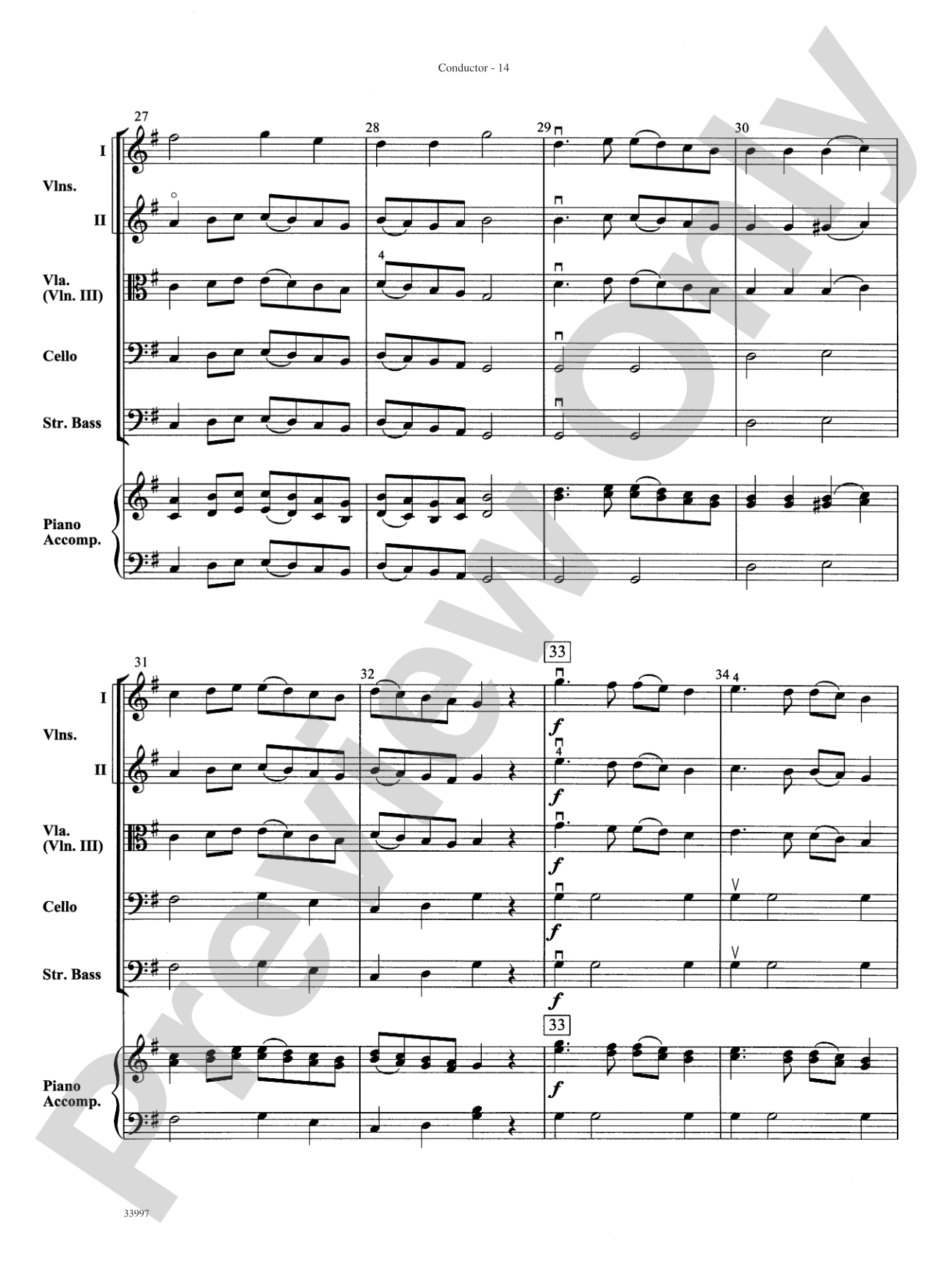
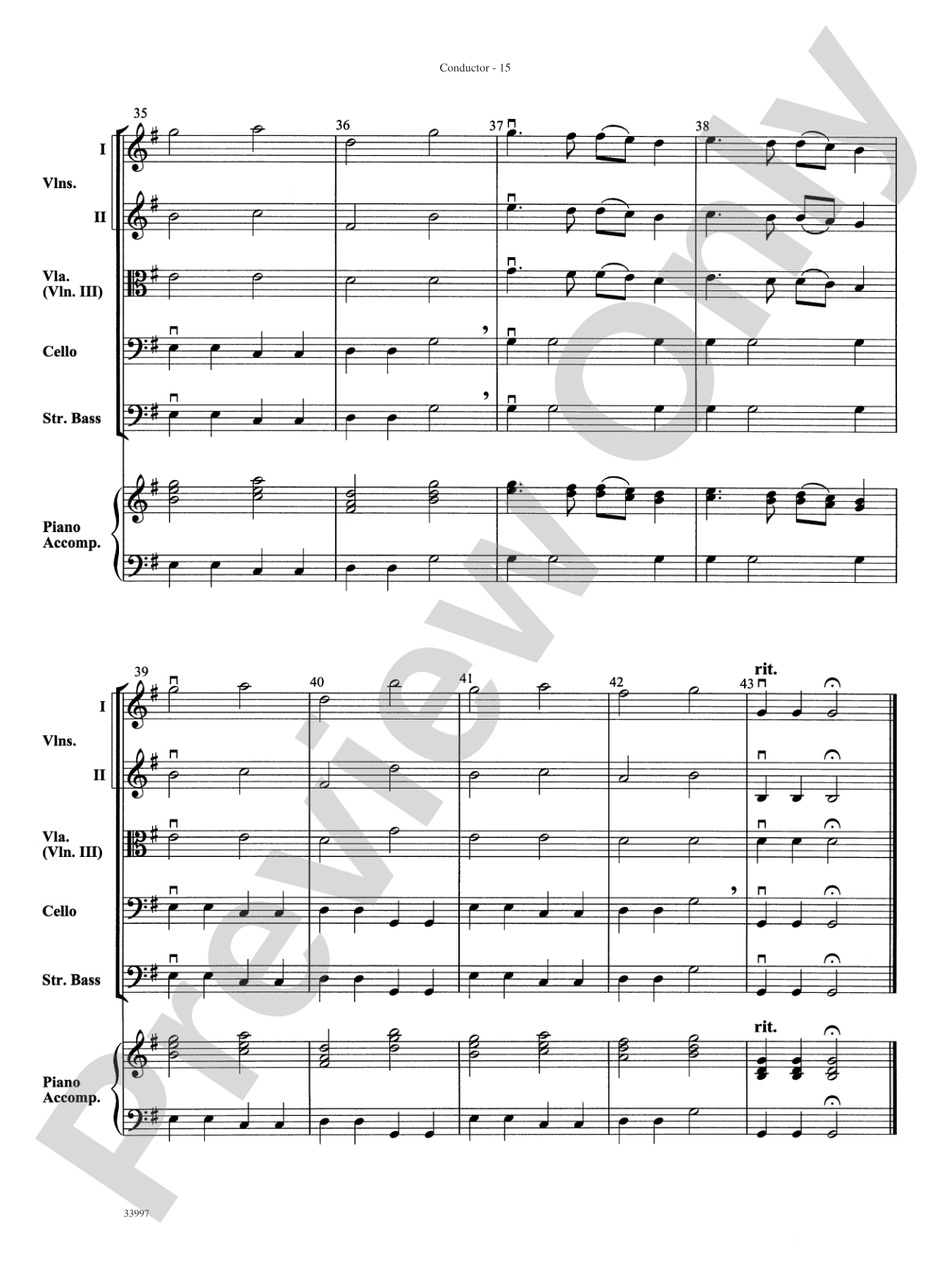
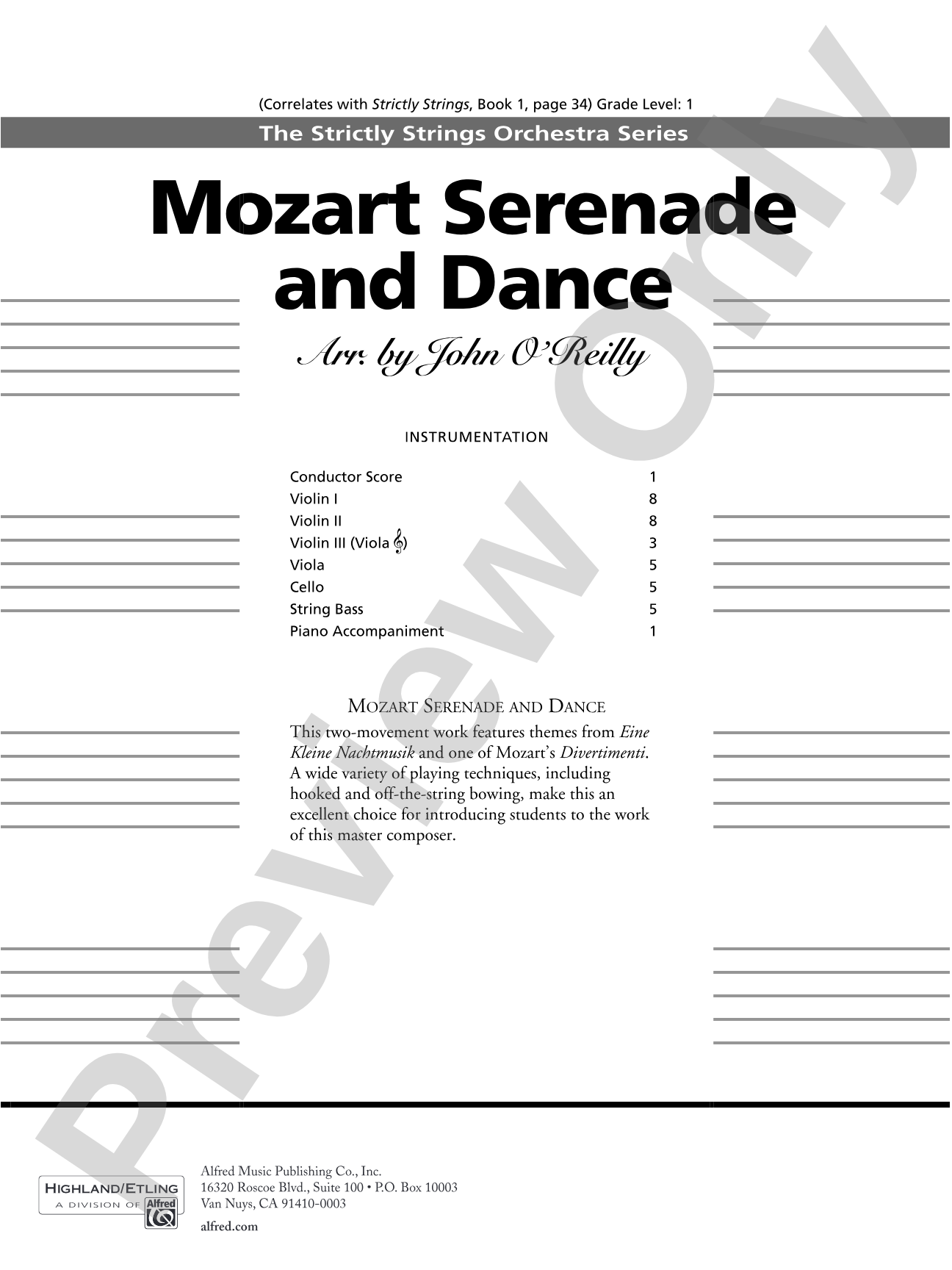
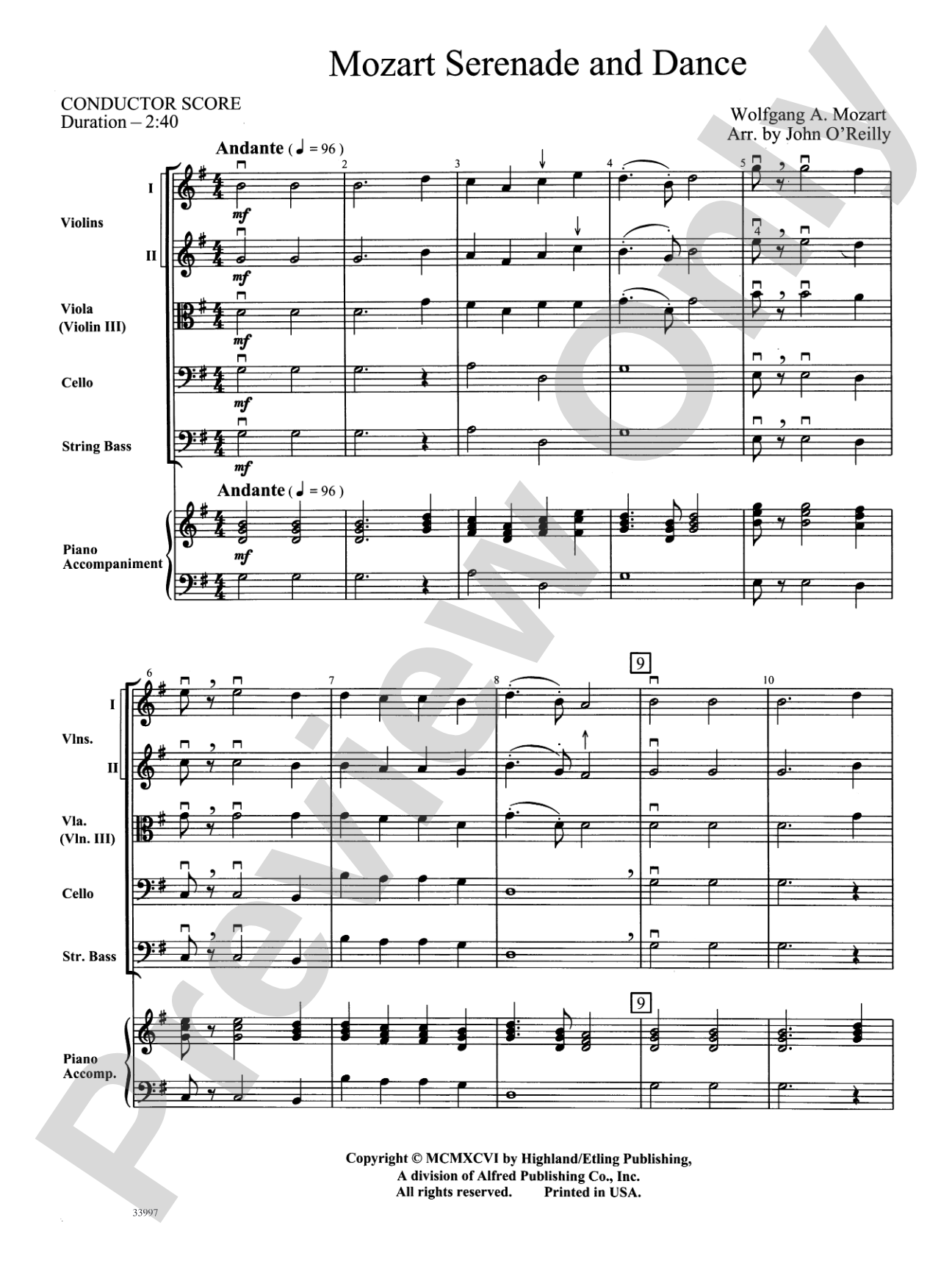
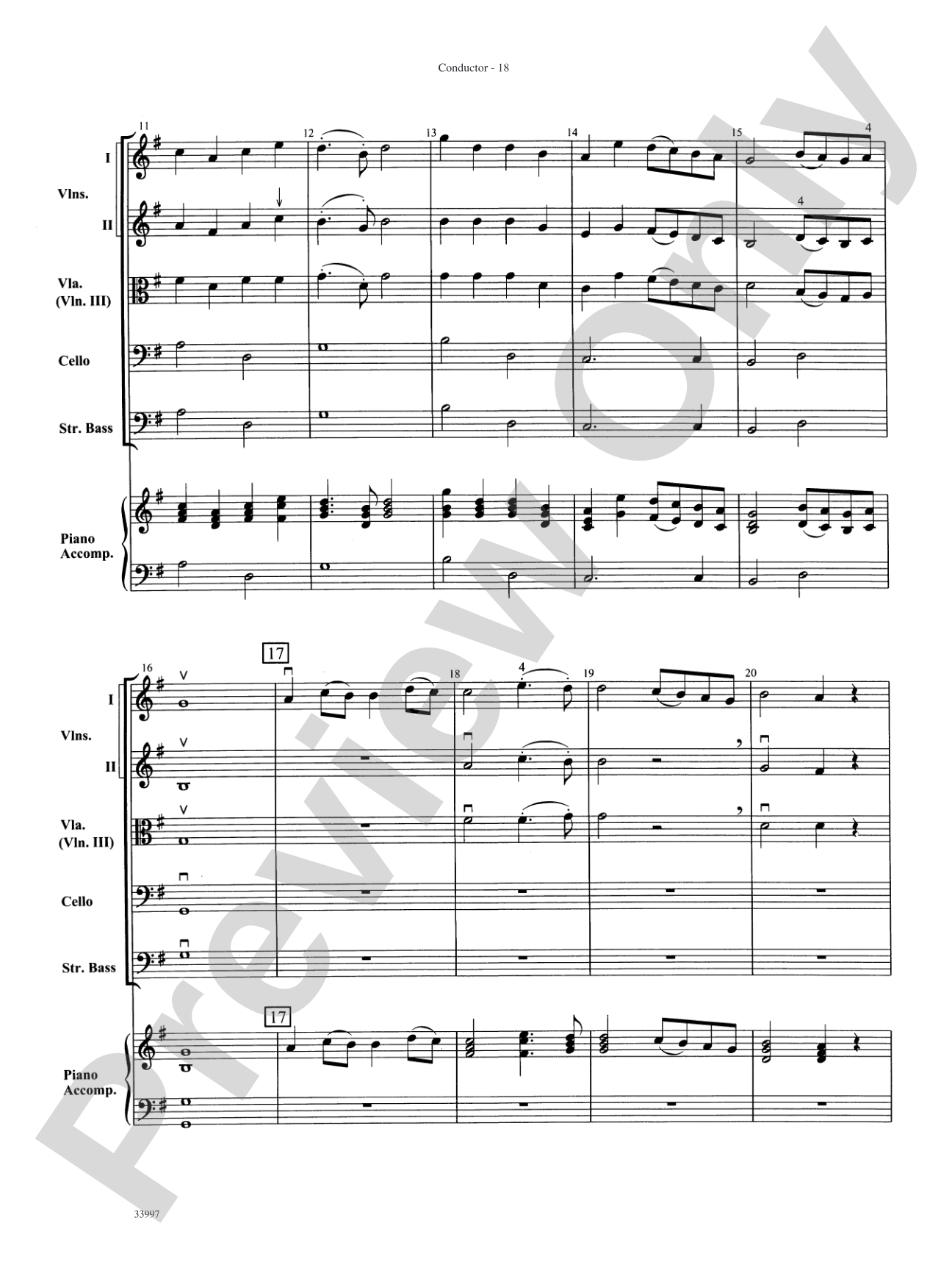
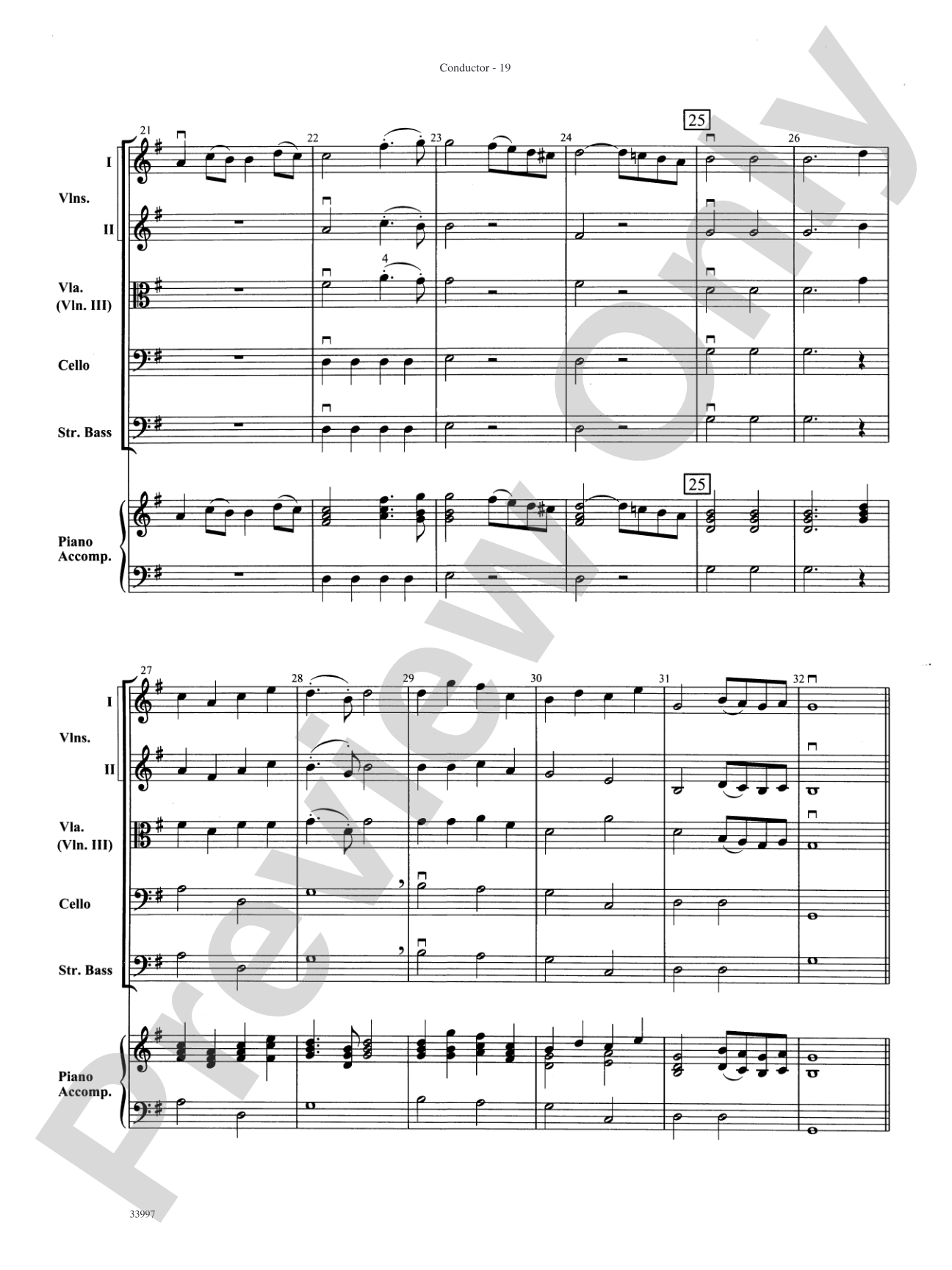
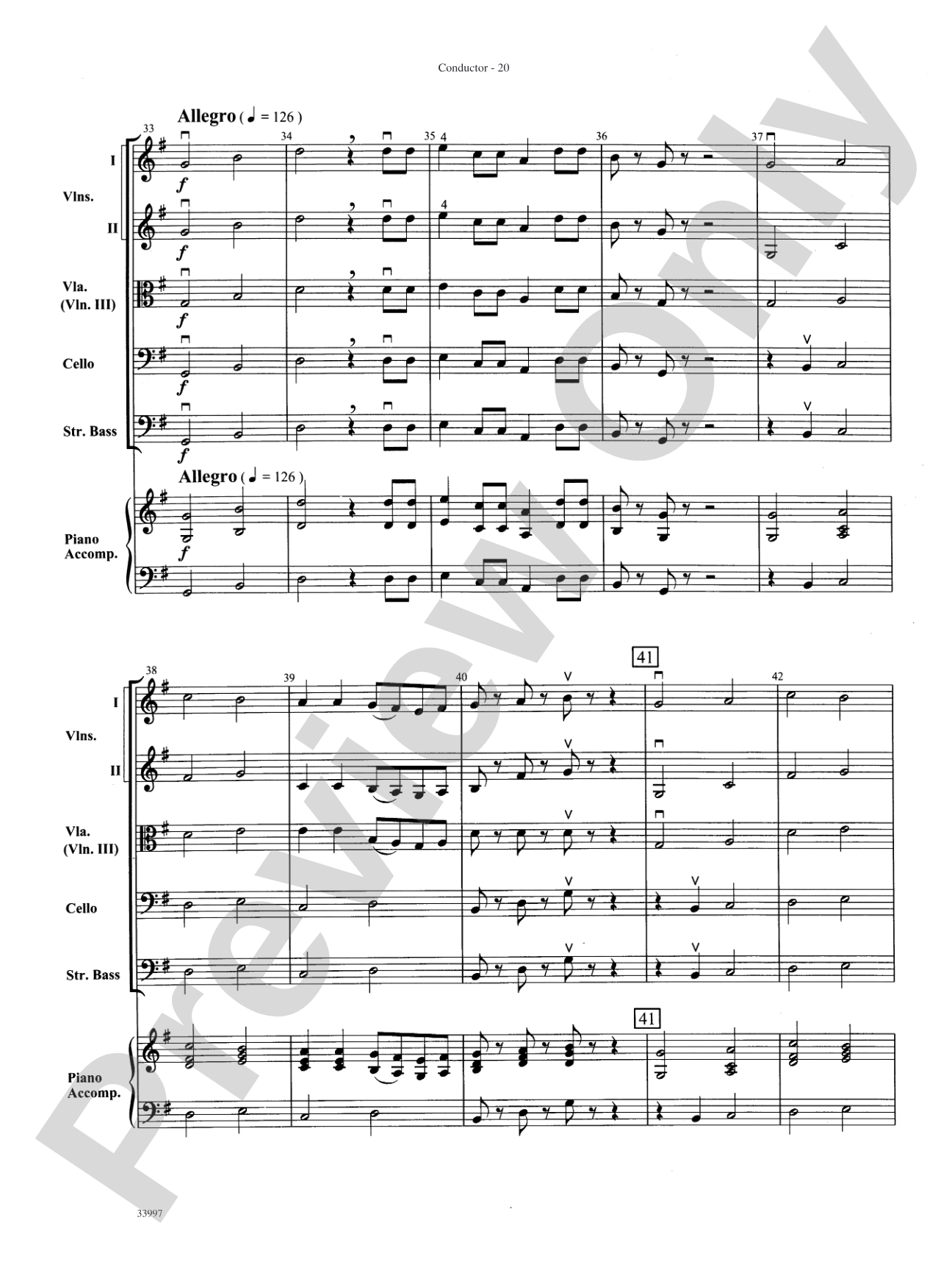
Featuring: Minuet and Rondo / Alleluia / Serenade and Dance
[Wolfgang Amadeus Mozart] / arr. John O'Reilly
Grade: 1
Item: 00-PK-0004309

$75.00
Pickup currently not available
Buy Extra Parts (Digital PDF Download)
| Product | Price | Quantity |
|---|---|---|
| Mozart Classics: Score | $10.00 | |
| Mozart Classics: 1st Violin | $5.99 | |
| Mozart Classics: 2nd Violin | $5.99 | |
| Mozart Classics: 3rd Violin (Viola [TC]) | $5.99 | |
| Mozart Classics: Viola | $5.99 | |
| Mozart Classics: Cello | $5.99 | |
| Mozart Classics: String Bass | $5.99 | |
| Mozart Classics: Piano Accompaniment | $5.99 |
Parts Added to Cart!
Description
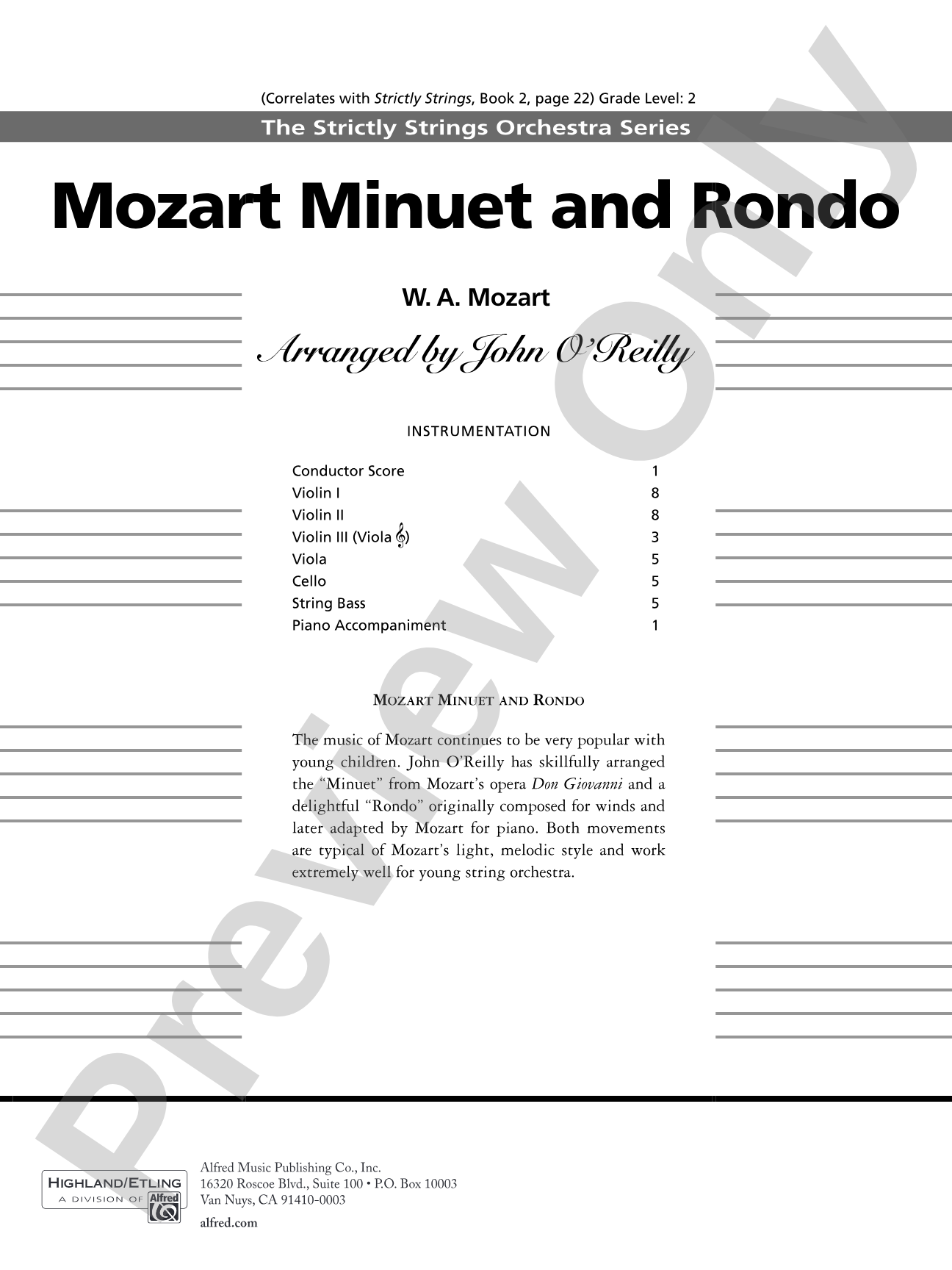
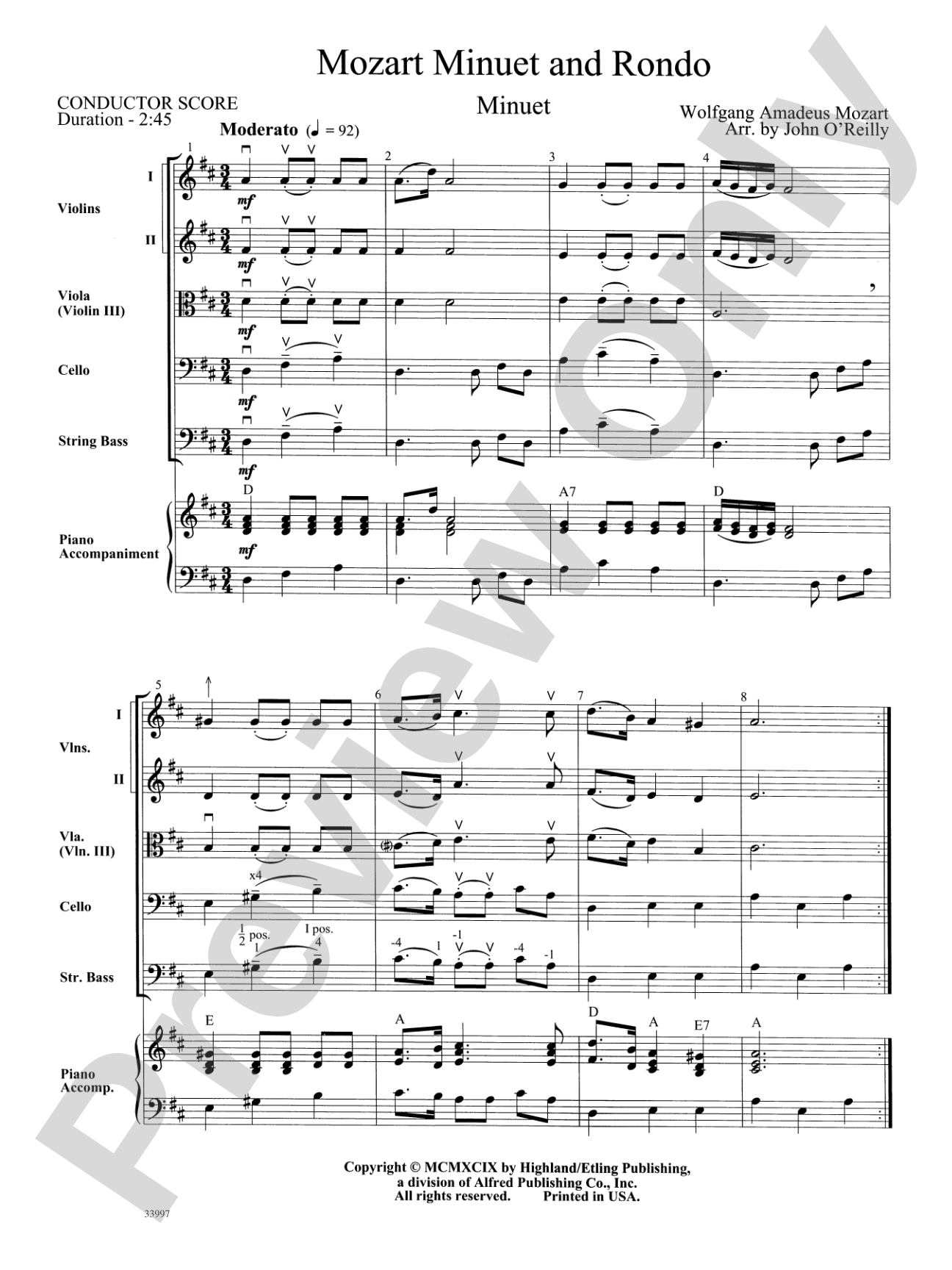
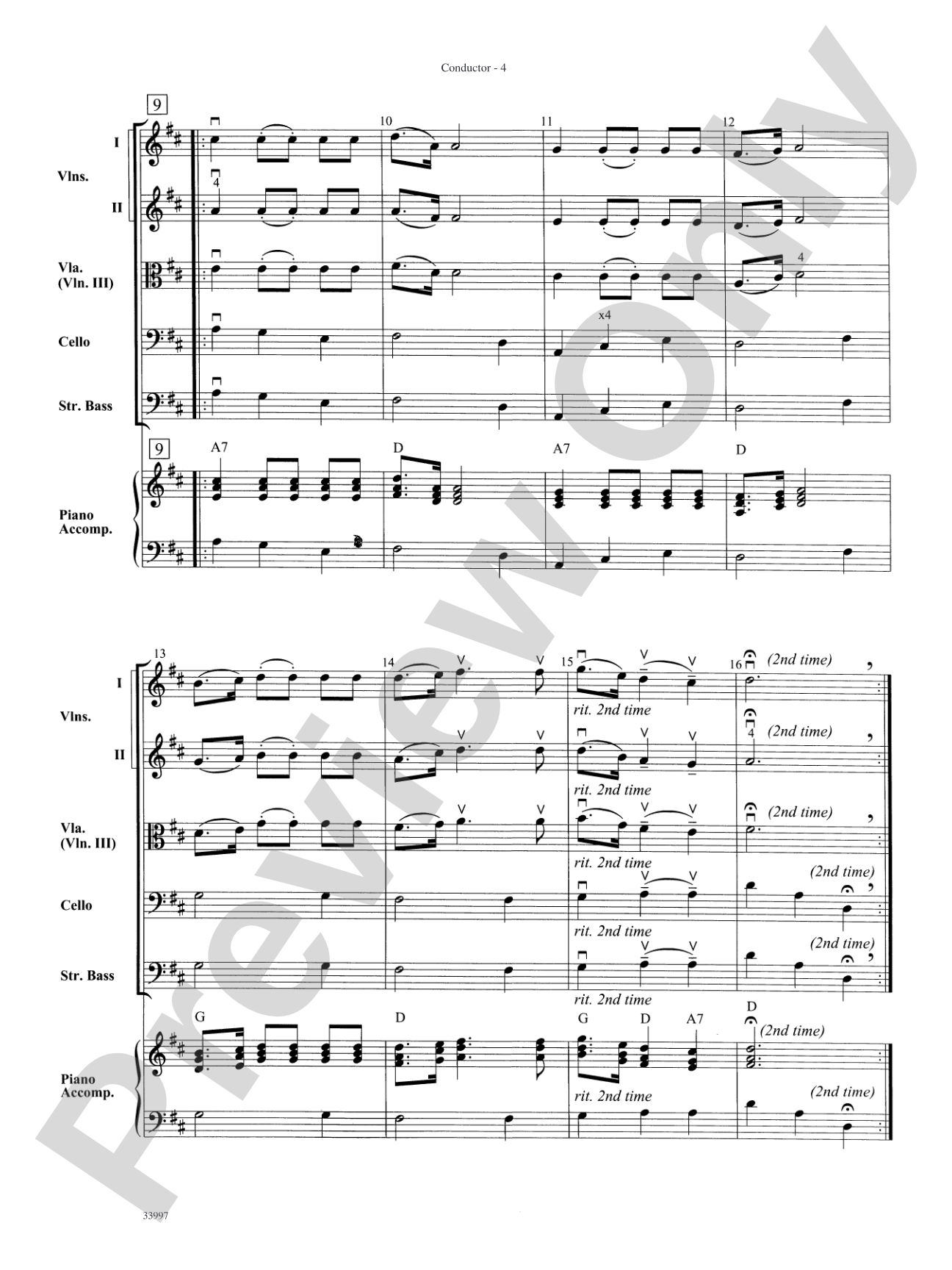
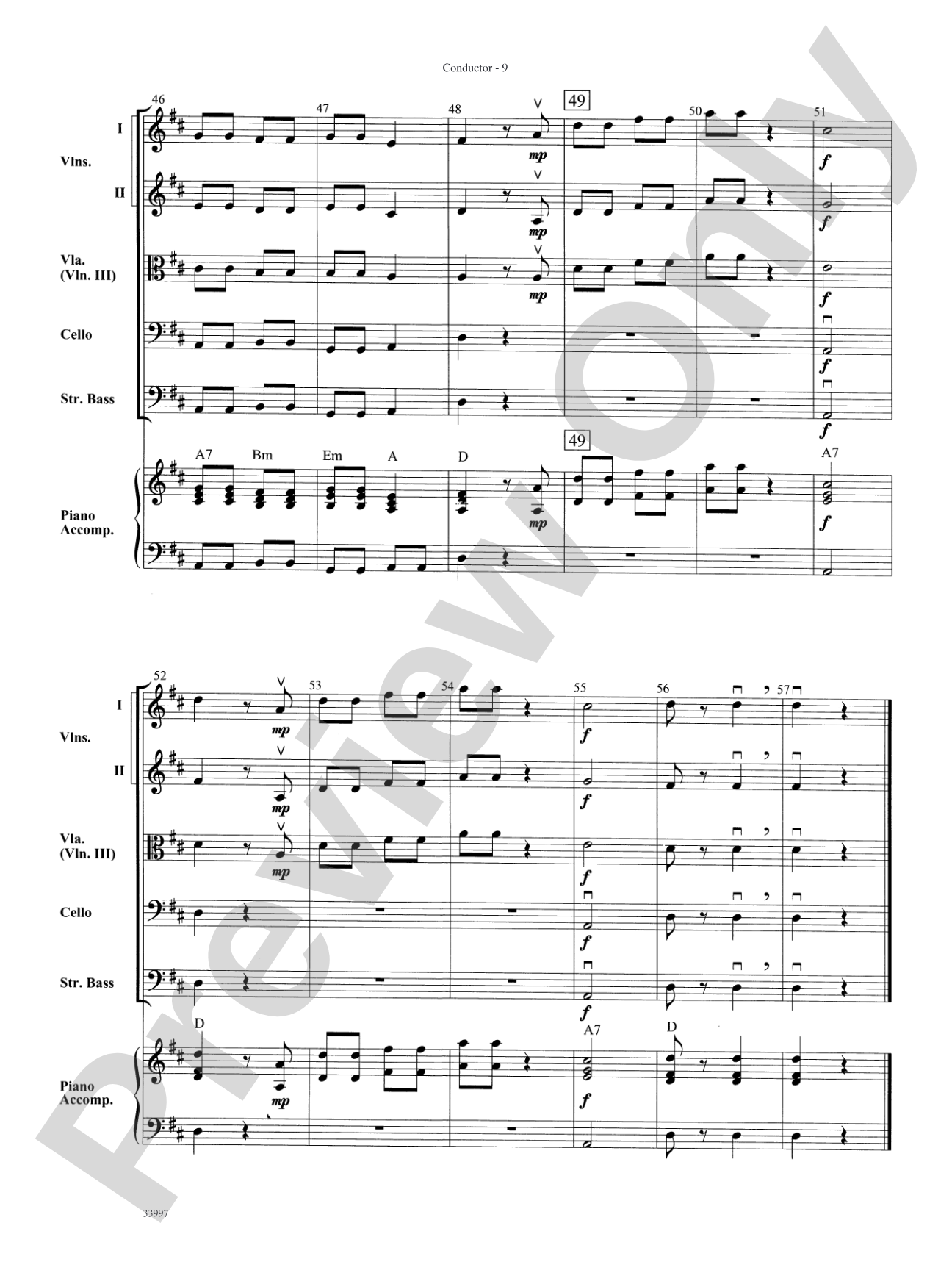
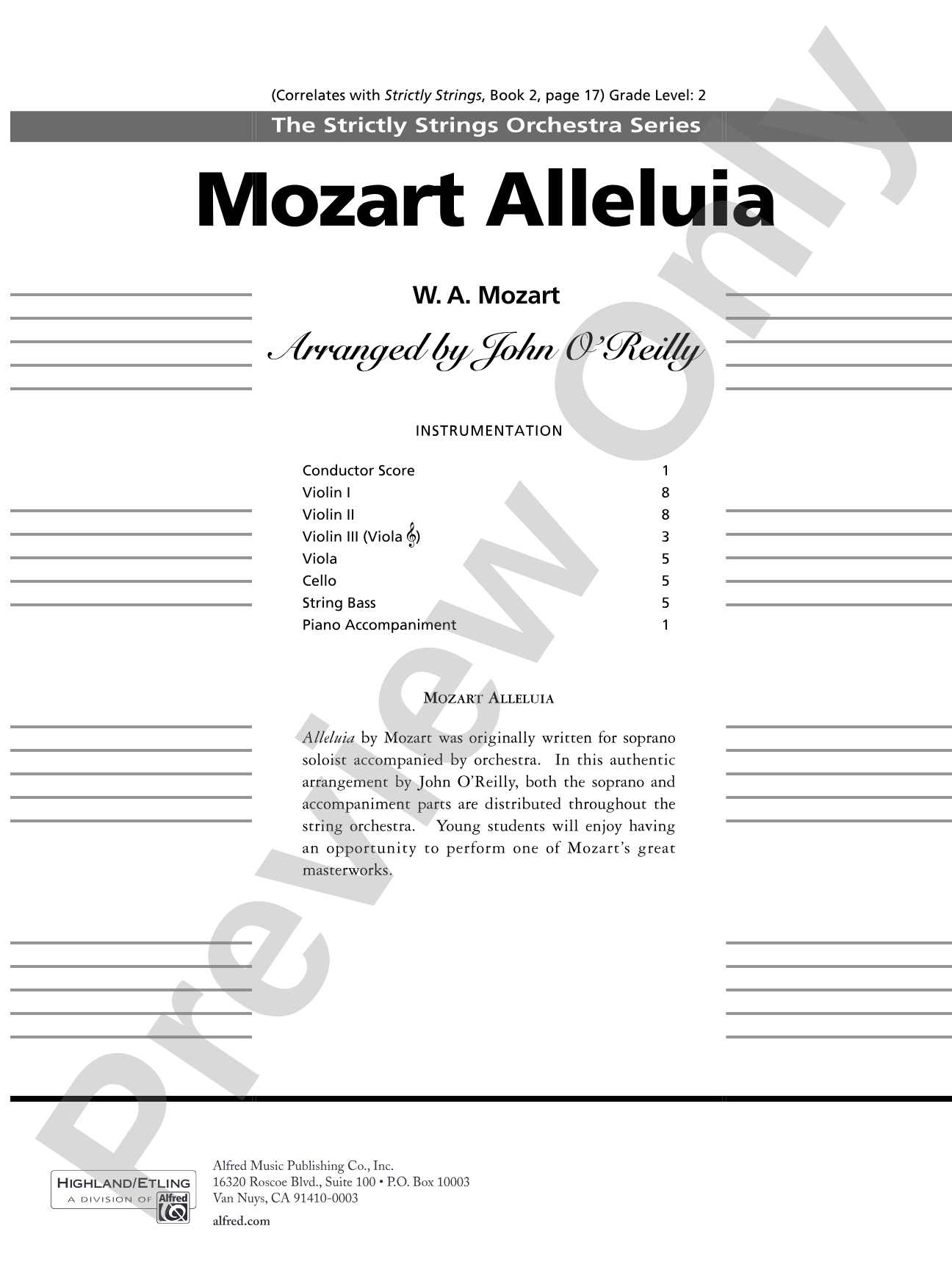
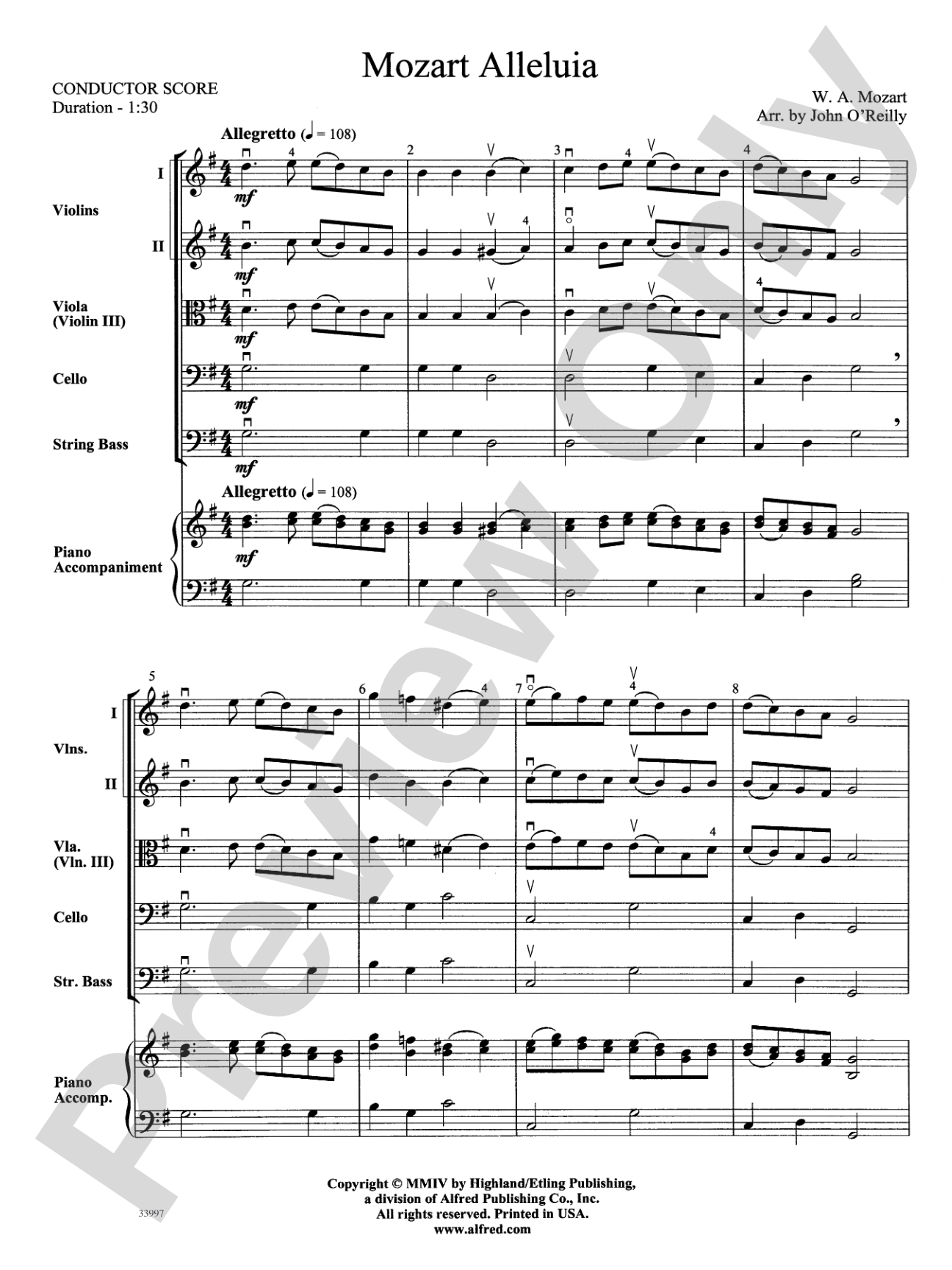
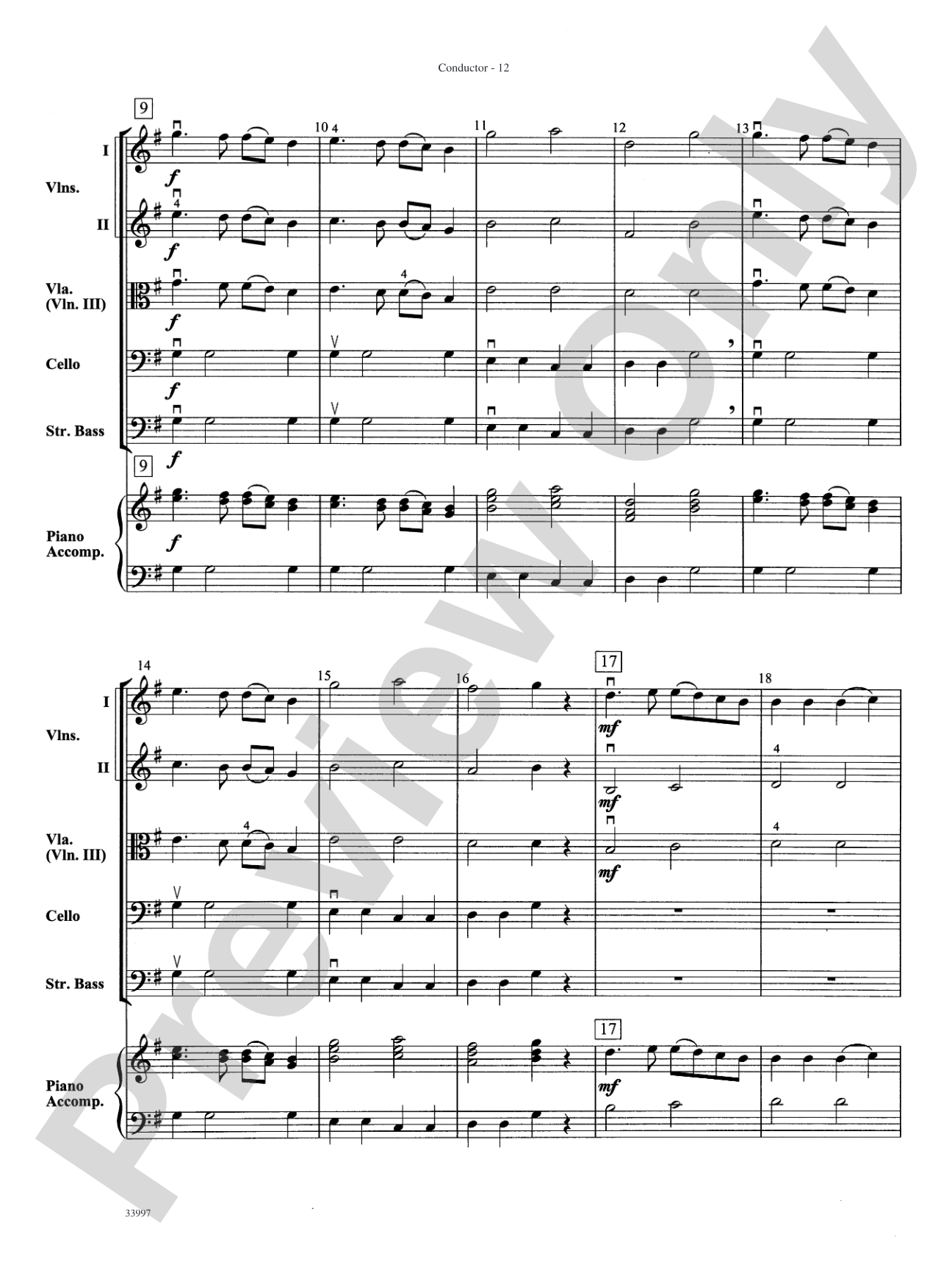
Stretch your performance music budget further with a collection of pieces for the price of one! The Alfred and Belwin Signature Performance Series combine several best-selling pieces by our popular composers and arrangers into one set of score and parts. Made for young bands and orchestras, each set contains full-length pieces that can be used together in one concert or separately, with themes such as classic popular Christmas, movies, international, pop, and Classics appropriate for Contest. Also available for choir and handbell choir. Enjoy quality music at a great value price! Titles: Minuet and Rondo * Alleluia * Serenade and Dance.


Don't just read it, hear it, play along with it, and watch your students grow with it. In MakeMusic Cloud, Mozart Classics: String Orchestra Conductor Score & Parts comes alive with professional accompaniment, adjustable tempo, and built-in practice tools that turn solo practice into real progress.
Open in the Player
Jump straight in and assign it today.
Start Your Free Trial
Open this title and explore the full library in minutes.
Sample Audio
No sample audio found.
Sample Video
No sample videos found.
Additional Details
Series:
Alfred Signature Performance Series for Orchestra
Publisher:
Alfred Music
Page Count:
144
SKU:
00-PK-0004309
More about this title
About the Arranger: John O'Reilly
John O'Reilly is an arranger and composer whose work for young orchestras and bands emphasizes accessibility without sacrificing musical substance. His arrangements in the Alfred Signature Performance Series have become staples in school music programs, known for thoughtful voicing that respects the classical material while accommodating the technical range of developing musicians.
Why we love this
Three complete pieces at Grade 1 lets you build a concert program around genuine classical material without stretching your budget across multiple purchases. The collection pairs manageable technical demands with pieces that sound polished and substantial on stage, giving young orchestras real concert wins.
What to expect
These pieces capture the refinement and grace of classical writing scaled for young players. There's a real sense of purpose in each arrangement; you hear Mozart's structure and melodic intelligence translated into accessible parts without losing the elegance that makes these works enduring.
Who it's for
Young string orchestras and beginning ensemble directors seeking concert-ready classical arrangements that don't demand advanced technical facility. Conductors building programs for festivals and competitions will find these pieces meet contest requirements while remaining genuinely musical.
How to get the most out of it
- Balance the melodic lines across sections by identifying who carries the primary theme in each piece; mark these moments clearly in rehearsal so attention naturally follows the music's architecture.
- Work the rhythmic precision in ensemble passages separately before combining with melodic material; string players often rush in homophonic textures when focused only on intonation.
- Shape phrasing through dynamic contours rather than tempo fluctuations; this maintains forward momentum while keeping classical proportions intact.
- Use the three-piece structure to your advantage in rehearsal by rotating which piece you open with to maintain focus across all three without listener fatigue.
How to use it
Program all three pieces as a classical suite in a single concert, or break them across multiple performances depending on your season calendar. Minuet and Rondo works particularly well as an opening or closing pair for a more formal concert, while Alleluia and Serenade and Dance offer variety in tone within a single program.
Skills your students will build
- Reading and executing dotted rhythms and sixteenth-note figures
- Balancing melody and accompaniment across four-part voicing
- Sustaining clear intonation in sustained passages and key modulations
- Responding to rubato and phrasing cues from the conductor
- Ensemble precision in rhythmic alignment across string sections