
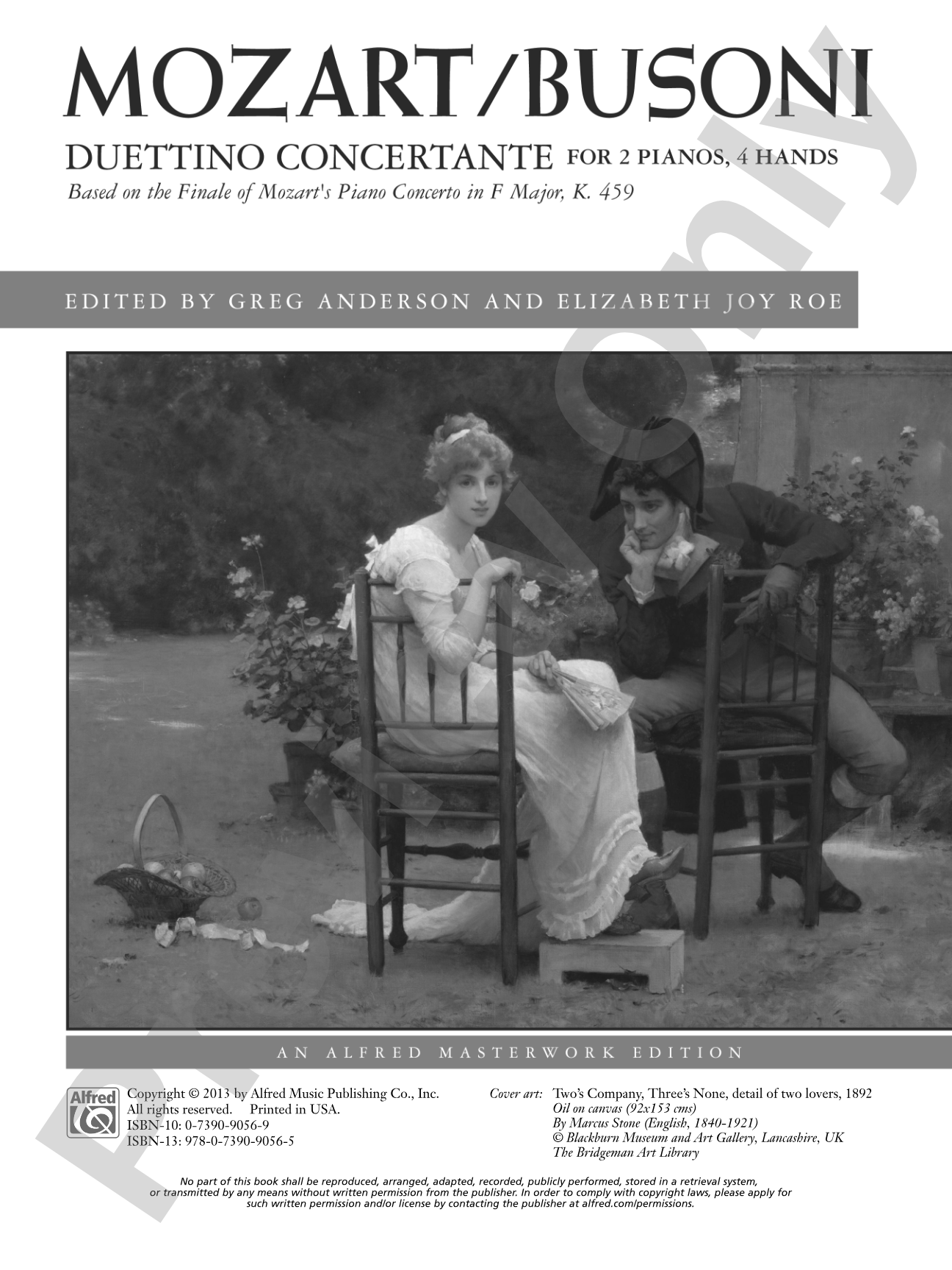

Mozart/Busoni: Duettino concertante: Based on the Finale of Mozart's Piano Concerto in F Major, K. 459 - Piano Duo (2 Pianos, 4 Hands): Piano Duets & Four Hands
Based on the Finale of Mozart's Piano Concerto in F Major, K. 459
By Ferruccio Busoni / ed. Greg Anderson and Elizabeth Joy Roe
Level: Advanced
Item: 00-PB-0000595
$9.99
Pickup currently not available
Related Items
Mozart/Busoni: Duettino concertante: Piano Duo (2 Pianos, 4 Hands) Book (2 copies required) |
$9.99
|
View |
Description
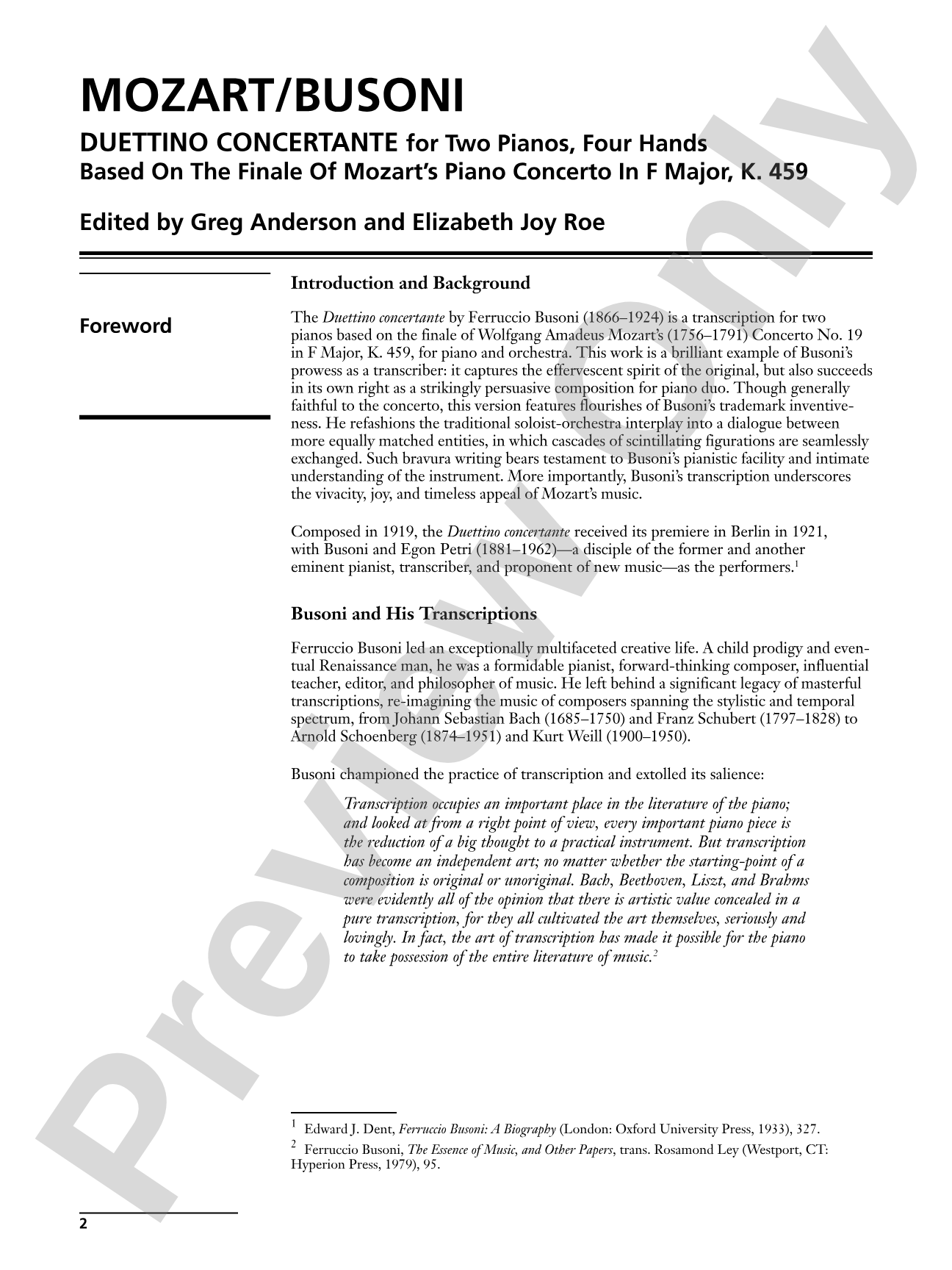
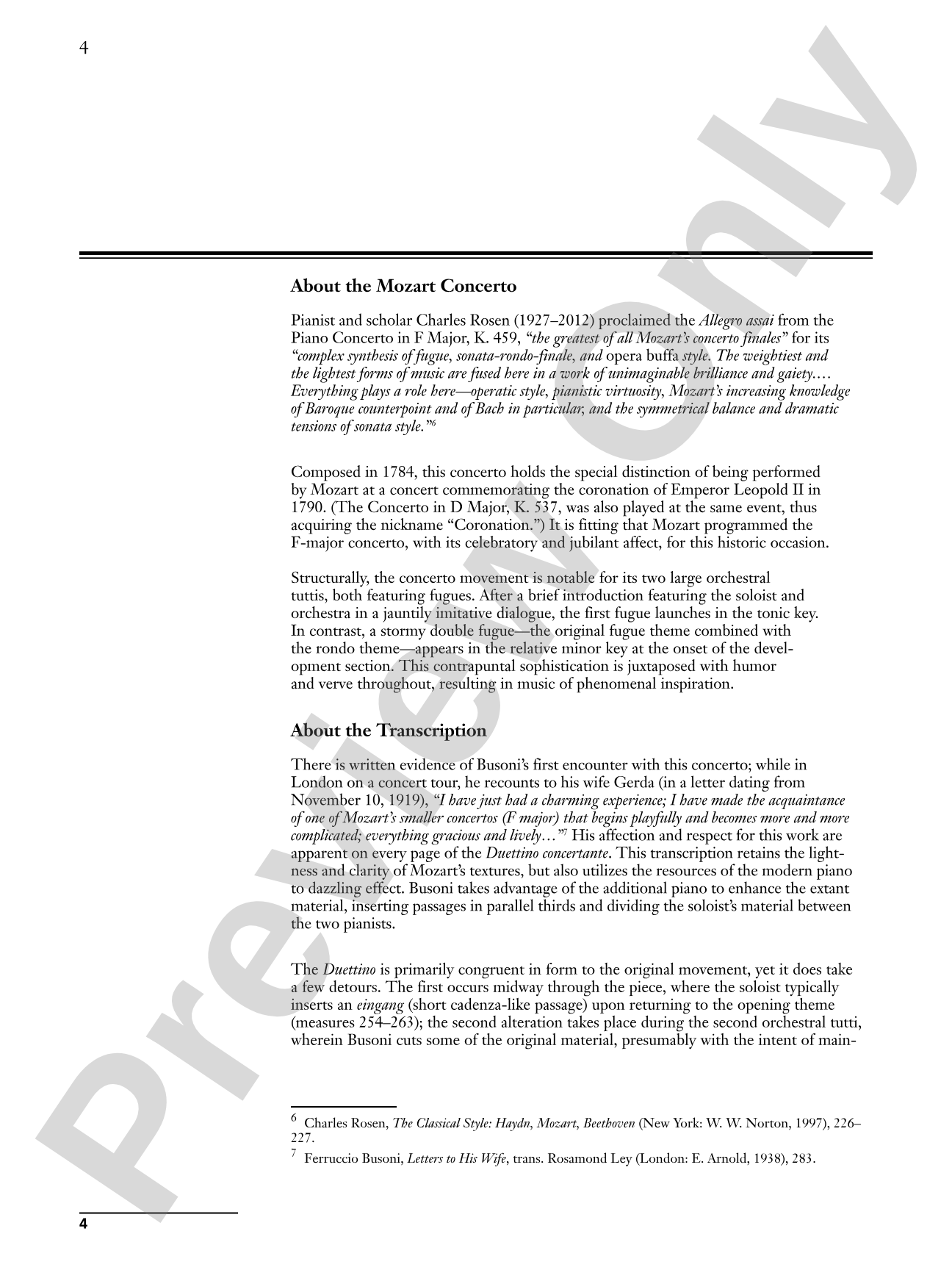
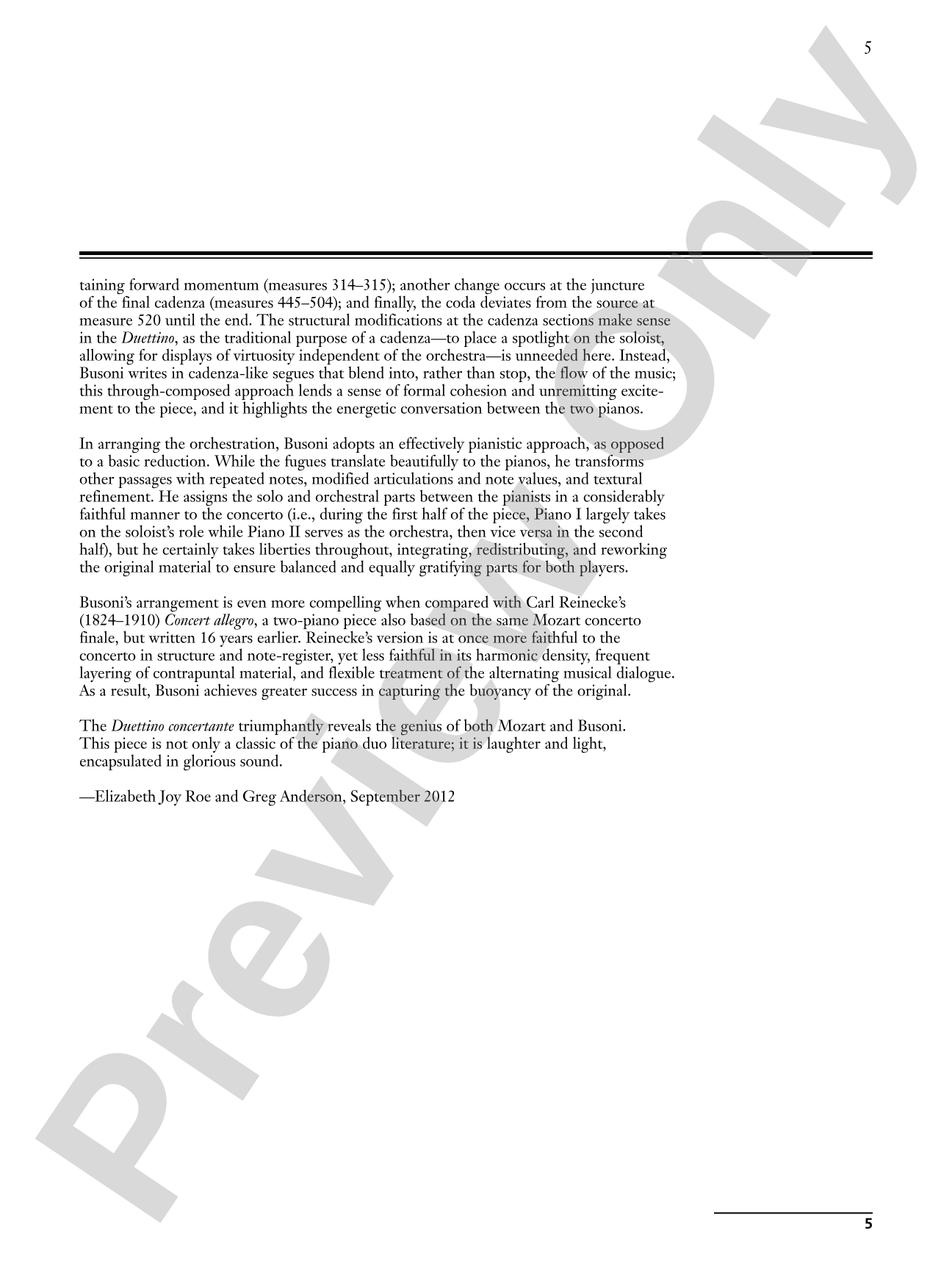
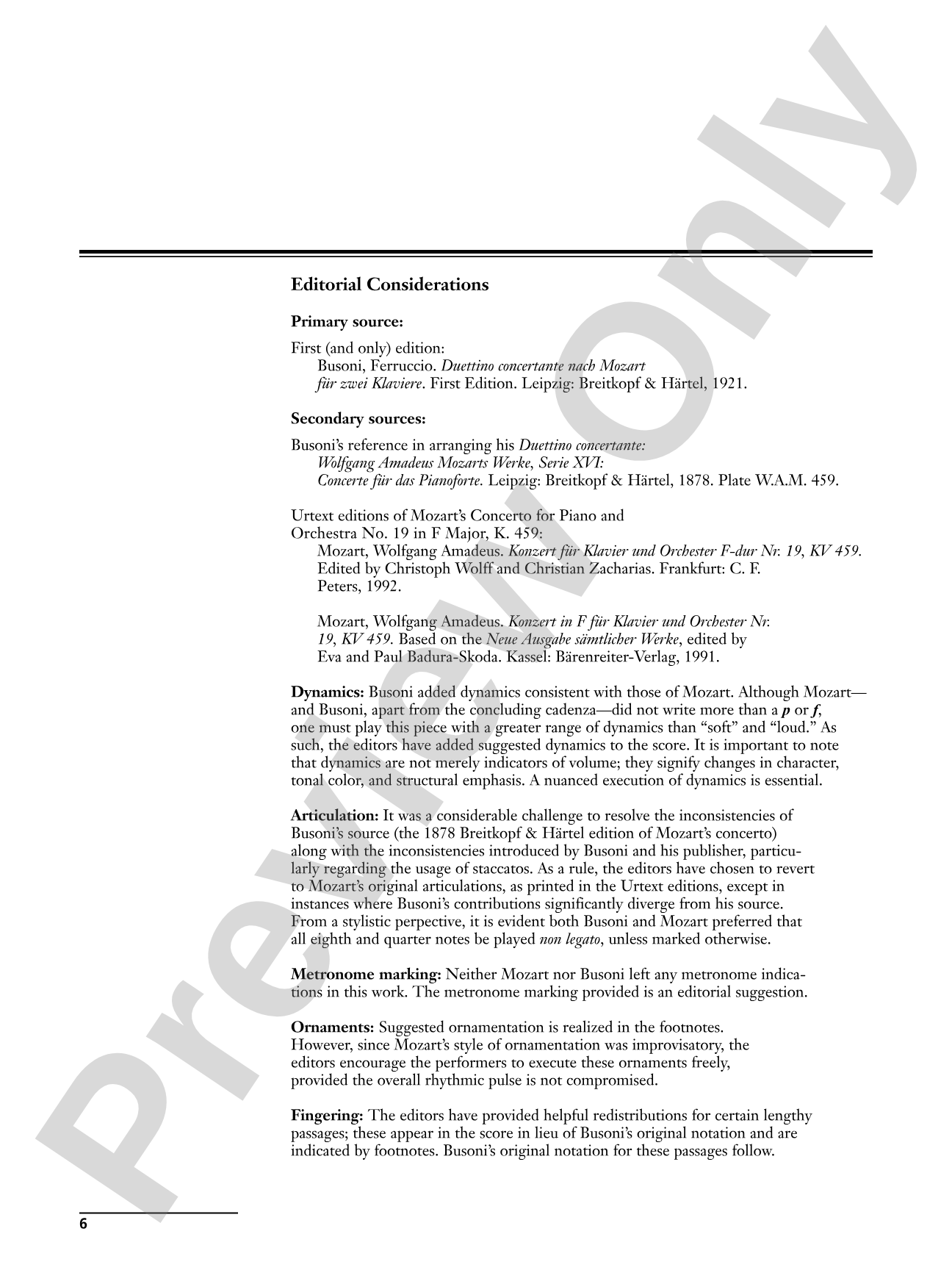
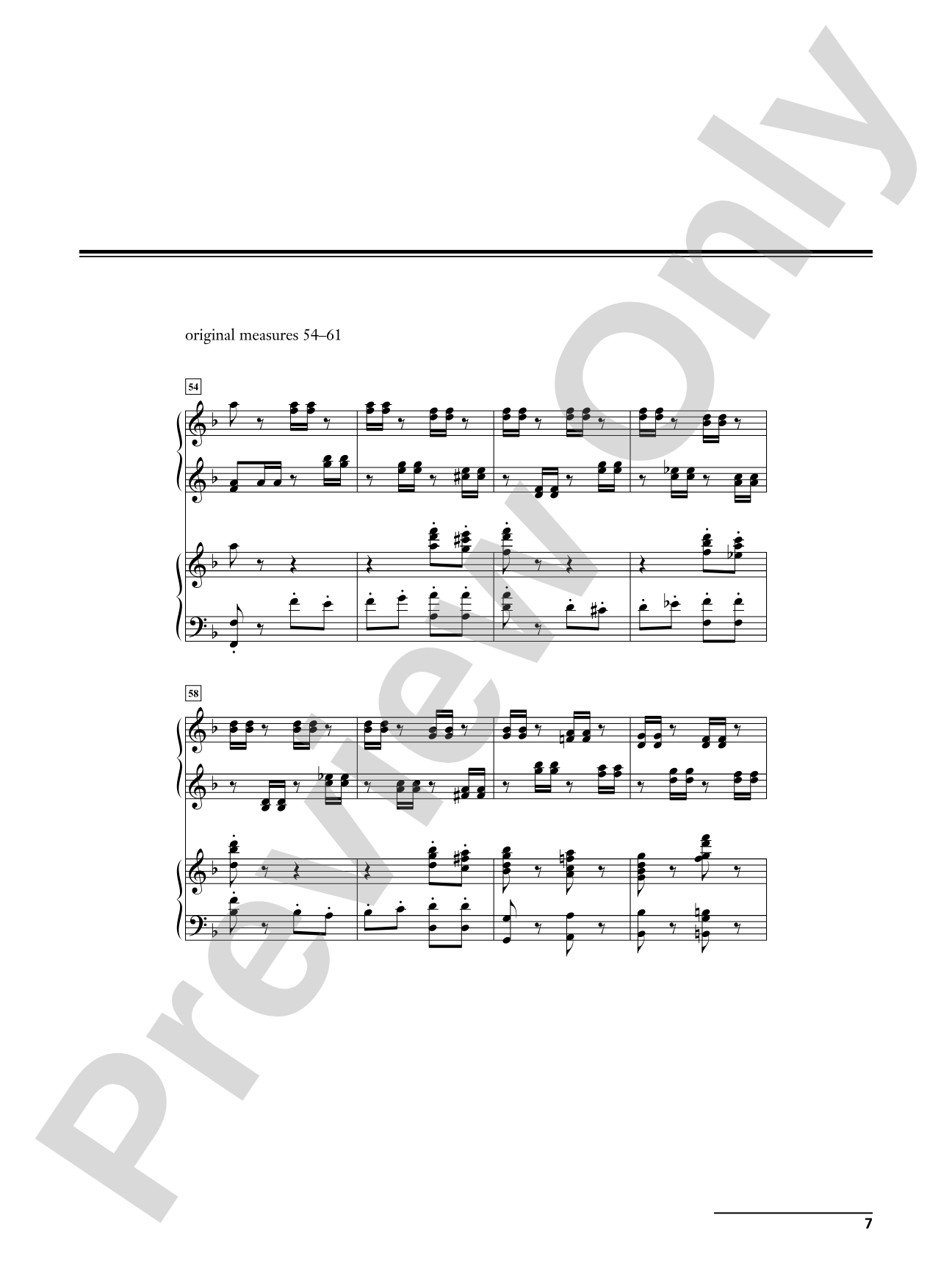
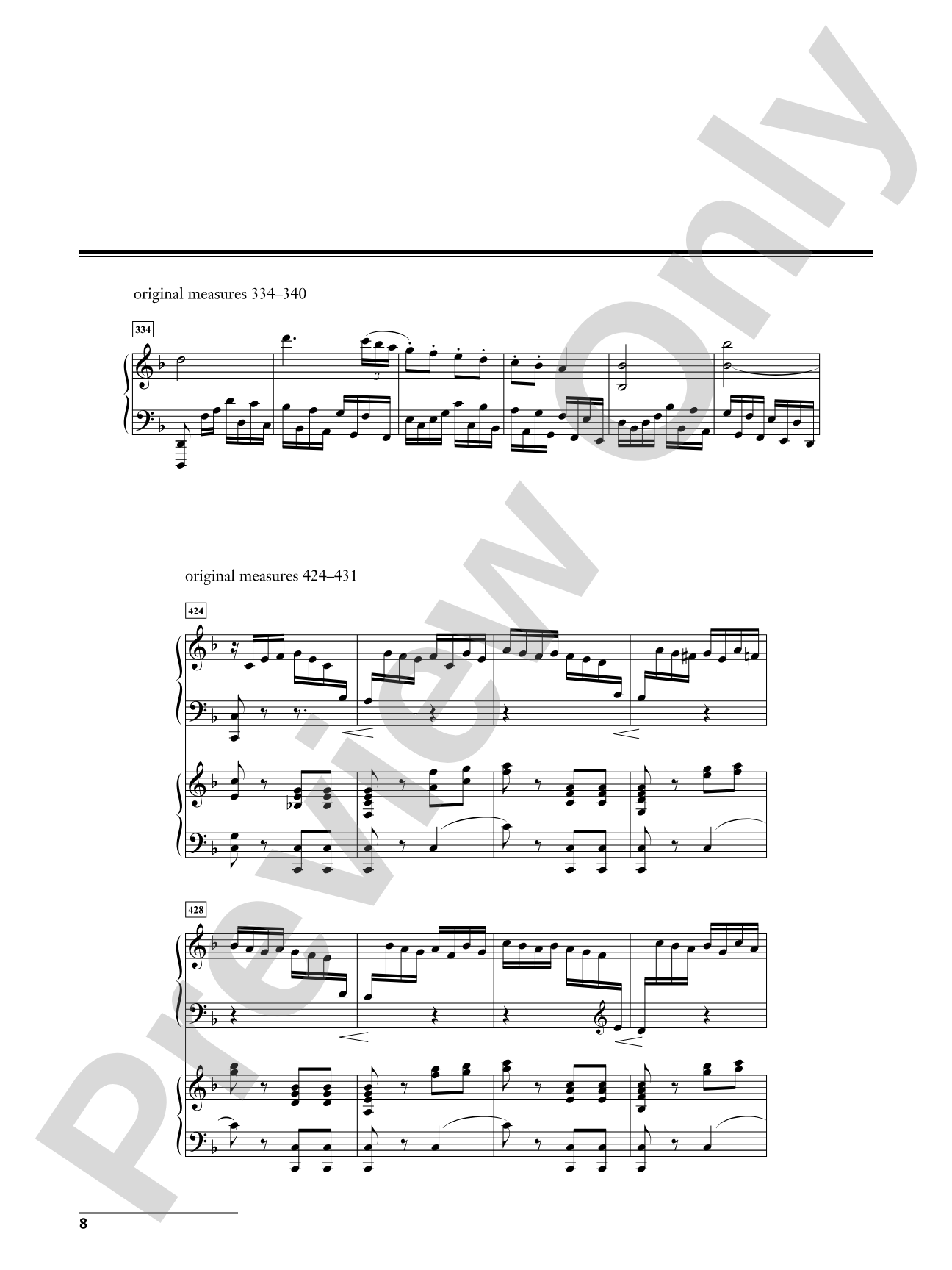
Ferruccio Busoni's Duettino concertante for two pianos, four hands, is based on Mozart's Finale of Concerto No. 19 in F Major, K. 459, for piano and orchestra. Edited by the dynamic piano duo team of Anderson & Roe, this work is a brilliant example of Busoni's prowess as a transcriber as it retains the lightness and clarity of Mozart's textures while utilizing the resources of the modern piano. Metronome marks are editorial and ornaments are realized in footnotes. Fingerings, dynamics, and articulation have been supplemented by the editors. Two copies required. A Federation Festivals 2024-2028 selection.


Mozart/Busoni: Duettino concertante: Based on the Finale of Mozart's Piano Concerto in F Major, K. 459 - Piano Duo (2 Pianos, 4 Hands): Piano Duets & Four Hands isn't in MakeMusic Cloud just yet...but it could be. Let us know you'd like to see it, and you'll help shape what comes next. In the meantime, start a free trial and dive into thousands of interactive titles your students can play along with today.
Request This Title
Tell us you want it.
Start Your Free Trial
Explore everything that's ready to play right now.
Sample Audio
No sample audio found.
Sample Video
No sample videos found.
Additional Details
Series:
Alfred Masterwork Edition
Publisher:
Alfred Music
Page Count:
36
SKU:
00-PB-0000595
More about this title
About the Composer: Ferruccio Busoni
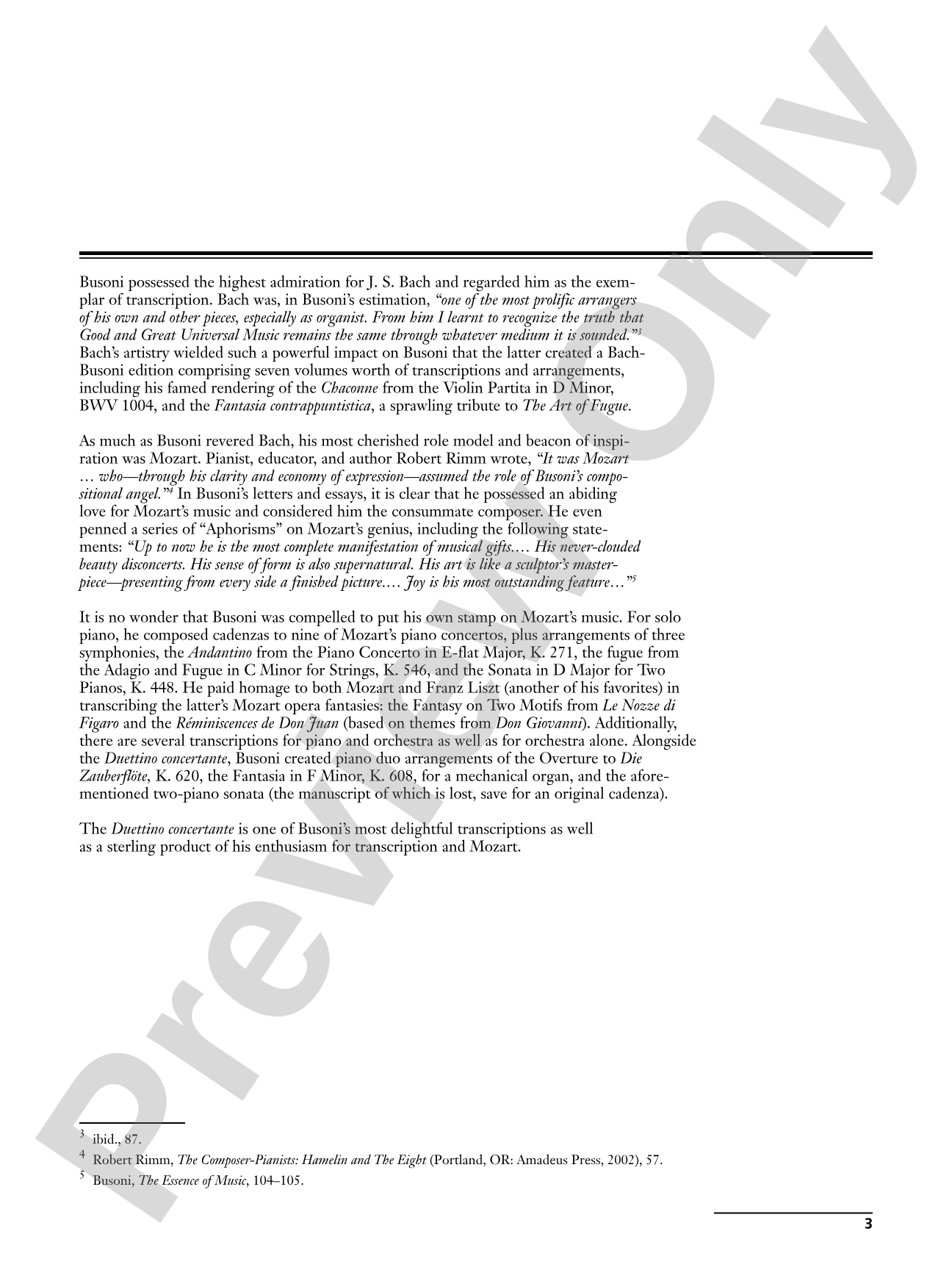
Ferruccio Busoni (1866-1924) was an Italian pianist, composer, and conductor whose transcriptions and arrangements rank among the finest ever written for keyboard instruments. His approach to transcription was never literal; instead, he treated the original work as a foundation for reimagining sound and texture through the capabilities of modern instruments. Busoni's dual mastery as both a virtuoso pianist and a compositional innovator gave him unique insight into what works could become when adapted for new contexts.
Busoni's transcriptions are studied and performed today because they balance fidelity to the composer's intent with genuine creative transformation. He understood how to expand harmonic possibilities, redistribute material between hands, and deepen textures without losing the essential character of the original. His work remains a model for how transcription can be both scholarship and artistry.
Why we love this
Busoni's transcription of Mozart's K. 459 finale strips away the orchestration with surgical precision, yet the piece gains rather than loses in the transaction. With Anderson & Roe's careful editorial work, pianists encounter Mozartian elegance filtered through a twentieth-century sensibility about what two pianos can achieve together. This is programming gold for advanced duos who want something substantive that still sparkles.
What to expect
Bright, conversational, and unexpectedly modern despite its historical roots. The two pianos trade phrases with the ease of chamber musicians, creating a sense of dialogue that Mozart's original concerto hints at but the duo setting makes explicit. Beneath the surface sparkle runs a current of harmonic subtlety that rewards close listening.
Who it's for
Advanced piano duos preparing for competitions, festivals, or recitals who want a work that balances serious pianistic demands with the elegance of the Classical repertoire. This is also ideal for pianists studying transcription as a compositional craft and wanting to understand how a master approached the problem.
How to get the most out of it
- Treat the piano that carries Mozart's original solo line as the conversation's anchor, even when both parts are equally active. Balance should favor clarity of melody, not equality of volume.
- Study the ornament realizations in the footnotes as suggestions, not law. These are Busoni's and the editors' choices; your own interpretive voice matters here.
- The lightness Busoni prized in Mozart's orchestration translates to touch. Avoid the temptation to make this thick or heavy just because you have two pianos; restraint in pedal and dynamics preserves the original's wit.
- Lock the tempo relationships between the two pianos from rehearsal one. Busoni's material often alternates between coordinated rhythmic gestures and independent figurations; rhythmic unanimity prevents the piece from splintering into two separate performances.
How to use it
This sits naturally on a recital featuring keyboard transcriptions across centuries, or as a centerpiece in a program pairing Mozart with twentieth-century responses to his work. It also serves as an excellent final-round festival piece for advanced competitors who need repertoire that impresses without relying on flashy virtuosity alone.
Skills your students will build
- Coordination and independence between two instruments in contrapuntal and homophonic textures
- Interpretation of editorial realizations and ornaments in historical transcriptions
- Touch differentiation to preserve clarity when material passes between pianos
- Balance and blend in ensemble playing at an advanced level
- Understanding of how twentieth-century pianistic resources can enhance rather than distort Classical material