
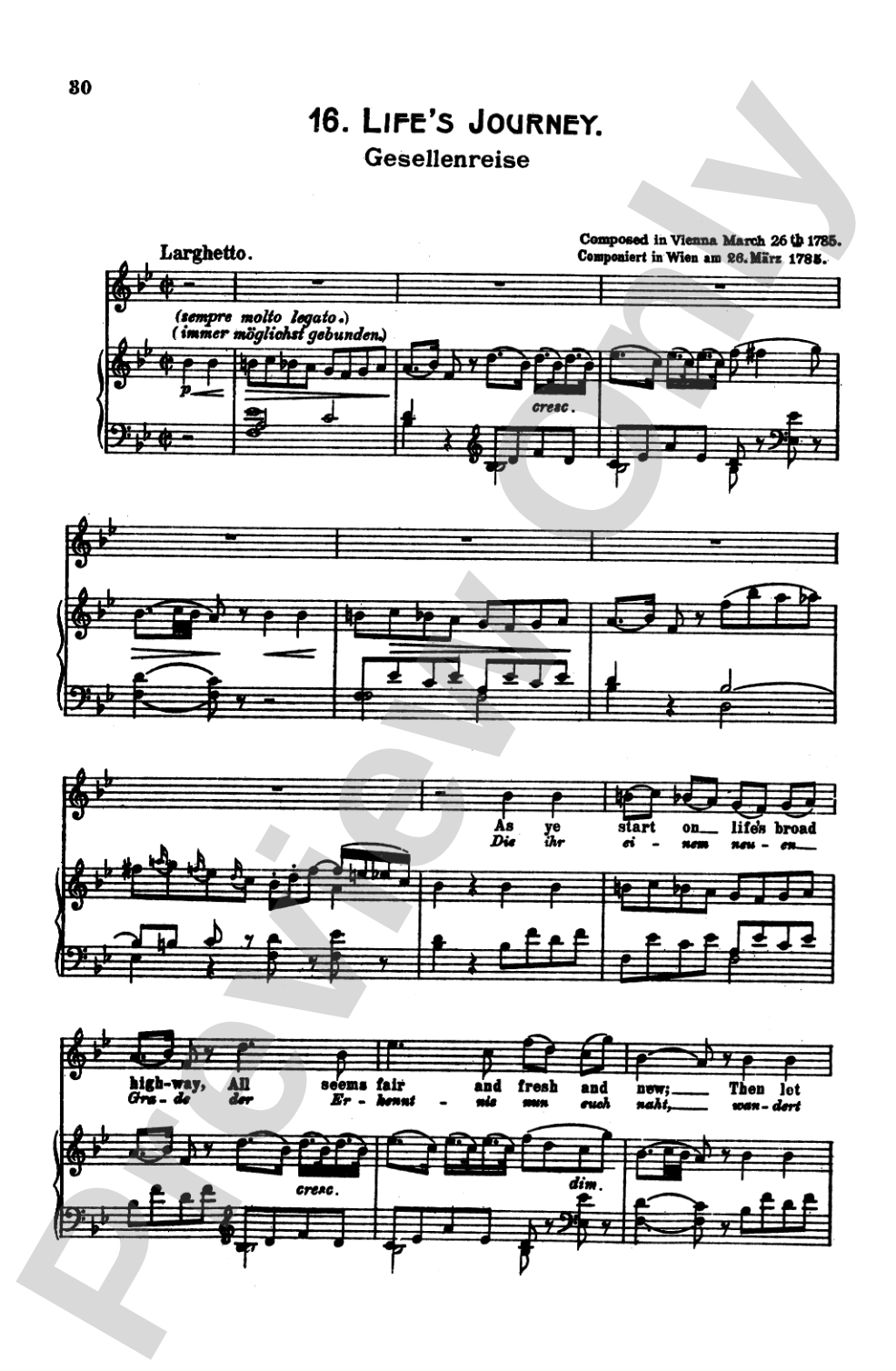

Mozart: 39 Songs for Medium High Voice (German/English/French/Italian)
For Solo Voice and Piano with German and English Text (Some Songs also with French of Italian Text)
By Wolfgang Amadeus Mozart
Item: 00-PC-0011363
$0.99
Pickup currently not available
Description
A collection of pieces for Medium High Voice, composed by Wolfgang Amadeus Mozart.


Don't just read it, hear it, play along with it, and watch your students grow with it. In MakeMusic Cloud, Mozart: 39 Songs for Medium High Voice (German/English/French/Italian) comes alive with professional accompaniment, adjustable tempo, and built-in practice tools that turn solo practice into real progress.
Open in the Player
Jump straight in and assign it today.
Start Your Free Trial
Open this title and explore the full library in minutes.
Sample Audio
No sample audio found.
Sample Video
No sample videos found.
Additional Details
Series:
Kalmus Edition
Publisher:
Alfred Music
Page Count:
96
SKU:
00-PC-0011363
More about this title
About the Composer: Wolfgang Amadeus Mozart
Wolfgang Amadeus Mozart (1756-1791) was an Austrian composer whose prolific output spanned every major genre of his era. He wrote over 600 works across symphonies, concertos, operas, chamber music, and vocal works, establishing himself as one of the most influential figures in Western classical music. His vocal writing is marked by elegant phrasing, expressive melodic lines, and a gift for text setting that brings poetry to life with musical sophistication.
Mozart's songs occupy a distinctive place in his catalogue. Written for various occasions and texts in multiple languages, they showcase his ability to craft intimate, singable music without sacrificing harmonic ingenuity or emotional depth. These pieces remain essential repertoire for vocalists developing lyrical control, interpretive nuance, and facility with Classical-era vocal technique.
Why we love this
Mozart's vocal writing sits in that rare category where technical refinement never interferes with accessibility. These 39 songs offer singers material that sounds vocally natural to sing while demanding real attention to phrasing, text clarity across four languages, and the kind of nuanced dynamic control that distinguishes mature performers. Programming them alongside other vocal collections or weaving them through a season gives students touchstones for understanding how melody and language intersect.
What to expect
Mozart's songs invite you into elegant, intimate spaces. Whether reflecting on love, nature, or human emotion, these pieces unfold with clarity and grace. The music feels conversational and direct, yet harbors surprising harmonic depths and expressive moments that reward careful listening and thoughtful interpretation.
Who it's for
This collection serves vocalists in upper-intermediate to advanced stages of study who are ready to engage with Classical vocal literature across multiple languages. It works equally well for solo recital preparation, song study in applied lessons, or as repertoire selections for vocal competitions and auditions.
How to get the most out of it
- Attend carefully to the language of each piece. Mozart's melodic lines often mirror the prosody of the text, so treating the language authentically (whether German, English, French, or Italian) shapes how naturally the music will sit vocally.
- Shape phrases around harmonic goals rather than text-driven stress. Mozart's Classical sensibility favors elegant arc and proportional phrasing; allow the melody to breathe at structurally important cadences.
- Balance technical clarity with lyrical generosity. Many of these songs feature elegant passagework or wide intervallic leaps that need security, but the expressive core lies in sustained, cantabile singing rather than showiness.
- Collaborate closely with your accompanist on tempo and character. Mozart's shorter pieces rely entirely on the partnership between voice and piano to establish mood; the accompaniment is never merely supportive.
How to use it
Feature individual songs as recital selections in solo voice competitions or evening programs, or program groups of three to five songs as thematic sets within larger choral concerts. Their accessibility makes them ideal for introducing advanced high school singers to art song repertoire, while their sophistication keeps them relevant for college and professional vocalists building their Classical-era library.
Skills your students will build
- Singing in German, French, Italian, and English with appropriate diction and phrasing conventions
- Interpreting Classical-era vocal phrasing and understanding text-to-melody relationships
- Sustaining lyrical lines while executing clean passagework and wide intervallic leaps
- Collaborating with accompanists on tempo, dynamics, and character development
- Recognizing harmonic functions and building expressive architecture around structural cadences