
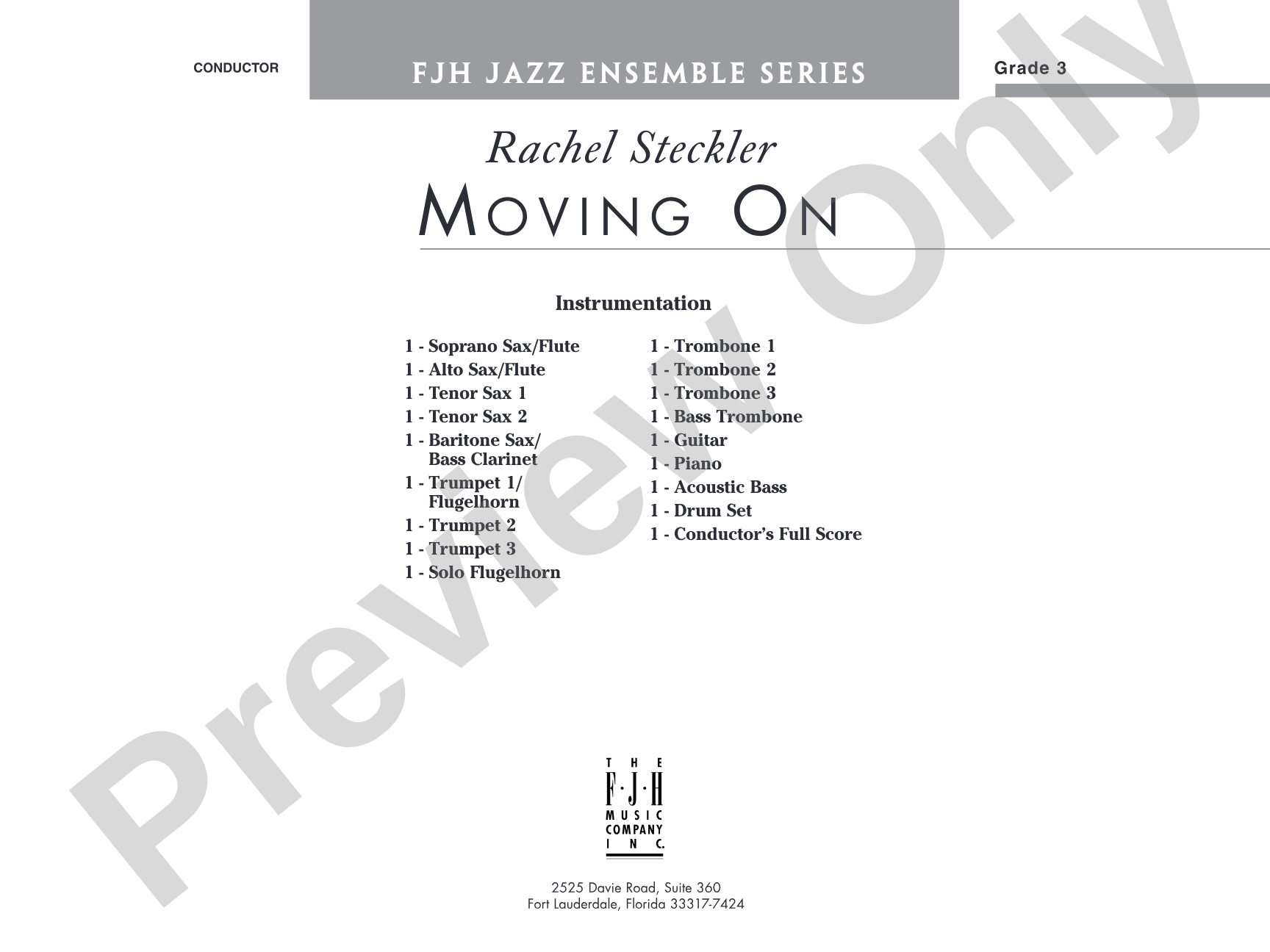
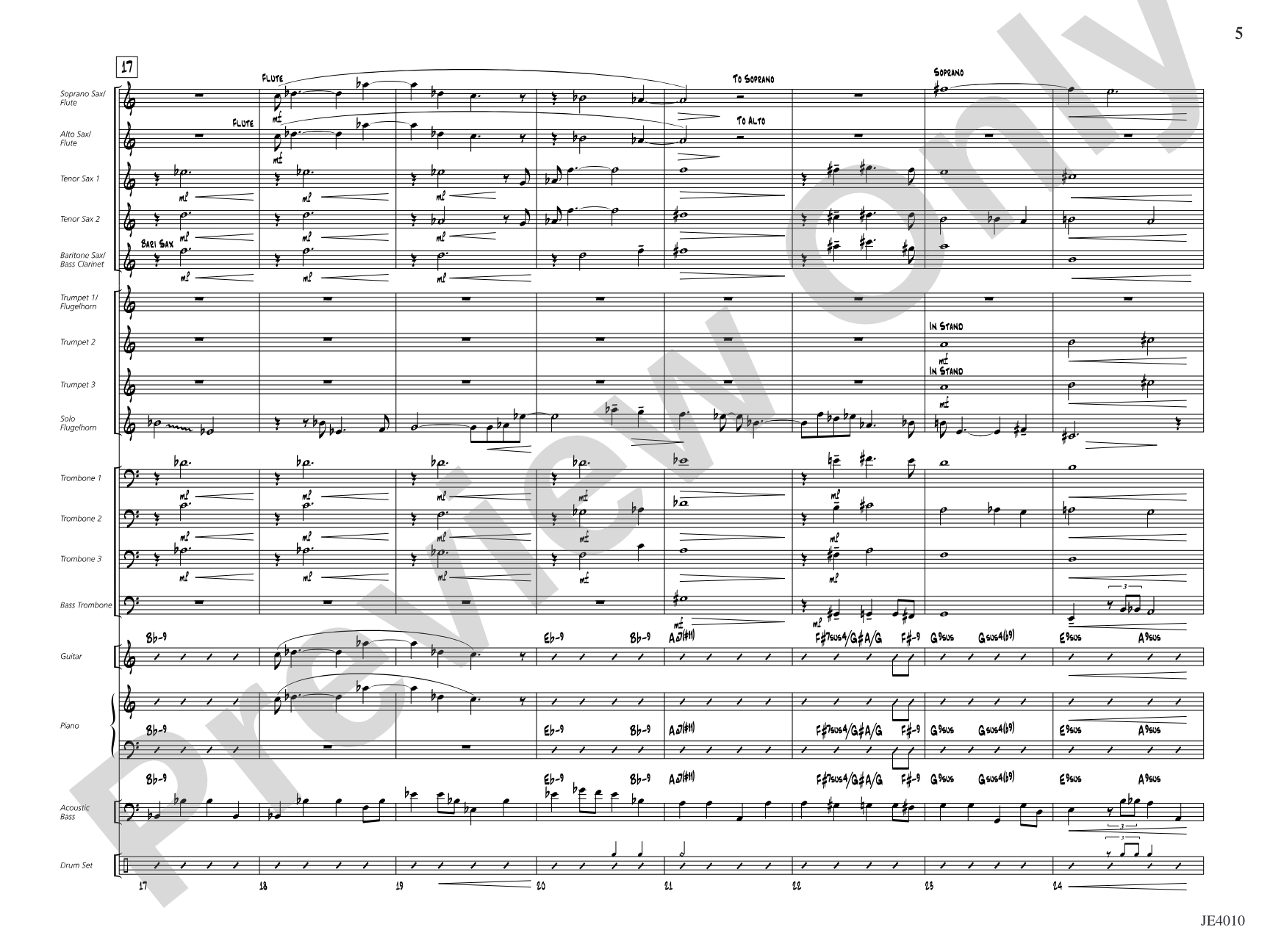
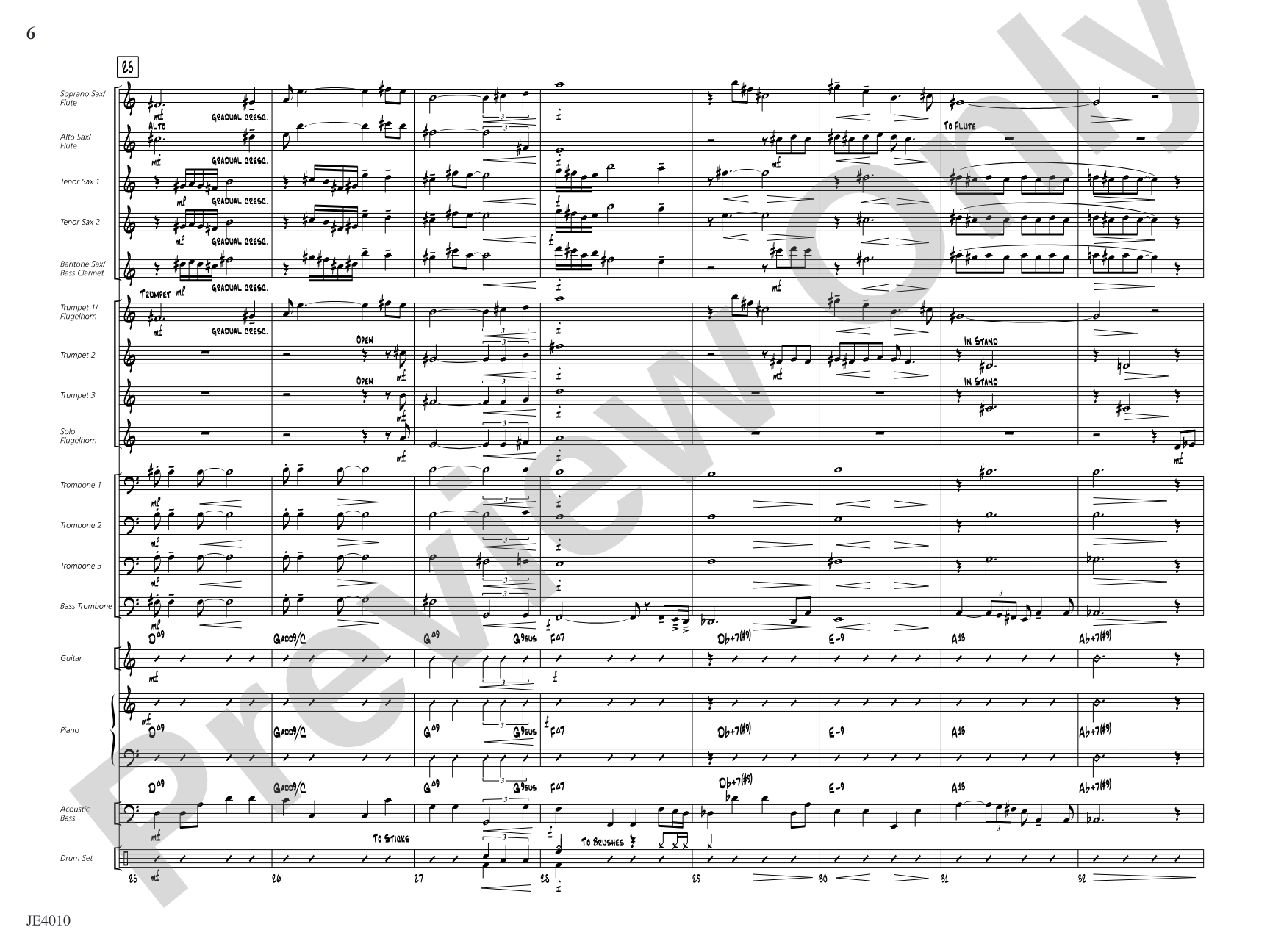
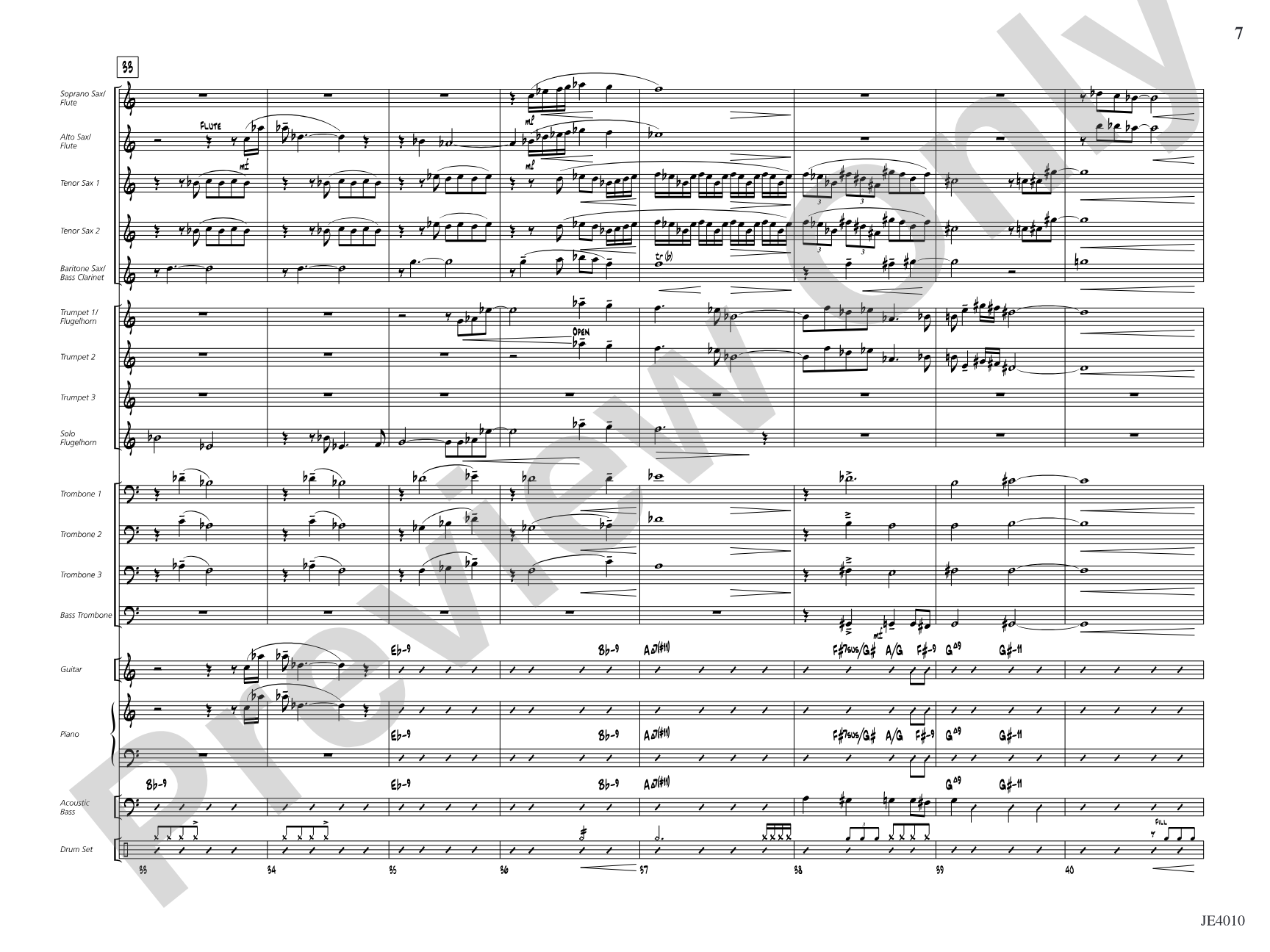
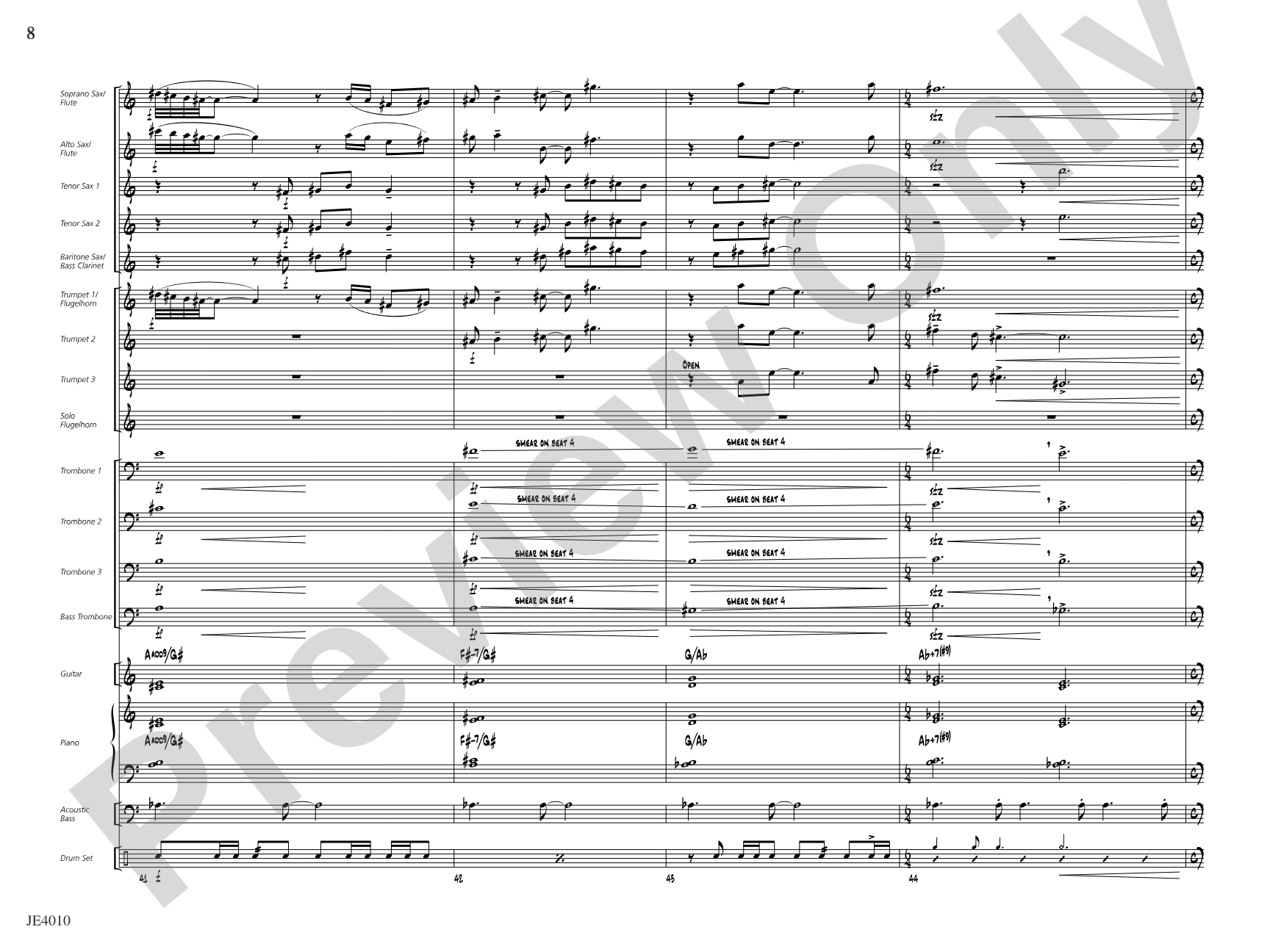
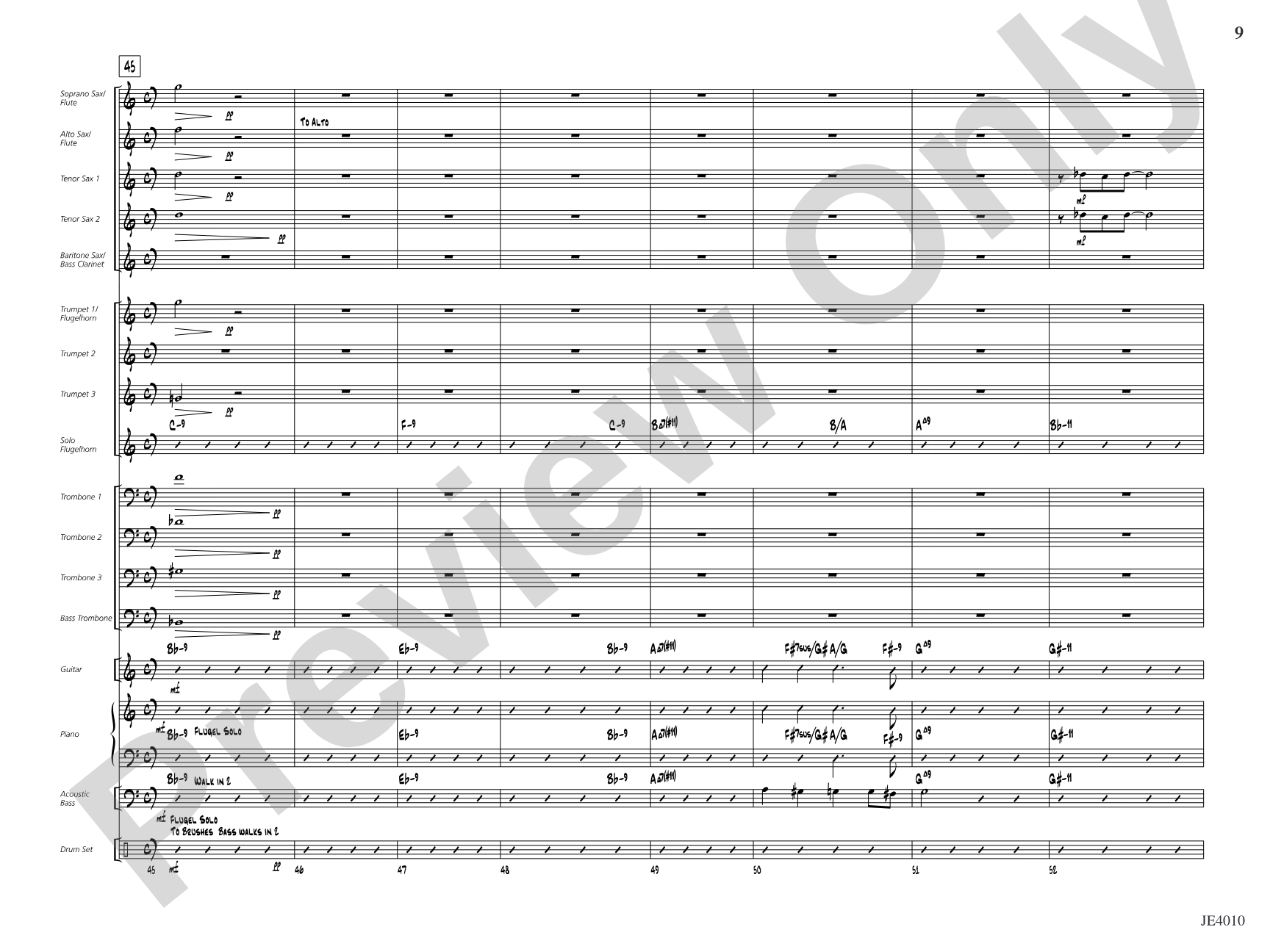
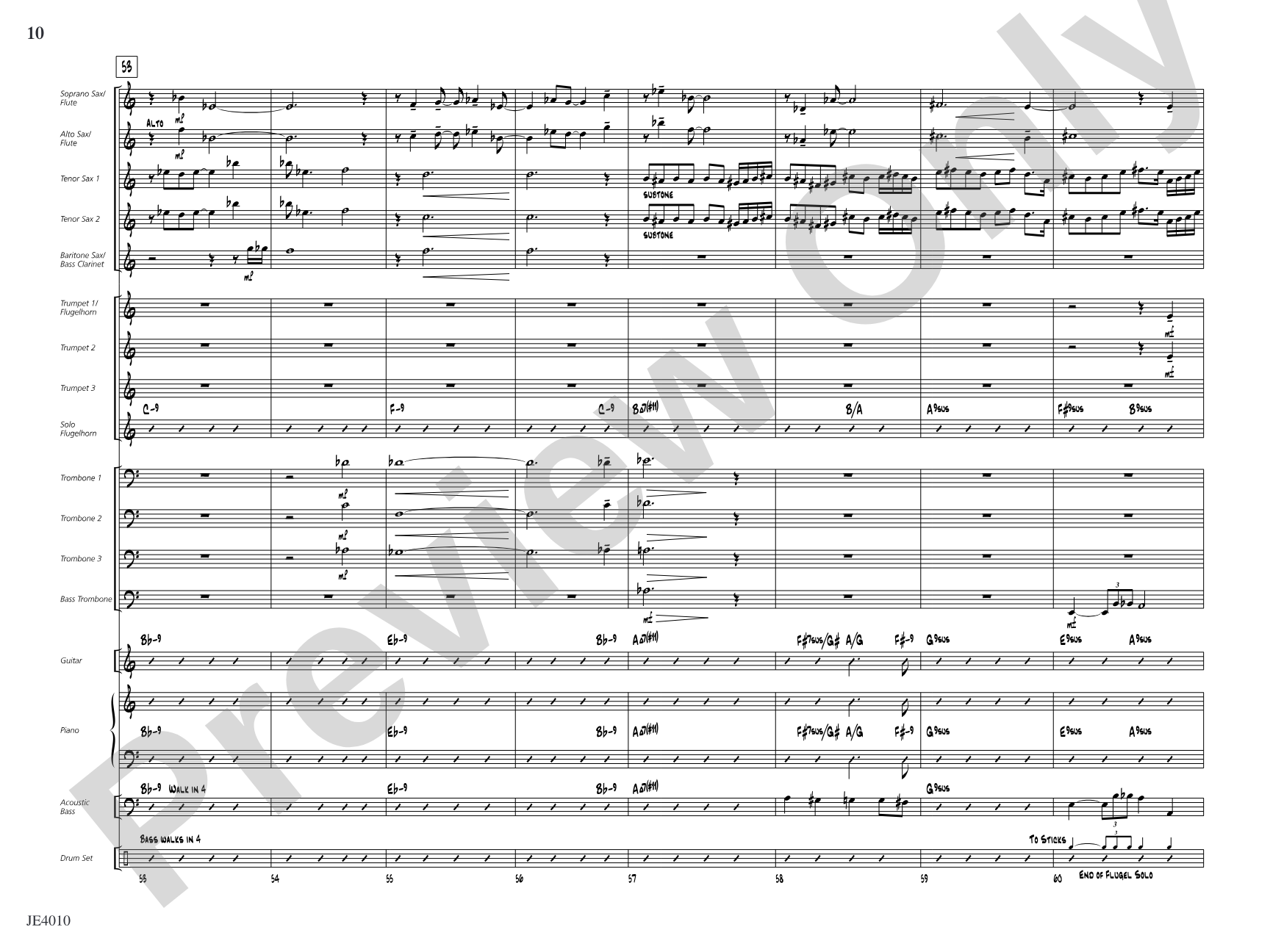
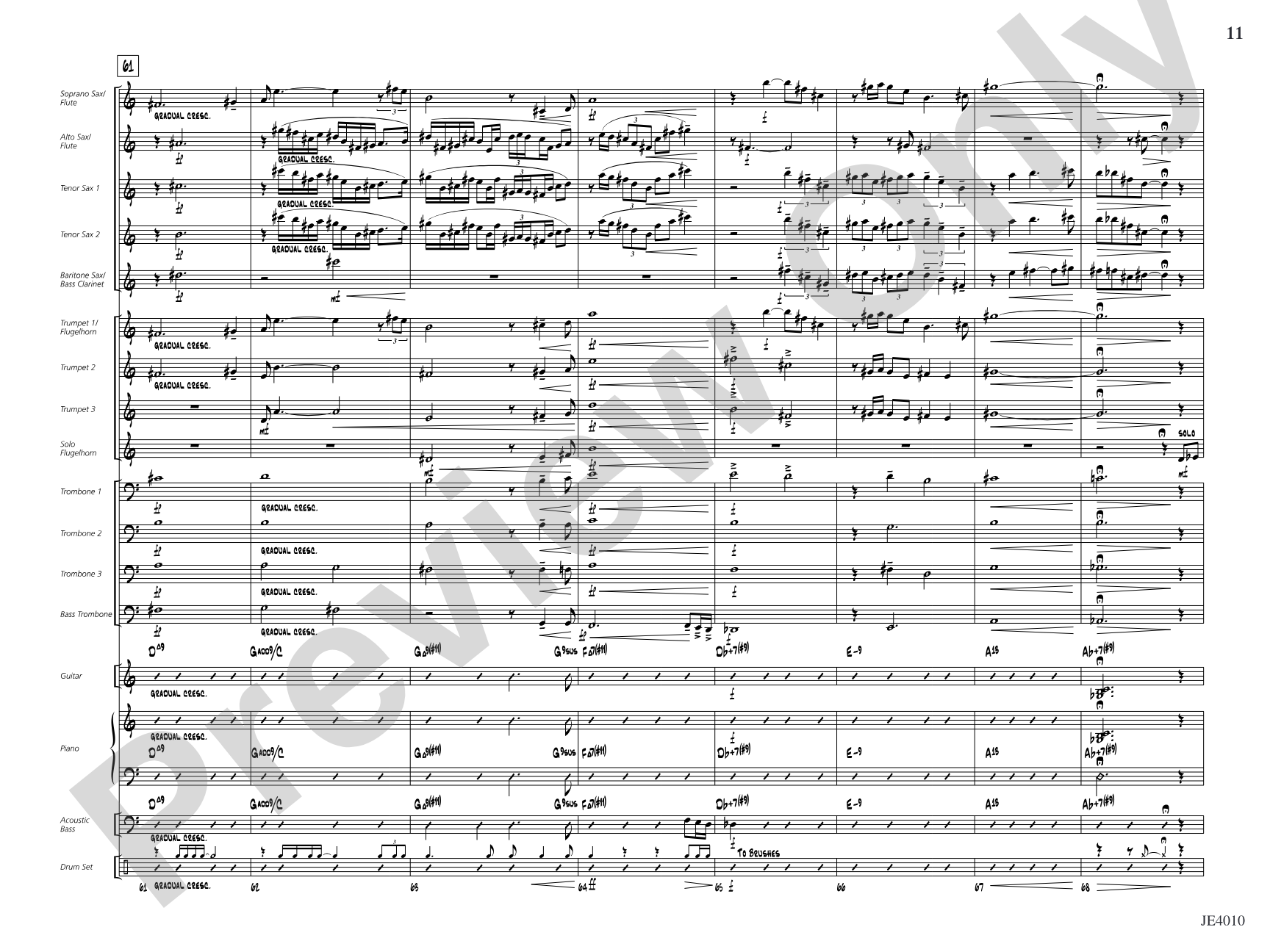
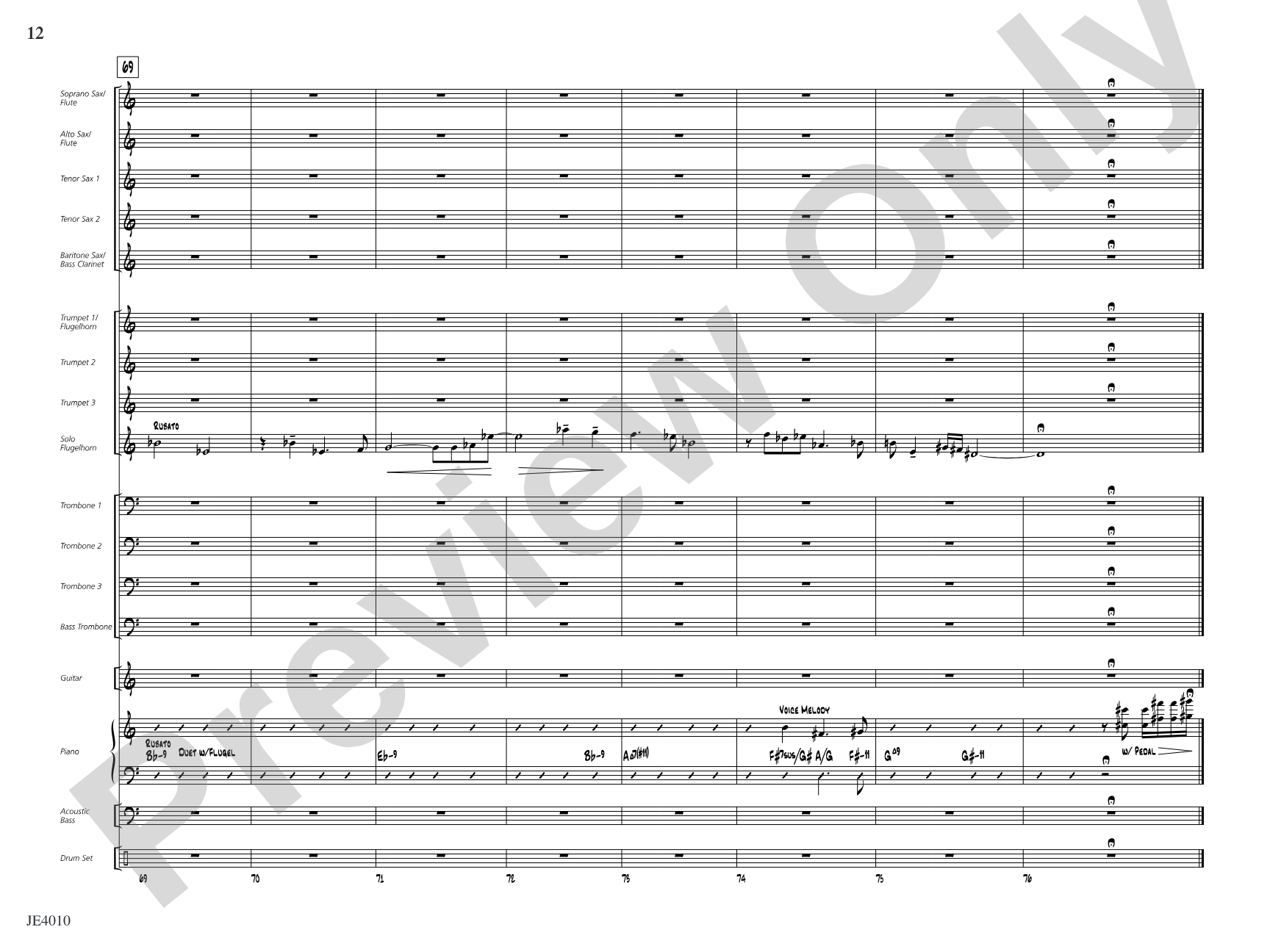

Moving On: Score
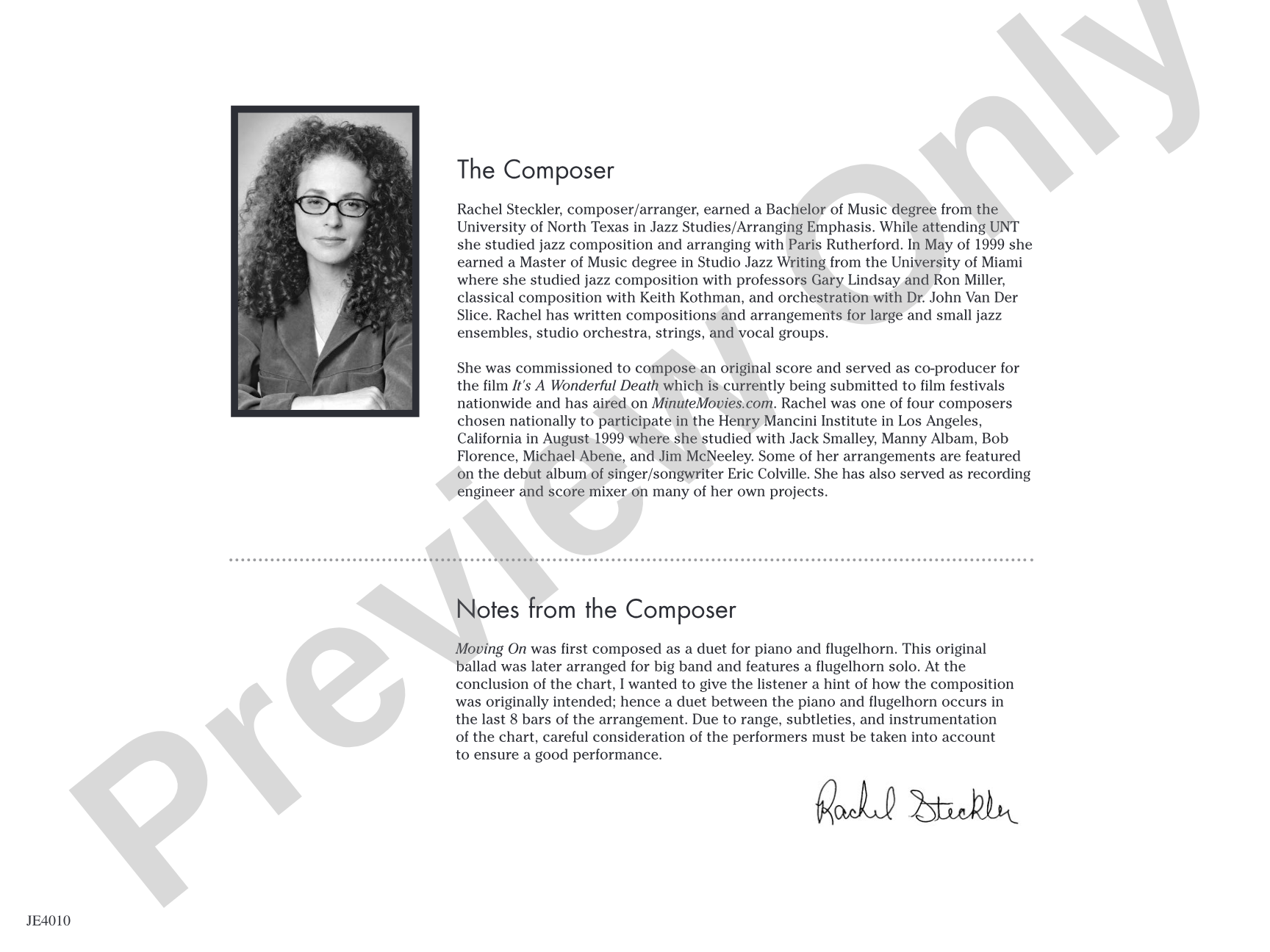
By Rachel Steckler
Grade: 3
Item: 98-DJE4010S
$6.00
Pickup currently not available
Description
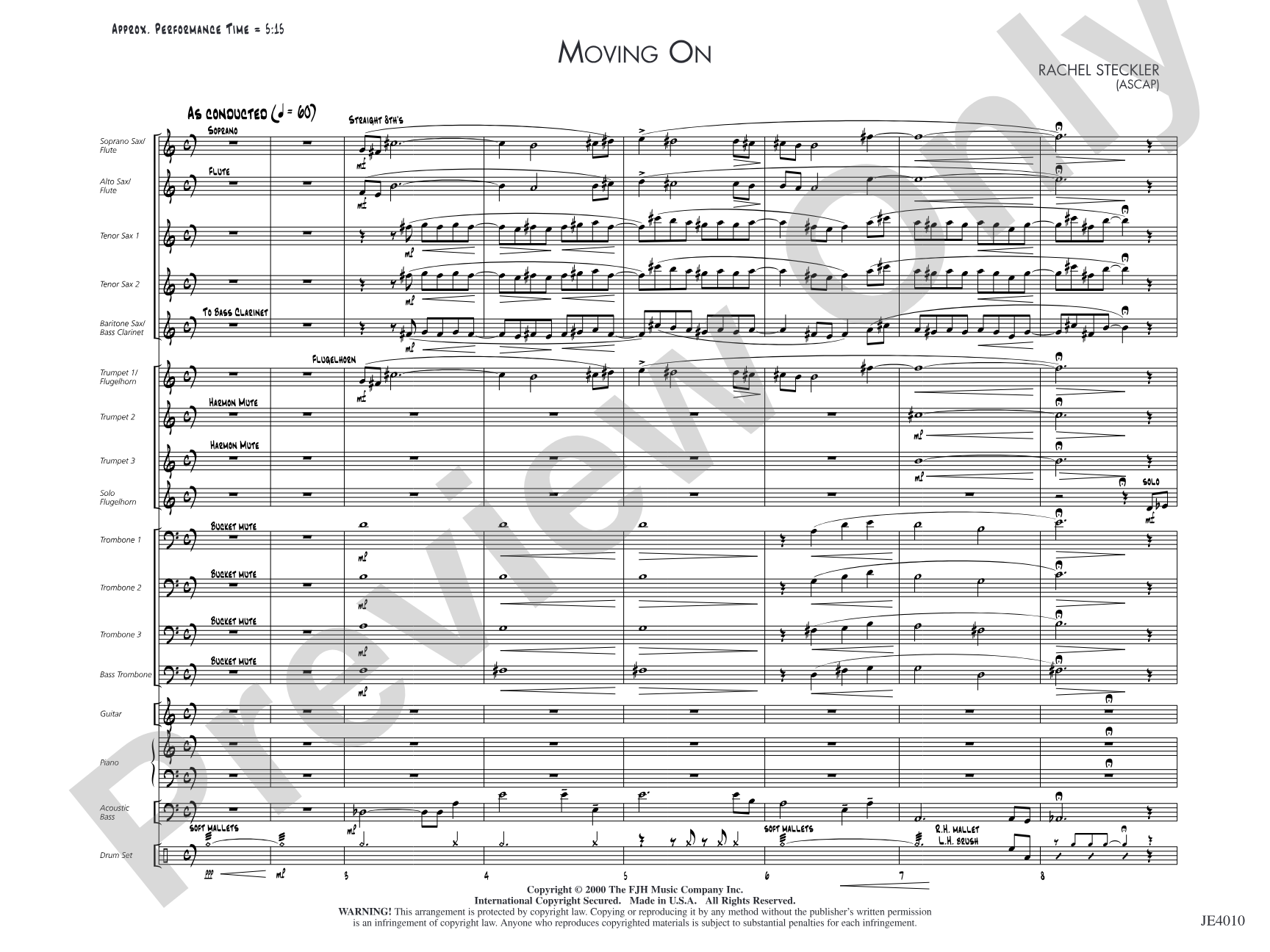
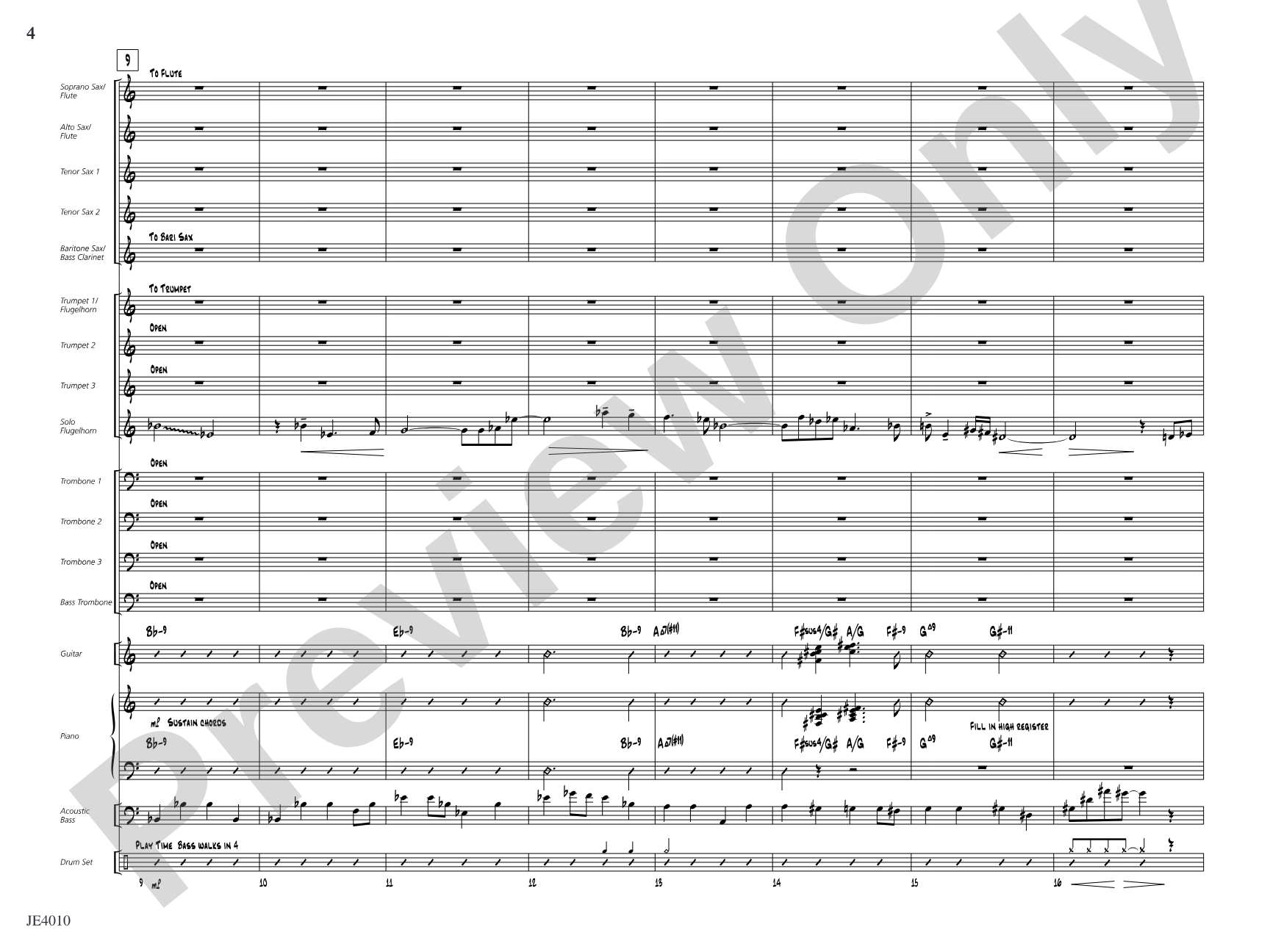
This beautiful ballad features flugelhorn solo and a lush background. Features lots of muted brass and parts for flute, soprano sax, and bass clarinet. Changes appear in the fourth trumpet/flugelhorn part only. Your slow chart winner for the festival!


Discover MakeMusic Cloud: thousands of interactive titles your students can play along with today.
Sample Audio
1
Audio File
--:--
0:00
0:00
Sample Video
No sample videos found.
Additional Details
Series:
FJH Intermediate Jazz Ensemble
Publisher:
The FJH Music Company, Inc.
SKU:
98-DJE4010S
More about this title
Why we love this
Steckler writes with real sensitivity to what makes a ballad work at the high school level: a genuine solo voice (flugelhorn) that students will want to listen to, ensemble writing that supports without overwhelming, and enough textural variety (muted brass, extended instrumentation) to keep the arrangement fresh. The changes appear only in one part, which means your lead player gets the spotlight while the section stays locked and supporting.
What to expect
Intimate and reflective, with the kind of lush harmonic warmth that only muted brass can create. The flugelhorn carries the emotional weight while the ensemble surrounds it with gentle support, making it feel like a confident ballad performance rather than a showcase vehicle.
Who it's for
Jazz ensembles at the Grade 3 level who have secure fundamentals and want a feature that showcases a capable lead player. This works equally well for directors looking to balance their season with a lyrical piece or for programs that need a reliable slow chart for festival play.
How to get the most out of it
- Balance the flugelhorn solo so it sits naturally above the ensemble without requiring the player to force dynamics; the muted backgrounds should recede slightly even if they're playing at a healthy volume.
- Use the fourth trumpet/flugelhorn part as your guide for the chart's emotional arc; since changes appear only there, have that player mark cues and the rest of the section will follow the original harmonic framework.
- Let the flute, soprano sax, and bass clarinet voice the upper and lower textural layers; they create the lush sound, so make sure they hear each other even during full ensemble moments.
- Commit to the ballad's slow tempo from rehearsal one; rushing even slightly erodes the beauty of the muted brass sonority that defines this chart.
How to use it
Program this as a set opener or closer for a concert where you want to establish mood and showcase ensemble maturity. It also serves as a strong festival entry for a slow chart category, especially if your flugelhorn player has the lyrical quality and breath control to phrase through longer lines.
Skills your students will build
- Sustaining balanced muted brass sonority across a full section
- Listening to and supporting a featured soloist without losing ensemble cohesion
- Reading extended instrumentation (flute, soprano sax, bass clarinet alongside traditional jazz voices)
- Playing with dynamic sensitivity in a ballad context
- Following a soloist's phrasing variations while maintaining rhythmic foundation