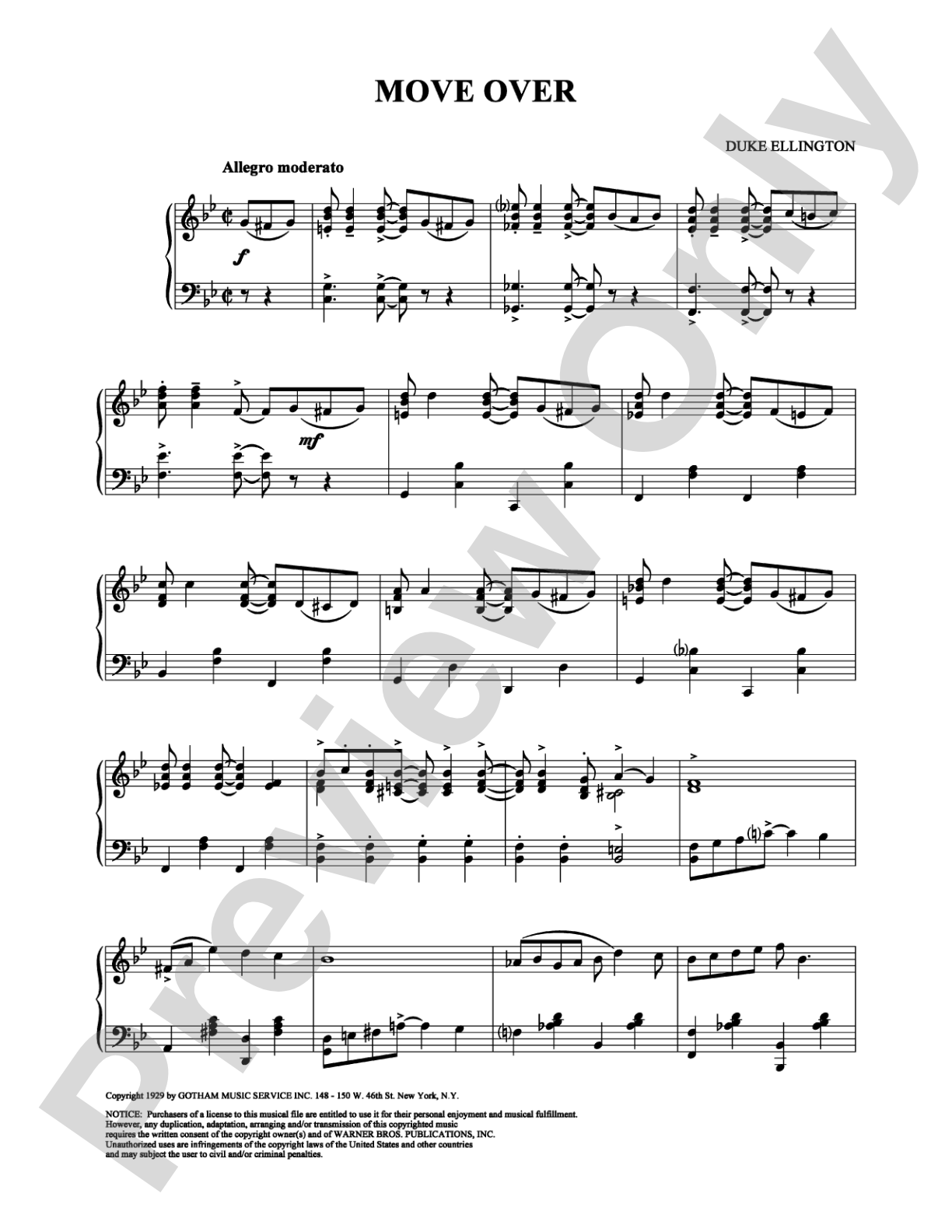
Move Over: Piano Digital Sheet Music

Move Over: Piano Digital Sheet Music

Duke Ellington

Item: 00-PS-0008199

Digital Download
$3.99
Description

Move Over: Piano Digital Sheet Music isn't in MakeMusic Cloud just yet...but it could be. Let us know you'd like to see it, and you'll help shape what comes next. In the meantime, start a free trial and dive into thousands of interactive titles your students can play along with today.

Sample Audio
No sample audio found.
Sample Video
Additional Details
SKU: 00-PS-0008199

More about this title

About the Artist: Duke Ellington

Duke Ellington (1899-1974) stands as one of the most consequential composers in American music. His output spanned over five decades and reshaped jazz from a regional idiom into a concert art form, earning him recognition across classical and popular spheres alike. Ellington's harmonic sophistication, orchestral imagination, and gift for melody influenced generations of musicians far beyond jazz.

Why we love this

Ellington's stride-influenced jazz standards give pianists a direct entry into authentic jazz vocabulary without sacrificing musical substance. The compositional elegance here rewards close listening and careful voicing, making it genuinely instructive for advanced students who want to understand how swing era piano works from the inside.

What to expect

Urbane and sophisticated, with a conversational quality that invites you to lean in. The harmonic colors shift unexpectedly, and the rhythmic buoyancy keeps the piece moving forward even when the tempo sits comfortably, creating that timeless Ellington elegance.

Who it's for

Advanced jazz pianists and serious students ready to tackle swing era repertoire with authentic harmony and rhythmic vocabulary. Piano teachers working with students who want to move beyond lead-sheet playing into real composition study.

How to get the most out of it

  • Emphasize the stride left hand as foundational rhythm; the right-hand melody sits on top of it, not ahead of or behind
  • Shape the phrases by listening to the harmonic movement rather than counting measures; Ellington's phrasing often breaks the symmetry of written meter
  • Work the jazz articulation and touch separately from tempo; lock the feel before adding speed
  • Balance clarity in the upper register with a warm, singing tone in the lower voices where the harmony lives

How to use it

Pair this with other swing-era standards in a jazz recital or student showcase focused on American songwriting. It also works well in a program that traces jazz piano from stride to bebop, showing students the harmonic richness that preceded later stylistic developments.

Skills your students will build

  • Stride piano technique and left-hand independence
  • Jazz harmony reading and chord voicing
  • Swing rhythm and phrasing in jazz style
  • Improvisation frameworks based on jazz standards
  • Listening to and interpreting harmonic color and voice leading

You May Also Like