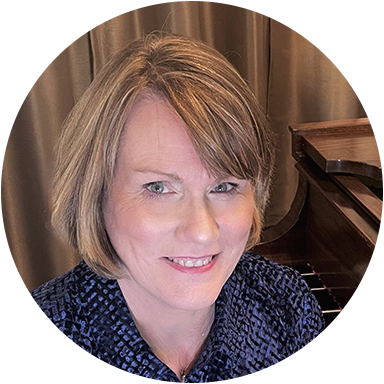
Jennifer Linn brings three decades of piano teaching experience to her work as a composer and arranger. Her output spans over 300 original pieces and editions published by major houses including Alfred, G. Schirmer, Hal Leonard, and Music Sales America. She has held faculty positions in piano pedagogy at the university level while maintaining an active independent studio serving students of all ages.
Linn's credentials include a B.M. with distinction and M.M. in piano performance from the UMKC Conservatory of Music, where she won the Concerto-Aria competition and received the Vice Chancellor's award for academic excellence and service. As a clinician, she has led workshops and master classes across the United States, Canada, and India. Her work earned her recognition as the 2013 UMKC Alumni of the Year, and in 2020 she received the Albert Nelson Marquis Lifetime Achievement Award.
Why we love this
This piece carries genuine charm without sacrificing musical substance. The title evokes playfulness, yet Linn's writing demonstrates the restraint and craft that comes from her pedagogical depth; every note serves a purpose in building technique rather than cluttering the musical line.
What to expect
Delicate and refined, with a texture reminiscent of the dessert itself: layers of richness that feel both light and indulgent. The piece invites a sense of playful elegance, offering moments of musical sweetness without sacrificing structural integrity.
Who it's for
Early intermediate pianists ready to engage with pieces that combine attractive musical ideas with genuine compositional sophistication. This works especially well for students who respond to descriptive, character-based titles and benefit from music that teaches through artistic purpose rather than technical drill.
How to get the most out of it
Shape each phrase through careful attention to voicing rather than heavy dynamic changes. Students should hear the inherent contour of the melody and harmony working together.
Let the character of the piece emerge through articulation choices. Experiment with legato versus detached approaches in different sections to discover which best matches the musical mood.
Balance accompaniment figuration so it remains supportive rather than rhythmically assertive. This allows the decorative elements to enhance without overwhelming the central musical idea.
How to use it
Include this on a recital showcasing student composers and arrangements, where its accessible appeal and poetic title create an engaging audience moment. It also serves well in a thematic piano recital exploring food, nature, or French culture, especially if programmed alongside other descriptive works.
Skills your students will build
Voice leading through triadic harmony
Pedal control and tone color
Phrasing in the absence of overt dynamic markings
Coordination of accompaniment figuration with melodic line
Musical interpretation of programmatic titles
You May Also Like
Scan to Complete Your Purchase
Use your phone's camera to scan the code below
You'll log in on your phone and the order will be added to your account