
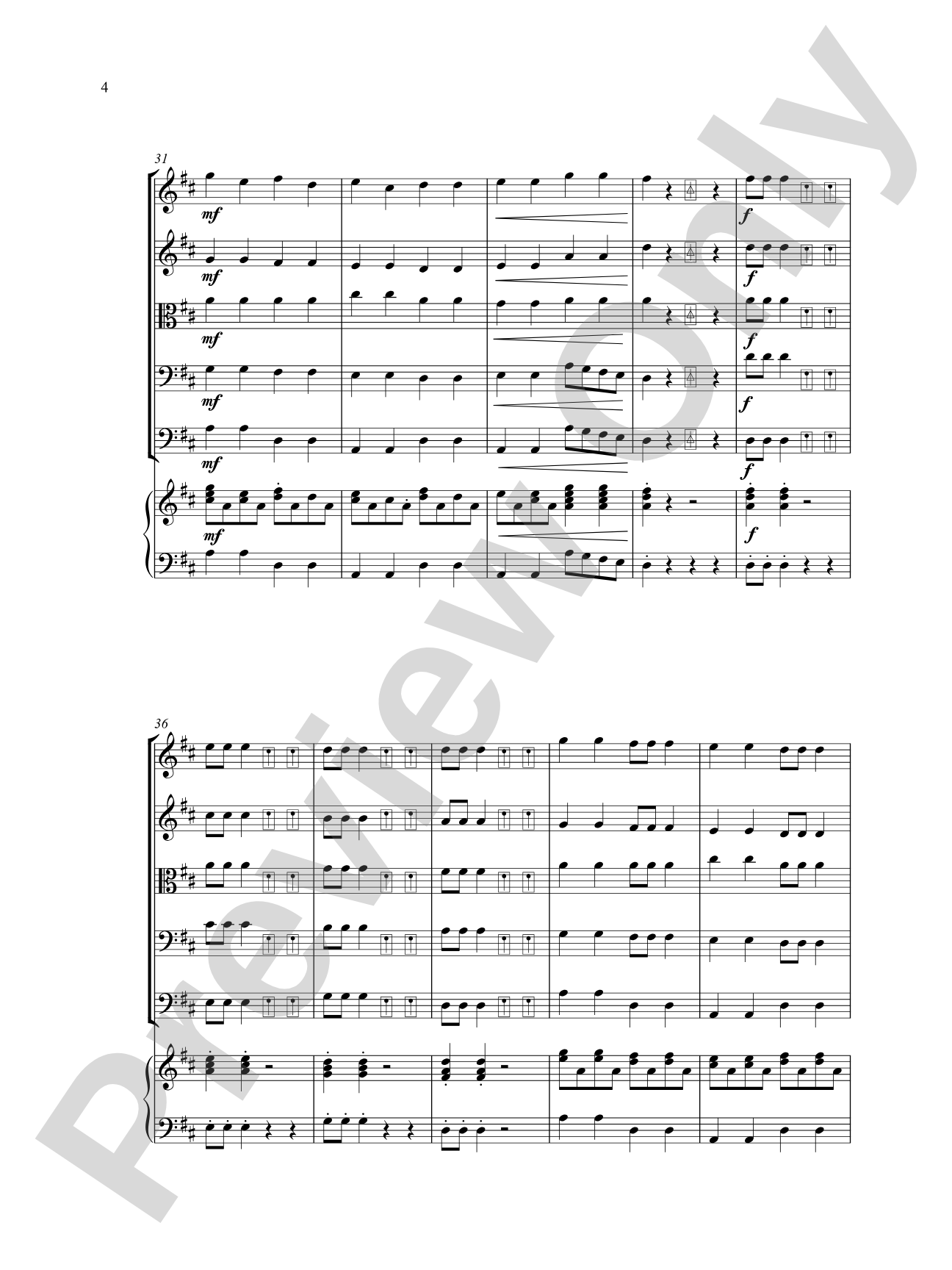
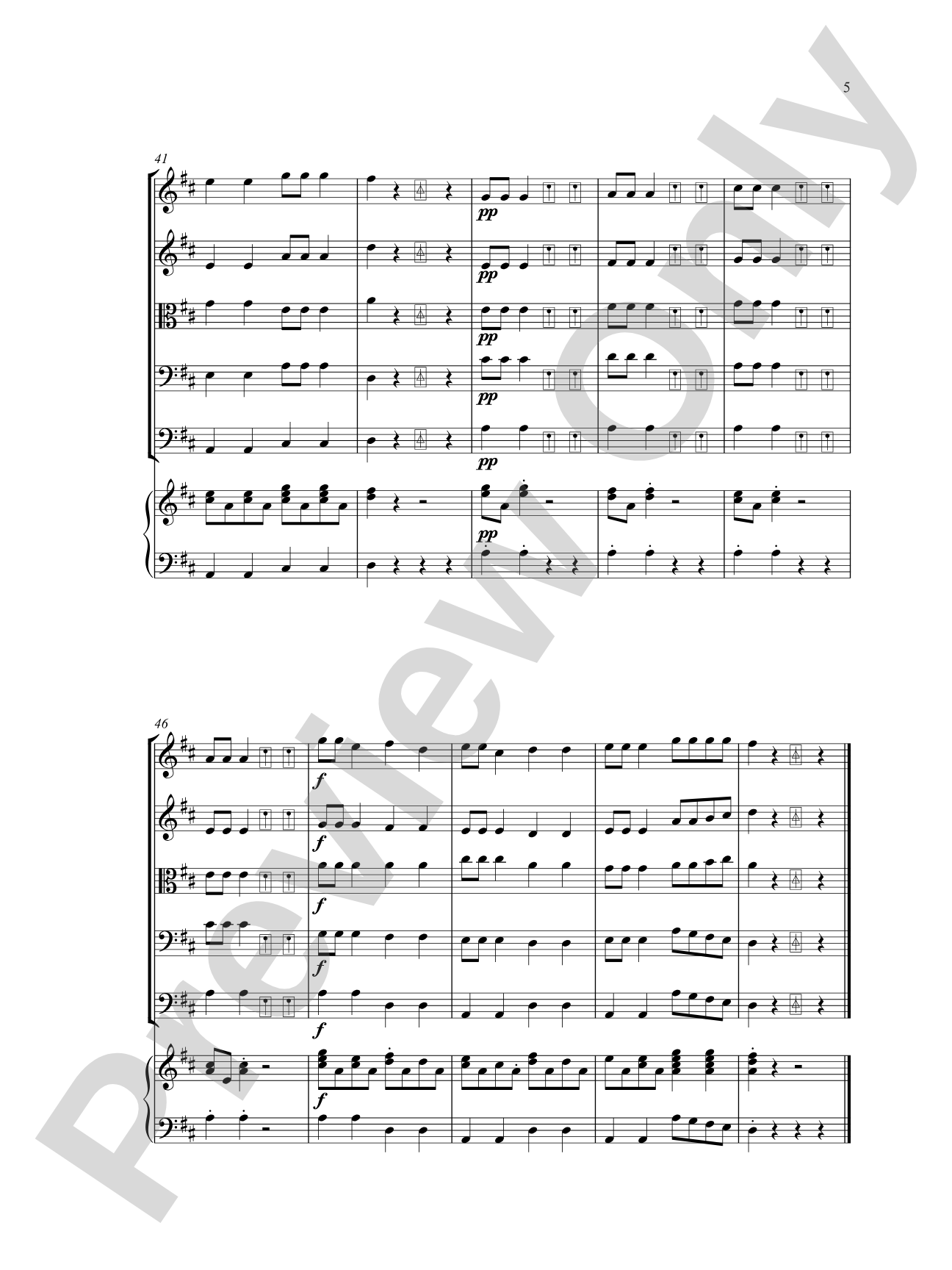

Mousey at the Door: Score
By Loreta Fin
Grade: 1
Item: 76-PR-0000044
$7.00
Pickup currently not available
Description
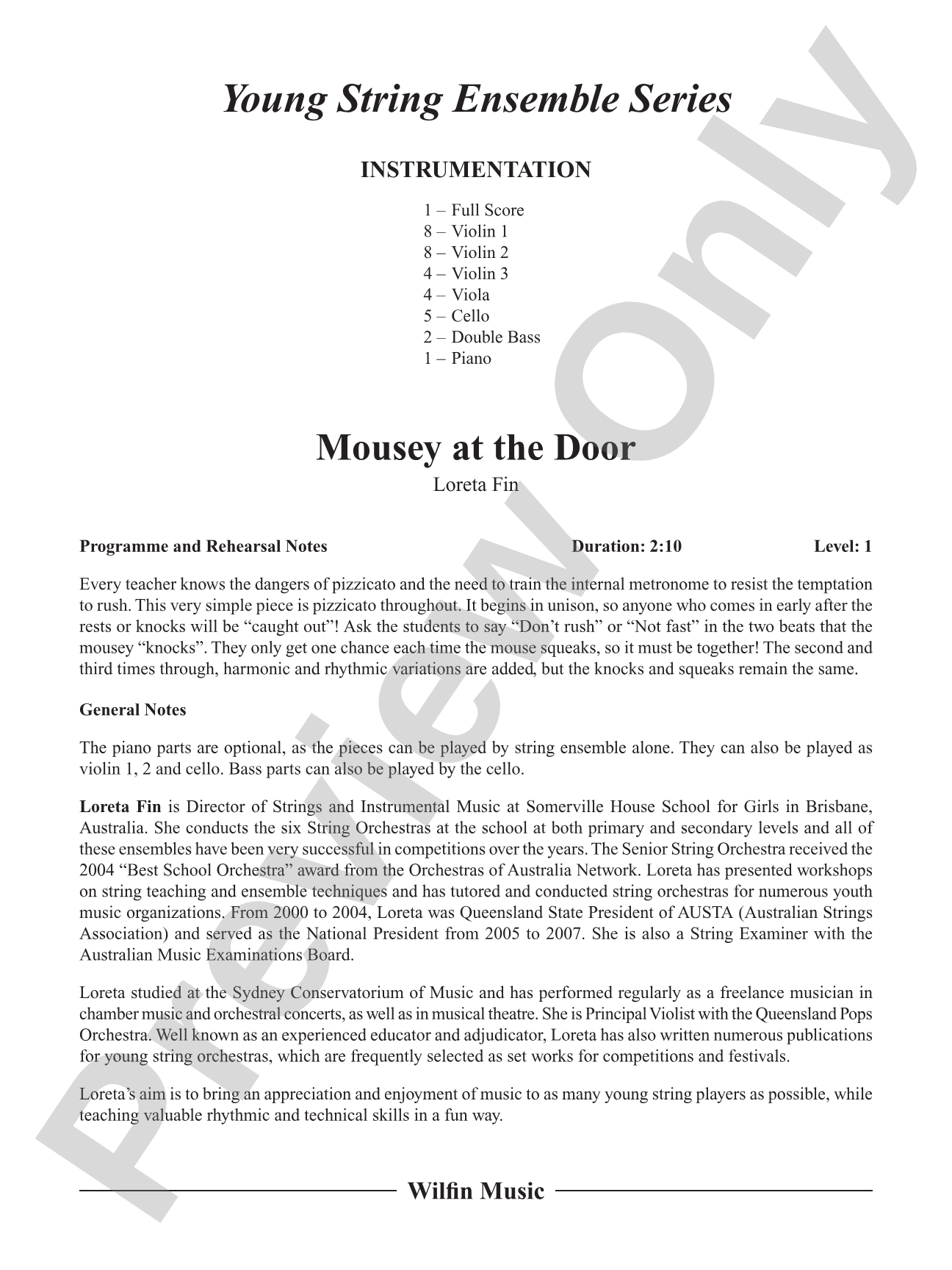
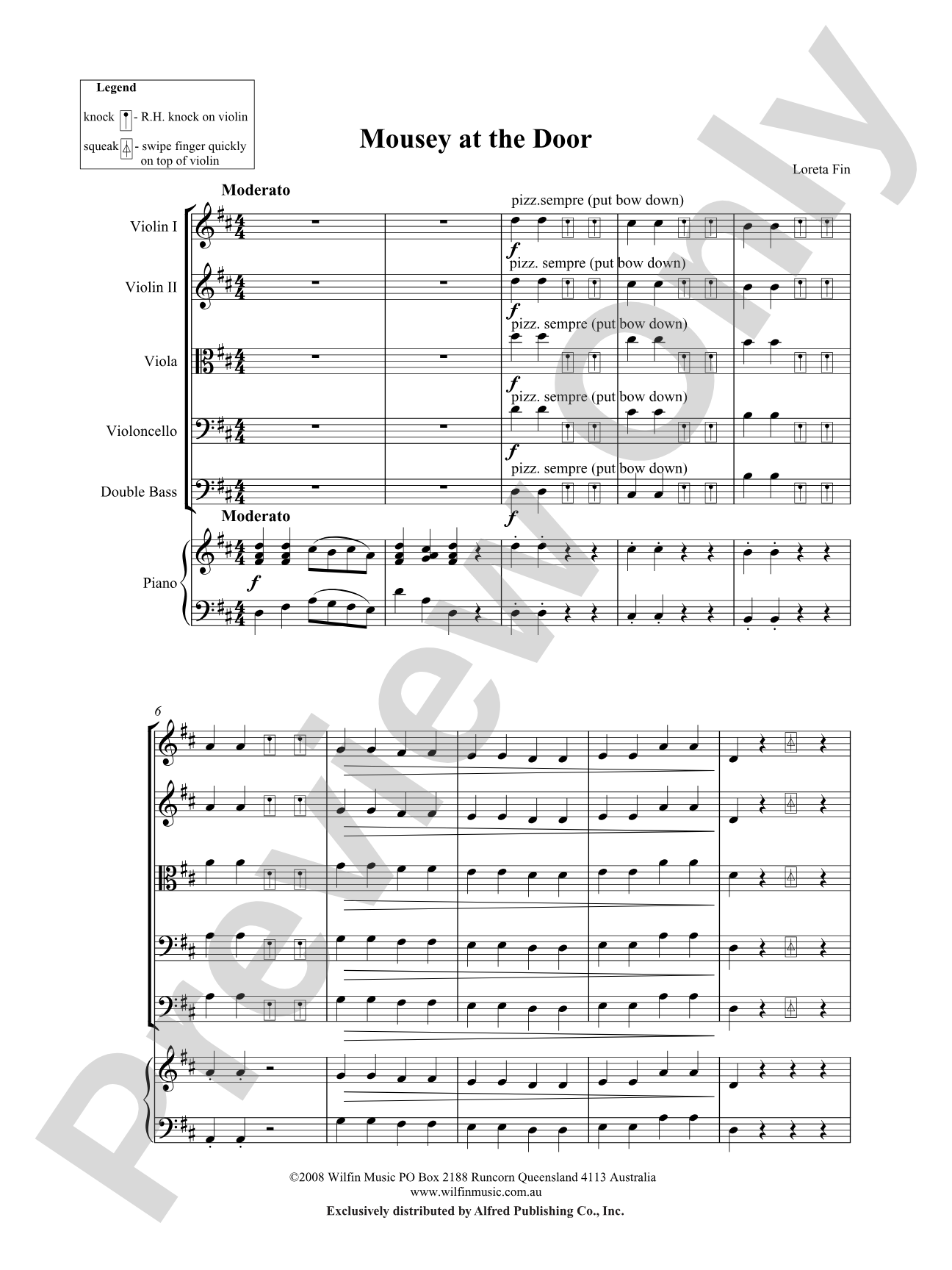
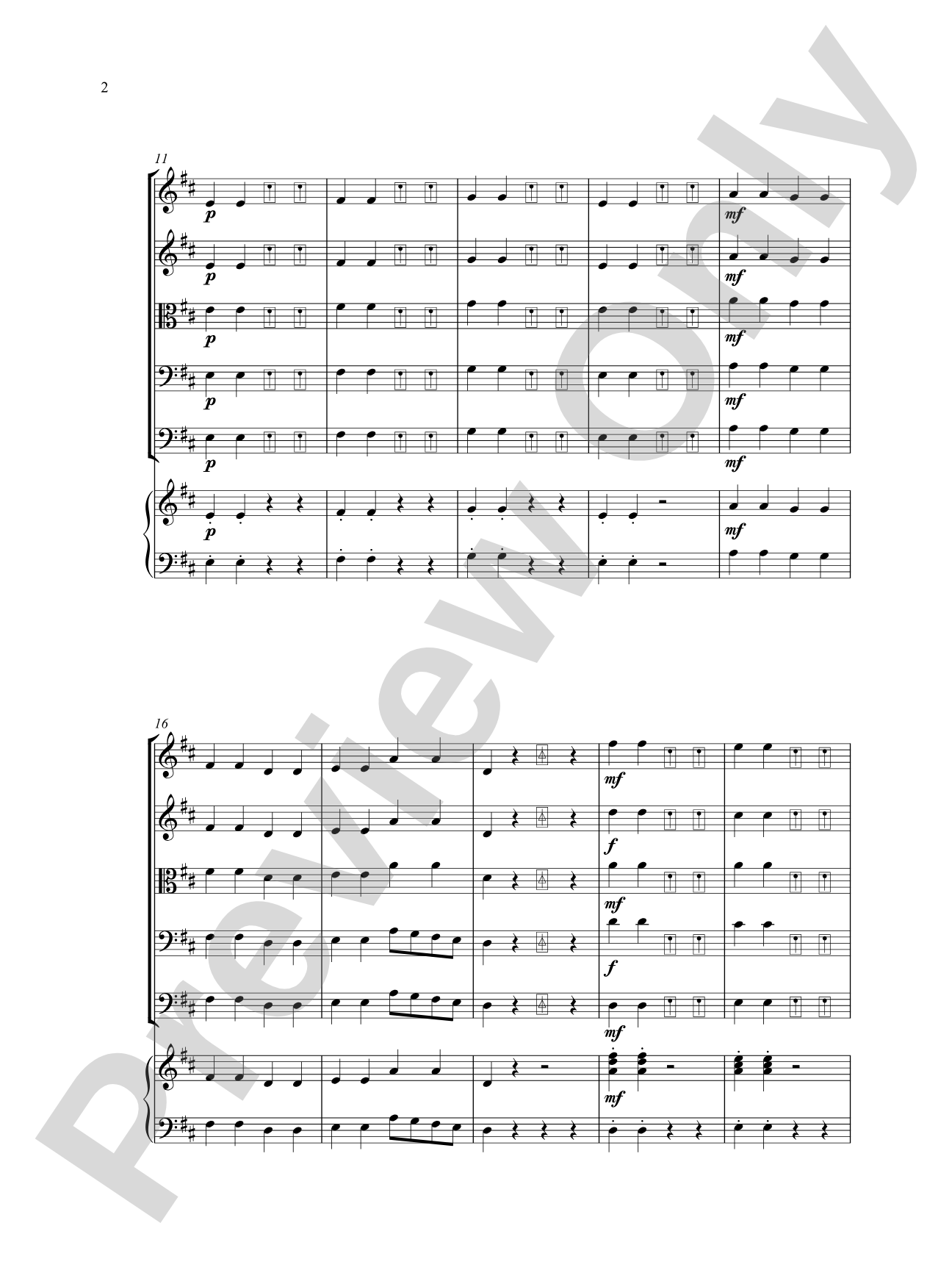
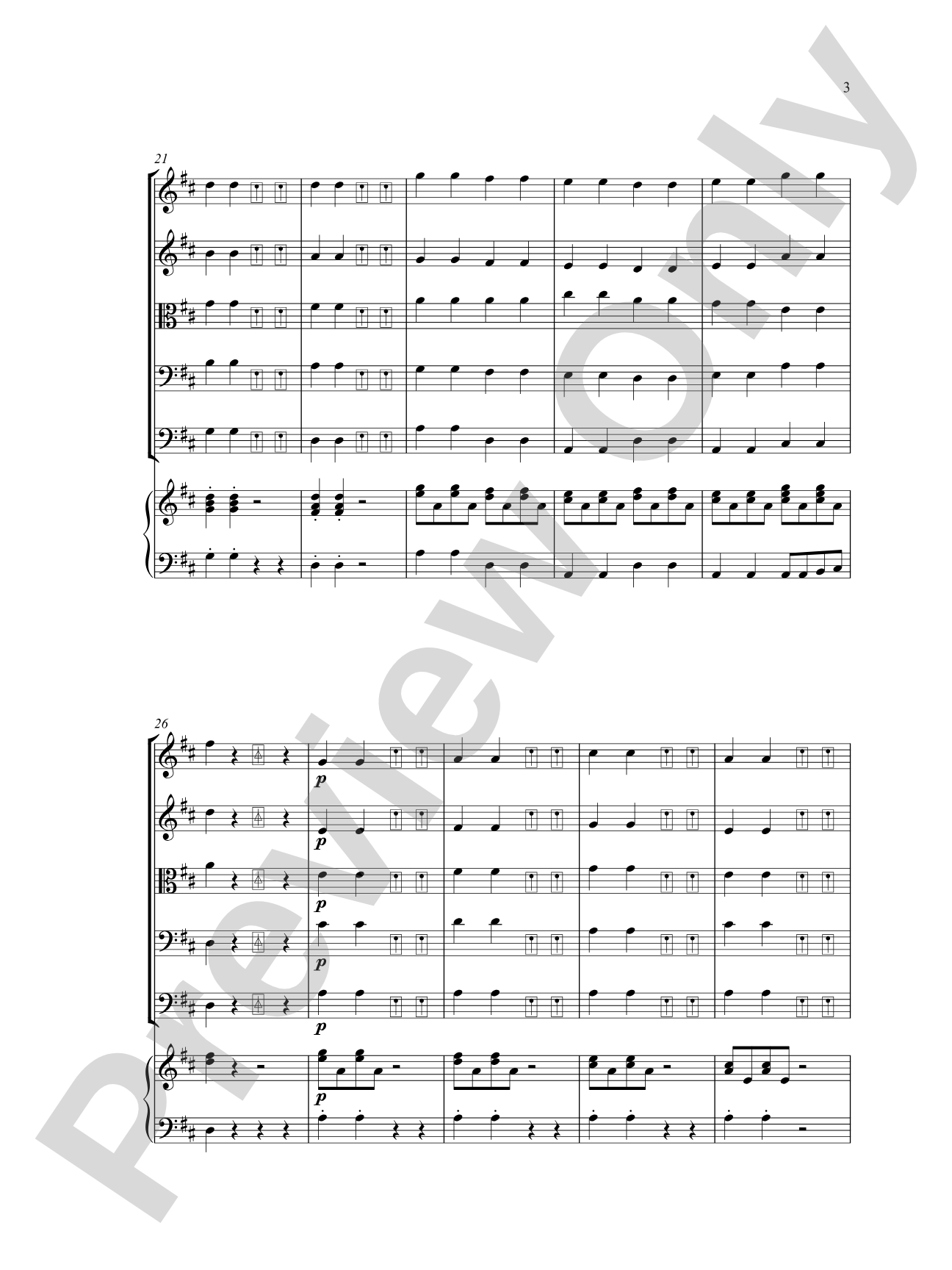
Every teacher knows the dangers of pizzicato and the need to train the internal metronome to resist the temptation to rush. This very simple piece is pizzicato throughout. It begins in unison, so anyone who comes in early after the rests or knocks will be "caught out"! Ask the students to say "Don't rush" or "Not fast" in the two beats that the mousey "knocks". They only get one chance each time the mouse squeaks, so it must be together! The second and third times through, harmonic and rhythmic variations are added, but the knocks and squeaks remain the same.


Mousey at the Door: Score isn't in MakeMusic Cloud just yet...but it could be. Let us know you'd like to see it, and you'll help shape what comes next. In the meantime, start a free trial and dive into thousands of interactive titles your students can play along with today.
Request This Title
Tell us you want it.
Start Your Free Trial
Explore everything that's ready to play right now.
Sample Audio
No sample audio found.
Sample Video
No sample videos found.
Additional Details
Series:
Wilfin String Orchestra: Young String Ensemble Series
Publisher:
Wilfin Music
Page Count:
66
SKU:
76-PR-0000044
More about this title
About the Composer: Loreta Fin

Loreta Fin studied viola and violin at the Sydney Conservatorium of Music and performed as a first violinist with the Sydney Youth Orchestra. She served as Principal Viola player with the Queensland Pops Orchestra for over 25 years while maintaining an active chamber music and orchestral performance schedule, collaborating with internationally recognized artists and ensembles.
As Director of Strings at Somerville House School in Brisbane since 1993, Fin has become a respected voice in music education across Australia and North America. She has presented at multiple National Music Conferences, adjudicated major competitions, and composed more than 100 works for string orchestra published worldwide by Alfred Music. Her contributions to the Australian Strings Association earned her a Queensland State Award in 2009, and she was recognized with the National Award for Services to Music and String Teaching. Fin also serves as a state advisor for strings, examiner with the Australian Music Examinations Board, and regular conductor of Honours Ensembles Programs.
Why we love this
Fin understands the exact pedagogical problem pizzicato creates for young ensembles: the rush. By building the entire piece around this challenge, she transforms a common technical weakness into the heart of the music itself. The unison opening and repeated knock figures give every student accountability and nowhere to hide, while the harmonic variations in later sections reward their focus with something satisfying to play.
What to expect
A playful, slightly mischievous moment in rehearsal. The mouse's knock is tentative and precise, almost fragile in its unison presentation. As the piece develops, harmonic color and rhythmic complexity emerge while the central knock figure remains the anchor, creating a sense of reliable growth beneath the fun.
Who it's for
Young string orchestras in Grades 1-2 who are learning to control tempo and coordinate attacks, particularly groups working through the temptation to rush during pizzicato passages. Directors seeking a piece that diagnoses and addresses a real technical challenge while keeping students engaged through humor and clear musical stakes.
How to get the most out of it
- Establish the internal pulse during rests with a clear conducting pattern; students should anticipate the entrance rather than react to it.
- Have the ensemble speak the rhythmic phrase 'Don't rush' or 'Not fast' during the knock figures to internalize the tempo and create ensemble cohesion around those critical moments.
- Emphasize the pizzicato articulation with clear finger motion and consistent dampening to maintain rhythmic precision, especially during the unison passages where any sloppiness becomes immediately obvious.
- Use the harmonic and rhythmic variations in repetitions to build confidence gradually; acknowledge when entries are clean and together before moving to more complex layering.
How to use it
Program this early in a concert to establish control and ensemble precision before tackling more demanding repertoire. It works equally well as a teaching showcase during a school assembly or parents' night, where the humor and clear concept translate immediately to an audience. Use it as a benchmark moment mid-season to measure whether your ensemble's internal metronome has strengthened.
Skills your students will build
- Resisting the urge to rush during pizzicato passages
- Entering cleanly and together after rests
- Maintaining consistent rhythm and articulation in unison writing
- Listening for harmonic context while playing rhythmically synchronized parts