
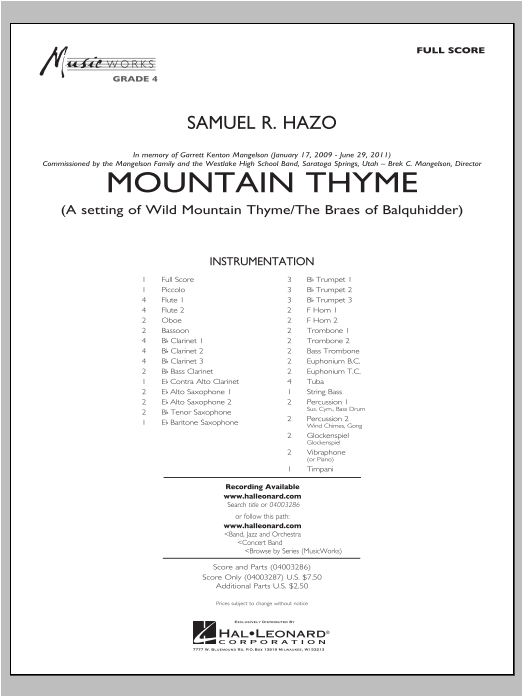

Mountain Thyme: Concert Band Conductor Score & Parts
By Samuel R. Hazo
Grade: 4
Item: 35-PK00260079
$80.00
Pickup currently not available
Buy Extra Parts (Digital PDF Download)
Parts Added to Cart!
Description
Written as a memorial, this beautifully emotional setting is a reworking of the traditional folk song "The Braes of Baquhidder" (also known as "Wild Mountain Thyme") by Scottish writer Robert Tannahill. Samuel Hazo uses a varied tapestry of colors, textures and dynamics, taking full advantage of the depth and power of the modern wind band in creating this stunningly effective work. Dur: 4:20


Mountain Thyme: Concert Band Conductor Score & Parts isn't in MakeMusic Cloud just yet...but it could be. Let us know you'd like to see it, and you'll help shape what comes next. In the meantime, start a free trial and dive into thousands of interactive titles your students can play along with today.
Request This Title
Tell us you want it.
Start Your Free Trial
Explore everything that's ready to play right now.
Sample Audio
No sample audio found.
Sample Video
No sample videos found.
Additional Details
Publisher:
Hal Leonard
SKU:
35-PK00260079
More about this title
About the Composer: Samuel R. Hazo
Samuel R. Hazo is a prolific composer for wind band whose work bridges contemporary composition with accessible, engaging writing for student ensembles. His pieces consistently appear on festival and contest programs across North America, earning recognition for their musical substance and performers' enthusiasm.
Hazo's compositional approach emphasizes orchestration and color within the wind band medium. He writes with deep knowledge of what student musicians can achieve, crafting parts that challenge without overwhelming and that reward careful preparation with genuine musical expression.
Why we love this
Hazo's treatment of this Scottish melody strips away sentimentality while honoring the tune's emotional core. The orchestration unfolds with real sophistication, moving from delicate, intimate moments to powerful full ensemble statements, giving conductors meaningful interpretive choices at every turn and giving students genuine substance to sink their teeth into.
What to expect
There is a wistful, contemplative quality throughout, rooted in the folk melody's gentle contours but deepened by Hazo's harmonic and orchestrational choices. The piece moves between moments of tenderness and passages of quiet dignity, creating space for reflection without ever feeling static or over-arranged.
Who it's for
Concert bands at the Grade 4 level, particularly those seeking festival or contest repertoire with genuine emotional weight. Directors working with ensembles mature enough to balance technical execution with interpretive nuance will find this piece especially rewarding.
How to get the most out of it
- Honor the dynamic architecture carefully. The piece builds through color shifts rather than constant crescendo; each instrumental addition should feel like a deliberate choice rather than an automatic swell.
- Shape the melody line through the ensemble as it passes between sections. The folk song's simple beauty depends on singers instinctively hearing the tune, even when it's distributed across different voices.
- Balance the texture during moments where multiple melodic or harmonic ideas coexist. Listen for moments where the ear needs help following the primary line without losing secondary colors that give the arrangement its depth.
- Let the memorial context inform pacing and breath. The four-plus minute duration invites a patient, reflective approach rather than driving forward continuously.
How to use it
This works beautifully as a centerpiece for a concert built around folk traditions or cultural themes, or as a contrast piece following something energetic or playful. Its length and character also make it a thoughtful choice for festival competition programs where judges are listening for maturity and musicianship.
Skills your students will build
- Balancing melody against supporting textures
- Dynamic control across a wide range of expression levels
- Sustaining ensemble cohesion across subtle tempo and rubato choices
- Listening for color and orchestrational clarity in complex textures
- Understanding arrangement principles applied to folk material