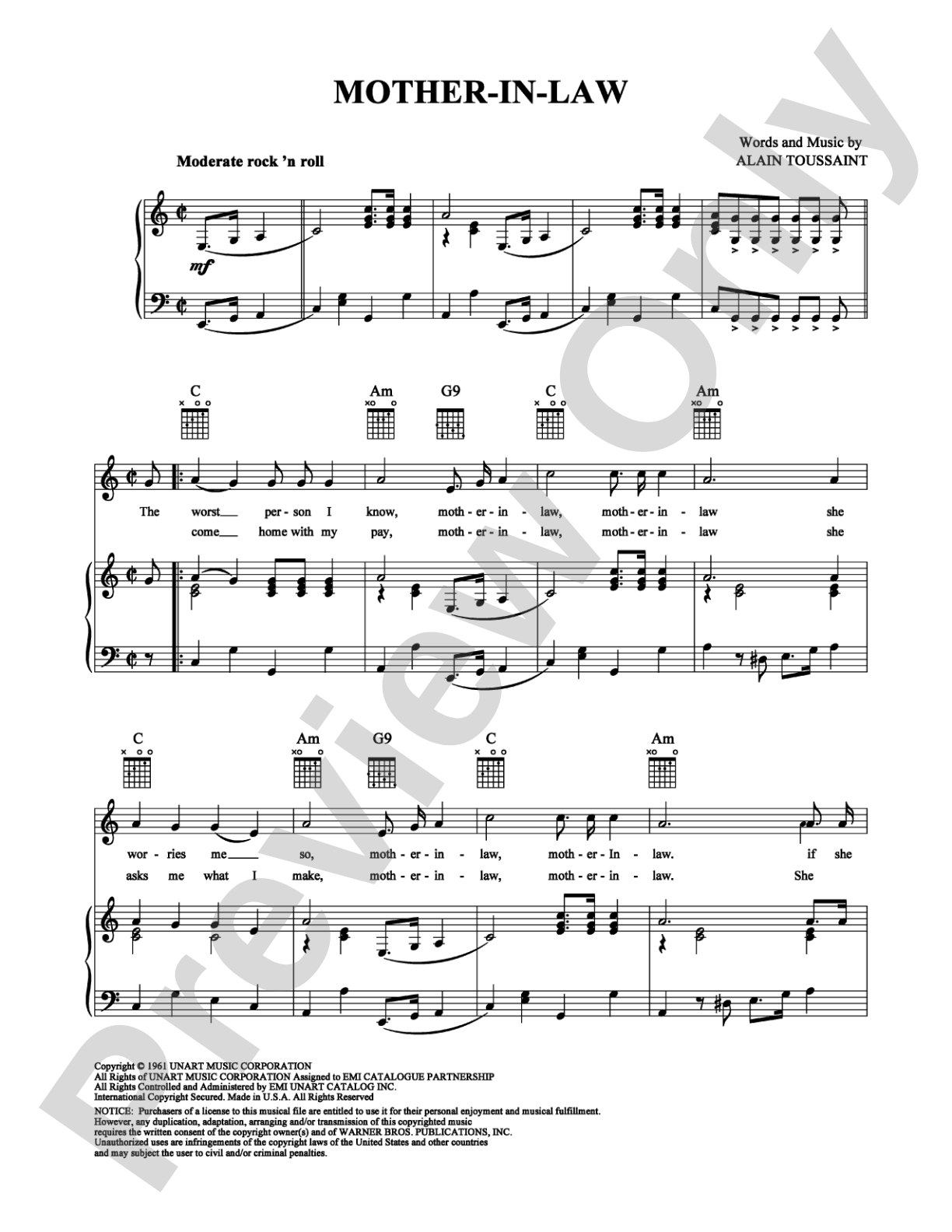
Mother-in-Law: Piano/Vocal/Chords Digital Sheet Music

Mother-in-Law: Piano/Vocal/Chords Digital Sheet Music

Allen Toussaint, Ernie K-Doe

Item: 00-PS-0007301

Digital Download
$3.99
Description

Mother-in-Law: Piano/Vocal/Chords Digital Sheet Music isn't in MakeMusic Cloud just yet...but it could be. Let us know you'd like to see it, and you'll help shape what comes next. In the meantime, start a free trial and dive into thousands of interactive titles your students can play along with today.

Sample Audio
No sample audio found.
Sample Video
Additional Details
SKU: 00-PS-0007301

More about this title

About the Artist: Ernie K-Doe

Ernie K-Doe (1933-2001) was a New Orleans R&B and soul singer whose theatrical delivery and novelty hits made him a fixture of 1960s pop radio. "Mother-in-Law," released in 1961, became his signature song and one of the most recognizable novelty records in American music history, reaching number one on the Billboard Hot 100.

K-Doe's music bridges pop, R&B, and comedy, making his work valuable for teachers exploring how humor, personality, and production choices shape a song's cultural impact. His legacy demonstrates how a single well-crafted novelty record can outlast countless serious competitors through memorable melody, tight arrangement, and authentic vocal character.

Why we love this

This novelty classic works brilliantly for vocal ensembles and soloists because the humor is musical, not forced. The melody is instantly singable, the lyrics paint a vivid comedic scene, and the straightforward harmonic movement supports strong melodic storytelling. It's the kind of piece that reminds singers why people love music in the first place.

What to expect

Bouncy and comedic, with a Crescent City groove underneath. The melody sits naturally for most voice types and moves with the rhythmic snap of early 1960s pop production. There's genuine warmth beneath the humor; this isn't cynical comedy song but rather good-natured storytelling set to music.

Who it's for

Solo singers preparing pop standards, vocal ensemble directors looking for accessible novelty material with real charm, and pianists who want repertoire that connects popular music history to current performance. The piece works equally well as a light moment in a recital or as an ensemble selection.

How to get the most out of it

  • Nail the comic timing by treating the rhythmic hits and the vocal phrasing as comedic punctuation, not just musical phrase structure. The humor lands when the delivery is rhythmically confident.
  • Keep the tempo steady and energetic. This song thrives on groove and momentum; let the rhythm section lock in early and stay consistent throughout.
  • Shape the vocal line with character but without oversinging. The best novelty performances sound genuine and conversational, not winking at the audience.
  • Use the chord changes to add color without getting precious about them. The straightforward progression supports the melody; don't let accompaniment choices bury the hook.

How to use it

Pair this with other novelty or humorous pieces from the same era to create a themed concert set, or use it as a palate cleanser between more serious vocal selections. High school and community vocal ensembles find it especially effective as a closer because it leaves audiences smiling without sacrificing musicianship.

Skills your students will build

  • Comic phrasing and rhythmic timing in melody
  • Maintaining groove over a steady harmonic progression
  • Vocal character development in pop/novelty idioms
  • Piano accompaniment reading for R&B and pop styles
  • Coordinating vocal expression with rhythm section intent

You May Also Like