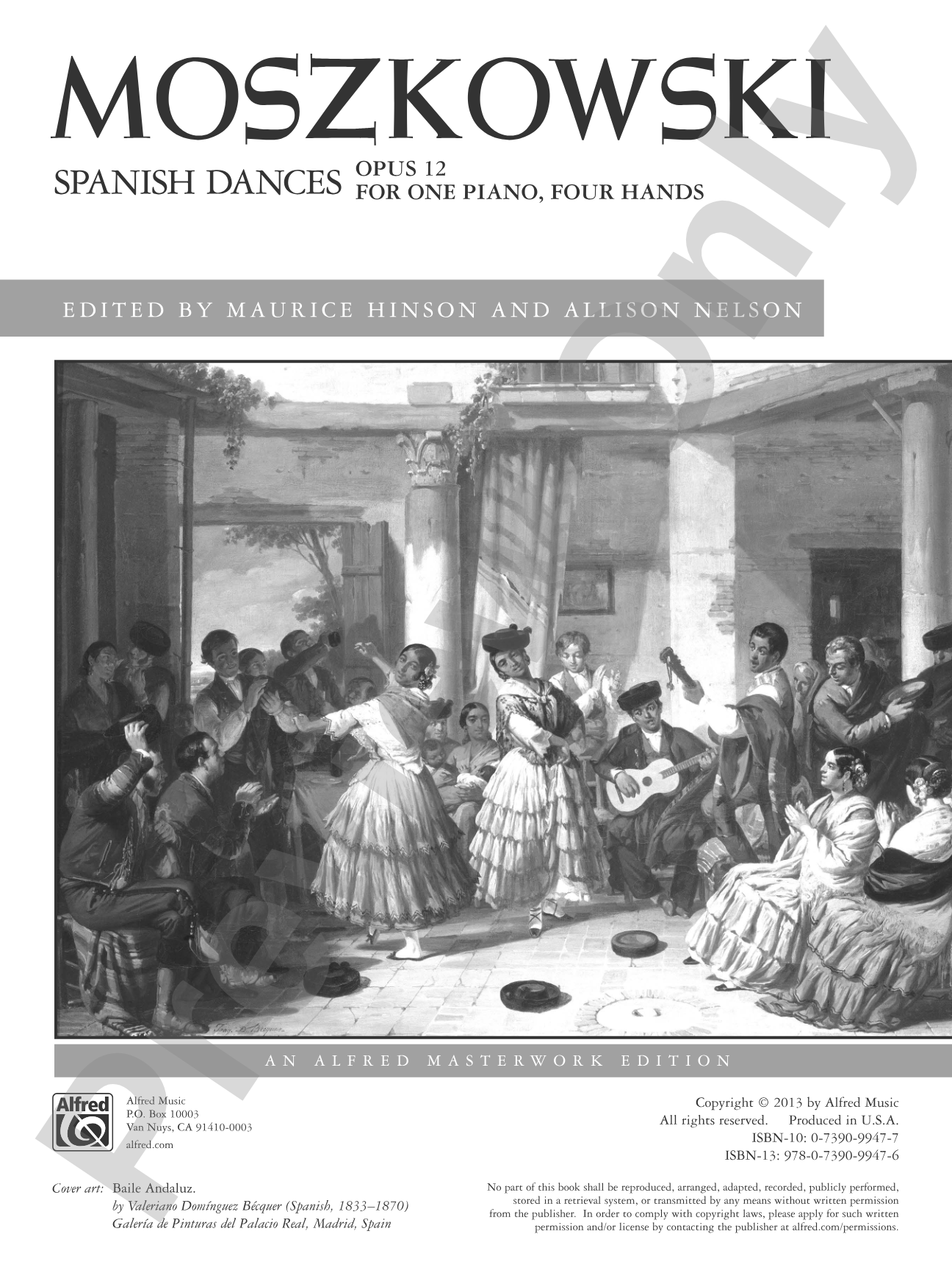
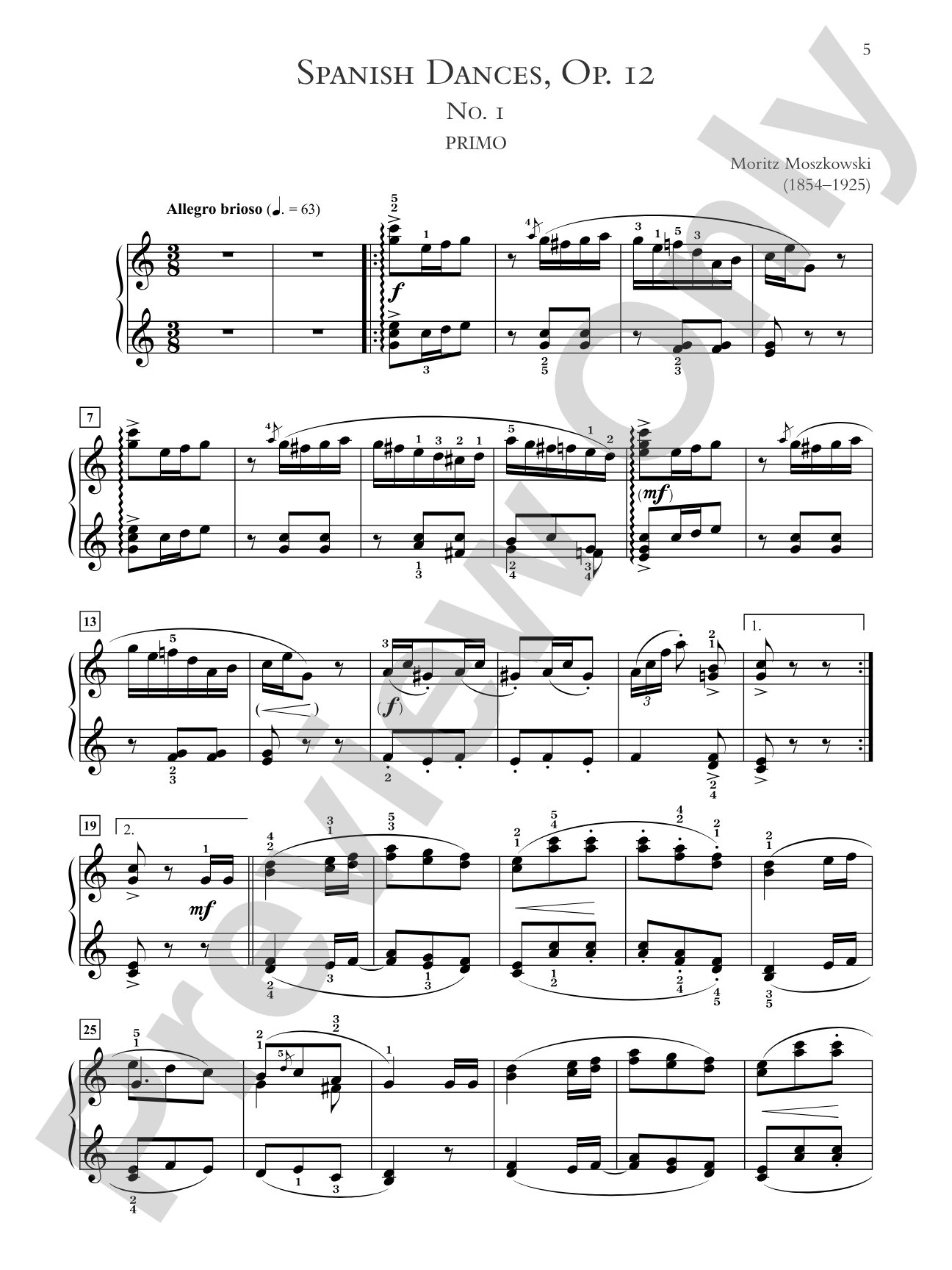
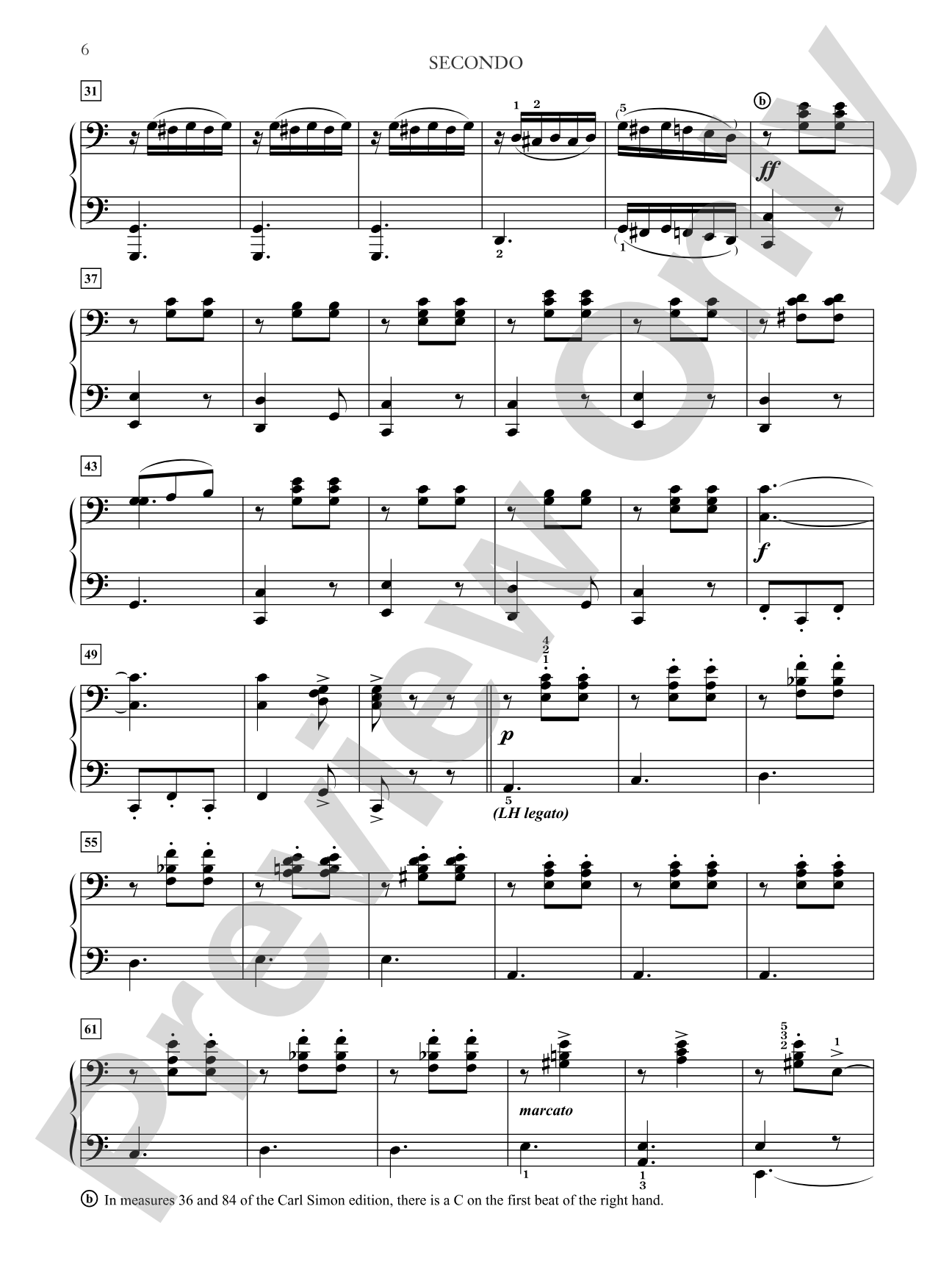
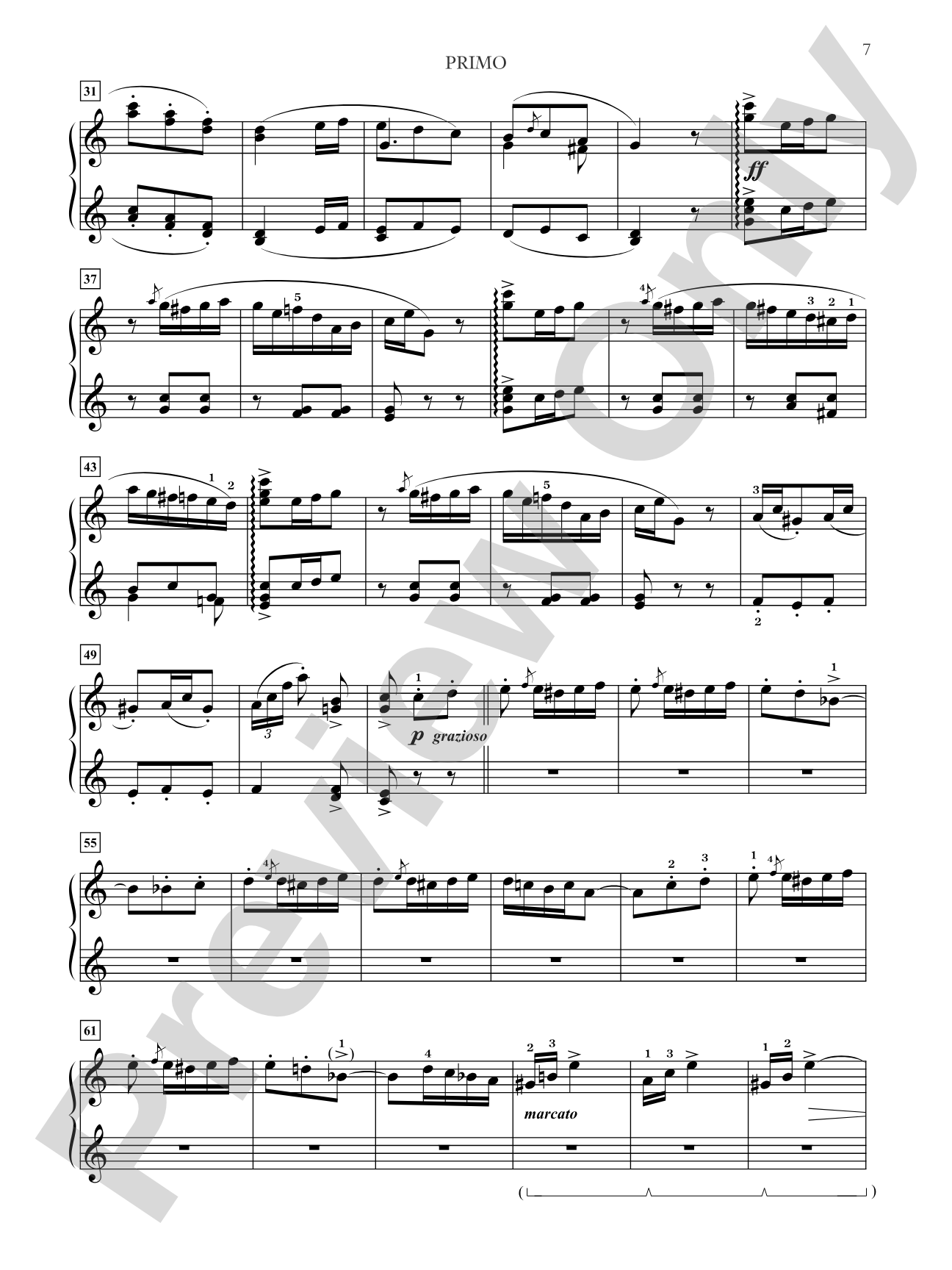
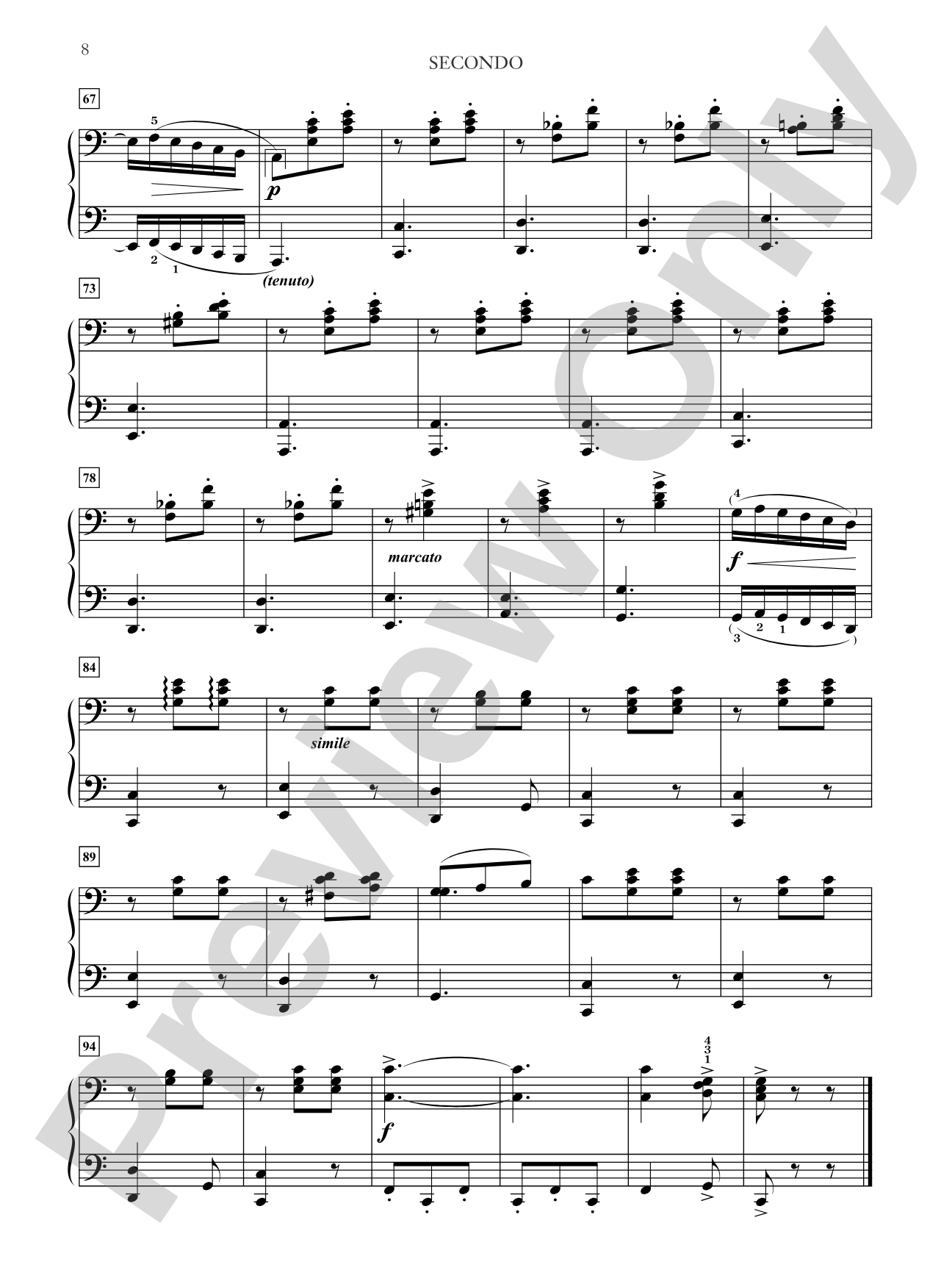
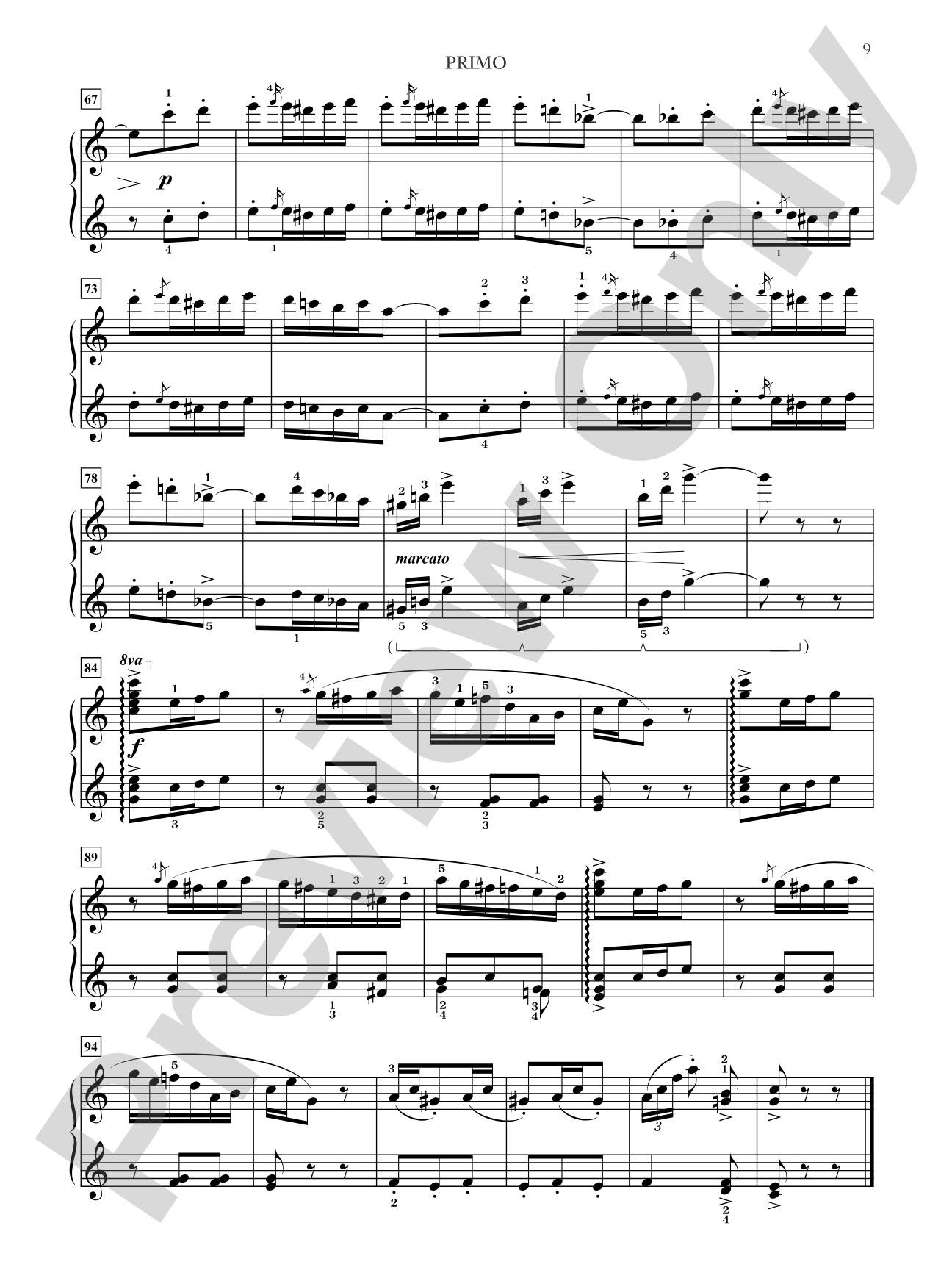
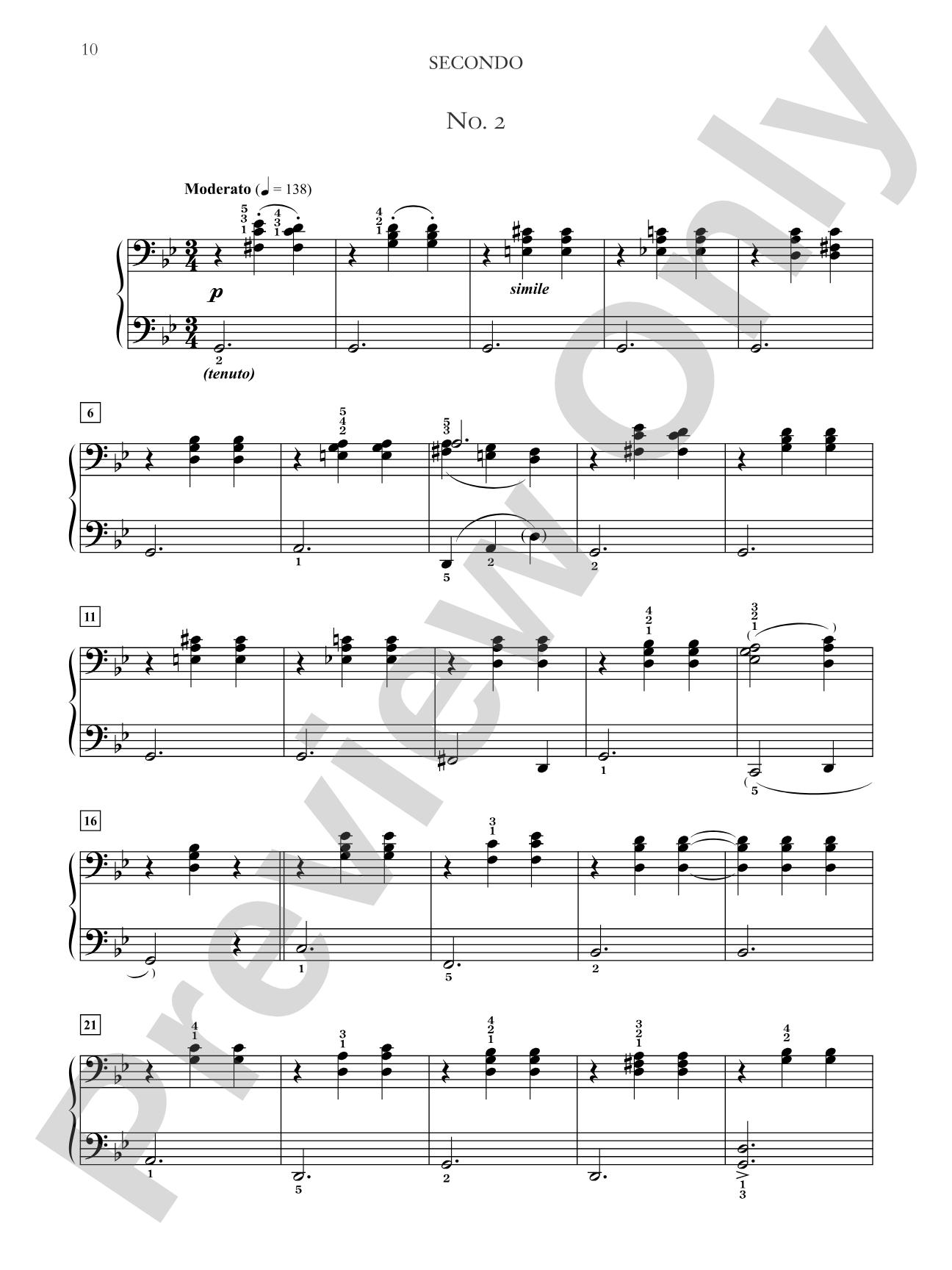
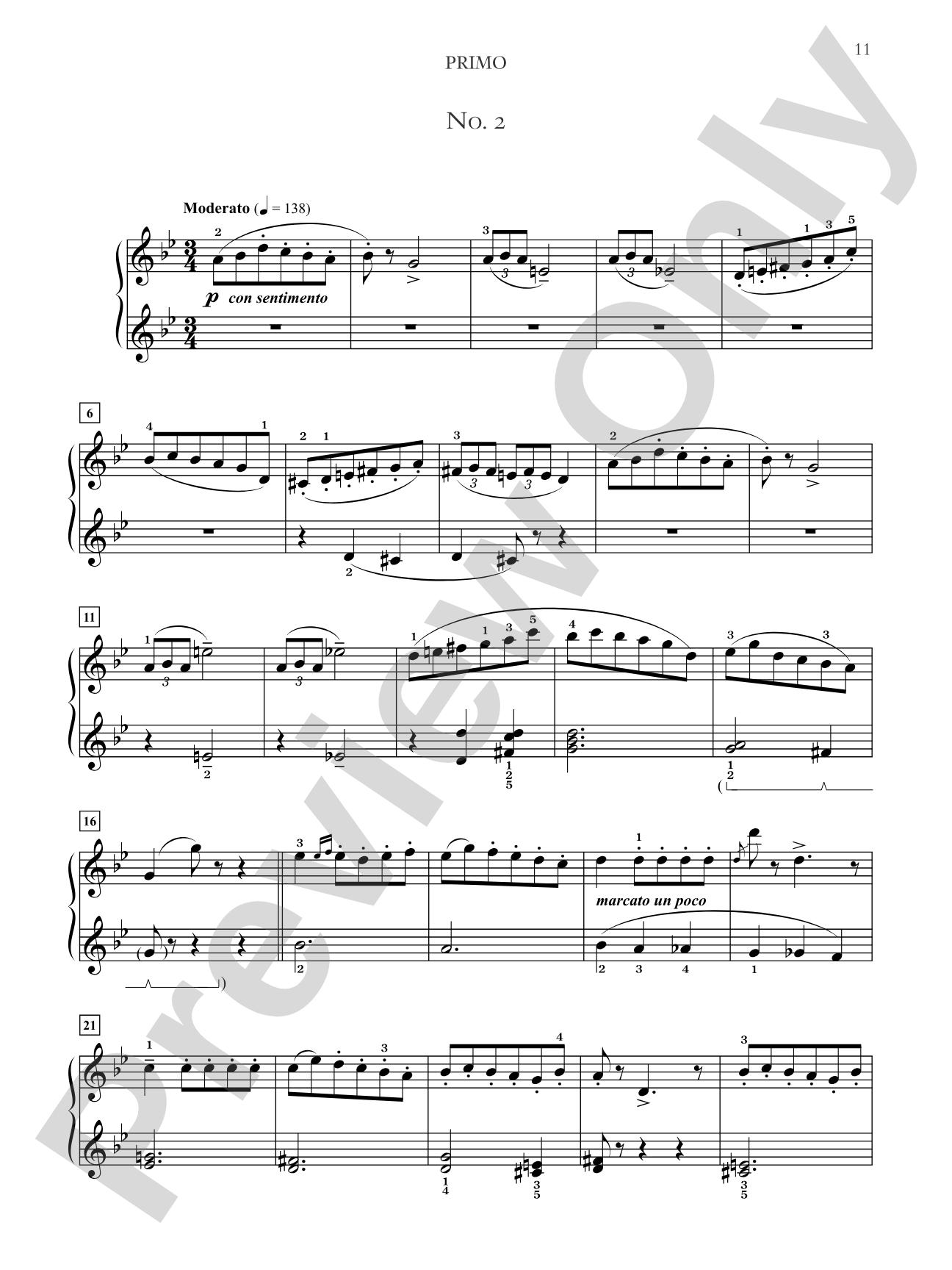
Moszkowski: Spanish Dances, Opus 12 - Piano Duet (1 Piano, 4 Hands): Piano Duets & Four Hands
By Moritz Moszkowski / ed. Maurice Hinson and Allison Nelson
Level: Advanced
Item: 00-PB-0000622
Pickup currently not available
Related Items
Moszkowski: Spanish Dances, Opus 12: Piano Duet (1 Piano, 4 Hands) Book |
$9.99
|
View |
Description
Moszkowski: Spanish Dances, Opus 12 - Piano Duet (1 Piano, 4 Hands): Piano Duets & Four Hands isn't in MakeMusic Cloud just yet...but it could be. Let us know you'd like to see it, and you'll help shape what comes next. In the meantime, start a free trial and dive into thousands of interactive titles your students can play along with today.
Tell us you want it.
Explore everything that's ready to play right now.
Sample Audio
Sample Video
Additional Details
More about this title
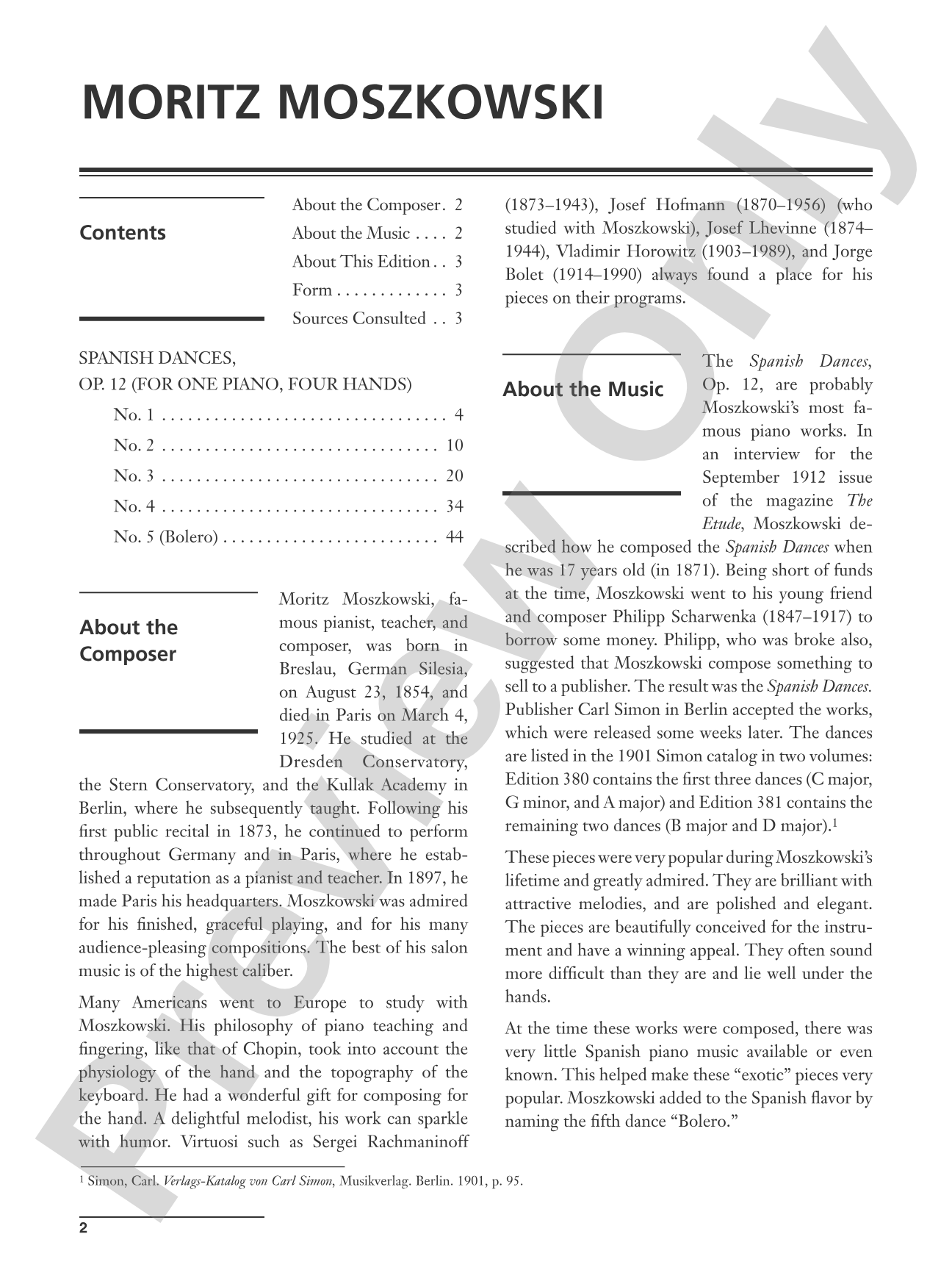
About the Composer: Moritz Moszkowski
Moritz Moszkowski (1854, 1925) was a Polish-German pianist and composer whose gift for melody and orchestration made him one of the most performed composers of the late 19th century. Though he wrote across multiple genres, his piano works earned him lasting recognition, particularly among teachers and serious amateurs seeking music that balances technical interest with genuine musical substance.
Moszkowski's career spanned the transition from Romanticism into the modern era, yet his writing remained rooted in elegant lyricism and pianistic idiom. His Spanish Dances represent the height of his craft: works that reward both performers and audiences with immediate appeal while hiding considerable compositional sophistication beneath their graceful surfaces.
Why we love this
These five dances deliver the rare combination of audience-friendly character writing with genuine musical meat for both players. The fact that they consistently sound more demanding than their Advanced level suggests makes them strategic choices for recitals where you want your students to build confidence without compromising artistic standards. Federation Festivals recognition across multiple cycles speaks to their durability and pedagogical value.
What to expect
Sunlit, rhythmically alive, and suffused with Spanish melodic inflection. Each dance captures a distinct mood, from the spirited opening to more lyrical and contemplative moments, all delivered with the clarity and harmonic directness that made Moszkowski's music irresistible to concert audiences.
Who it's for
Advanced piano duet teams preparing for recitals, festival competitions, or concert programming that demands both polish and substance. These works suit pianists who want to perform something with real technical interest but prefer music that sings rather than primarily showcases virtuosity.
How to get the most out of it
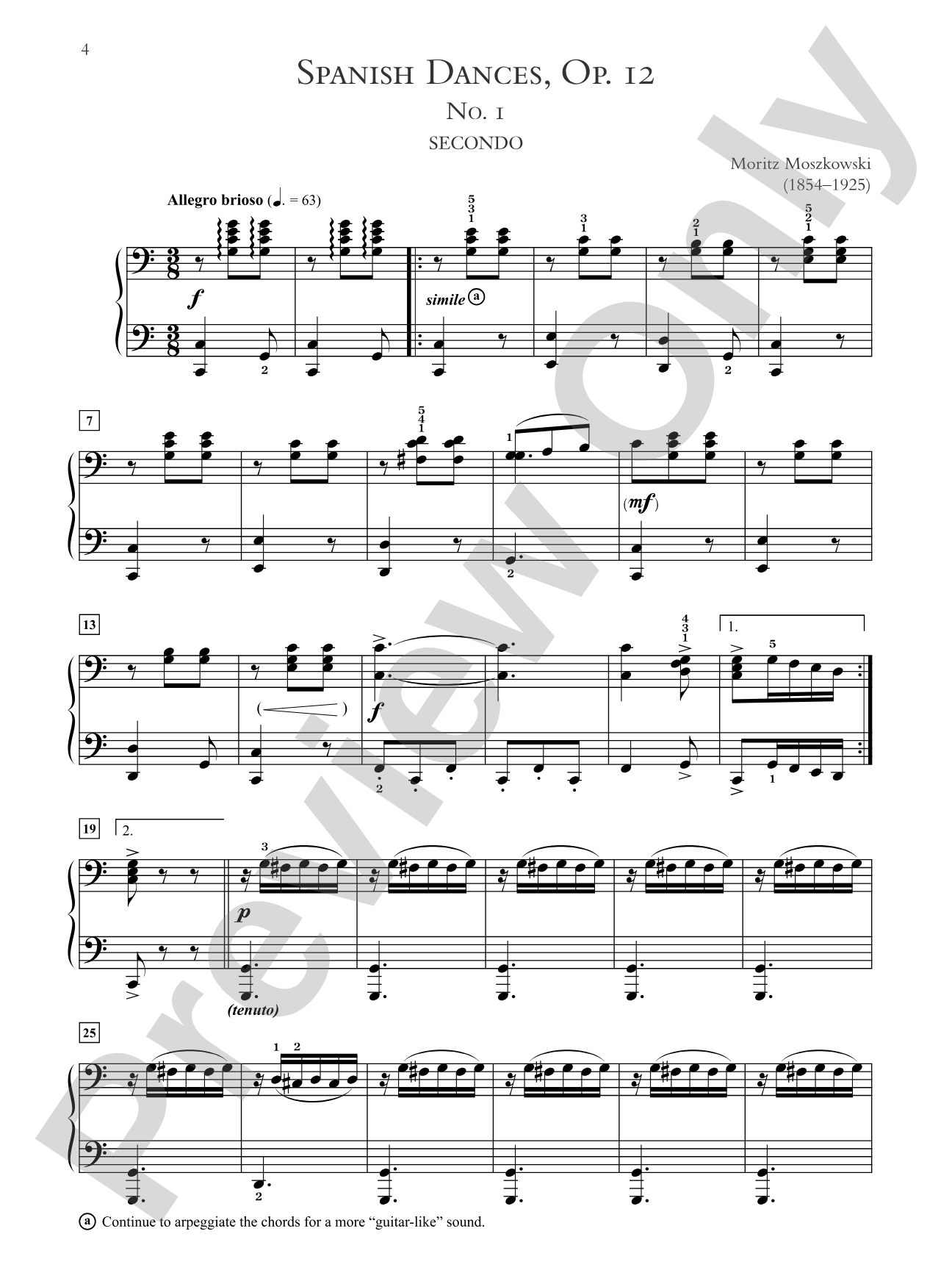
- Balance the primo and secondo parts carefully during opening passages; the secondo's rhythmic foundation should anchor without overwhelming the primo's thematic material.
- Treat each dance as a distinct character study rather than racing through the set as one continuous suite. Separate them with silence for maximum impact.
- Pay close attention to Moszkowski's articulation markings and dynamic shaping; they often create the Spanish flavor more effectively than tempo alone.
- Let the historically informed editorial fingerings guide your hand positioning, especially in passages that look awkward on the page but feel natural under the fingers.
How to use it
Feature one or two dances on a recital to provide Spanish-flavored color alongside Classical and Contemporary works, or program the entire cycle for audiences who enjoy suites with internal contrast. Their Federation Festivals pedigree also makes them ideal selections for students working toward competition calendars.
Skills your students will build
- Ensemble balance and communication between primo and secondo voices
- Rhythmic independence and secure ensemble intonation in running passagework
- Interpretation of articulation and dynamics as primary shapers of character
- Efficient hand positioning and comfort at the keyboard (the works reward fingering choices that feel counterintuitive on the page)
- Spanish idiom and rhythmic inflection in Romantic piano writing