
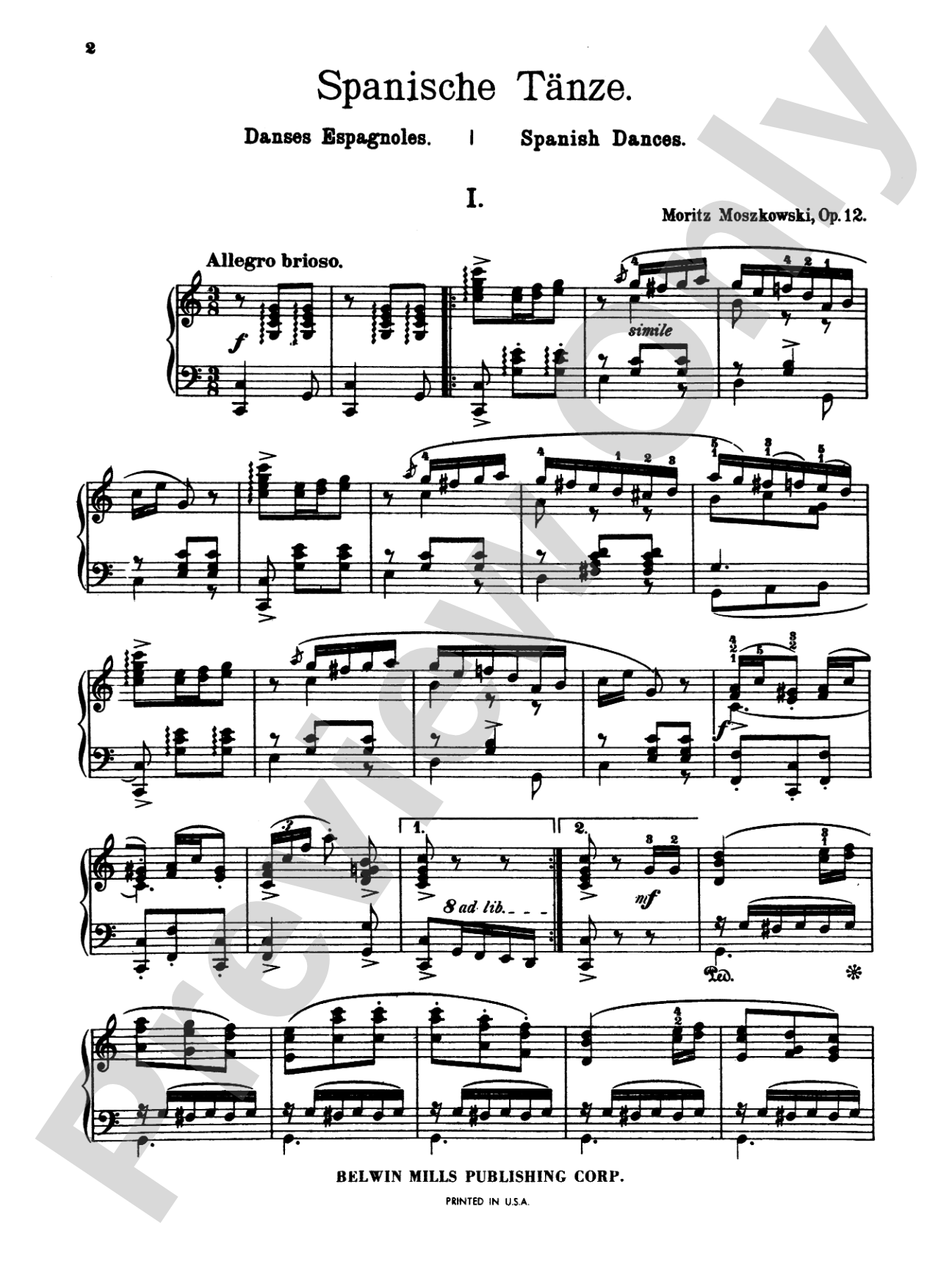
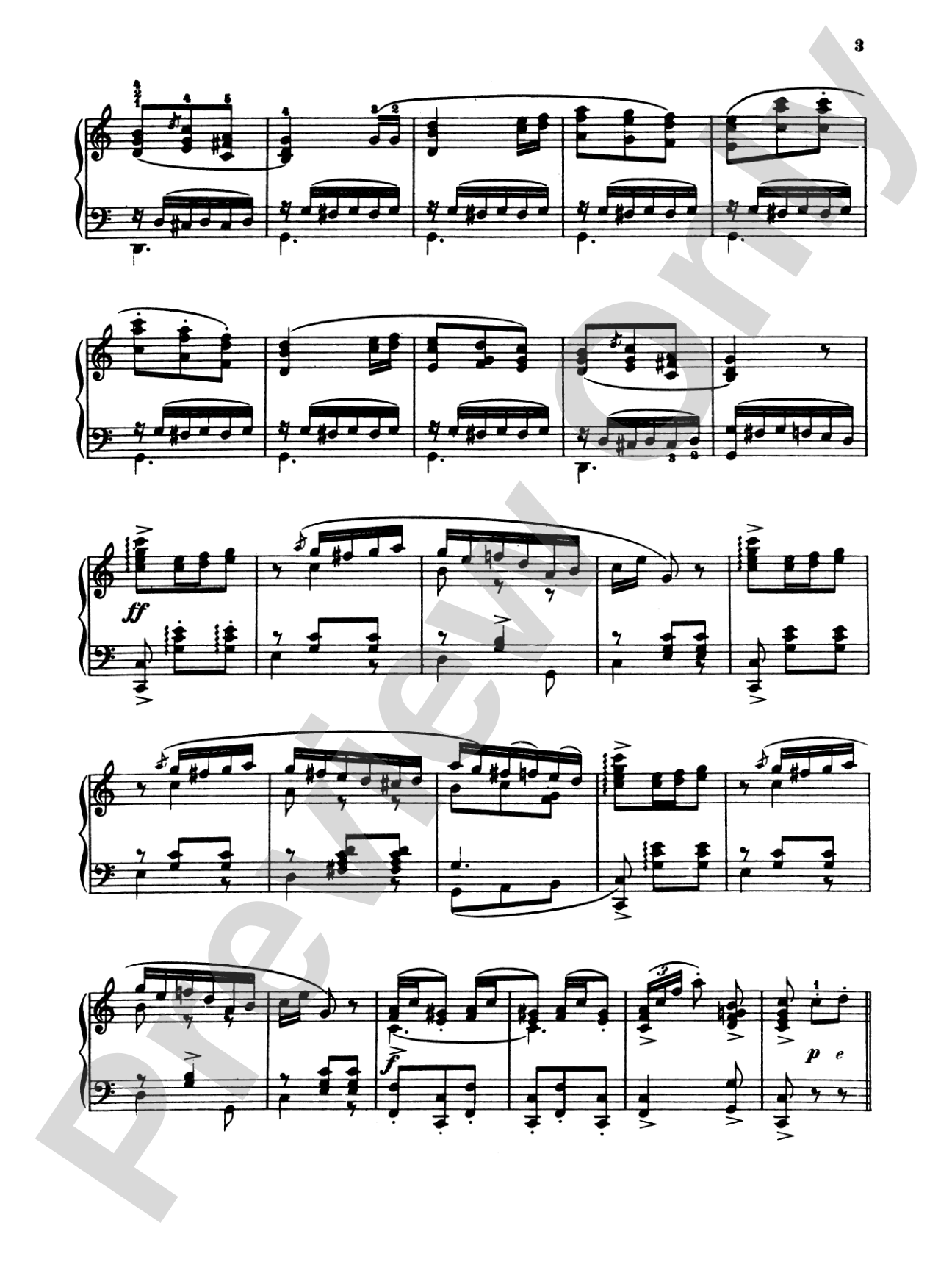
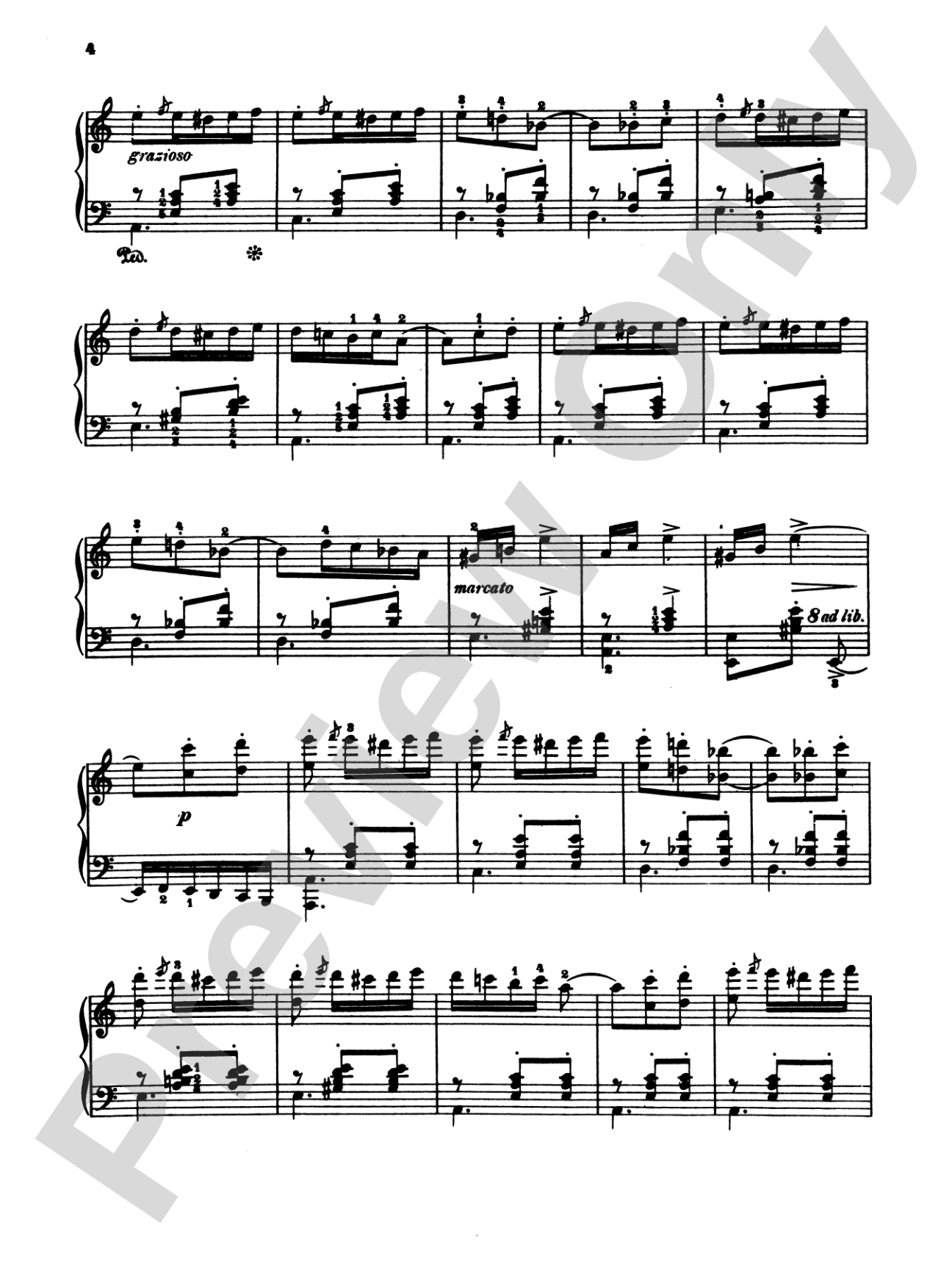
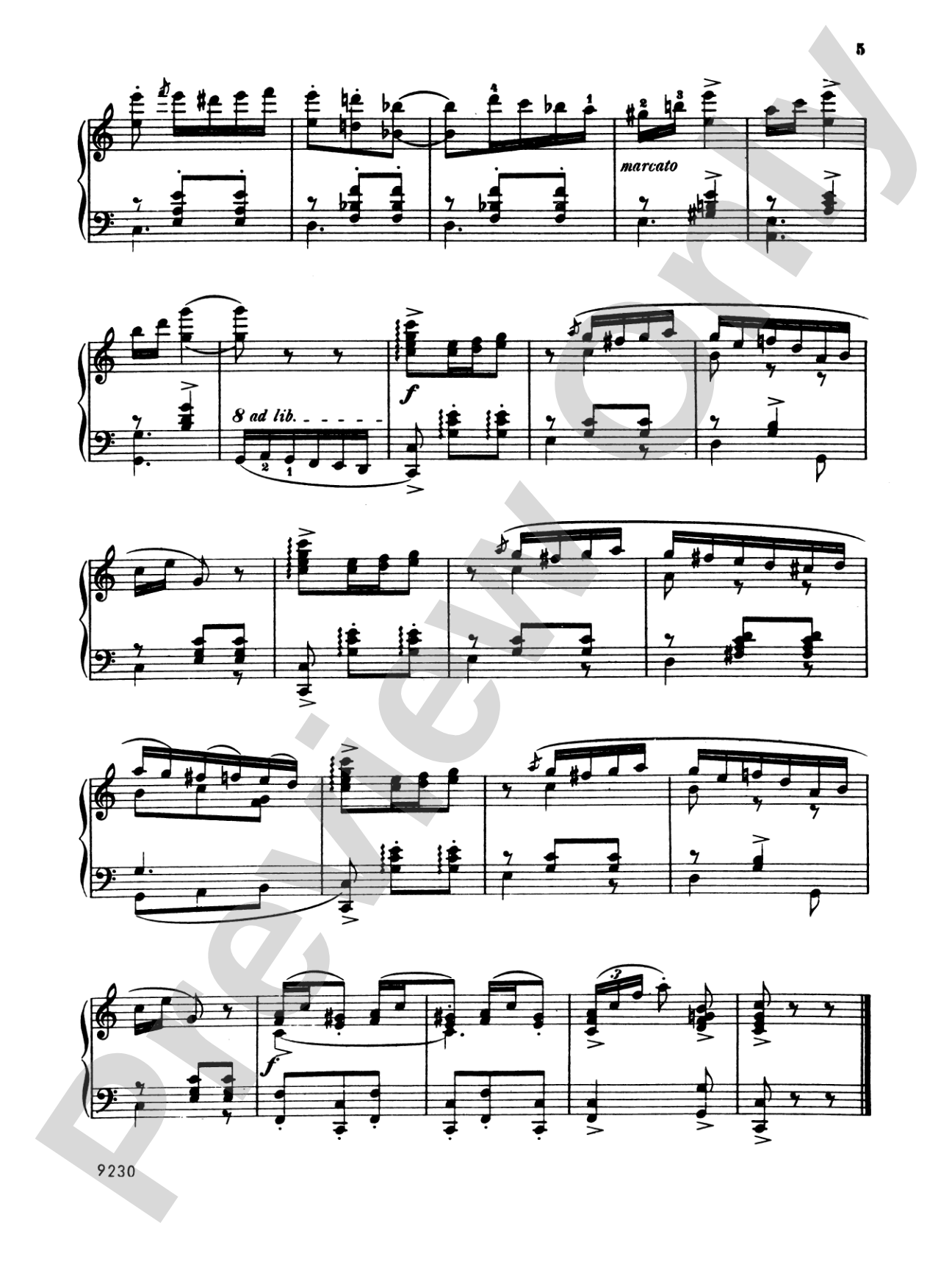

Moszkowski: Spanish Dances, Op. 12: Piano
By Moritz Moszkowski
Item: 00-PK-0003716

$8.99
Pickup currently not available
Buy Extra Parts (Digital PDF Download)
| Product | Price | Quantity |
|---|---|---|
| Moszkowski: Spanish Dances, Op. 12 | $0.99 | |
| Moszkowski: Spanish Dances, Op. 12 | $0.99 | |
| Moszkowski: Spanish Dances, Op. 12 | $0.99 | |
| Moszkowski: Spanish Dances, Op. 12 | $0.99 | |
| Moszkowski: Spanish Dances, Op. 12 | $0.99 |
Parts Added to Cart!
Description


Don't just read it, hear it, play along with it, and watch your students grow with it. In MakeMusic Cloud, Moszkowski: Spanish Dances, Op. 12: Piano comes alive with professional accompaniment, adjustable tempo, and built-in practice tools that turn solo practice into real progress.
Open in the Player
Jump straight in and assign it today.
Start Your Free Trial
Open this title and explore the full library in minutes.
Sample Audio
No sample audio found.
Sample Video
No sample videos found.
Additional Details
Series:
Kalmus Edition
Publisher:
Alfred Music
Page Count:
28
SKU:
00-PK-0003716
More about this title
About the Composer: Moritz Moszkowski
Moritz Moszkowski (1854-1925) was a Polish-German pianist and composer who built a substantial career across Europe's concert halls and as a prolific publisher of pedagogical and concert works. His gift for writing idiomatic music for the piano made him a fixture in the late Romantic repertoire, and his technical clarity and harmonic directness earned respect from both students and professional performers.
Moszkowski's Spanish Dances represent some of his most enduring work, capturing the color and rhythmic vitality of Spanish folk music through a purely pianistic lens. These pieces combine accessible virtuosity with genuine musical substance, which is why they remain staples in advanced student repertoires and professional recital programs more than a century after their composition.
Why we love this
These dances strike an uncommon balance: they demand technical facility and interpretive maturity without requiring the student to navigate dense modern compositional language or vast structural architecture. Each dance stands alone as a complete musical statement, yet the set as a whole offers pedagogical range across contrasting textures, tempos, and moods that make them ideal for building recital programs or exploring late Romantic piano writing.
What to expect
These dances pulse with Mediterranean warmth and rhythmic energy, evoking the swagger and sensuality of Spanish folk traditions filtered through a sophisticated European salon aesthetic. The writing sits comfortably under the fingers with brilliant passagework and clear harmonic progressions that make the music feel both virtuosic and musical rather than mechanically showy.
Who it's for
Advanced students and young professionals preparing recital programs or seeking substantial Romantic-era repertoire that demonstrates technical competence and musical maturity. Teachers often assign these dances to pianists ready to move beyond simplified arrangements into authentic concert literature that rewards both technical and interpretive development.
How to get the most out of it
- Keep rhythmic figures crisp and animated; these dances rely on vitality and forward momentum, not romantic lingering, even in the slower sections
- Listen closely to the relationship between right and left hand parts, as Moszkowski often distributes melodic interest between them rather than concentrating it in one voice
- Shape the Spanish folk elements (dance rhythms, modal inflections) without exaggeration; the composer's style is sophisticated enough to convey character through restraint
- Attend to hand independence and clarity in passages where both hands move in sixteenth-note figures; muddiness obscures the compositional intent
How to use it
Program one or more dances as a contrasting unit within a recital that spans multiple eras or styles; the brightness and rhythmic specificity offer effective foils to weightier Classical or contemporary works. They work equally well as complete standalone recital sets or as individual numbers that anchor a thematic program exploring national musical characteristics.
Skills your students will build
- Idiomatic hand writing and finger independence
- Rhythmic precision in dance-based figuration
- Shaping and phrasing across unbroken sixteenth-note or thirty-second-note passages
- Color and texture differentiation between melody and accompaniment voices
- Interpretive choices within a clear harmonic and structural framework