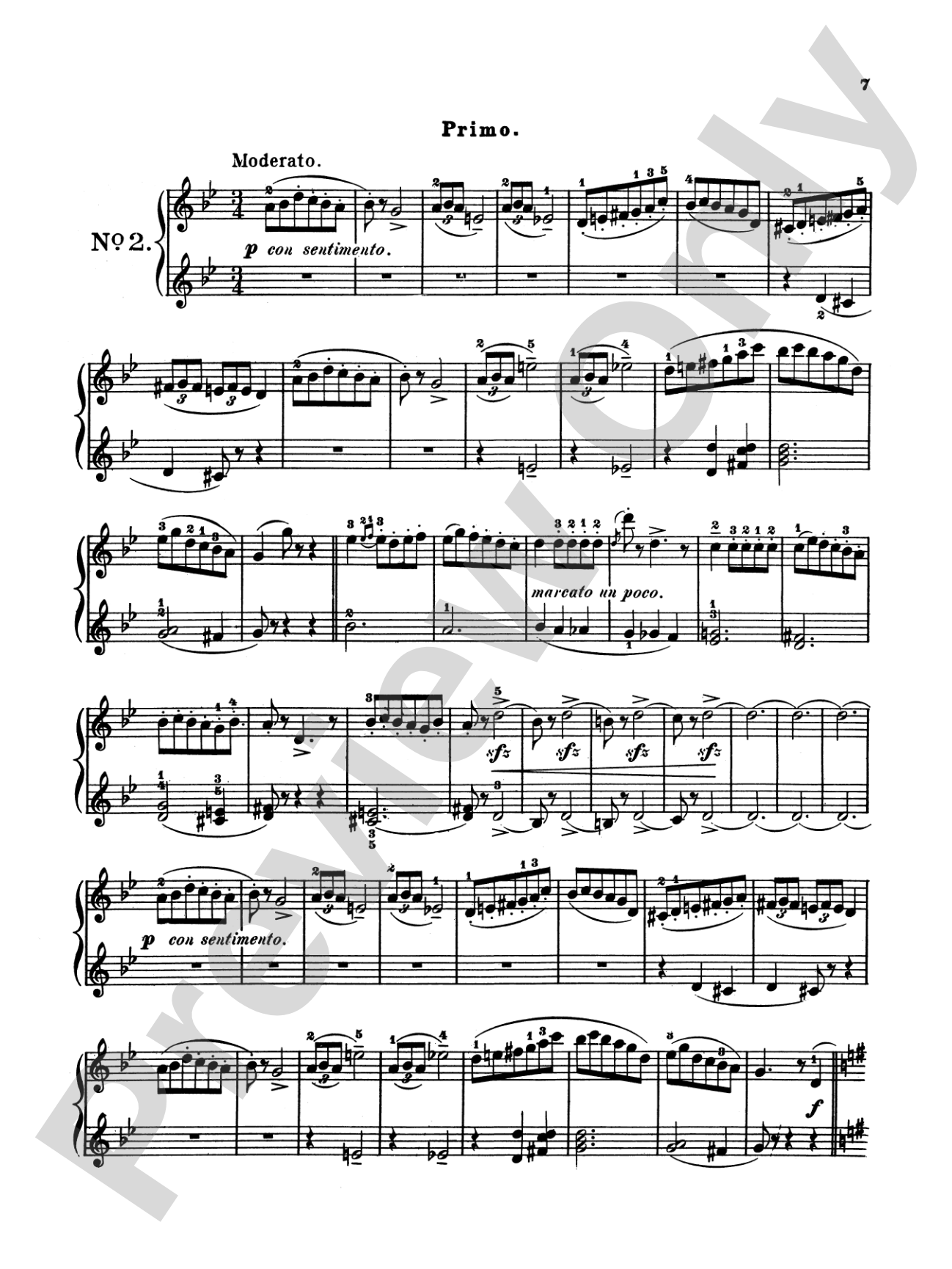
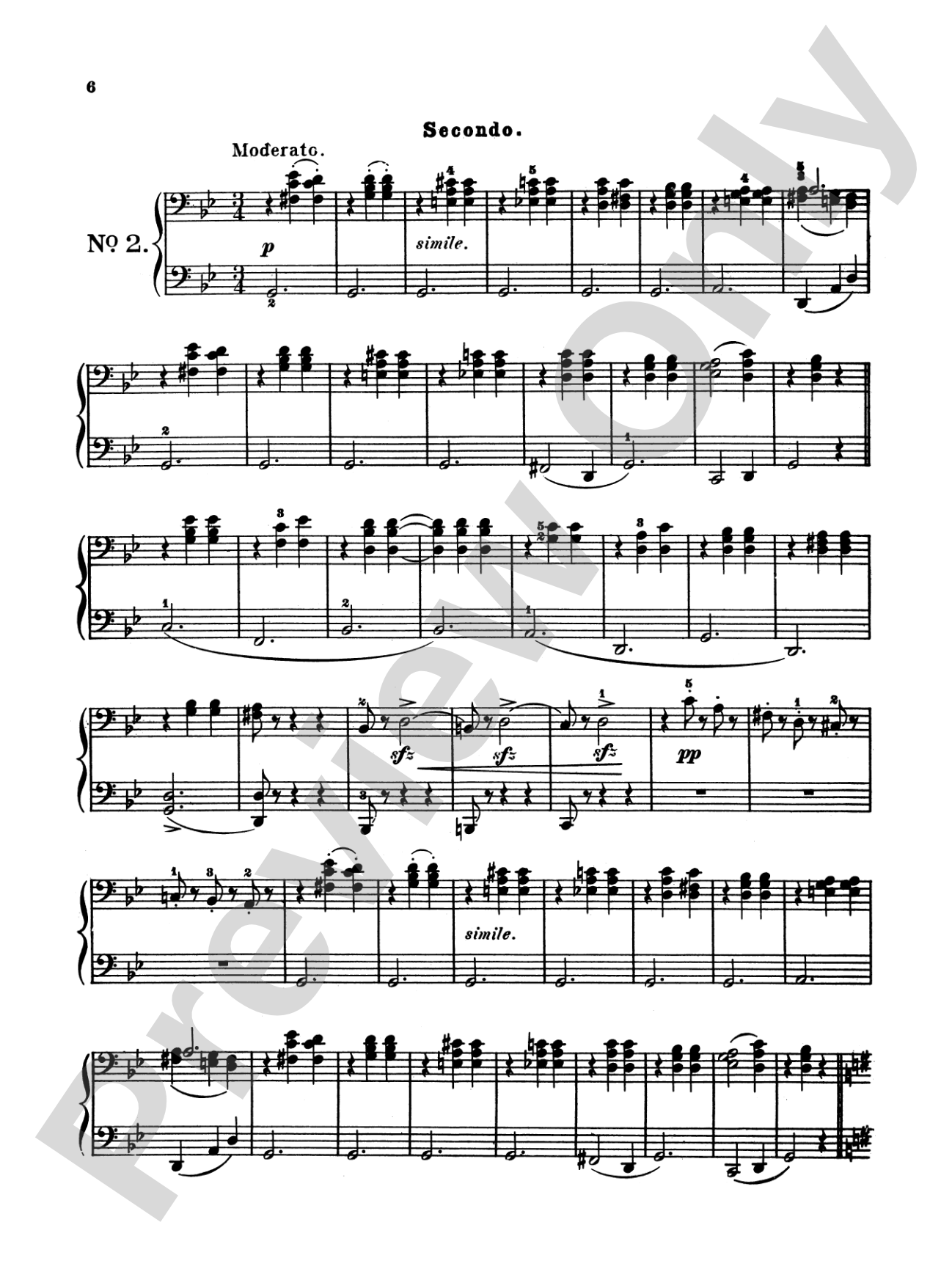
Moszkowski: Spanish Dances, Op. 12 Sheet Music Preview

Moszkowski: Spanish Dances, Op. 12

By Moritz Moszkowski

Item: 00-PC-0012802

Digital Download
$1.99
Description
Expertly arranged Piano Duet by Moritz Moszkowski from the Kalmus Edition series. This Piano Duet (1 Piano, 4 Hands) is from the 20th Century and Romantic eras.

Don't just read it, hear it, play along with it, and watch your students grow with it. In MakeMusic Cloud, Moszkowski: Spanish Dances, Op. 12 comes alive with professional accompaniment, adjustable tempo, and built-in practice tools that turn solo practice into real progress.

Sample Audio
No sample audio found.
Sample Video
Additional Details
Series: Kalmus Edition
Publisher: Alfred Music
Page Count: 36
SKU: 00-PC-0012802

More about this title

About the Composer: Moritz Moszkowski

Moritz Moszkowski (1854–1925) was a Polish composer and pianist whose gift for melody and orchestral color made him one of the most performed composers of the late Romantic era. Though best known for his virtuosic piano works and character pieces, Moszkowski wrote with remarkable accessibility, creating music that rewards both amateur and professional musicians. His Spanish Dances represent the peak of his gift for writing music that sounds far more complex than it actually is to play.

Despite his prominence during his lifetime, Moszkowski's catalog has been overshadowed by his contemporaries. Yet his works remain essential to intermediate and advanced pianists seeking music with genuine artistic substance alongside approachable technical demands. The Spanish Dances especially showcase his skill at crafting memorable themes, colorful harmonic progressions, and genuine theatrical character.

Why we love this

These dances are the ideal bridge between standard duet repertoire and concert-hall material. Moszkowski knew how to write for four hands on one keyboard with complete understanding of hand distribution and balance, so neither player feels relegated to accompaniment. The Spanish flavor gives them immediate charm while the harmonic language and phrasing demand real musicianship.

What to expect

These dances pulse with Spanish warmth and rhythmic vitality. The melodies sing with Romantic generosity while the harmonic language sparkles with unexpected colors, creating an atmosphere of salon elegance mixed with flamenco spirit. You'll feel both the virtuosity and the playfulness in every section.

Who it's for

Intermediate to advanced pianists seeking four-hand repertoire with genuine musical substance. This is ideal for collaborative duet players, teachers looking for recital material with both performers equally engaged, and advanced students ready for ensemble playing at a sophisticated level.

How to get the most out of it

  • Establish hand independence early. The primo and secondo parts often move independently across the keyboard, so practice hands separately at first and map out all the crossing and hand-over moments before ensemble rehearsals begin.
  • Listen actively to your partner's line, not just your own. These pieces thrive on dialoguing between the parts rather than locking rigidly into rhythm. Allow room for rubato and phrasing to breathe together.
  • Shape the Spanish character through articulation and pedal choices. Let staccatos sparkle and cantabile passages sing with warmth. The Spanish idiom relies on color as much as technique.
  • Balance the melody-and-accompaniment sections carefully. When one hand carries the theme, resist the urge to overshadow it with the accompanying figuration, even if the accompaniment requires more finger work.

How to use it

Program this as a standalone feature on a piano recital or as part of a duet concert celebrating Romantic-era four-hand writing. The dances work beautifully as an elegant closer to a diverse program or as a centerpiece that demonstrates collaborative pianists' interpretive range and technical facility.

Skills your students will build

  • Four-hand ensemble balance and communication
  • Hand independence and keyboard navigation at tempo
  • Baroque-to-Romantic phrasing and rubato
  • Character interpretation and stylistic differentiation between individual dances
  • Memorization of substantial multi-movement material
  • Pedal technique for coloristic effect in Romantic harmonic language

You May Also Like