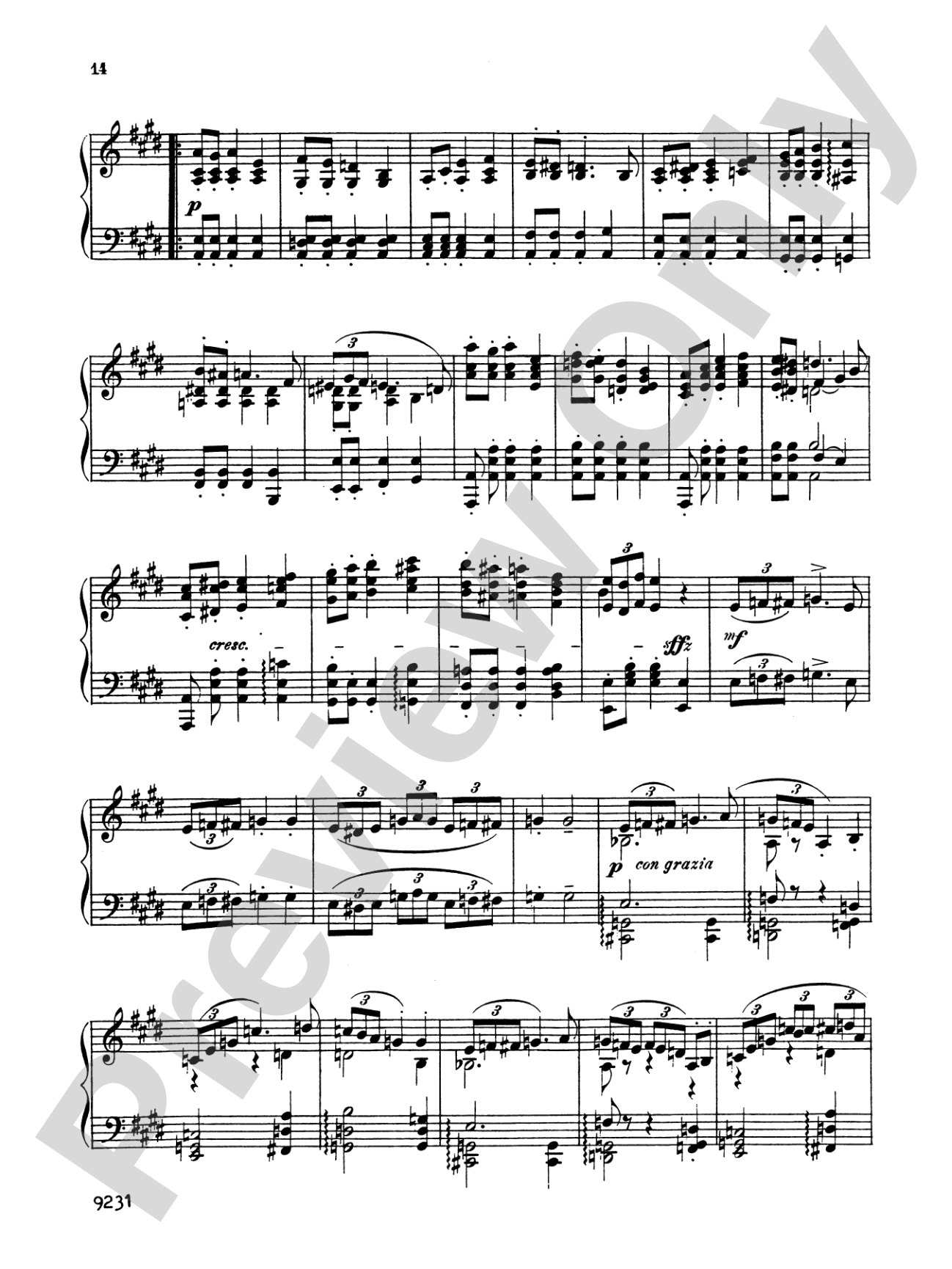
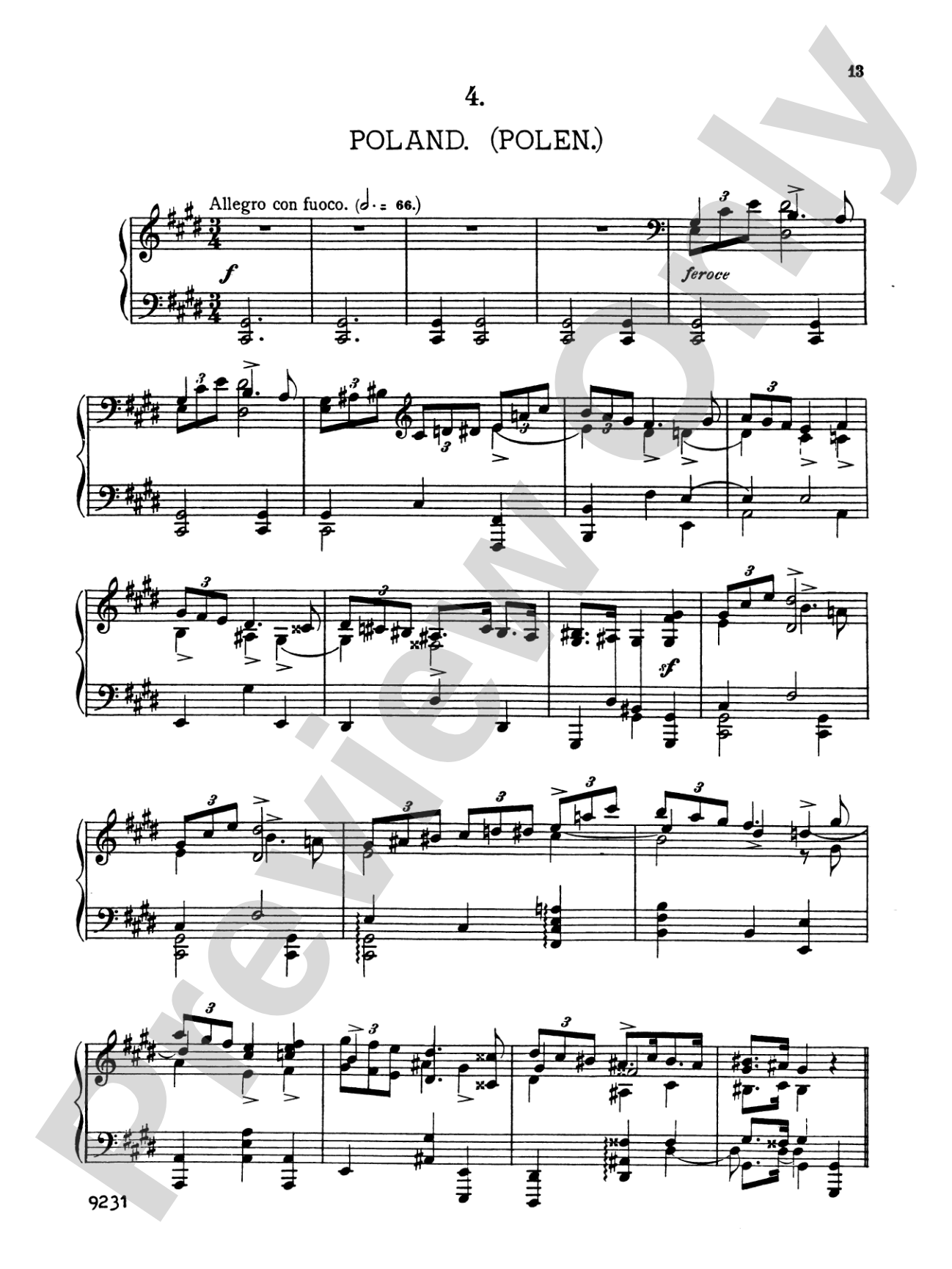
Moszkowski: From Foreign Parts, Op. 23 Sheet Music Preview

Moszkowski: From Foreign Parts, Op. 23

By Moritz Moszkowski

Item: 00-PC-0011942

Digital Download
$0.99
Description

Don't just read it, hear it, play along with it, and watch your students grow with it. In MakeMusic Cloud, Moszkowski: From Foreign Parts, Op. 23 comes alive with professional accompaniment, adjustable tempo, and built-in practice tools that turn solo practice into real progress.

Sample Audio
No sample audio found.
Sample Video
Additional Details
Series: Kalmus Edition
Publisher: Alfred Music
Page Count: 40
SKU: 00-PC-0011942

More about this title

About the Composer: Moritz Moszkowski

Moritz Moszkowski (1854-1925) was a Polish-German pianist and composer whose prolific output of character pieces and pedagogical works shaped late 19th-century salon music. Known for his technical brilliance and melodic gift, he wrote over 400 compositions, many of which remain staples in the intermediate and advanced piano repertoire. His pieces balance genuine musical substance with accessibility, making them enduringly popular with students and concert pianists alike.

Moszkowski spent much of his career in Berlin and Paris, where he gained recognition as both a composer and performer. Though he lived into the early 20th century, his musical language remained rooted in the Romantic tradition, emphasizing lyrical invention, harmonic color, and pianistic elegance. His influence on piano pedagogy and amateur music-making extended well beyond his lifetime.

Why we love this

Moszkowski's character pieces reward both the player and listener with unfussy charm and genuine compositional craft. These pieces sustain the interest of advanced pianists through varied textures and harmonic exploration rather than virtuosic display alone, making them excellent recital material that audiences recognize and enjoy. The collection represents where Romantic piano writing lands when technique serves musicality rather than the reverse.

What to expect

These pieces evoke the elegant drawing room world of late Romanticism, where refined technique and emotional directness coexist. Each piece unfolds like a well-told story: charming, tuneful, and complete in itself, yet never lightweight or sentimental. The musical language is warm and approachable, yet sophisticated in its harmonic language and formal pacing.

Who it's for

Advanced amateur pianists and pre-college students seeking repertoire that combines genuine artistic merit with approachable scope will find this collection rewarding. Teachers searching for recital pieces that develop mature musical judgment and pianistic facility, without the extreme technical demands of virtuosic showpieces, will value these works highly.

How to get the most out of it

  • Attend to the voicing of inner lines; Moszkowski layers melodic interest throughout the texture, and revealing these voices creates depth without heavy-handed pedal work.
  • Shape each piece's harmonic progressions deliberately. The tonal language moves through vivid key areas, and clear voice leading helps listeners follow the journey.
  • Balance clarity with legato; the salon style invites singing tone, but muddiness will obscure the refined detail Moszkowski provides.
  • Experiment with subtle tempo flexibility within pieces rather than rigid metronomic adherence, allowing the music's lyrical character to breathe naturally.

How to use it

Program individual pieces from this collection as contrasting items in student recitals, or perform several as a thematic group celebrating Romantic character music. These works sit comfortably alongside Brahms intermezzos, Schumann album leaves, or other salon repertoire, offering variety in mood and texture while maintaining artistic coherence.

Skills your students will build

  • Voicing inner melodic lines within a dense texture
  • Reading and executing romantic-era harmonic language with varied modulations
  • Executing pedal changes precisely to maintain textural clarity
  • Shaping lyrical phrases with structural awareness across multi-section forms
  • Interpreting character piece conventions and rhetorical gestures of the salon tradition

You May Also Like