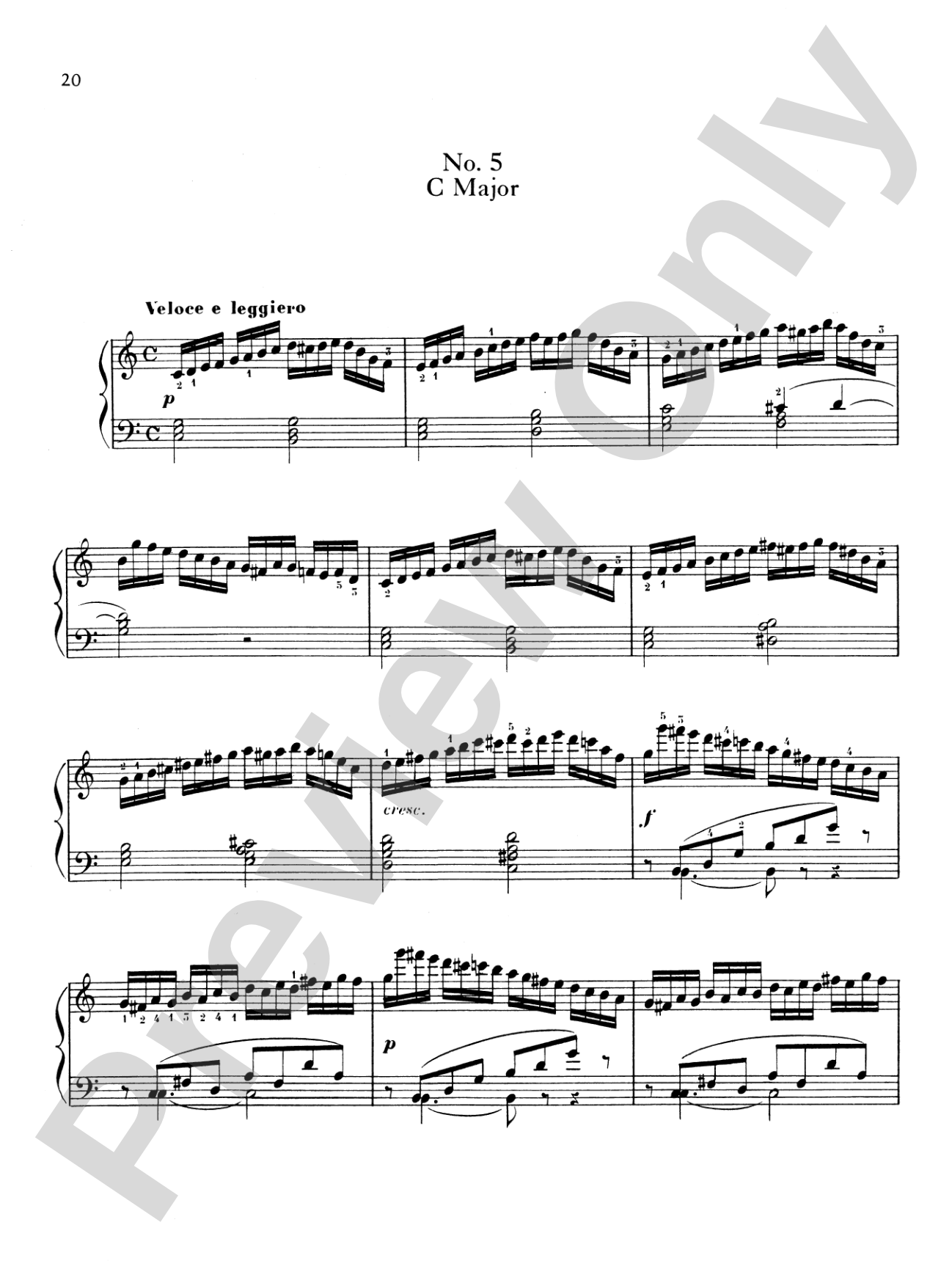
Moszkowski: Fifteen Études de Virtuosité, Op. 72 Sheet Music Preview

Moszkowski: Fifteen Études de Virtuosité, Op. 72

By Moritz Moszkowski

Level: Advanced

Item: 00-PC-0008559

Digital Download
$0.99
Description
Titles: No. 1 in E Major * No. 2 in G Minor * No. 3 in G Major * No. 4 in C Major * No. 5 in C Major * No. 6 in F Major * No. 7 in E-Flat Major * No. 8 in C Major * No. 9 in D Minor * No. 10 in C Major * No. 11 in A-Flat Major * No. 12 in D-Flat Major * No. 13 in A-Flat Major * No. 14 in C Minor * No. 15 in B Major.

Don't just read it, hear it, play along with it, and watch your students grow with it. In MakeMusic Cloud, Moszkowski: Fifteen Études de Virtuosité, Op. 72 comes alive with professional accompaniment, adjustable tempo, and built-in practice tools that turn solo practice into real progress.

Sample Audio
No sample audio found.
Sample Video
Additional Details
Series: Kalmus Edition
Publisher: Alfred Music
Page Count: 68
SKU: 00-PC-0008559

More about this title

About the Composer: Moritz Moszkowski

Moritz Moszkowski (1854-1925) was a Polish-German pianist and composer whose technical brilliance at the keyboard shaped his compositional voice. He studied at the Dresden Conservatory and later established himself as a virtuoso performer across Europe, earning particular acclaim for his interpretations of Chopin and Schumann.

Moszkowski's output favors the piano, with over 150 published works ranging from concert pieces to salon music. His études occupy a distinctive place in piano pedagogy: they solve genuine technical problems while remaining musically substantial. Unlike studies that isolate single technical challenges, Moszkowski's mature études combine multiple demands within coherent musical structures, making them valuable for advanced students preparing concert repertoire as much as for technique refinement.

Why we love this

These fifteen studies reveal what separates the Romantic virtuoso tradition from mechanical finger gymnastics. Moszkowski wrote for pianists who already commanded significant technical facility, so each study assumes competence and builds toward artistic expression. The harmonic language moves beyond simple diatonic patterns, the formal structures reward thoughtful interpretation, and the accompaniment figuration often carries melodic interest rather than merely supporting a solo line.

What to expect

The collection moves through varied moods and characters: brilliant figuration that spins without becoming mechanical; lyrical sections that breathe with genuine melodic shape; harmonic language that colors familiar European tonality with chromatic warmth. There's an unmistakable atmosphere of virtuosity grounded in musicianship rather than display for its own sake.

Who it's for

Advanced pianists preparing for advanced classical technique requirements, repertoire recitals, or conservatory-level study. These studies suit students who have secured comfortable execution of standard nineteenth-century concerto repertoire and are ready to address the specific technical and musical demands of mature Romantic writing.

How to get the most out of it

  • Establish a secure fingering for each study before addressing tempo. Moszkowski's passagework often rewards unusual but efficient hand positions that earlier Czernys might not have explored.
  • Listen for the harmonic progression underneath rapid figuration. In pieces like the E-flat major study (No. 7), the underlying chord movement shapes phrasing even when notes cascade quickly.
  • Balance technical clarity with legato where the texture permits. These studies test articulation control, not just speed; clarity of line matters as much as facility.
  • Recognize when the left hand carries structural weight. Several studies feature active accompaniment that shouldn't fade into background texture.

How to use it

Program individual studies as recital fillers between weightier works, particularly when you need a piece that showcases facility without demanding the emotional depth of a concerto movement or sonata. Alternatively, assign them systematically in a studio where advanced students need targeted work on transitional technique between intermediate concert repertoire and professional-level performance demands.

Skills your students will build

  • Rapid repeated-note articulation and control
  • Scalar and arpeggio figuration at advanced tempos
  • Voicing and independence in multi-layered textures
  • Left-hand agility beyond simple accompaniment patterns
  • Pedal management in sustained harmonic contexts
  • Chromatic voice-leading and harmonic analysis
  • Legato connection across wide intervallic leaps

You May Also Like