Morpheus: Baritone T.C. Sheet Music Preview

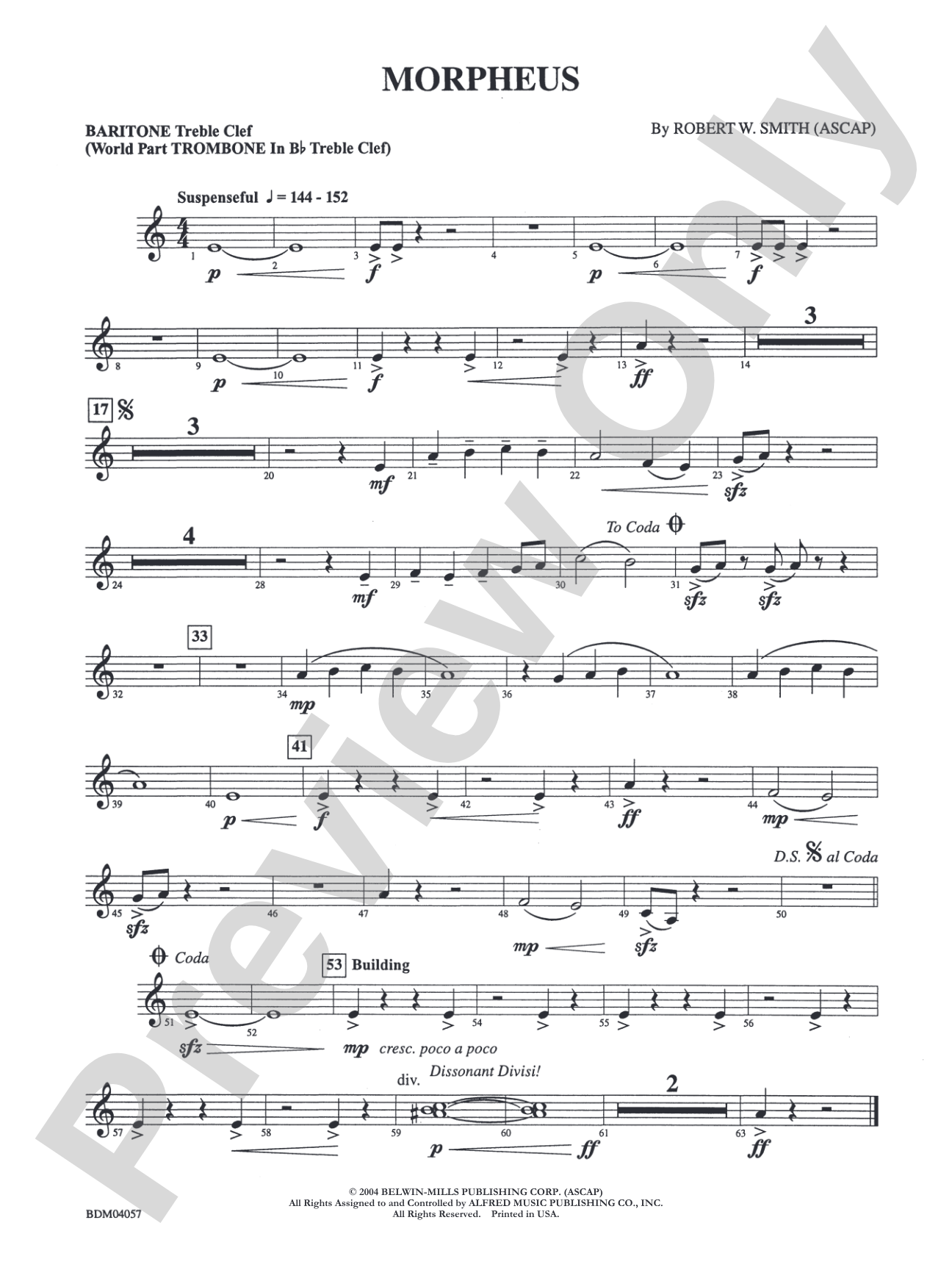
Morpheus: Baritone T.C.

By Robert W. Smith

Grade: 1 (Very Easy)

Item: 00-PC-0015200_BTC1

Digital Download
$3.00
Description
Morpheus, the Greek God of Dreams, is represented in part by the powerful pulses that open this work, indicative of his power. Made up of high-energy, driving rhythms that establish the mood, this is truly an epic work for beginners. The repetitive rhythmic passages make the work sound difficult, but it's easy to master. (1:58) This title is available in MakeMusic Cloud.

Don't just read it, hear it, play along with it, and watch your students grow with it. In MakeMusic Cloud, Morpheus: Baritone T.C. comes alive with professional accompaniment, adjustable tempo, and built-in practice tools that turn solo practice into real progress.

Sample Audio
0:00
0:00
Sample Video
Additional Details
Series: Belwin Beginning Band
Publisher: Alfred Music
Page Count: 144
SKU: 00-PC-0015200_BTC1

More about this title

About the Composer: Robert W. Smith

Robert W. Smith

Robert W. Smith holds a unique position in American wind band composition, with over 400 publications that span concert band, orchestral, and popular music contexts. His education at Troy State University and the University of Miami grounded him in both performance and pedagogy, and his work has traveled globally—from European concert halls to Asia, Australia, and Canada.

Smith's compositions range from accessible Grade 1 works to substantial symphonic structures like The Divine Comedy and The Odyssey. His music has appeared in high-profile broadcasts and ceremonies, including Olympic coverage, the Macy's Thanksgiving Day Parade, and major television productions. He remains a sought-after clinician and conductor, bringing his expertise directly to ensembles across multiple continents.

Why we love this

Morpheus delivers genuine musicality without requiring technical command your newest players don't yet possess. Smith understands that powerful rhythm and clear harmonic movement communicate drama better than flashy technique, and he uses both to create an opening statement that excites ensembles and audiences alike. The repetitive rhythmic foundation lets musicians lock in quickly while the fuller band texture keeps energy high throughout.

What to expect

Morpheus opens with the weight of mythology—powerful, insistent pulses that announce the god of dreams himself. The driving energy maintains momentum throughout, creating a work that feels epic and intentional rather than simple or didactic.

Who it's for

Beginning concert bands and first-year students ready to tackle an ensemble piece with real musical presence. Morpheus works equally well for groups building confidence in rhythmic precision and groups preparing for festival competition.

How to get the most out of it

  • Establish a steady pulse before the downbeat and anchor it in your conducting pattern. The opening pulses set the foundation for everything that follows, so precision here matters more than surface-level tempo.
  • Balance the driving rhythmic sections by bringing out melodic lines as they emerge. Without this contrast, the piece can flatten; with it, the work gains architectural shape.
  • Use dynamics to reinforce structure and build momentum. Even at this level, the difference between mezzo-forte and forte gives the band something to execute and an audience something to hear.

How to use it

Open a concert or festival performance with Morpheus to establish energy and engagement from the first moments. Its brief runtime and immediate musical impact make it ideal for building a young ensemble's confidence early in the season or as a reliable closer for youth band showcases.

Skills your students will build

  • Rhythmic precision under sustained pulse
  • Balance between ensemble sections with repeating rhythmic figures
  • Dynamic control and contrast within a single structural idea
  • Ensemble blend when multiple sections carry similar rhythmic material

You May Also Like