Morning Star: Piano Accompaniment Sheet Music Preview

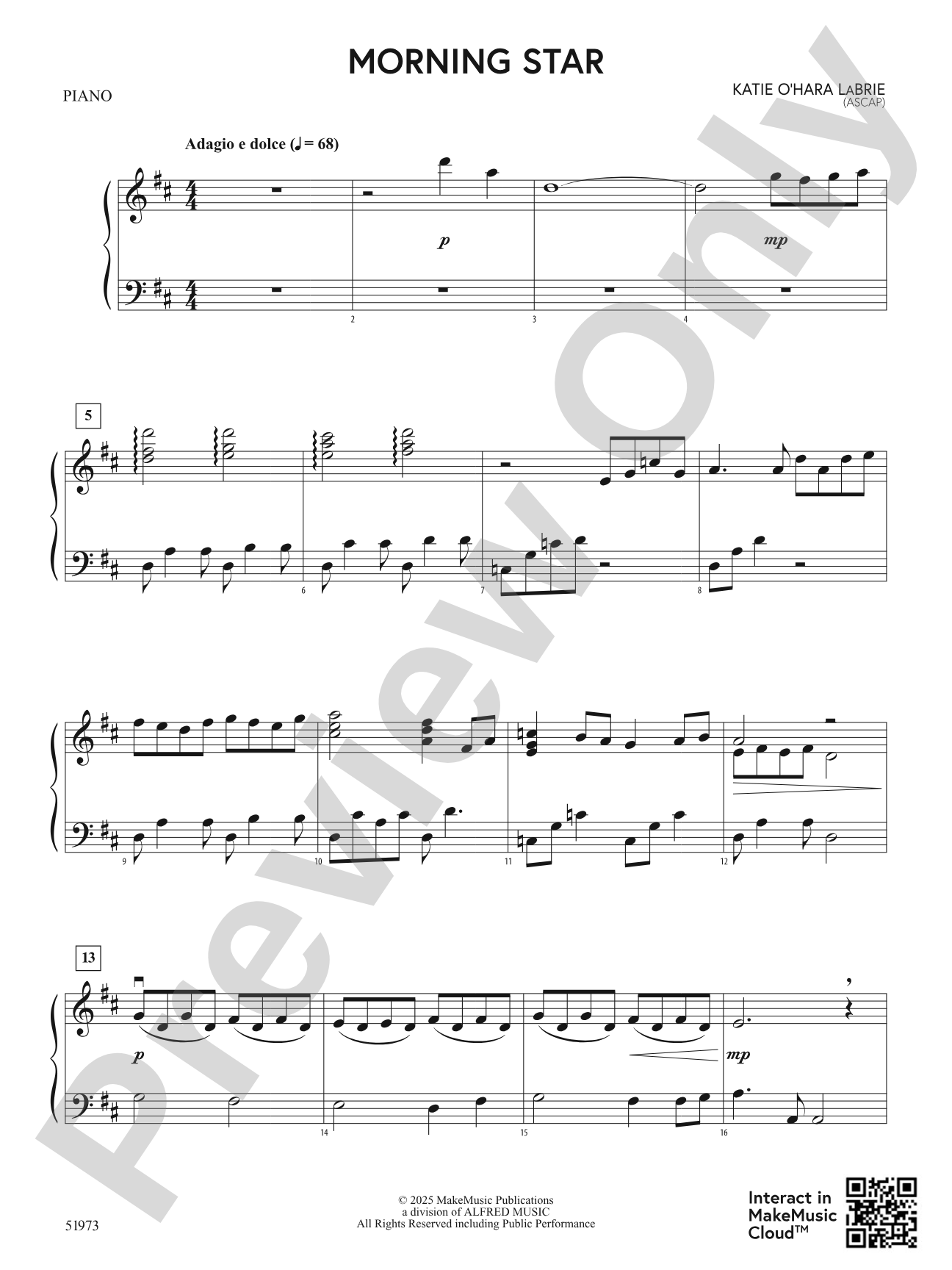
Morning Star: Piano Accompaniment

By Katie O'Hara LaBrie

Grade: 2

Item: 00-PC-0019453_K

Digital Download
$3.00
Description
Morning Star is a musical reflection that reminds listeners to take a brief pause each day to appreciate the beauty that surrounds us. Katie O'Hara LaBrie showcases delicate legato, tenuto, and portato playing, with her flowing melodies gracefully passed between sections. An optional independent piano part enhances the shimmer and provides an opportunity for a student to shine. (2:00)

Morning Star: Piano Accompaniment isn't in MakeMusic Cloud just yet...but it could be. Let us know you'd like to see it, and you'll help shape what comes next. In the meantime, start a free trial and dive into thousands of interactive titles your students can play along with today.

Sample Audio
0:00
0:00
Sample Video
Additional Details
Series: MakeMusic Intermediate Strings
Publisher: MakeMusic Publications
SKU: 00-PC-0019453_K

More about this title

About the Composer: Katie O'Hara LaBrie

Katie O'Hara LaBrie

Katie O'Hara LaBrie is a composer, conductor, clinician, and cellist based in Northern Virginia whose work consistently reflects her deep classroom experience. During her first 15 years in music education, she taught orchestra in Fairfax County schools while earning a Bachelor of Music in Music Education from St. Olaf College and a Master of Music in Instrumental Conducting from George Mason University. Her compositional voice emerges directly from her work with students and her observations of the natural world around her.

LaBrie's pieces have been recognized as J.W. Pepper Editor's Choice selections and performed at the Midwest Band and Orchestra Directors Clinic and American String Teachers Association Conference. In 2022, Yamaha named her one of their "40 Under 40" honorees for her impact on music education. She founded the Fairfax Chamber Players and co-created "the Big IDEA" practice method, both reflecting her commitment to purposeful musicianship and student growth. She lives in Fairfax with her husband Joe, a middle school band director, and their son.

Why we love this

LaBrie's writing for strings at this level strikes a rare balance between accessibility and genuine artistry. The piece moves beyond technical exercises by asking players to shape singing phrases while building control over sustained tone and bow changes, making it rewarding to rehearse and deeply satisfying to perform.

What to expect

Morning Star unfolds with a quiet, contemplative quality that invites listeners into a moment of stillness. The flowing melodies pass through the ensemble like light shifting across water, with graceful bowing and tender dynamics creating a sense of peace and wonder.

Who it's for

String orchestras at the Grade 2 level looking for repertoire that develops legato control and phrase shaping without excessive technical demands. This works equally well for conductors building student ensembles and for festival or contest programming where reflection and beauty resonate with adjudicators.

How to get the most out of it

  • Shape the legato lines with clarity and intention; the sustained character of the piece depends on consistent bow pressure and vibrato control throughout each phrase.
  • If using the optional piano part, balance it carefully against the strings so it enhances shimmer without overwhelming the orchestral texture.
  • Work sections separately on legato, tenuto, and portato techniques before combining them, since the piece asks players to shift between these articulations with musical purpose rather than mechanical switches.

How to use it

Use this as a contrasting moment in a concert program, especially between more technically demanding or rhythmically driven pieces. Its two-minute length makes it ideal for festival programming, and the optional piano part offers a chance to feature a talented young pianist alongside the orchestra.

Skills your students will build

  • Legato bowing with consistent tone and pressure
  • Tenuto and portato articulations
  • Sustaining phrases through dynamic shaping
  • Listening for melodic movement across section transitions
  • Ensemble balance and blend in homophonic textures

You May Also Like