
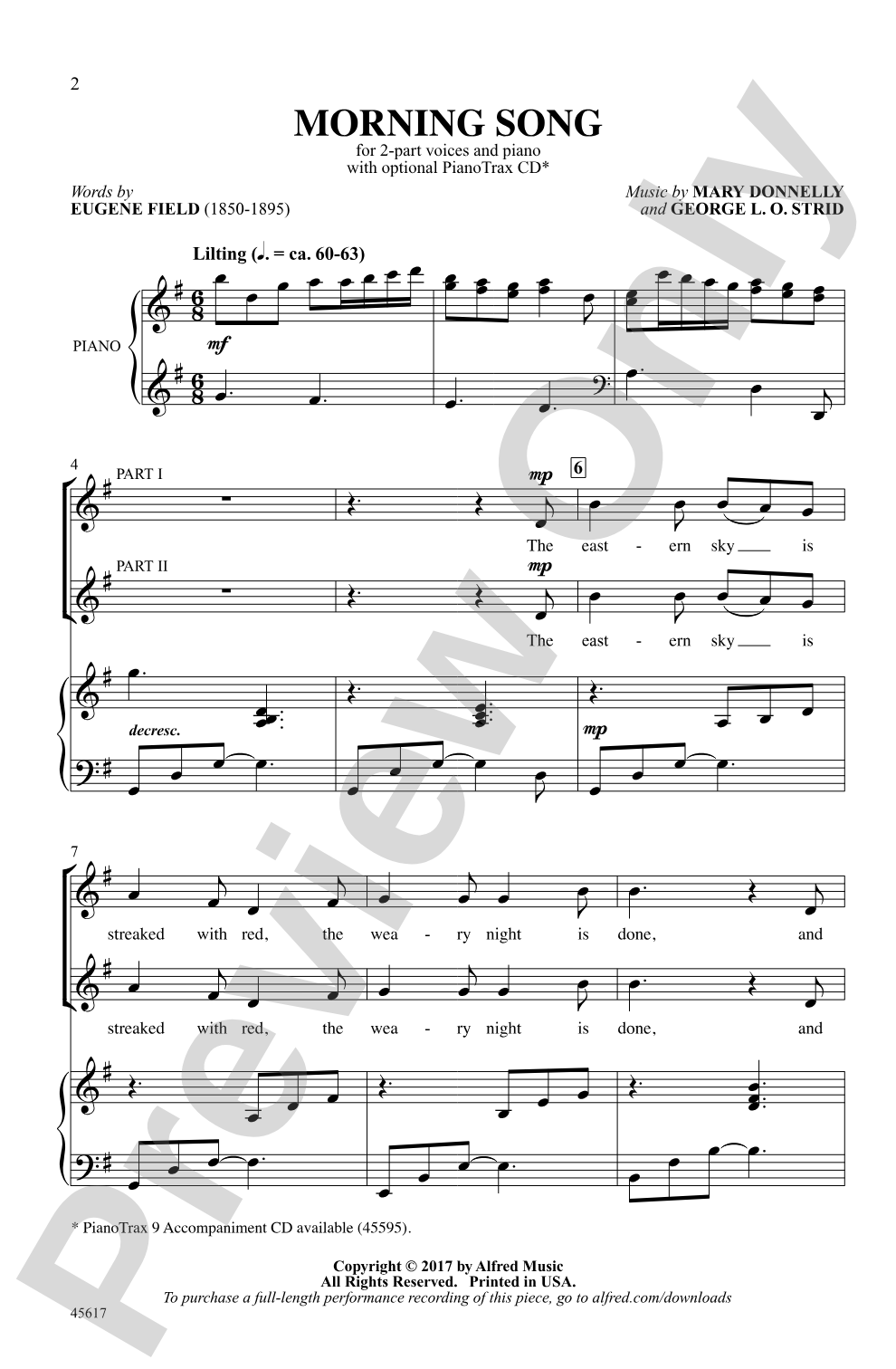
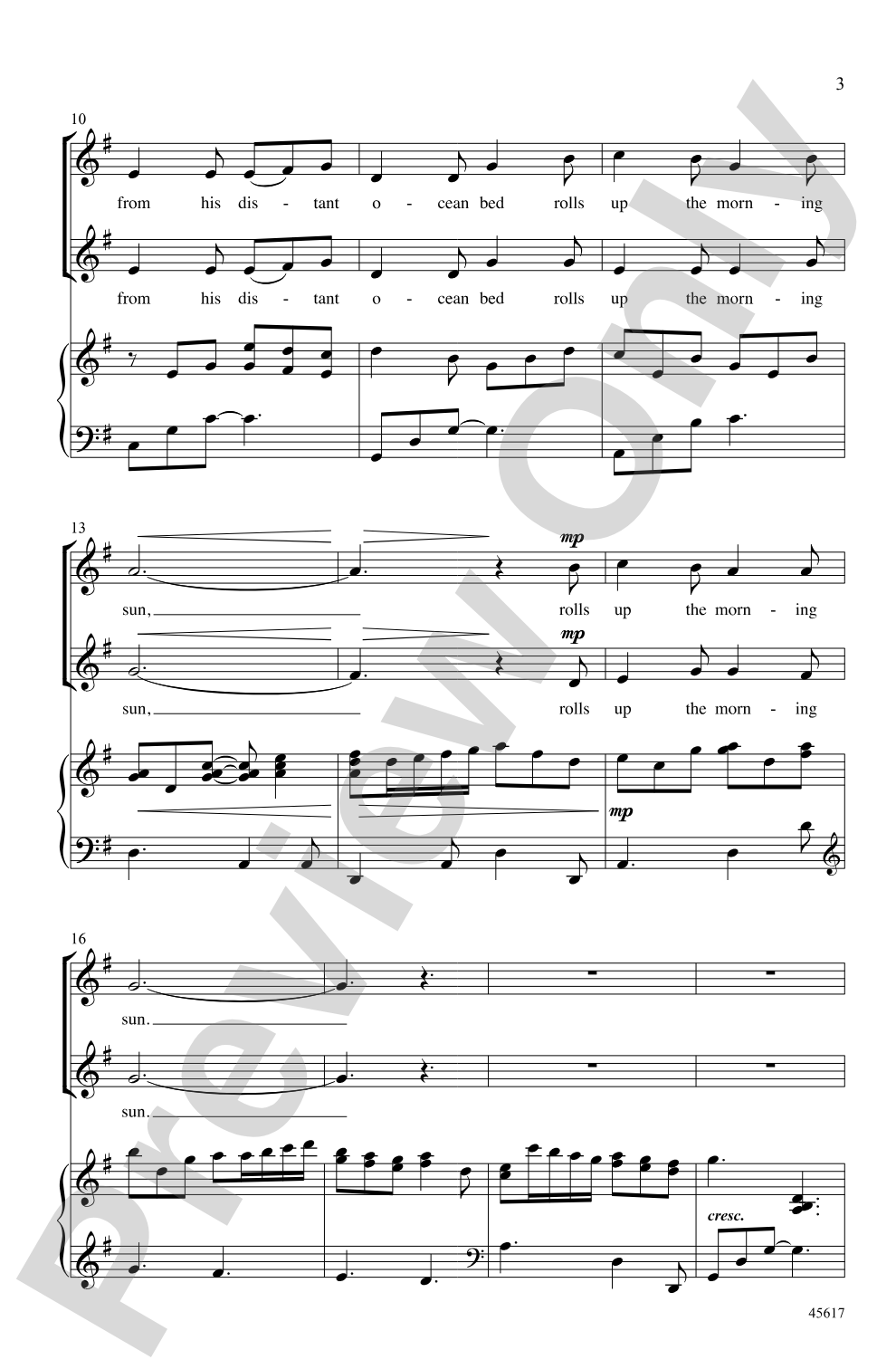

Morning Song: 2-Part Choral Octavo
Words by Eugene Field, music by Mary Donnelly and George L. O. Strid
Item: 00-PO-0005510
$1.90
Minimum order quantity: 20 copies
Pickup currently not available
Description
Featuring a vivid poetic text, a light and airy lilt, and a supportive piano accompaniment, this lyrical beauty celebrates the newness of every day. Each voice part shares moments of melody and brief flowing counterlines, making this a top choice for developing treble choirs. Charming!


Morning Song: 2-Part Choral Octavo isn't in MakeMusic Cloud just yet...but it could be. Let us know you'd like to see it, and you'll help shape what comes next. In the meantime, start a free trial and dive into thousands of interactive titles your students can play along with today.
Request This Title
Tell us you want it.
Start Your Free Trial
Explore everything that's ready to play right now.
Sample Audio
1
Audio File
--:--
0:00
0:00
Sample Video
Additional Details
Series:
Alfred Choral Designs
Publisher:
Alfred Music
Page Count:
8
SKU:
00-PO-0005510
More about this title
About the Composer: Mary Donnelly
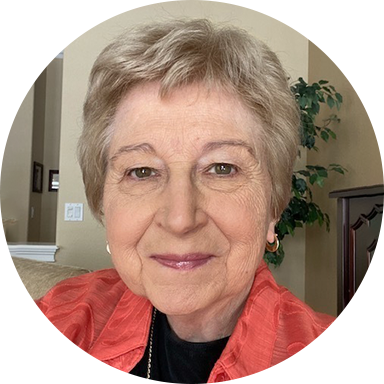
Mary Donnelly grew up in Reno, Nevada, and studied English and French at the University of Nevada before discovering her passion for music education during her college years. She organized children's choruses while still a student, then earned a Master's Degree in Education from Lesley College, where she focused on integrating the arts across disciplines. Over thirty years, she taught general music and choir in elementary and middle schools throughout the Washoe County School District.
In 1985, Donnelly began a creative partnership with George L. O. Strid when their principal asked them to co-write a musical for Reading Week. That first project launched a prolific collaboration that has produced more than two hundred songs and twenty-five musicals. An active member of ACDA, NEA, and ASCAP, Donnelly continues to live in Reno with her husband.
Why we love this
Donnelly and Strid understand how treble choirs develop. Rather than locking one part into a supporting role, they distribute melody and counterline between both voices, keeping singers engaged throughout. The text carries real poetic weight, and the light lilt makes this piece feel fresh enough for concert programming while remaining entirely accessible for younger or less experienced ensembles.
What to expect
Morning Song captures the quiet joy of a new day starting. The airy, lilting character feels unrushed and gentle, with both voice parts moving in a natural, conversational way that never feels strained. Beneath it all, the piano provides warmth and support, making the whole experience feel like a shared moment of reflection.
Who it's for
This octavo serves developing treble choirs ranging from middle school through early high school. The accessible 2-part voicing and melodic balance make it ideal for singers building confidence in part-singing and blend, while the literary text appeals to ensembles ready to explore choral music with substance.
How to get the most out of it
- Balance the melodic phrases between parts. Since both voice lines share moments of prominence, rehearse each part's melody first in isolation so singers understand their own line's shape before blending.
- Let the piano accompaniment guide your tempo and phrasing. The supportive writing underneath creates natural breathing points and helps lock the ensemble's sense of flow.
- Shape the text expressively. A poetic lyric deserves attention to word color and meaning; this will naturally enhance the piece's lightness and prevent it from feeling flat.
How to use it
This piece works beautifully as an opening or closing number on a concert, especially in spring programs celebrating renewal or hope. It also pairs well with other sacred or inspirational works in a longer set, and its moderate length makes it a strong choice for festival programming where you want to showcase musicality and text expression.
Skills your students will build
- Singing independent melodic lines while maintaining harmonic awareness
- Balancing solo and supporting roles within a two-part texture
- Phrasing and expression informed by poetic text
- Blend and tone matching across both voice parts