Randall Hartsell discovered composition through his high school English classes, drawing inspiration from the literature he studied and translating those narratives into piano pieces. After earning his degree from East Carolina University, he returned to composing while teaching in a small town, developing the lyrical, student-centered voice that would define his career. A chance meeting with Lynn Freeman Olson in the early 1980s led to his first publication with Alfred, and since then more than 60 of his collections and solos have reached students nationwide.
Hartsell's own path to music began at age 12 with piano lessons practiced daily at his aunt and uncle's house before his family could afford their own instrument. That early discipline and determination shaped his understanding of what student musicians need: accessible repertoire that respects their developing skills while offering genuine musical content. Today he remains active in Charlotte, North Carolina, as a teacher, accompanist, clinician, and church musician.
Why we love this
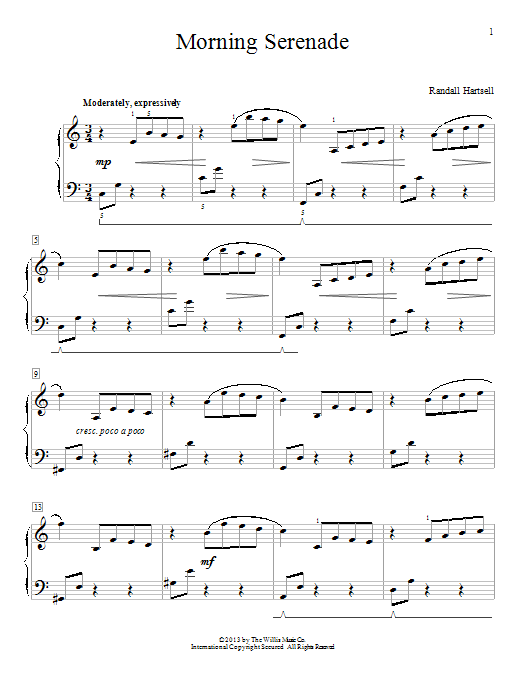
Hartsell writes with a gift for melody that sounds effortless but teaches important fundamentals. The piece unfolds naturally across two pages, offering enough substance to feel rewarding without overwhelming students who are still building independence at the keyboard.
What to expect
A gentle conversation between melody and accompaniment, full of warmth and quiet sophistication. The piece invites the performer into a contemplative space where careful listening matters as much as correct notes.
Who it's for
Intermediate to early advanced pianists building confidence in lyrical playing and hand independence. This works well for students progressing through Level 4-5 materials who are ready for pieces with genuine musicality and longer line structures.
How to get the most out of it
Shape the melodic line by thinking of a singer's breath; let each phrase breathe naturally rather than treating the measure line as a stopping point.
Maintain steady tempo in the accompaniment pattern so the melody can float slightly ahead or settle back without losing direction.
Pay attention to the dynamic arc within each section; small changes in volume reveal the structure and keep the piece alive.
Listen for places where the harmonic rhythm changes; these moments often mark important structural points that deserve subtle emphasis.
How to use it
Pair this as a solo recital piece for students preparing for festival or jury performances. The concise two-page length makes it ideal for spring concerts where you want variety without lengthy program notes.
Skills your students will build
Sustaining long melodic lines over accompanying patterns
Hand independence and coordination between treble and bass parts
Listening for and executing subtle dynamic shaping
Musical phrasing and breathing within Classical style conventions
You May Also Like
Scan to Complete Your Purchase
Use your phone's camera to scan the code below
You'll log in on your phone and the order will be added to your account