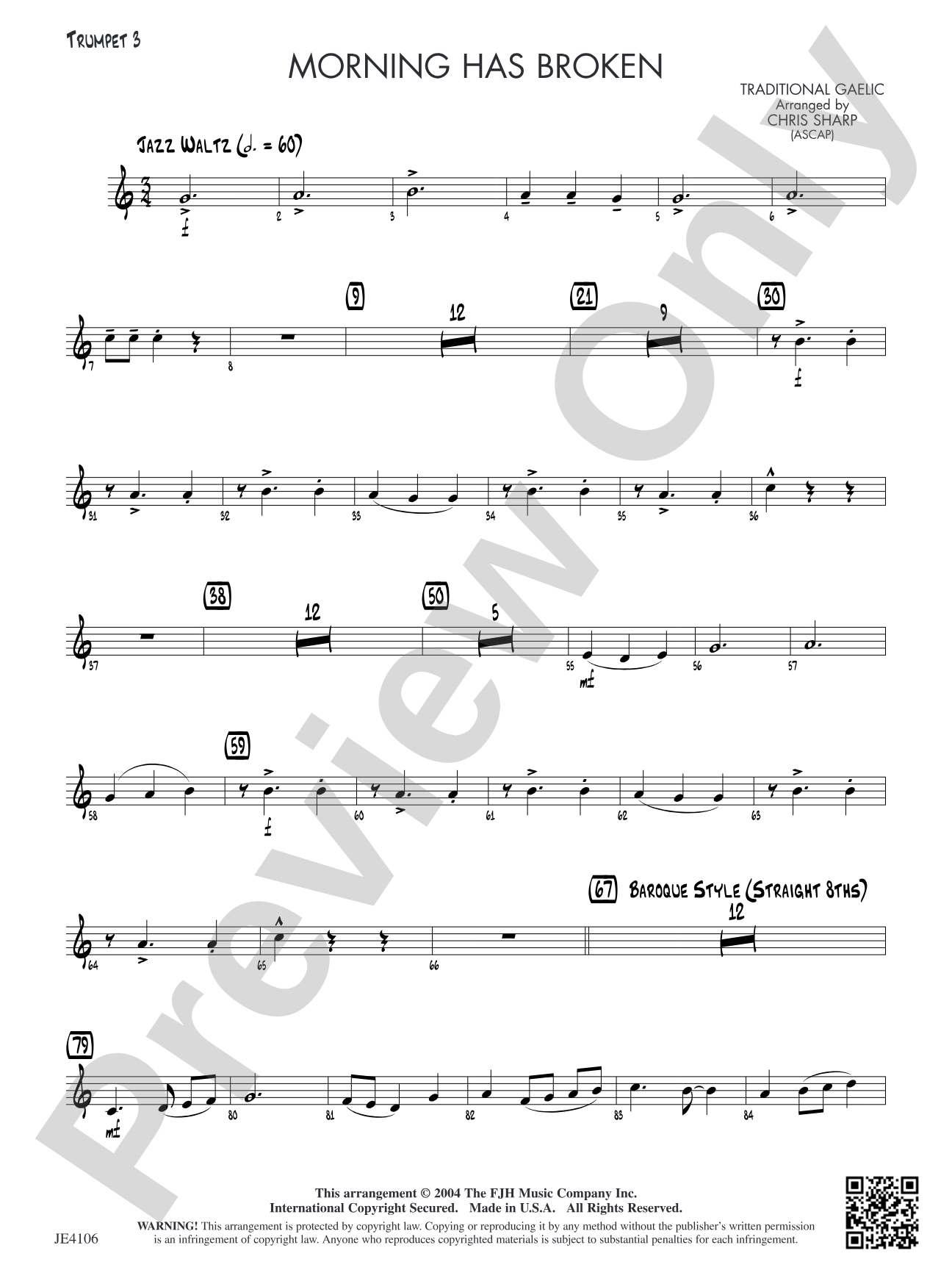
Morning Has Broken: Trumpet 3 Sheet Music Preview

Morning Has Broken: Trumpet 3

Arranged by Chris Sharp

Grade: 3

Item: 98-PC-DJE4106_T3

Digital Download
$7.00
Description
This hip version of the well-known traditional Gaelic folk song blends the old with the new. It features a baroque-style fugue section that is reminiscent of music by the Swingle Singers group, and provides a nice contrast to the outer sections of the tune. A richly scored shout chorus provides a sparkling climax to this uplifting arrangement by Chris Sharp.

Morning Has Broken: Trumpet 3 isn't in MakeMusic Cloud just yet...but it could be. Let us know you'd like to see it, and you'll help shape what comes next. In the meantime, start a free trial and dive into thousands of interactive titles your students can play along with today.

Sample Audio
0:00
0:00
Sample Video
Additional Details
Series: FJH Intermediate Jazz Ensemble
Publisher: The FJH Music Company, Inc.
SKU: 98-PC-DJE4106_T3

More about this title

About the Arranger: Chris Sharp

Chris Sharp

Chris Sharp holds a Ph.D. and brings decades of professional arranging experience to the concert and jazz band world. His career spans work as a performing trombonist and bandleader at Walt Disney World for eleven years, followed by sustained work as an arranger and orchestrator for Disney parks globally since 1984, creating music for live entertainment, recordings, and broadcast television. He has also arranged for major clients including Universal Studios, the Boston Pops, the Dallas Brass, and the USAF Airmen of Note.

Currently Director of Bands at Polk State College in Winter Haven, Florida, Sharp teaches music theory, technology, and arranging while maintaining an active composing and arranging practice. His work appears regularly at the Midwest Clinic, and he has served as clinician, guest conductor, and adjudicator for organizations including Bands of America and Drum Corps International. He is a multiple recipient of the ASCAPlus award.

Why we love this

Sharp's arrangement threads a baroque fugue through a contemporary jazz ensemble setting, creating genuine musical surprise rather than simply dressing up a familiar hymn. The progression from introspective opening through contrapuntal complexity to a fully voiced shout chorus gives your ensemble distinct sections to master, rewarding rehearsal time with clear musical architecture.

What to expect

Reverent and structured in its baroque center, energetic and swinging in its frame. The arrangement honors the hymn's spiritual roots while playfully recontextualizing it through sophisticated musical language, creating a piece that feels both contemplative and joyful.

Who it's for

Intermediate jazz ensembles (high school or college non-majors) who are ready to tackle multivoiced writing and stylistic contrast within a single piece. This works equally well for groups building confidence in jazz repertoire and ensembles looking to program something that bridges classical and contemporary idioms.

How to get the most out of it

  • Balance the fugal section carefully; inner voices carry thematic material, not just harmonic filler. Rehearse those lines separately so they sing through the texture.
  • Let the shout chorus breathe as a unified ensemble moment. The richly scored final section works best when all sections lock rhythmically rather than pushing individual voices forward.
  • Shape the outer swing sections with forward motion and light articulation to offset the structured formality of the fugue and keep the arc of the piece dynamic.

How to use it

Pair this with other traditional arrangements to explore how a single melody can inhabit radically different musical worlds within one concert. It also works as a program closer when you want to send an audience out uplifted, or as a mid-set palette cleanser that demonstrates your ensemble's versatility.

Skills your students will build

  • Reading and performing jazz ensemble voicings and chord extensions
  • Executing contrapuntal lines within a swing idiom
  • Balancing multiple simultaneous melodic lines without doubling
  • Responding to stylistic shifts between baroque and swing phrasing

You May Also Like