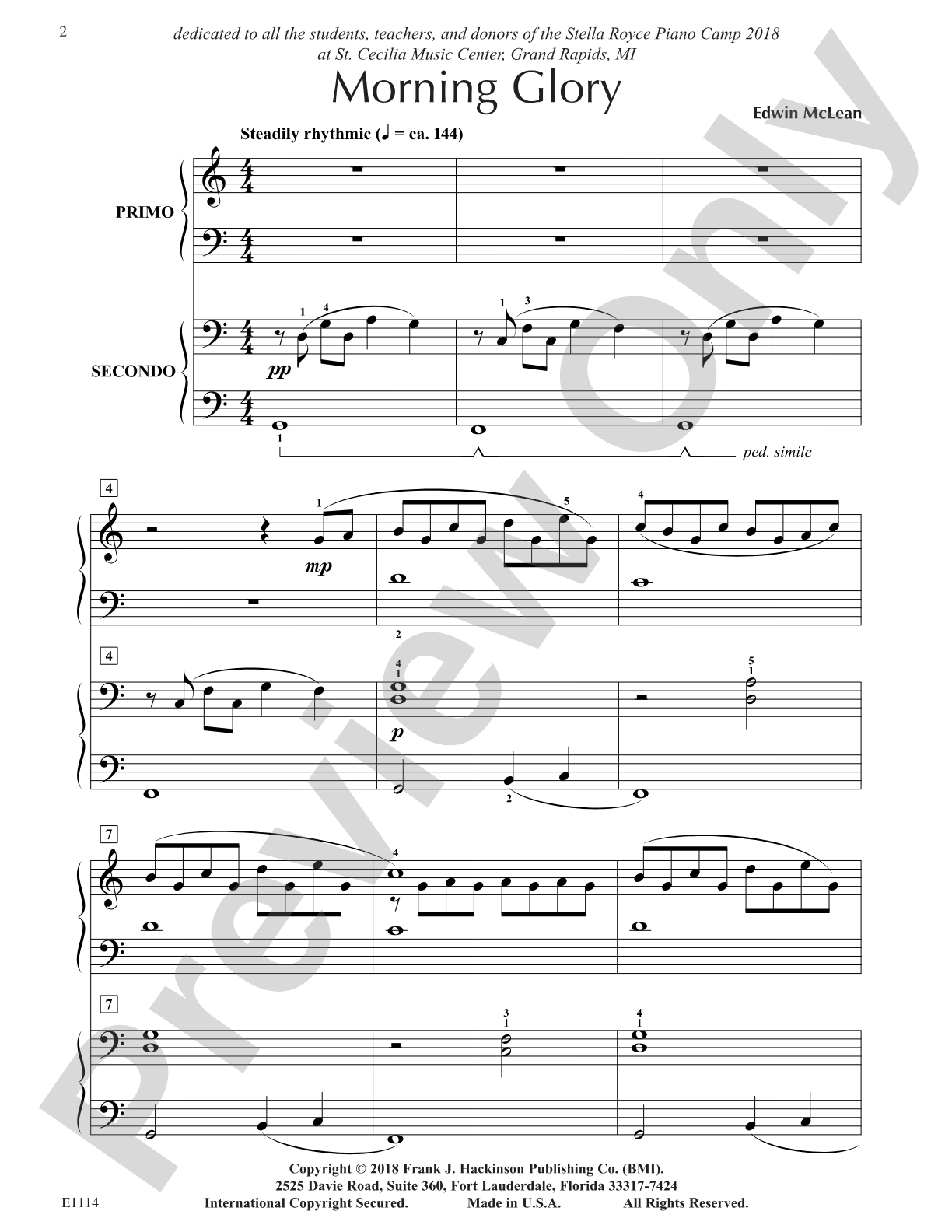
Morning Glory Sheet Music Preview

Morning Glory: Piano

By Edwin McLean

Item: 98-DE1114

Digital Download
$3.50
Description
Aptly named after the morning glory flower, this duet starts out quietly and then, as the texture thickens, it unfolds to greet the morning sun. In the key of C major, there are hand shifts but even small hands can quickly learn the easy-to-play patterns.

Morning Glory: Piano isn't in MakeMusic Cloud just yet...but it could be. Let us know you'd like to see it, and you'll help shape what comes next. In the meantime, start a free trial and dive into thousands of interactive titles your students can play along with today.


Sample Audio
No sample audio found.
Sample Video
Additional Details
Series: The FJH Piano Ensemble Series
Publisher: The FJH Music Company, Inc.
SKU: 98-DE1114

More about this title

Why we love this

The piece balances accessibility with genuine musical interest. Students get to experience textural growth and dynamic shaping without wrestling with complex rhythms or hand independence issues, and the C major key keeps reading manageable while allowing for real expressive work.

What to expect

Gentle and unrushed at first, like watching something delicate wake up. The texture gradually fills in with warmth and light, creating a sense of discovery rather than drama. The overall effect is peaceful but purposeful, exactly what the title suggests.

Who it's for

Early intermediate pianists working toward more sophisticated ensemble playing, and young students who benefit from duet contexts that don't demand technical virtuosity but do require listening and balance. This works well for studio teachers looking to build collaborative skills alongside technical facility.

How to get the most out of it

  • Start with a genuine pianissimo in both parts; the opening quiet sets up the entire arc, so resist the urge to play it louder than written just to be heard.
  • Map out the hand shifts during rehearsal so neither player loses continuity; even though the patterns are easy to learn, transitions between registers need planning.
  • Shape the unfolding texture deliberately. As more material enters, let the dynamic swell feel organic rather than abrupt, like the flower actually opening to light.

How to use it

Pair this with other short character pieces for a spring or seasonal concert that emphasizes imagery in music. It also works as a studio recital opener, since the quiet beginning commands attention and the gradual unfold keeps an audience engaged without requiring dramatic virtuosity.

Skills your students will build

  • Playing soft dynamics with control and consistency across both parts
  • Hand position shifts while maintaining musical line
  • Listening to and balancing a secondary part
  • Shaping texture dynamically over the course of a piece
  • Ensemble synchronization in a duet setting

You May Also Like