Morir! ... Tremende cosa! ... Urna fatale del mio destino Sheet Music Preview

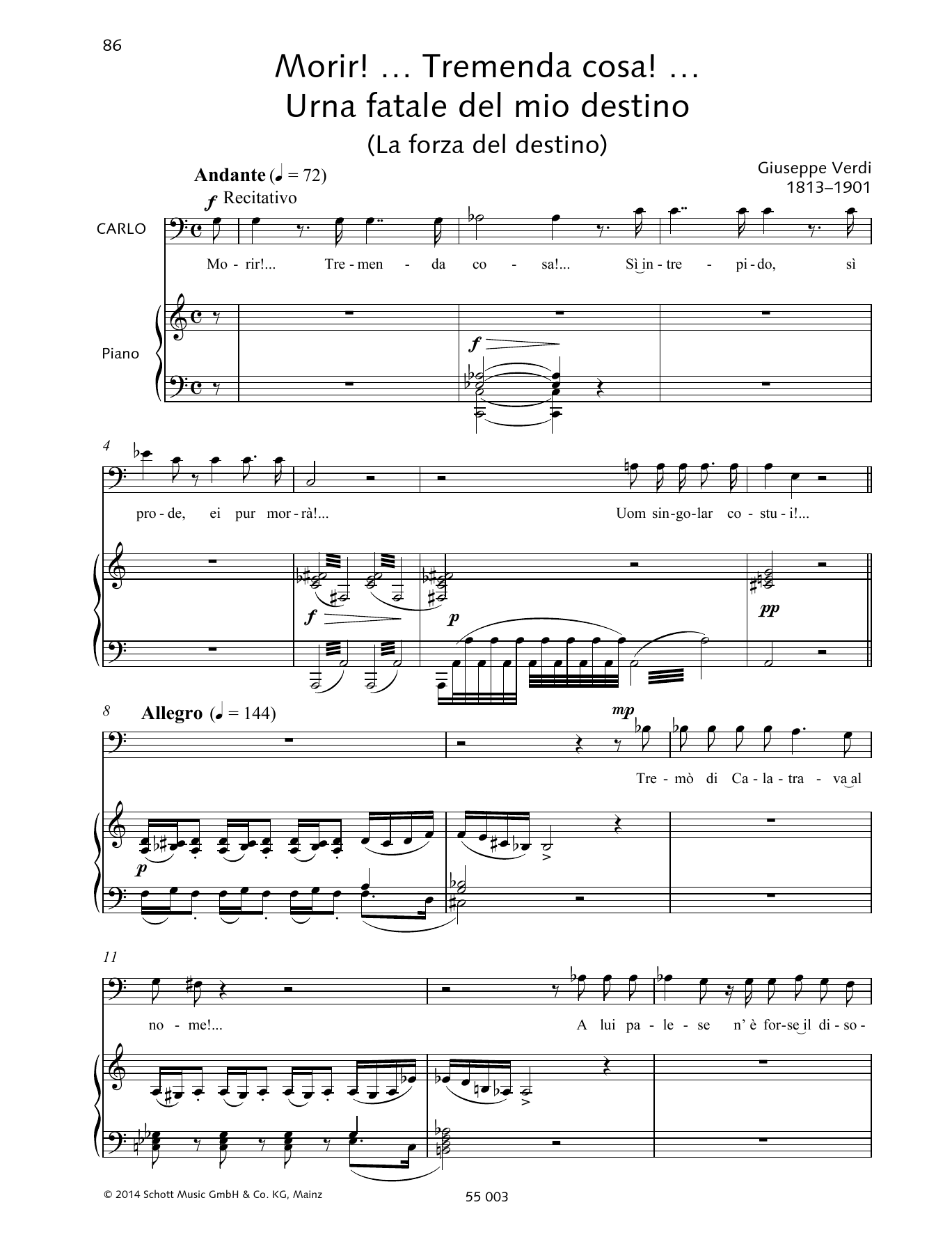
Morir!... Tremende cosa!... Urna fatale del mio destino: Piano Vocal

By Giuseppe Verdi / Arranged by Francesca Licciarda

Item: 35-DS00369819

Digital Download
$4.99
Description

Morir!... Tremende cosa!... Urna fatale del mio destino: Piano Vocal isn't in MakeMusic Cloud just yet...but it could be. Let us know you'd like to see it, and you'll help shape what comes next. In the meantime, start a free trial and dive into thousands of interactive titles your students can play along with today.

Sample Audio
No sample audio found.
Sample Video
Additional Details
Publisher: Hal Leonard
Page Count: 7
SKU: 35-DS00369819

More about this title

About the Composer: Giuseppe Verdi

Giuseppe Verdi (1813-1901) shaped Italian opera through sheer dramatic force. His gift lay in matching music to the emotional truth of a moment, whether that meant a soaring melody, a piercing orchestral gesture, or stark harmonic simplicity. For singers and teachers, Verdi's vocal writing remains the gold standard: it sits perfectly in the voice, demands real technique, and rewards expressive commitment.

Why we love this

This is Verdi at his most theatrically intense. The aria combines intimate vulnerability with moments of genuine vocal power, giving singers something to sink their teeth into without requiring the extreme tessituras of his most demanding roles. The piano reduction stays idiomatic and playable while preserving the dramatic architecture of the original.

What to expect

Fatalistic and turbulent. The aria moves from introspection to urgency, with Verdi's harmonic language painting psychological conflict. There is terror in the destiny the text describes, tempered by moments of almost resigned acceptance. The emotional landscape shifts constantly, keeping both singer and listener alert.

Who it's for

Advanced vocalists tackling Italian opera repertoire, whether in applied study, graduate programs, or young artist preparation. This also serves coaches, collaborative pianists, and directors building recital programs that explore 19th-century Italian drama.

How to get the most out of it

  • Anchor the opening recitative in speech-like phrasing rather than strict metronomic time; let the text guide the rhythm and breathing.
  • Balance the piano's harmonic foundation with clean vocal production through the lower register passages, which can muddy if the singer pushes too hard.
  • Allow space for the aria's emotional peaks to breathe; resist the urge to barrel through the climactic moments.
  • Coordinate with your accompanist on the dramatic pauses and fermatas so they feel purposeful rather than hesitant.

How to use it

Position this within a curated recital that traces a singer's dramatic arc across an evening. It also works effectively as a standalone audition piece for singers demonstrating operatic maturity and command of Italian text and style. Consider pairing it with music from earlier in the 19th century to highlight Verdi's evolution of the form.

Skills your students will build

  • Italian diction and textual interpretation in operatic context
  • Sustained legit singing across register transitions
  • Dramatic pacing and emotional shape in recitative and aria
  • Coordination with piano accompaniment across tempo changes and fermatas
  • Expressive use of dynamics and vocal color to convey psychological states

You May Also Like