
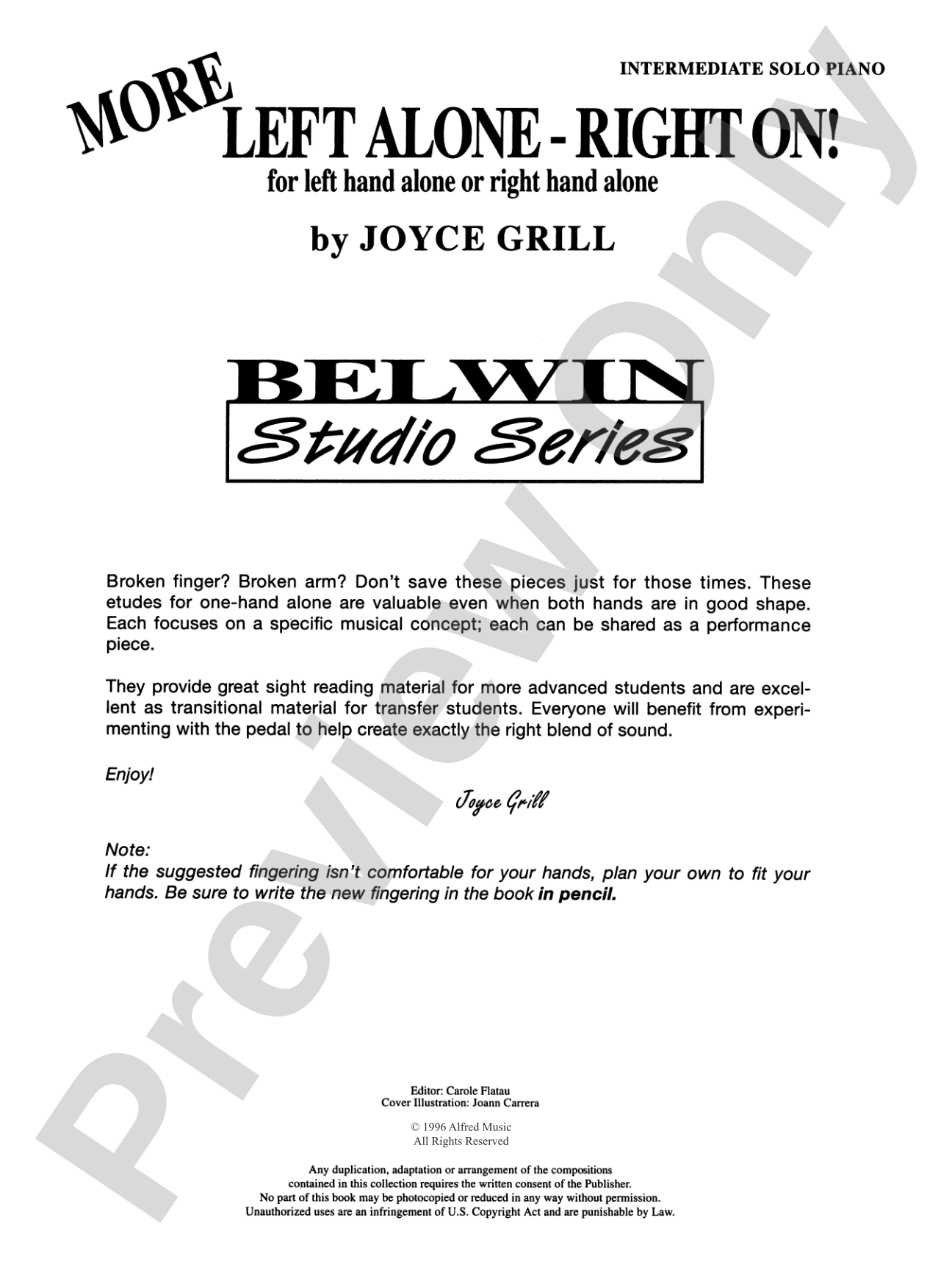

More Left Alone -- Right On!: for Left Hand Alone or Right Hand Alone: Piano
for Left Hand Alone or Right Hand Alone
By Joyce Grill
Level: Intermediate
Item: 00-PB-0000553
$6.99
Pickup currently not available
Related Items
More Left Alone -- Right On!: Piano Book |
$6.99
|
View |
Description
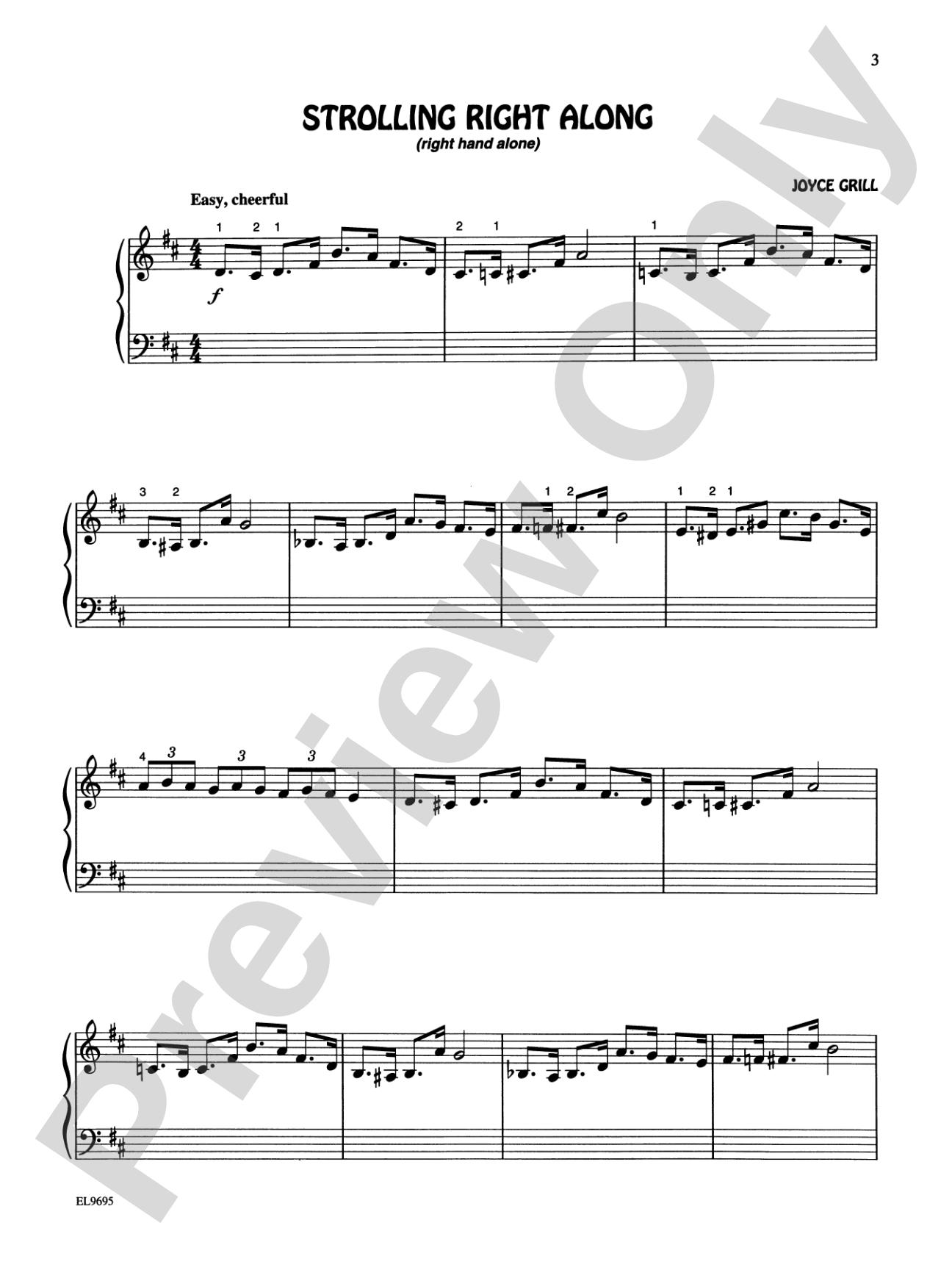
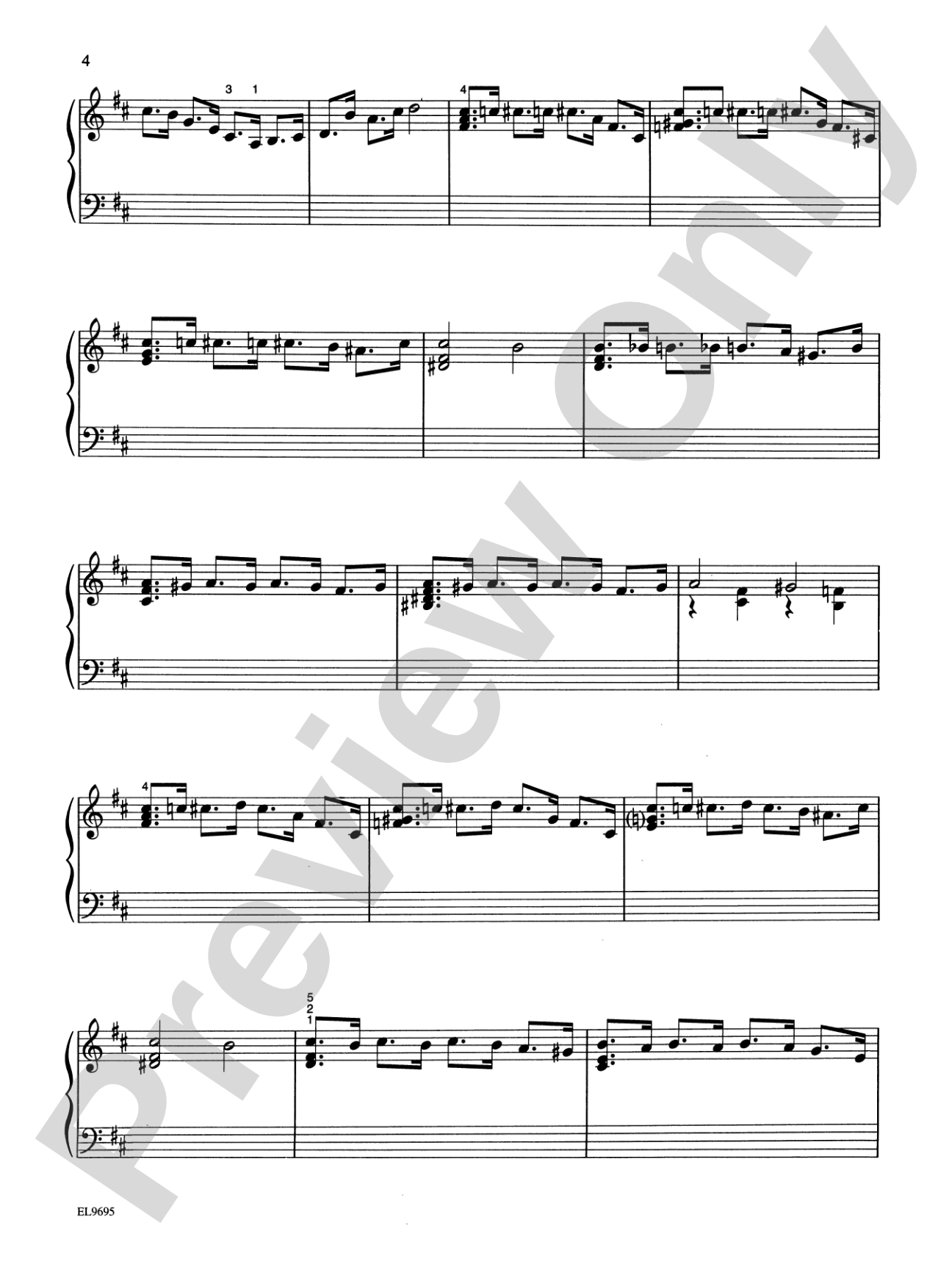
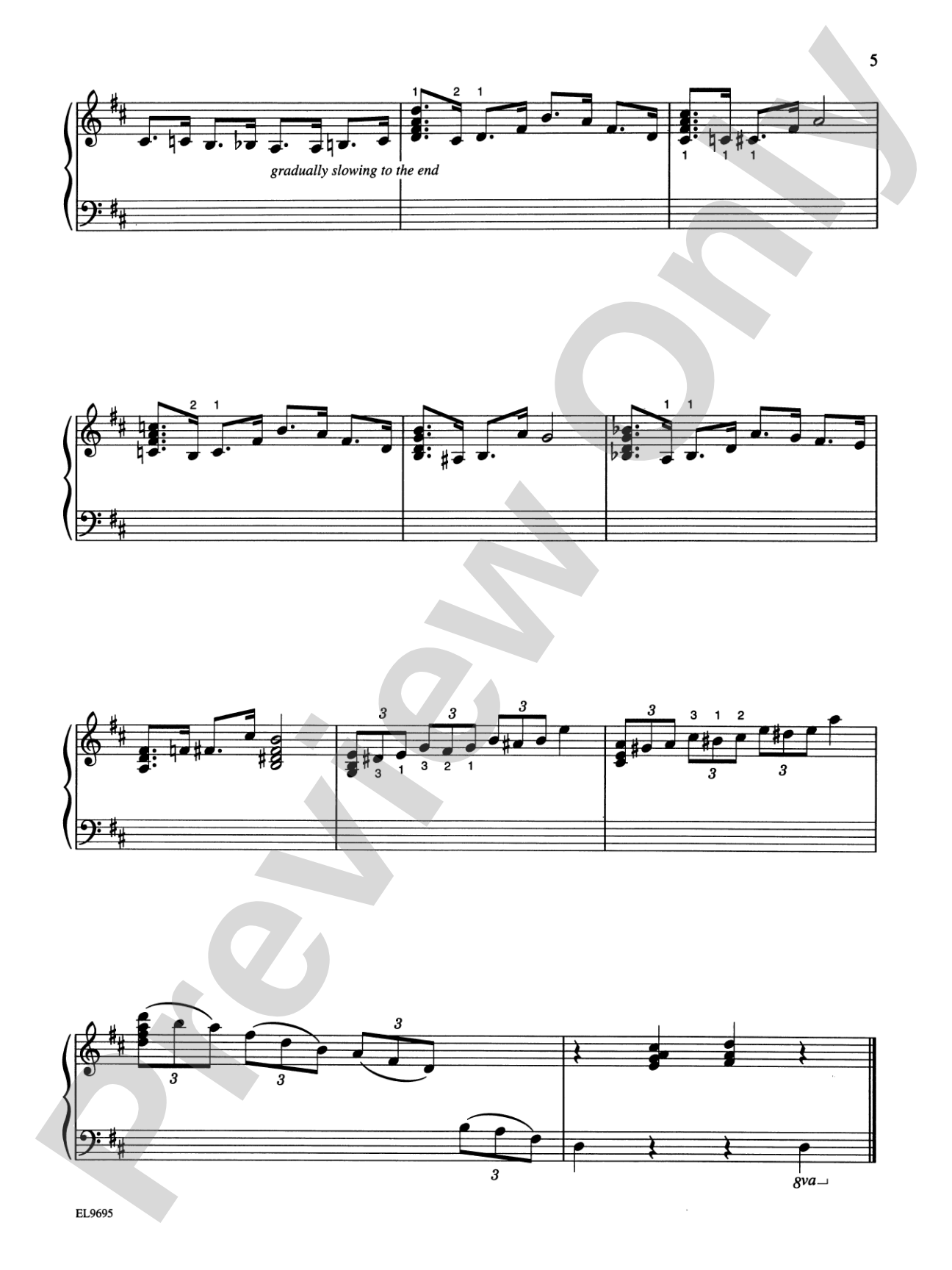
Teachers have been praising Joyce Grill's one-hand solos. In response to their requests, she's provided us with this set of additional pieces for right hand alone or left hand alone. Valuable not only for the temporarily incapacitated players, the book is great for reinforcing reading skills at any time. There's a good mix of melodic/rhythmic emphases and of different styles. The pieces are not just fill-in study pieces -- they are performable, adding an extra dimension to recitals. "Loco-Motion" (LH) and "Sara's Song" (RH) are Federation Festivals 2016-2020 selections. A Federation Festivals 2020-2024 selection.


More Left Alone -- Right On!: for Left Hand Alone or Right Hand Alone: Piano isn't in MakeMusic Cloud just yet...but it could be. Let us know you'd like to see it, and you'll help shape what comes next. In the meantime, start a free trial and dive into thousands of interactive titles your students can play along with today.
Request This Title
Tell us you want it.
Start Your Free Trial
Explore everything that's ready to play right now.
Sample Audio
No sample audio found.
Sample Video
No sample videos found.
Additional Details
Series:
Belwin Studio Series
Publisher:
Alfred Music
Page Count:
24
SKU:
00-PB-0000553
More about this title
About the Composer: Joyce Grill
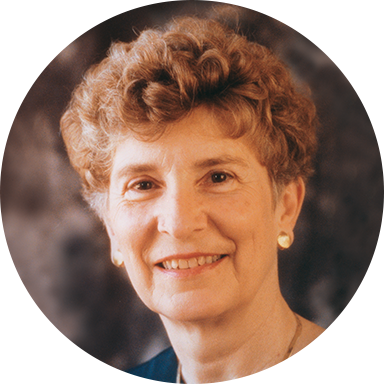
Joyce Grill brings decades of classroom experience to every piece she writes. As an emeritus faculty member at the University of Wisconsin-La Crosse, she earned the MTNA Master Teacher Certificate and served as Wisconsin State President of MTNA, along with roles as Division Vice-President and founder of the La Crosse Area Music Teachers Association. Her training under Nadia Boulanger at the School of Fine Arts in Fontainebleau, France, and her studies with Robert and Jean Casadesus shaped her approach to both composition and pedagogy.
Grill's reputation rests on ensemble writing and multi-piano conducting, but her solo collections have earned widespread adoption among teachers for their musicality and practical scope. A National Certified Teacher of Music (NCTM) and 2006 MTNA Foundation Fellow, she continues to conduct workshops nationally, translating her teaching insights into publications now available through Alfred Music Publishing.
Why we love this
Grill understands what teachers actually need: pieces that serve real pedagogical purposes while remaining genuinely musical enough for recital performance. The one-hand format removes technical barriers and opens programming options for students managing temporary injuries, building confidence during recovery. These aren't makeshift exercises—several selections appear on Federation Festivals competitions, signaling their artistic legitimacy and appeal to adjudicators.
What to expect
Opening this collection reveals a refreshing variety—some pieces lean into singing melodic lines with understated accompaniment, while others foreground rhythm and texture. Each piece stands on its own artistic merit rather than feeling like an adaptation or exercise, making time spent learning them feel genuinely rewarding rather than remedial.
Who it's for
Intermediate pianists working through recovery from hand or arm injuries will find these pieces maintain their progress while accommodating physical limitations. Teachers also reach for this collection to strengthen reading skills across the curriculum, using one-hand solos as focused technical or artistic assignments alongside regular repertoire.
How to get the most out of it
- Study the melodic or rhythmic focus Grill establishes in each piece before deciding on tempo; whether the emphasis lands on singing line or rhythmic clarity shapes your interpretation.
- Explore the style markers carefully—the collection spans multiple genres, so let the character of each piece guide your voicing and pedal choices rather than applying a single approach to all.
- Use the published selections ("Loco-Motion" and "Sara's Song") as models for how to shape these pieces for competition or formal recital contexts.
- Practice slowly to ensure clean voice independence, especially in pieces where one hand carries both melody and accompaniment figuration.
How to use it
Program these strategically on recitals to highlight student resilience and growth, particularly when a student has worked through injury. Alternatively, slot one-hand pieces into regular lessons as rotating technical assignments that build reading fluency and interpretive confidence without requiring both hands simultaneously.
Skills your students will build
- Reading and interpreting melodic writing in a single hand
- Coordinating rhythm and accompaniment figuration within one hand
- Identifying and realizing different musical styles and performance contexts
- Building independence and confidence during technical limitations or recovery
- Preparing pieces for competitive festival performance at intermediate level