


More Cowbell: Concert Band Conductor Score & Parts
By Mark Williams
Grade: 1 (Very Easy)
Item: 00-PK-0000813

$48.00
Pickup currently not available
Buy Extra Parts (Digital PDF Download)
Parts Added to Cart!
Description
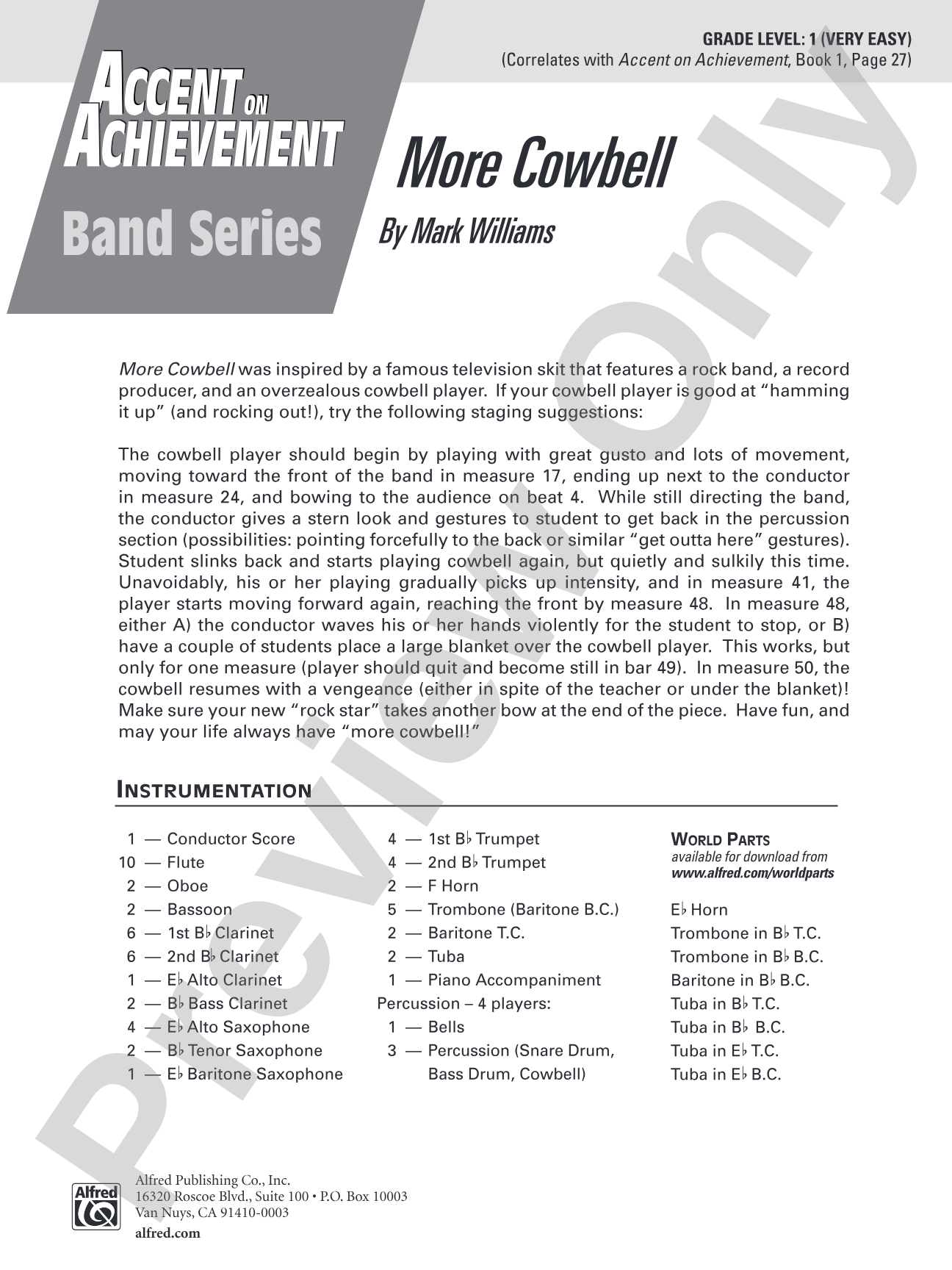
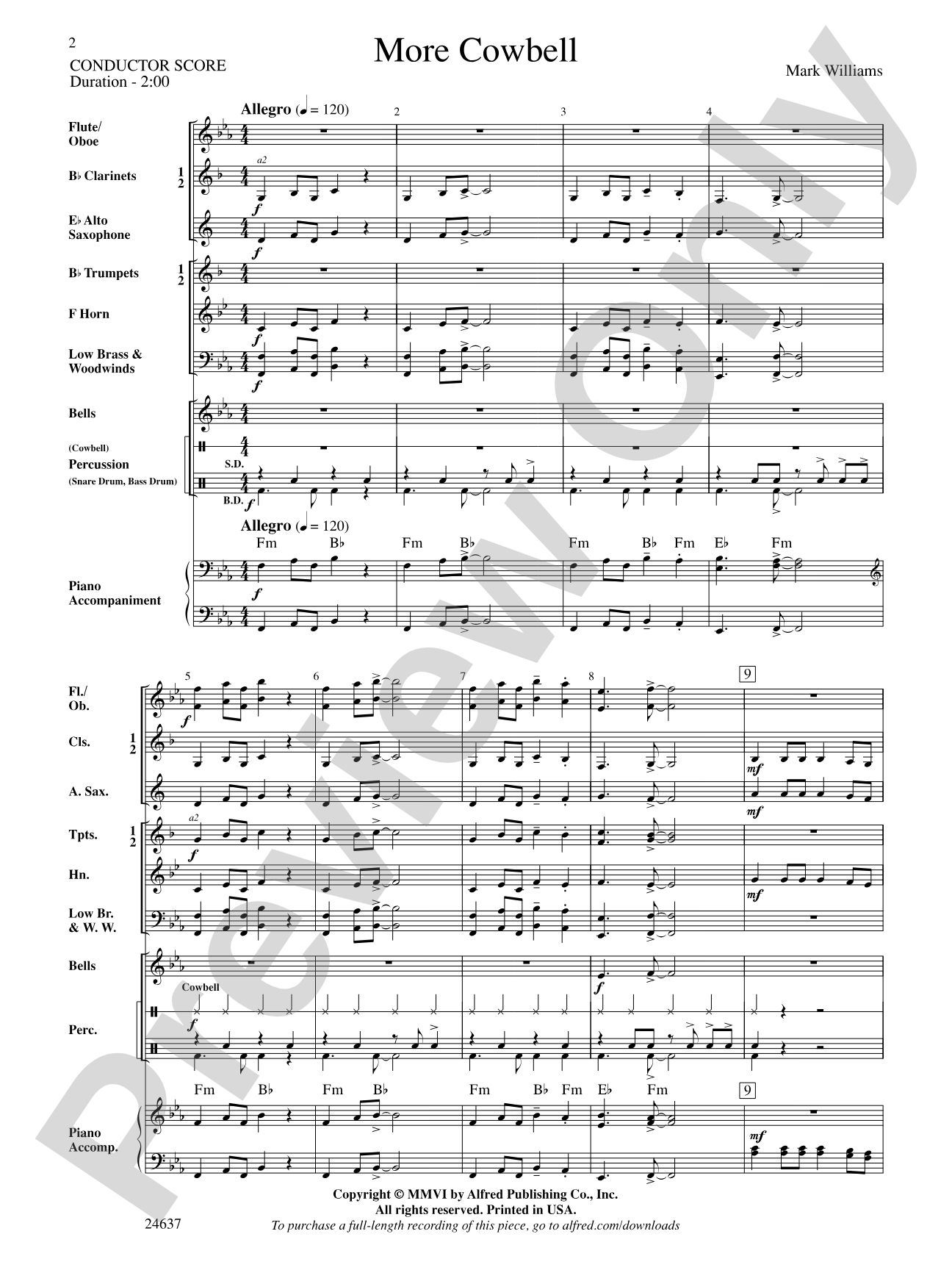
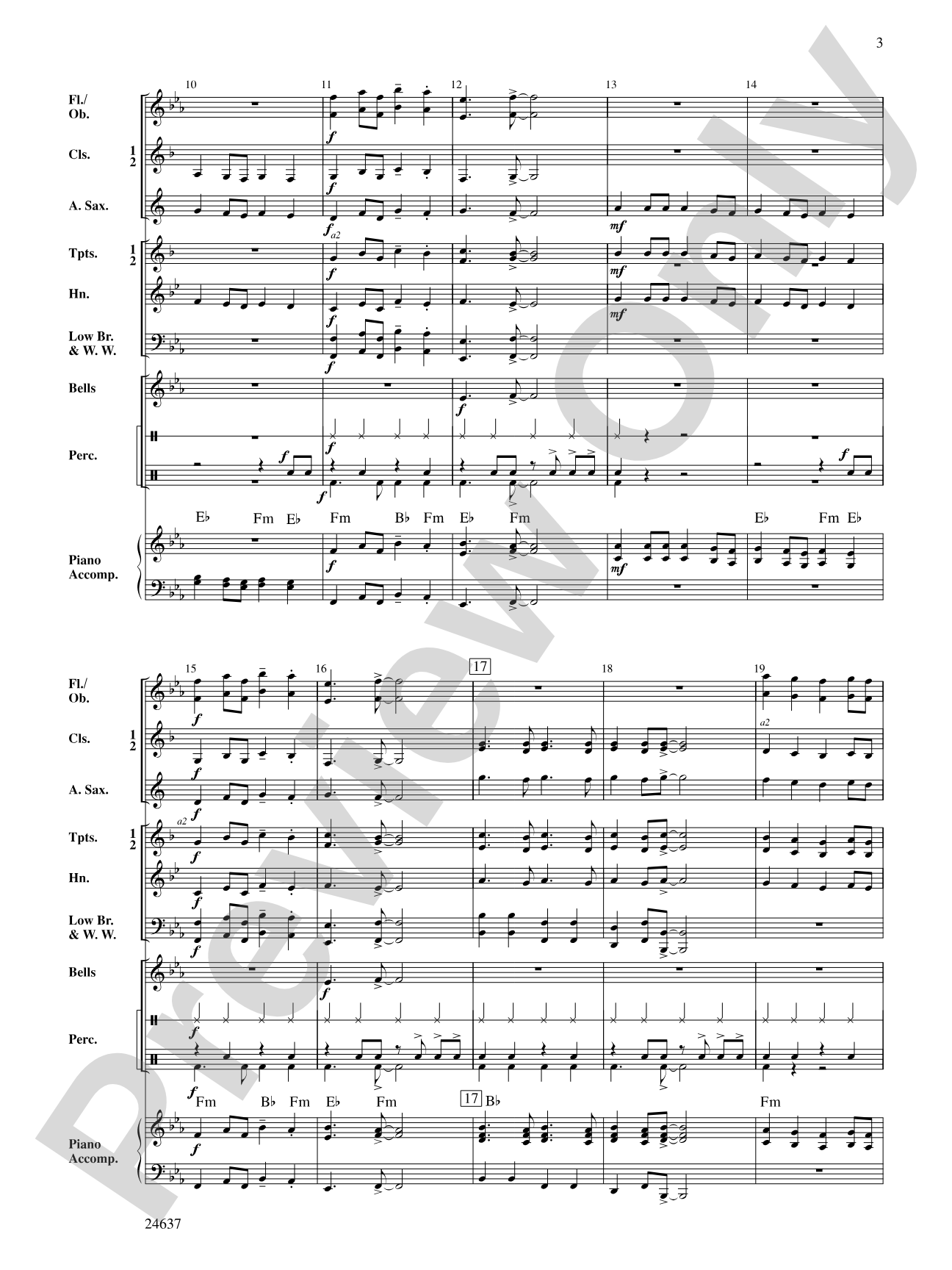
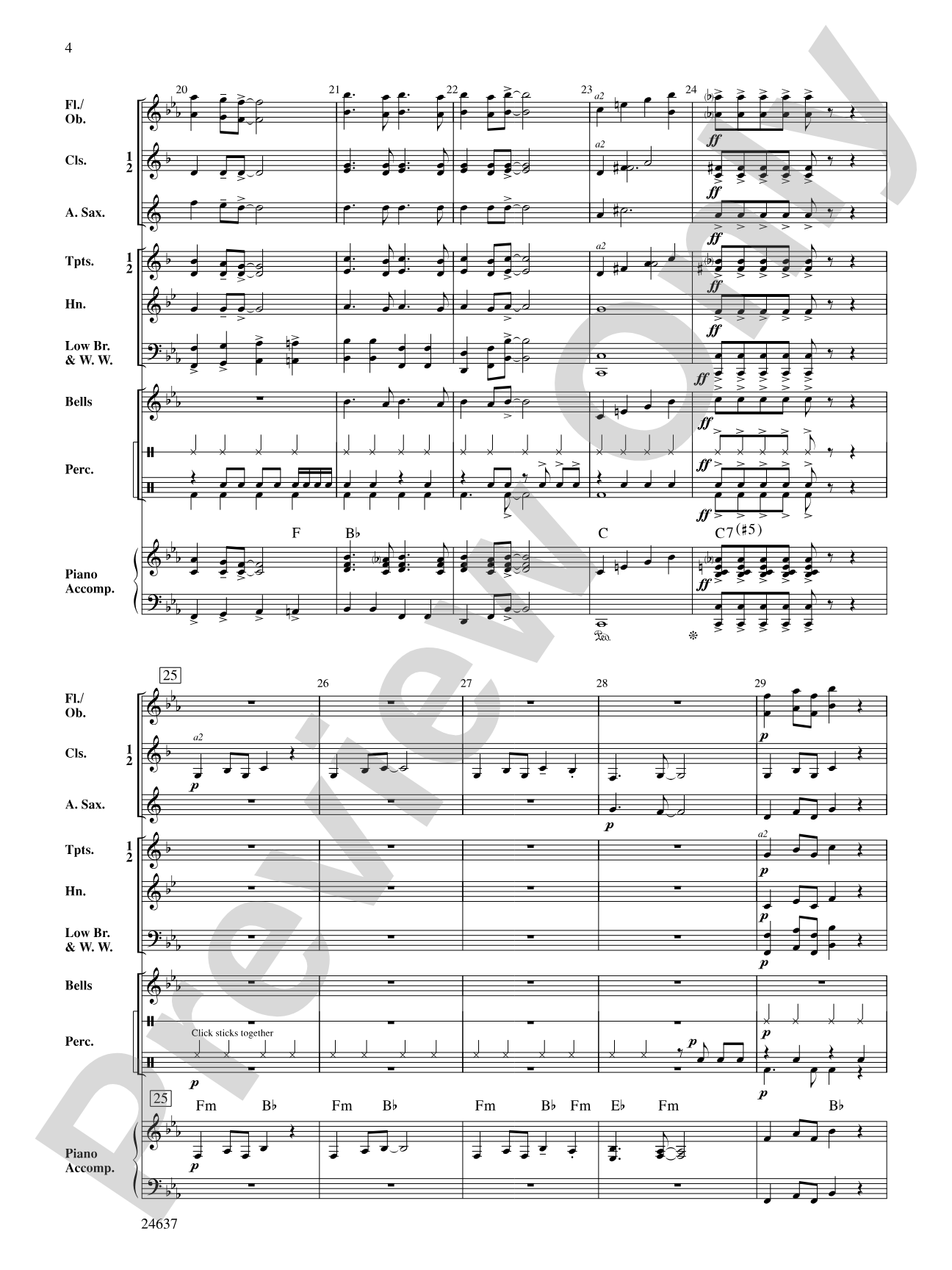
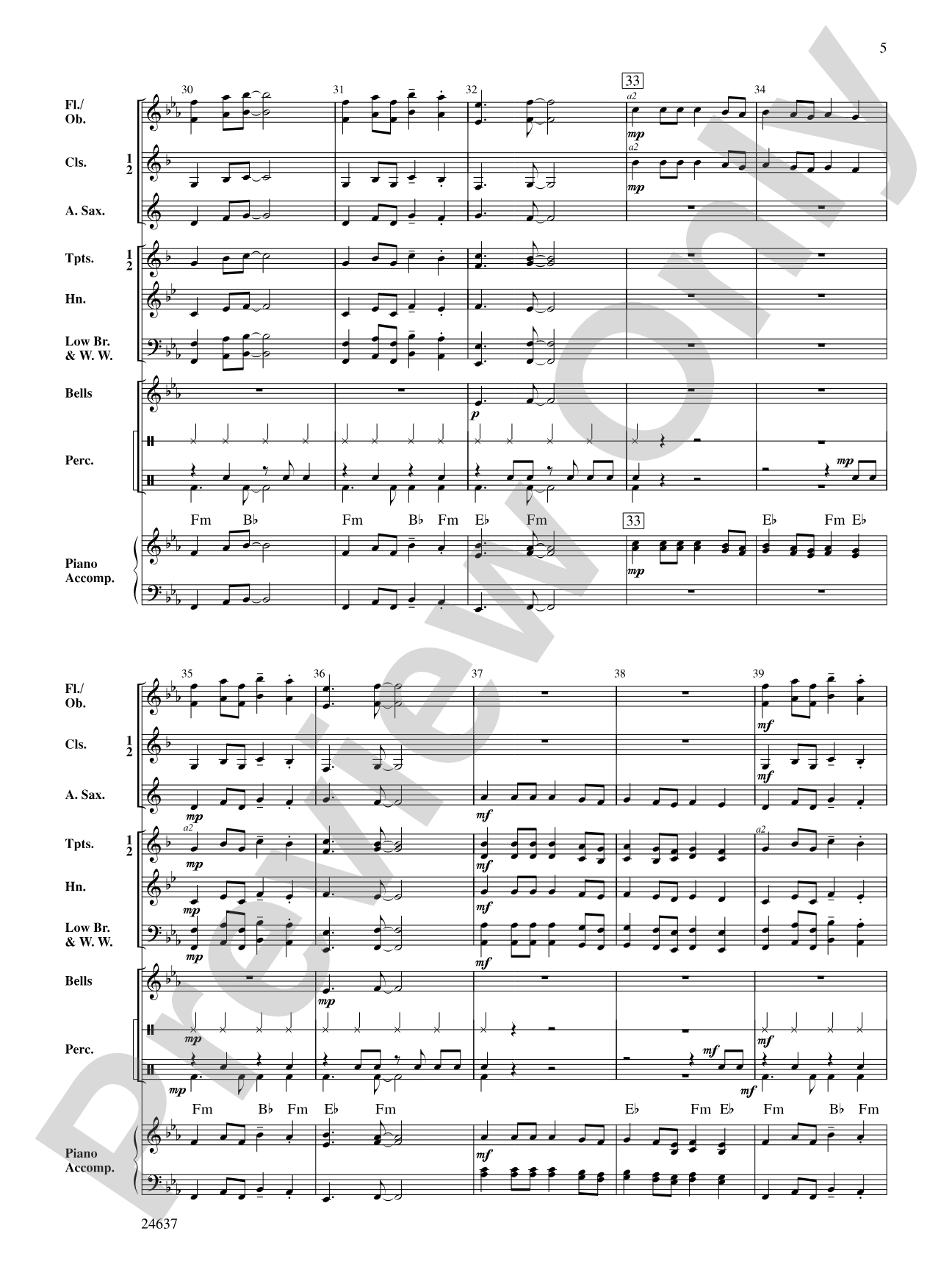
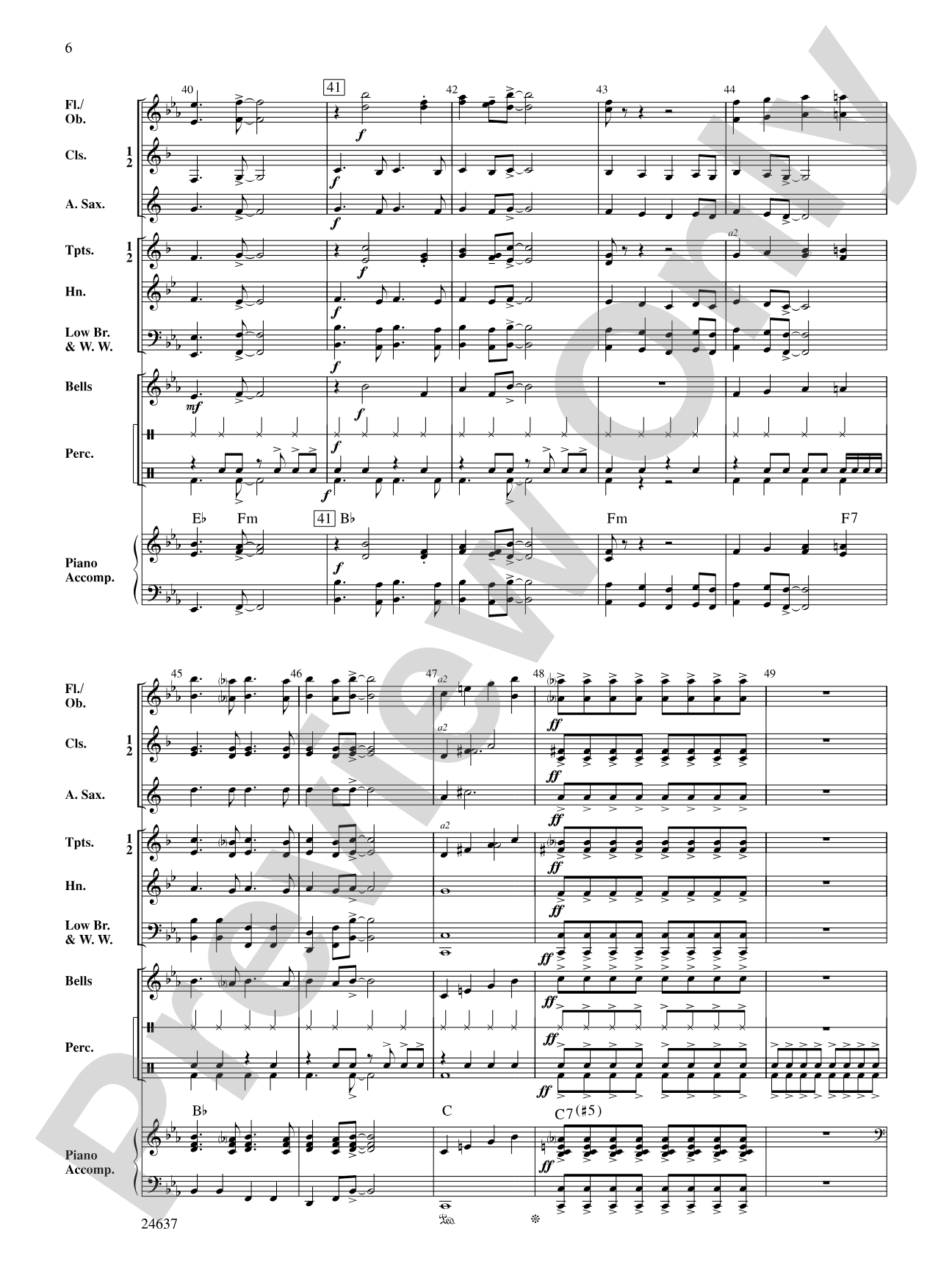
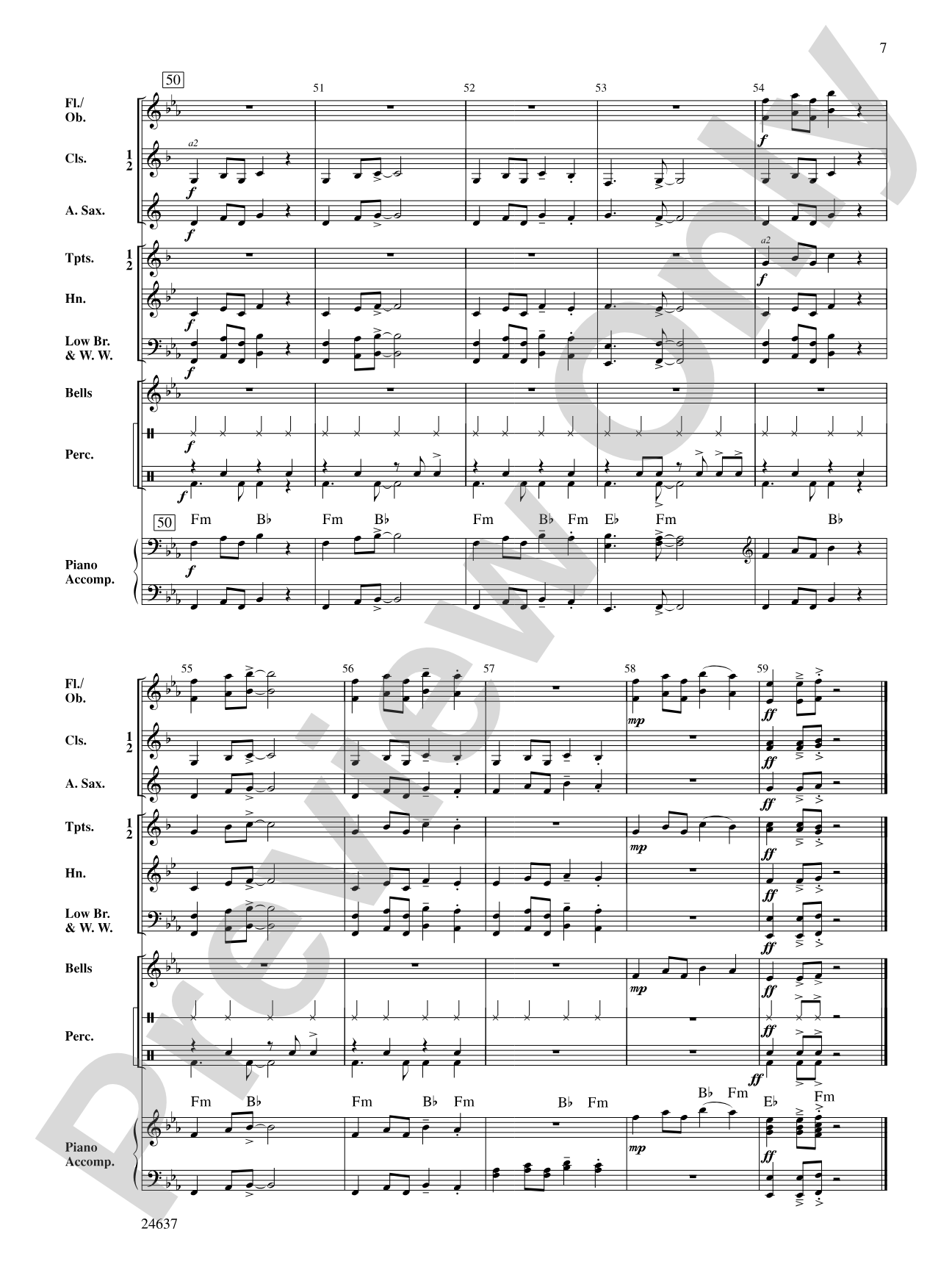
More Cowbell was inspired by the famous television skit featuring a rock band, a record producer, and an over-zealous cowbell player. If the cowbell player is good at hamming it up (and rocking out!), you could try the following staging suggestions: Cowbell player plays with intensity and lots of movement, and starts moving in measure 17 toward the front of the band, ending up next to the conductor in measure 24, bowing to the audience on beat 4. Conductor gives a stern look and gestures to student to get back in the percussion section (possibilities: "slit throat" gesture with side of first finger followed by pointing forcefully to the back, or similar gestures). Student slinks back, starts playing cowbell again, but quietly this time. Playing gradually picks up intensity, and player starts again toward the front in measure 41, reaching the front by measure 48. In measure 48, either A) Conductor waves hands violently for student to stop, or B) have a couple of students place a large blanket over the cowbell player. This works, but only for one measure (player quits and doesn't move in bar 49). Cowbell player resumes playing with a vengeance in measure 50 (either in spite of the teacher or under the blanket!). Make sure your new "rock star" takes another bow at the end of the piece. Have fun, and may your life always have more cowbell! Correlated with Accent on Achievement, Book 1, page 27. This title is available in MakeMusic Cloud.


Don't just read it, hear it, play along with it, and watch your students grow with it. In MakeMusic Cloud, More Cowbell: Concert Band Conductor Score & Parts comes alive with professional accompaniment, adjustable tempo, and built-in practice tools that turn solo practice into real progress.
Open in the Player
Jump straight in and assign it today.
Start Your Free Trial
Open this title and explore the full library in minutes.
Sample Audio
1
Audio File
--:--
0:00
0:00
Sample Video
No sample videos found.
Additional Details
Series:
Accent on Achievement
Publisher:
Alfred Music
Page Count:
128
SKU:
00-PK-0000813
More about this title
About the Composer: Mark Williams

Mark Williams built his reputation as a prolific composer and educator who understood the practical realities of school music programs. A bassoonist and arranger for the 560th Air Force Band, Williams brought his performance experience directly into his writing; he co-authored the Accent on Achievement Band Method and published over 200 works for band, orchestra, and choir. His compositions earned recognition including the Western International Band Clinic's Gralia Competition and multiple ASCAP Special Awards.
Williams spent his teaching career in Washington state, where he specialized in elementary band instruction and developed a keen sense of what young musicians could accomplish. Beyond the classroom, he served as Conductor and Artistic Director for the Spokane British Brass Band and traveled across 34 states, five Canadian provinces, and Australia as a clinician and guest conductor. A graduate of Eastern Washington University with degrees in Education and Music Education, Williams demonstrated throughout his career that accessible composition and serious musicianship were never opposing forces.
Why we love this
This novelty piece succeeds because it's genuinely funny without sacrificing musicality or control. Williams knew that humor in the ensemble room works best when the music itself is solid, and the built-in staging gives your band a concrete theatrical framework that doesn't require elaborate sets or costumes. It's the kind of piece that makes young musicians want to practice because they're invested in nailing both the music and the performance.
What to expect
More Cowbell captures the infectious energy of a rock band filtered through the lens of a school ensemble, complete with an over-the-top character moment that makes the whole band complicit in the comedy. The music rolls forward with swagger and good humor, building toward moments of dramatic tension between conductor and soloist. It feels like watching your band members discover that concert music can make an audience laugh and cheer just as readily as it can move them to silence.
Who it's for
Grade 1 concert bands seeking a repertoire piece that combines genuine musical content with high engagement and student investment. This works especially well for younger musicians who benefit from clear, memorable melodies and straightforward ensemble writing, combined with the motivational boost that comes from knowing they'll perform something entertaining and fun.
How to get the most out of it
- Establish clear cues with your designated cowbell soloist before rehearsal begins; the conductor gestures in measures 17, 24, 41, and 48 are load-bearing moments that require eye contact and precision timing.
- Keep the band's rhythmic foundation locked and steady throughout, especially during the cowbell player's dramatic movements. Ensemble accuracy makes the theatrical elements land harder.
- Coach the cowbell player to vary dynamics and intensity as written; the journey from quiet, reluctant playing to full-out rock star is the emotional arc that sells the joke.
- Encourage physical commitment from your featured musician without losing control of the overall ensemble sound. The humor lives in contrast between the band's discipline and the soloist's exuberance.
How to use it
Schedule this as a second-half opener at a concert where you want to shift the energy and build momentum toward stronger works, or use it as the closer to send the audience home smiling. It pairs well with other Grade 1 material from Accent on Achievement and serves as a perfect vehicle for teaching young musicians how ensemble commitment to a concept (even a silly one) creates compelling performance.
Skills your students will build
- Maintaining ensemble unity while responding to a featured soloist
- Reading and responding to conductor gestures during dramatic shifts in dynamics and intensity
- Coordinating rhythmic precision across the full ensemble in a pop-inflected style
- Understanding how theatrical staging and musical performance work together
- Playing with stylistic awareness appropriate to rock and novelty contexts