
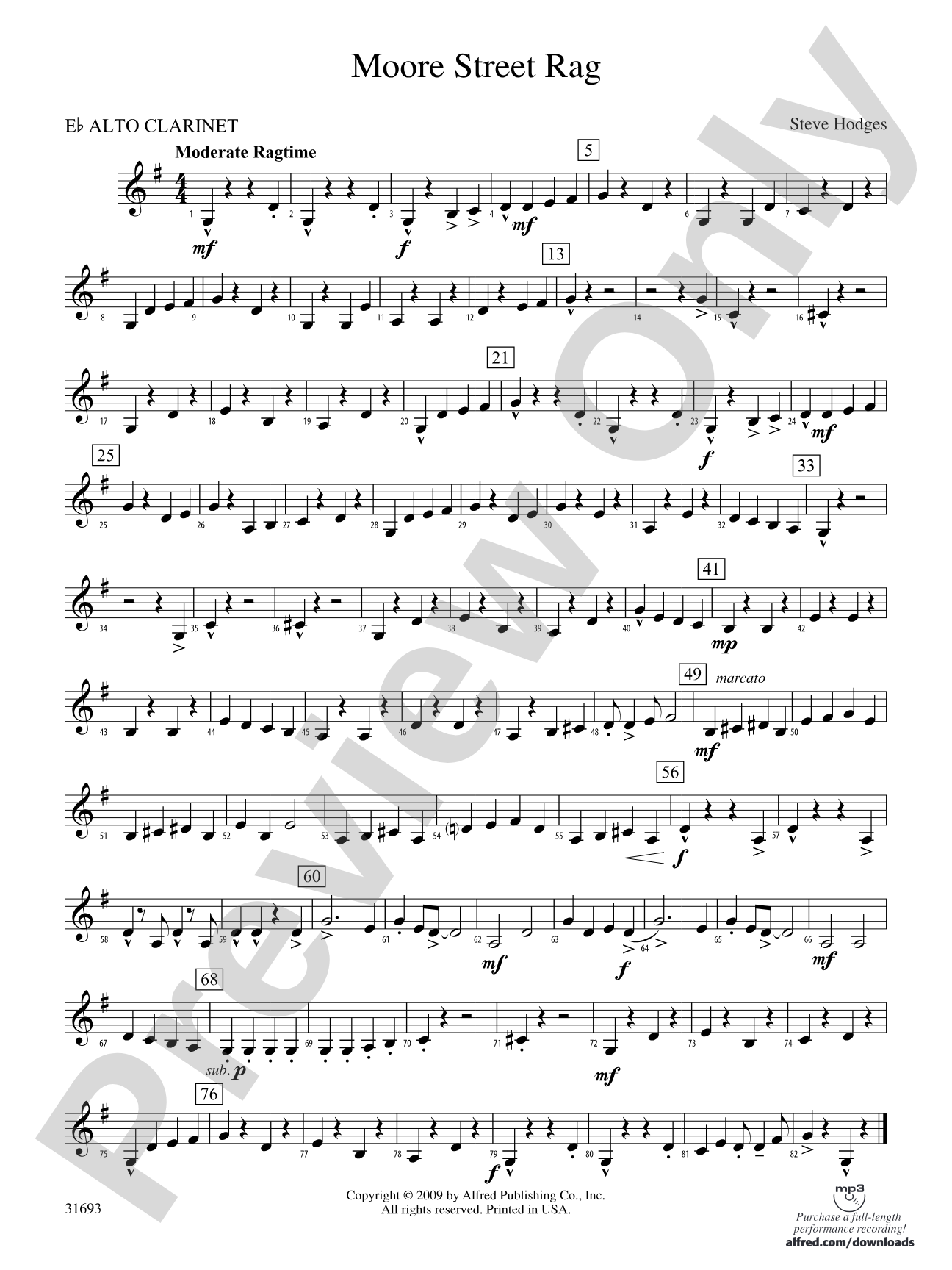

Moore Street Rag: (wp) E-flat Alto Clarinet
By Steve Hodges
Grade: 1.5 (Easy)
Item: 00-PC-0001794_wpAC1
$3.00
Pickup currently not available
Description
Moore Street Rag is an energetic piece that was composed for the young band to enjoy the various elements of ragtime music. Each section is featured playing the syncopated melodies and counter melodies and the low brass and woodwinds provide the steady rhythmic bass line. The trombones present the initial melody and are prominently featured throughout. With precise articulation patterns and many chromatic motives, this fresh tribute to ragtime music will be fun for the young musician to rehearse and will be a hit with the audience as well!


Don't just read it, hear it, play along with it, and watch your students grow with it. In MakeMusic Cloud, Moore Street Rag: (wp) E-flat Alto Clarinet comes alive with professional accompaniment, adjustable tempo, and built-in practice tools that turn solo practice into real progress.
Open in the Player
Jump straight in and assign it today.
Start Your Free Trial
Open this title and explore the full library in minutes.
Sample Audio
1
Audio File
--:--
0:00
0:00
Sample Video
No sample videos found.
Additional Details
Series:
Challenger Band Series
Publisher:
Alfred Music
Page Count:
122
SKU:
00-PC-0001794_wpAC1
More about this title
About the Composer: Steve Hodges

Steve Hodges holds degrees from Western Oregon University (B.S.) and Central Washington University (M.A. in Music Education). Over four decades as a public school band director, he led ensembles at all levels while building a catalog of more than 120 published concert band works through Alfred Music, along with choral arrangements issued by Staff Music and Shawnee Press.
Hodges's compositions have traveled internationally and appeared at festivals and state conventions across the country. His commissioned works span honor bands and schools in Virginia, Iowa, Winnipeg, British Columbia, Oregon, Washington, and North Carolina. His music has also been featured on TBS and ESPN programming. An ASCAP member, Hodges retired from full-time teaching and now resides in The Dalles, Oregon, where he remains active in community music alongside his wife, Teddie, and their extended family.
Why we love this
Hodges captures the spirit of ragtime without overwhelming a young band with rhythmic complexity. The writing gives every section a moment in the spotlight, and the straightforward Grade 1.5 difficulty means your students can focus on authentic ragtime articulation and phrasing rather than wrestling with the notes themselves. Audiences love the energy and familiarity of the style, making this a guaranteed program winner.
What to expect
The energy of a Scott Joplin piano ragged down into full band color, with bright woodwind lines dancing above warm trombone melody. There's a playfulness throughout, never pompous, with a stride that makes audiences smile the moment it begins.
Who it's for
Young concert bands tackling their first genuine genre study beyond traditional march or processional repertoire. Players need solid note-reading skills and basic rhythmic independence, but the Grade 1.5 level is accessible for second-year and up ensembles.
How to get the most out of it
- Nail the articulation patterns early. Ragtime lives and dies by crisp, deliberate tonguing. Spend rehearsal time isolating the syncopated sections before adding them back into full context.
- Balance the counter melodies against the main syncopated lines. Young players tend to overplay new material, so check that your supporting voices sit beneath the featured melody.
- Keep the rhythmic bass line steady and even. The low brass and woodwinds anchor the whole sound; any wavering in the foundation throws off the dance-like forward momentum.
- Shape the chromatic motives with a slight lean into each note rather than treating them as throwaway passages. These details give the arrangement its character and sophistication.
How to use it
Program this as a pops concert opener or a spring concert closer when you want something joyful and rhythmically engaged without heavy emotional stakes. It pairs well on a concert featuring other light fare or as a standalone feature that bridges a more serious set, giving your band a clear identity shift.
Skills your students will build
- Ragtime articulation and syncopation
- Balancing syncopated melodies against steady accompaniment
- Playing precise chromatic passages with style
- Ensemble precision with intricate rhythmic patterns
- Listening across the band for counter melody independence