Moonlight Sonata: Easy Piano Digital Sheet Music

Moonlight Sonata: Easy Piano Digital Sheet Music

Ludwig van Beethoven

Item: 00-PS-0000908

Digital Download
$3.99
Description

Moonlight Sonata: Easy Piano Digital Sheet Music isn't in MakeMusic Cloud just yet...but it could be. Let us know you'd like to see it, and you'll help shape what comes next. In the meantime, start a free trial and dive into thousands of interactive titles your students can play along with today.

Sample Audio
No sample audio found.
Sample Video
Additional Details
SKU: 00-PS-0000908

More about this title

About the Composer: Ludwig van Beethoven

Ludwig van Beethoven (1770, 1827) remains one of the most consequential composers in Western music, a figure whose work bridged Classical and Romantic sensibilities. His late piano sonatas showcase a harmonic adventurousness and emotional depth that continue to challenge and inspire pianists at every level.

Composed in 1801, the Moonlight Sonata stands as Beethoven's most recognizable work, beloved for its contemplative opening movement and the dramatic energy of its finale. The piece emerges from a period of personal struggle, yet it endures as a gateway work that introduces countless students to serious composition.

Why we love this

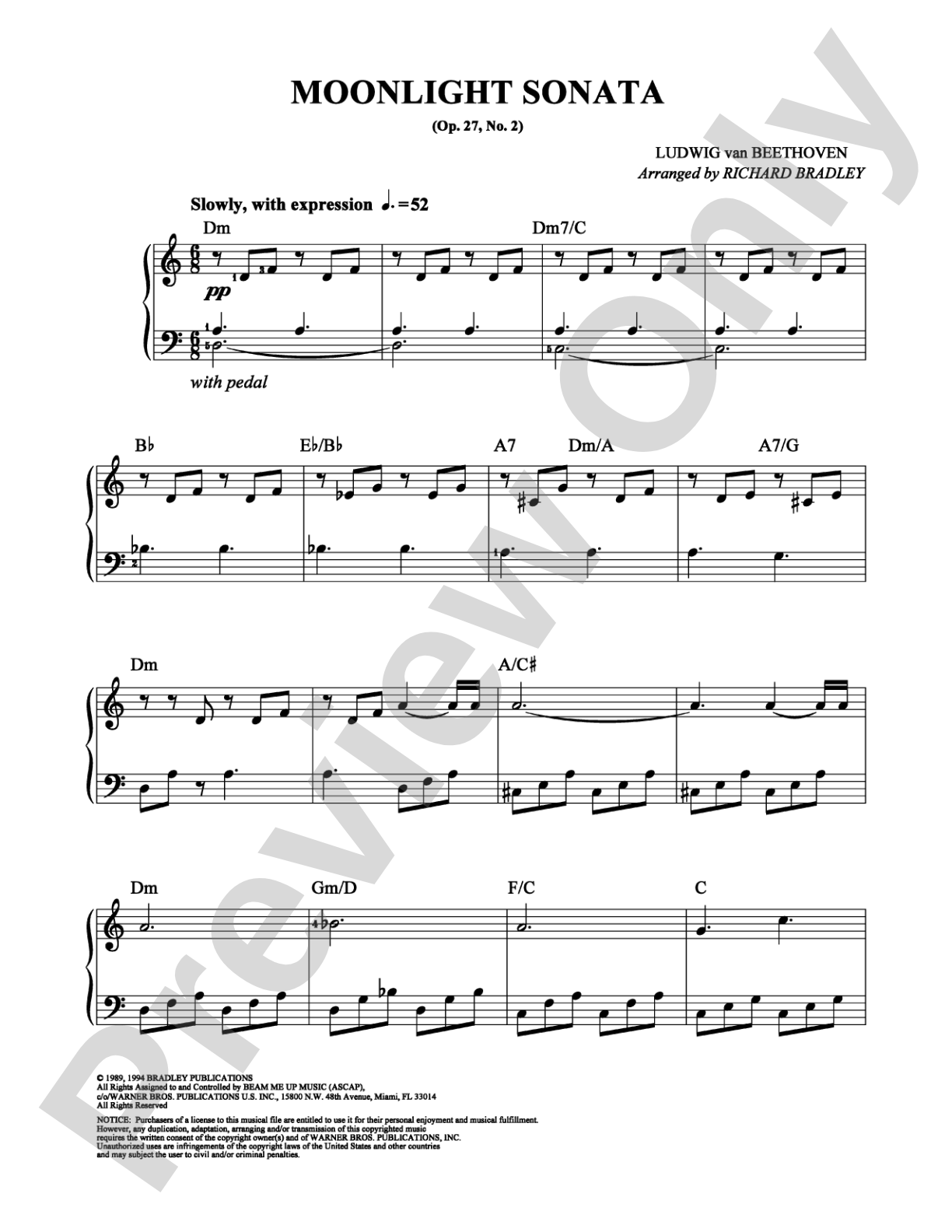
An Easy Piano arrangement of this iconic sonata opens the door to genuine Beethoven without the technical barriers of the original. Students get to inhabit the piece's emotional architecture, that distinctive broken-chord texture in the first movement, the harmonic shifts that give it such melancholy depth, while building confidence on a work they likely already know and love.

What to expect

The opening unfolds like moonlight on still water, rippling, introspective, almost hypnotic in its gentle motion. The piece invites stillness from the listener while asking the performer to balance technical clarity with emotional restraint, before building toward the turbulent energy of its close.

Who it's for

Elementary and early intermediate pianists who have solid note-reading skills and basic hand independence, but lack the span or velocity for the original version. Studio teachers seeking an entry point to Beethoven that builds musicality alongside technical confidence.

How to get the most out of it

  • Shape the opening melody with slight dynamic swells on the longer note values rather than playing metronomically; the piece breathes in phrases, not just measures.
  • Keep the left hand accompaniment even and undisruptive, letting it serve as a foundation without overwhelming the right hand's lyrical line.
  • Sustain the emotional quietness throughout; resist the urge to rush when passages feel simple, as restraint is what gives this piece its power.
  • Use the pedal sparingly and deliberately, changing it with harmonic shifts rather than holding it indiscriminately.

How to use it

Feature this in a spring recital as a solo performance piece, or as part of a mixed program showcasing student progress across different styles and periods. It also works well as a stepping stone in lessons, helping students understand that simplified arrangements can serve as legitimate artistic experiences rather than mere practice tools.

Skills your students will build

  • Playing sustained melodic lines with clear phrasing and dynamic shape
  • Coordinating broken-chord accompaniment patterns with independent melody
  • Pedal technique and timing for harmonic resonance
  • Hearing and interpreting legato style without technical virtuosity
  • Understanding Romantic-era harmonic language and its emotional effect

You May Also Like