
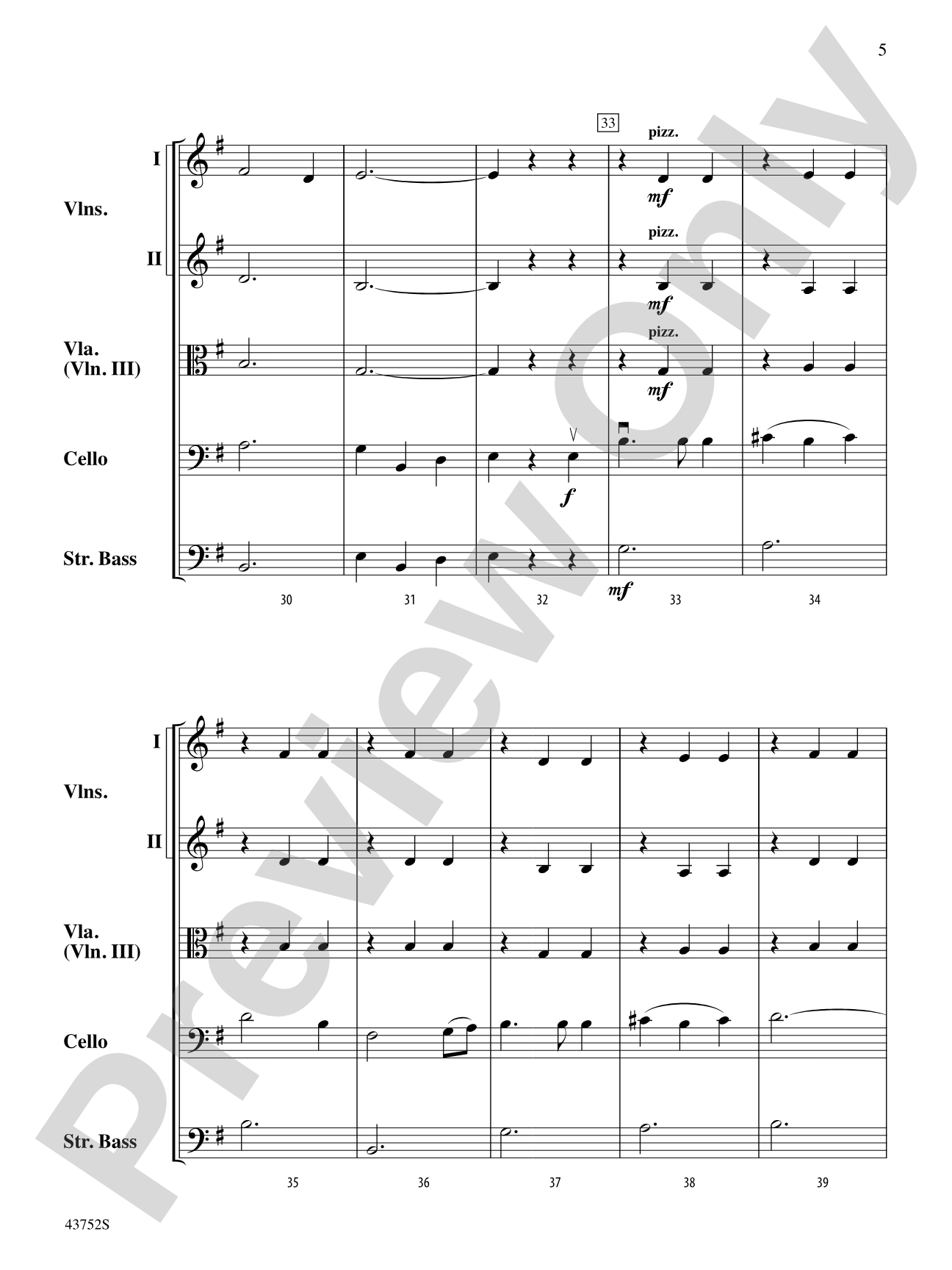
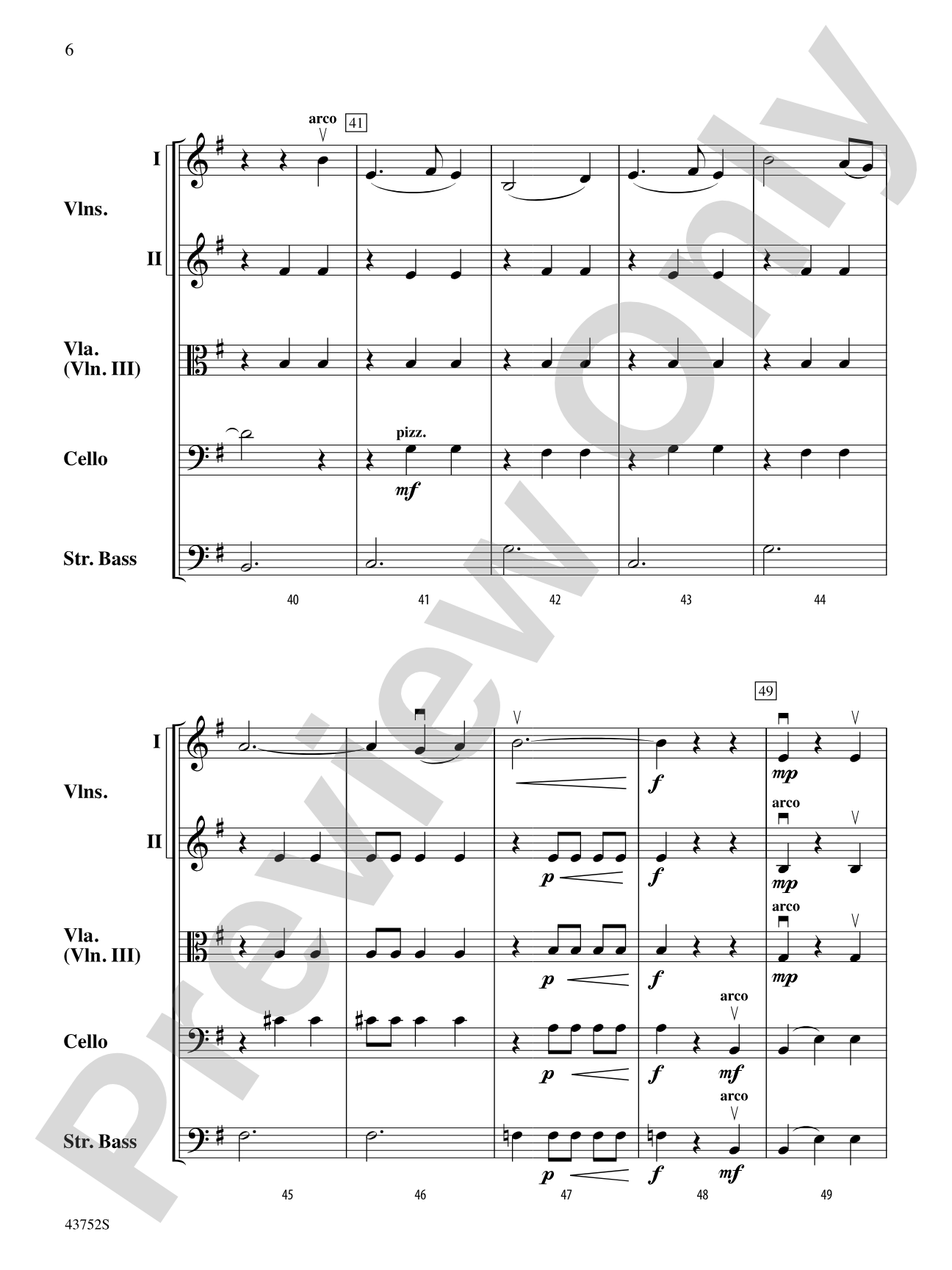
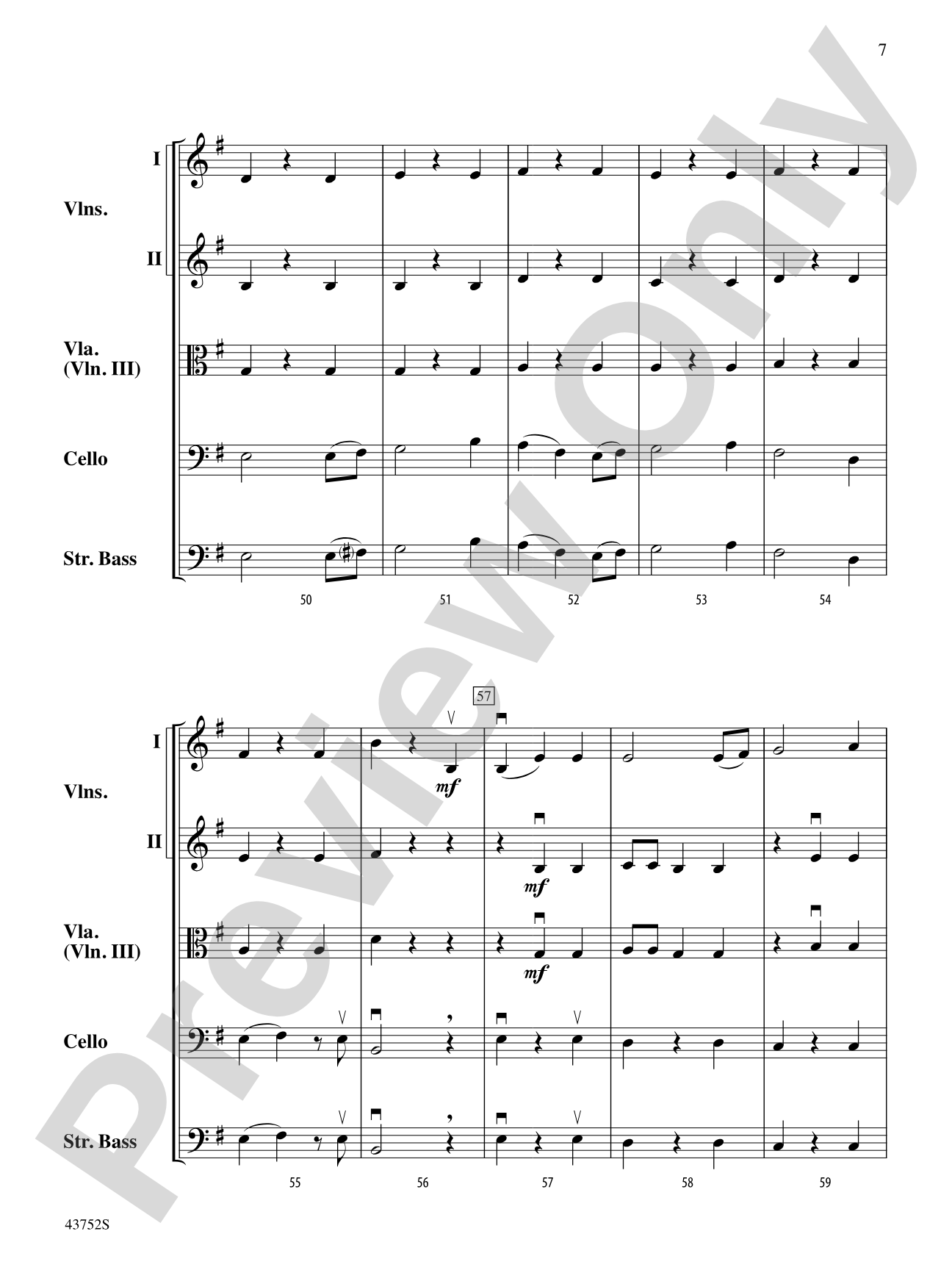
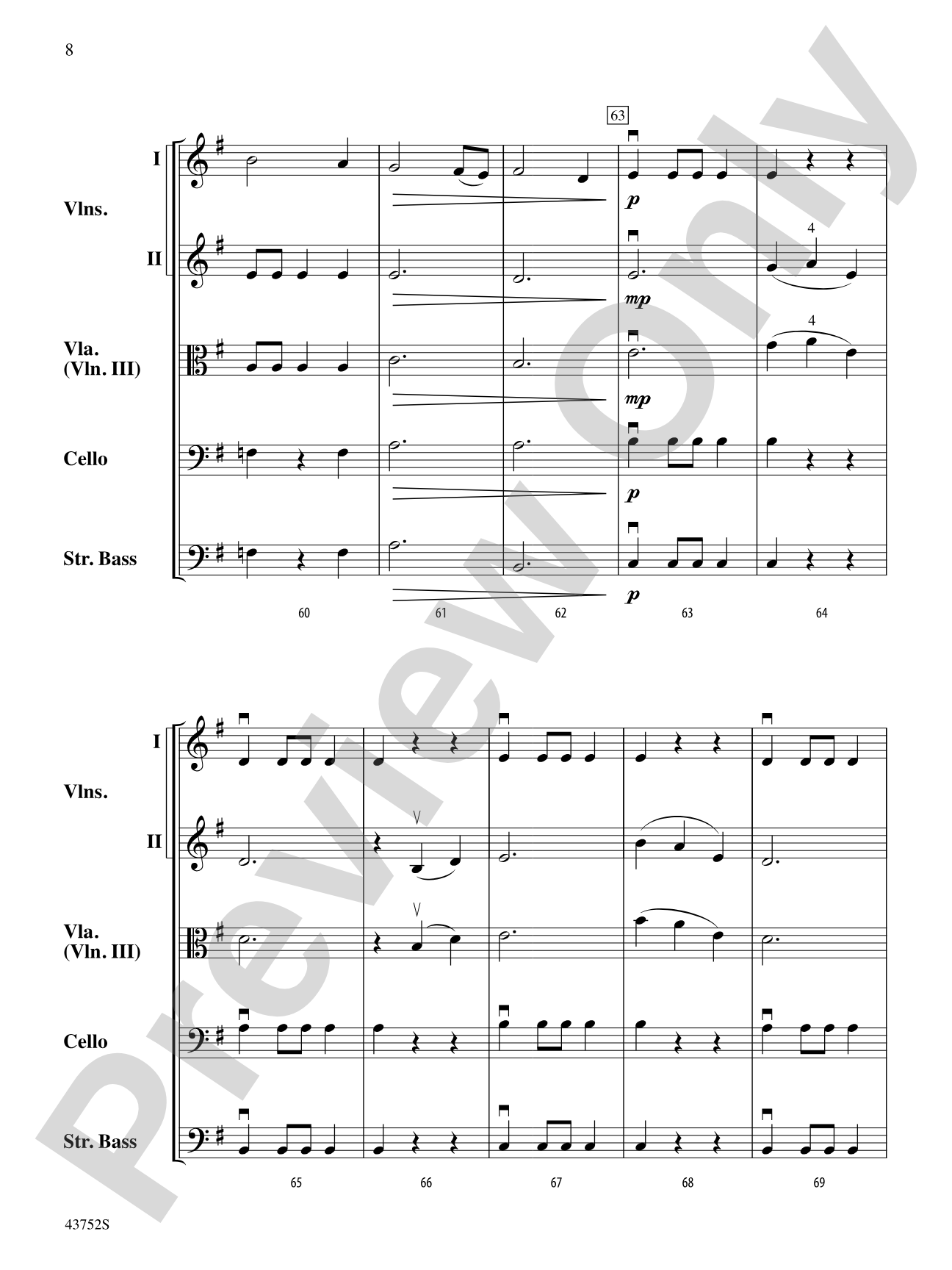

Moonlight Shadows: String Orchestra Conductor Score & Parts
By Michael Kamuf
Grade: 1.5
Item: 00-PK-0006610

$49.00
Pickup currently not available
Buy Extra Parts (Digital PDF Download)
| Product | Price | Quantity |
|---|---|---|
| Moonlight Shadows: Score | $8.00 | |
| Moonlight Shadows: 1st Violin | $5.99 | |
| Moonlight Shadows: 2nd Violin | $5.99 | |
| Moonlight Shadows: 3rd Violin (Viola [TC]) | $5.99 | |
| Moonlight Shadows: Viola | $5.99 | |
| Moonlight Shadows: Cello | $5.99 | |
| Moonlight Shadows: String Bass | $5.99 |
Parts Added to Cart!
Description
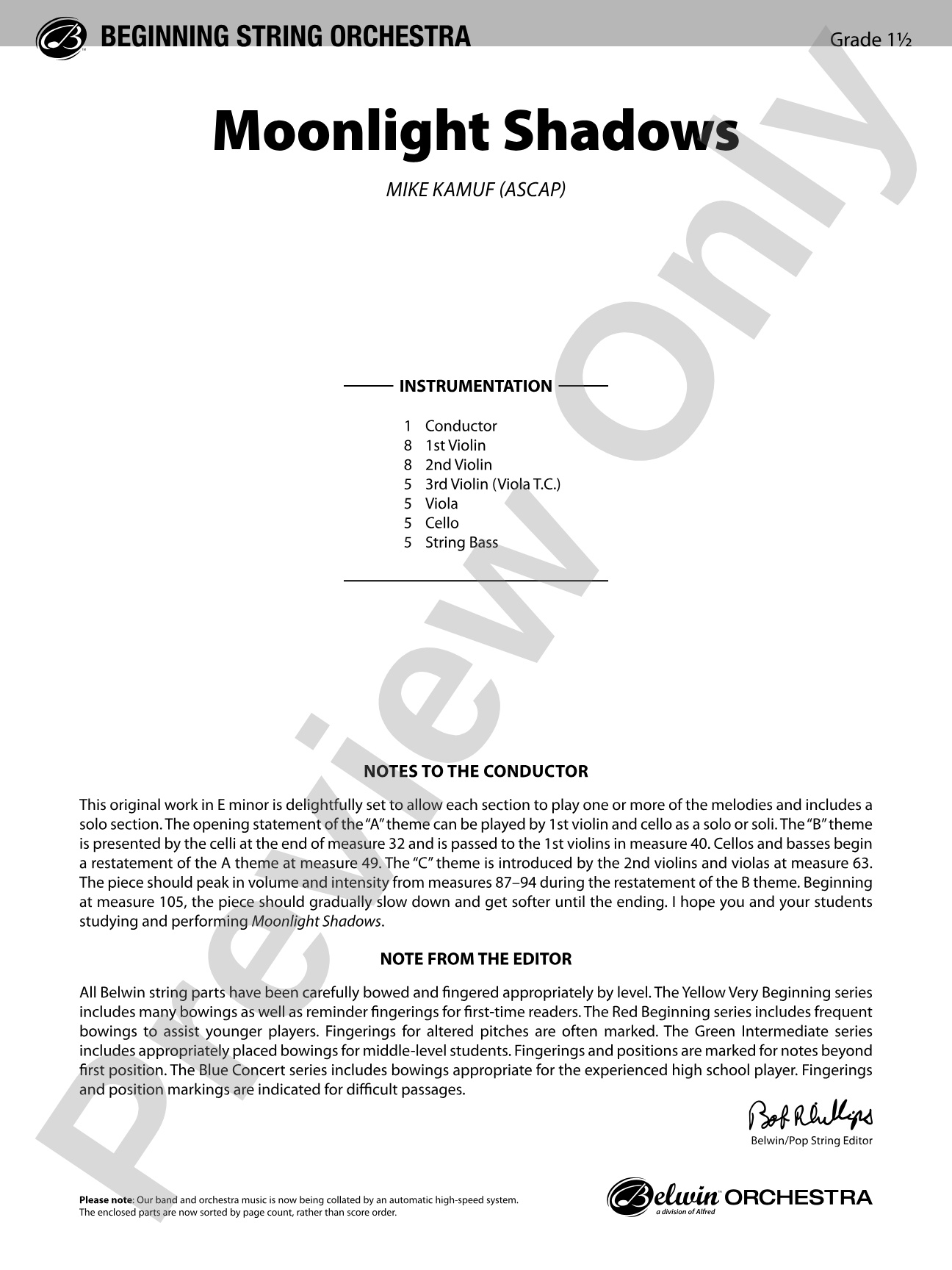
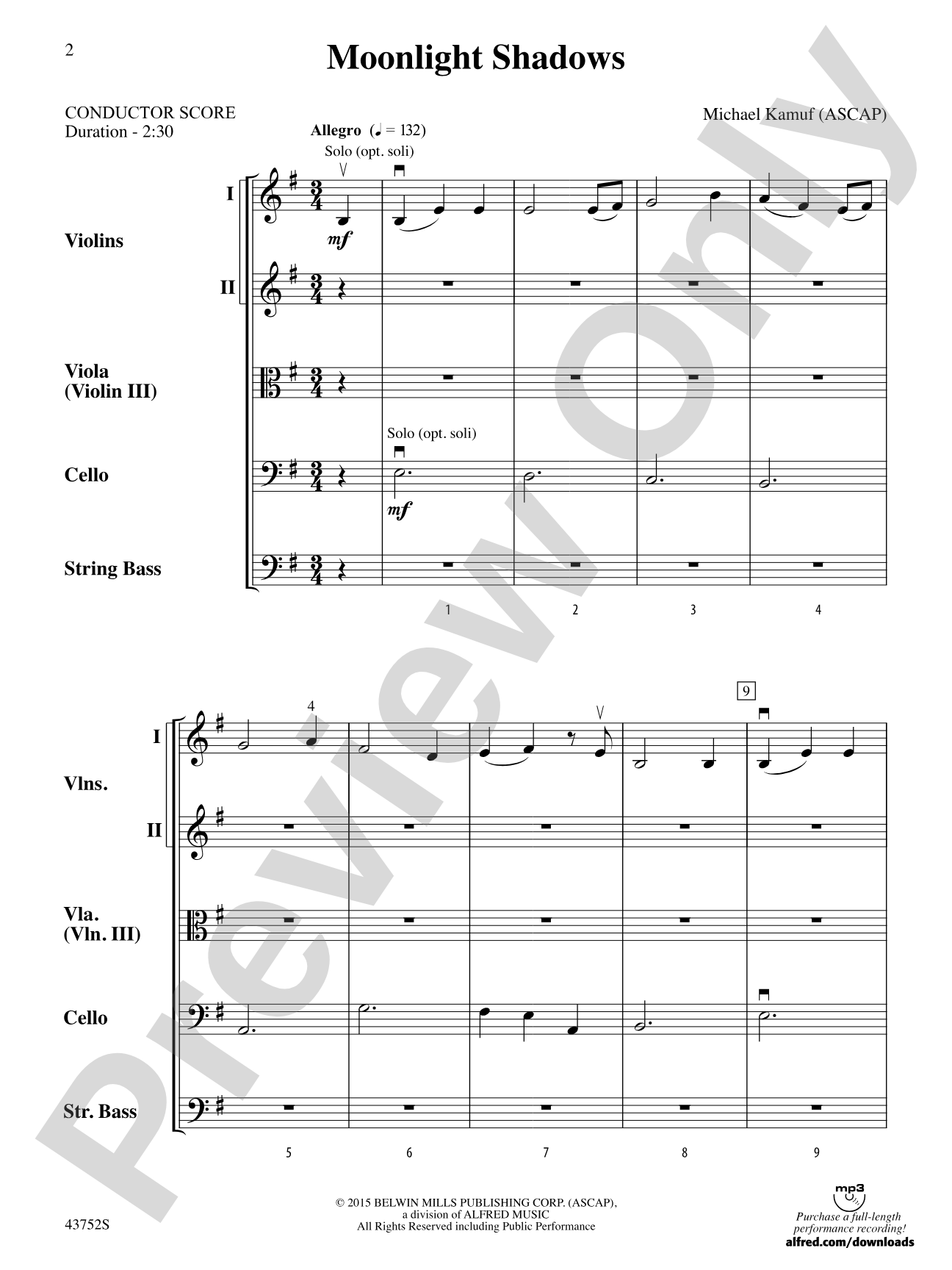
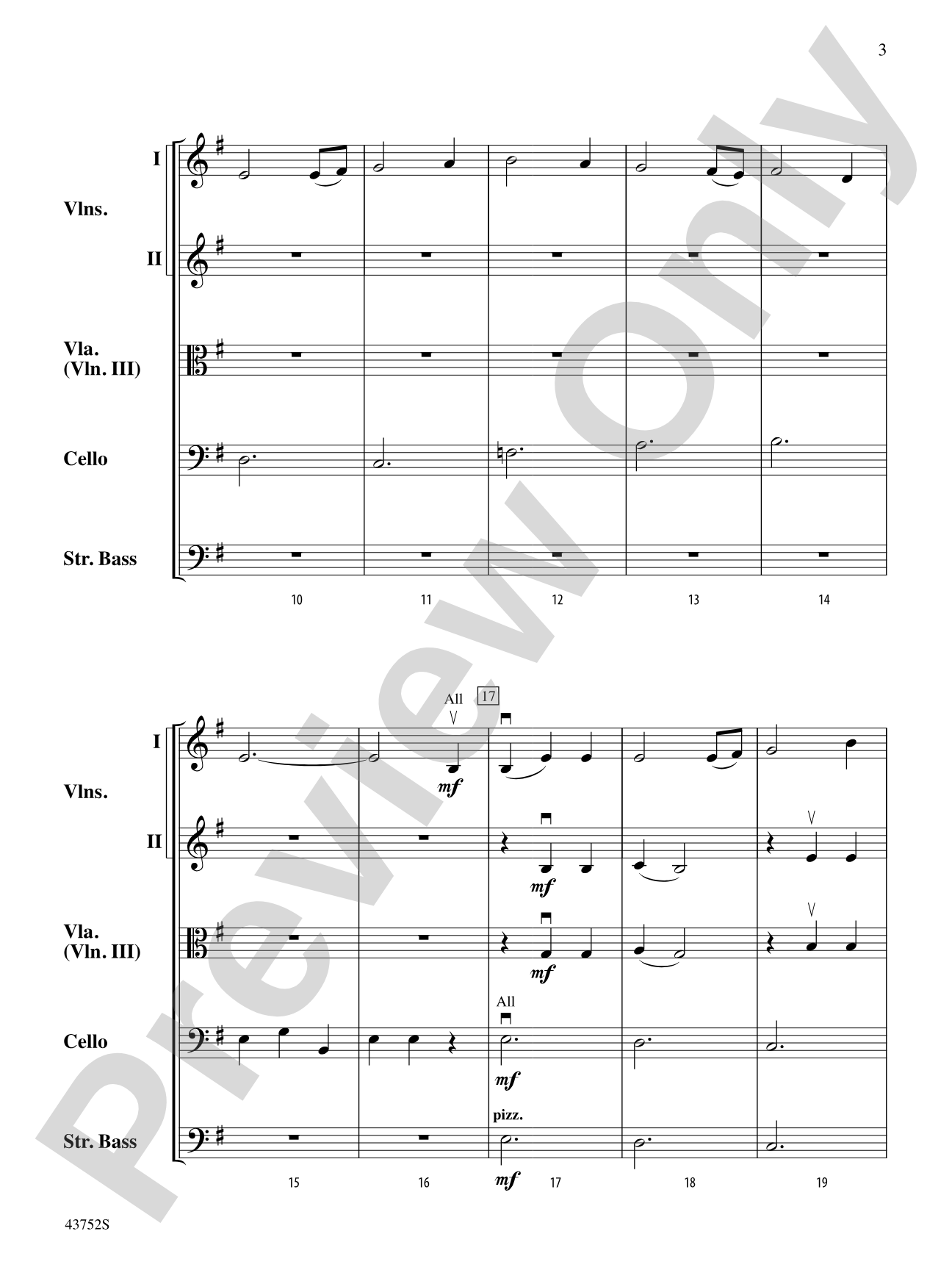
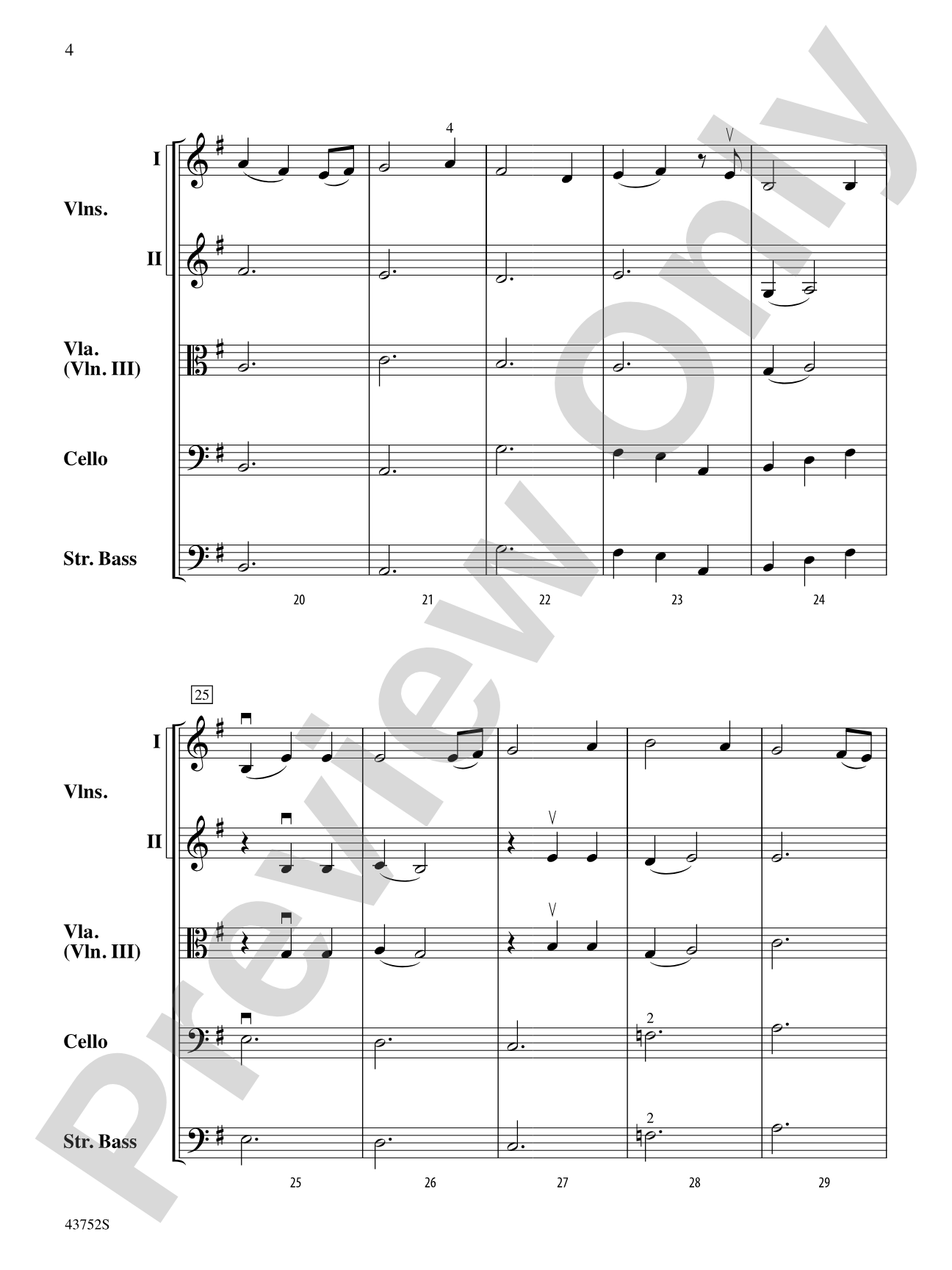
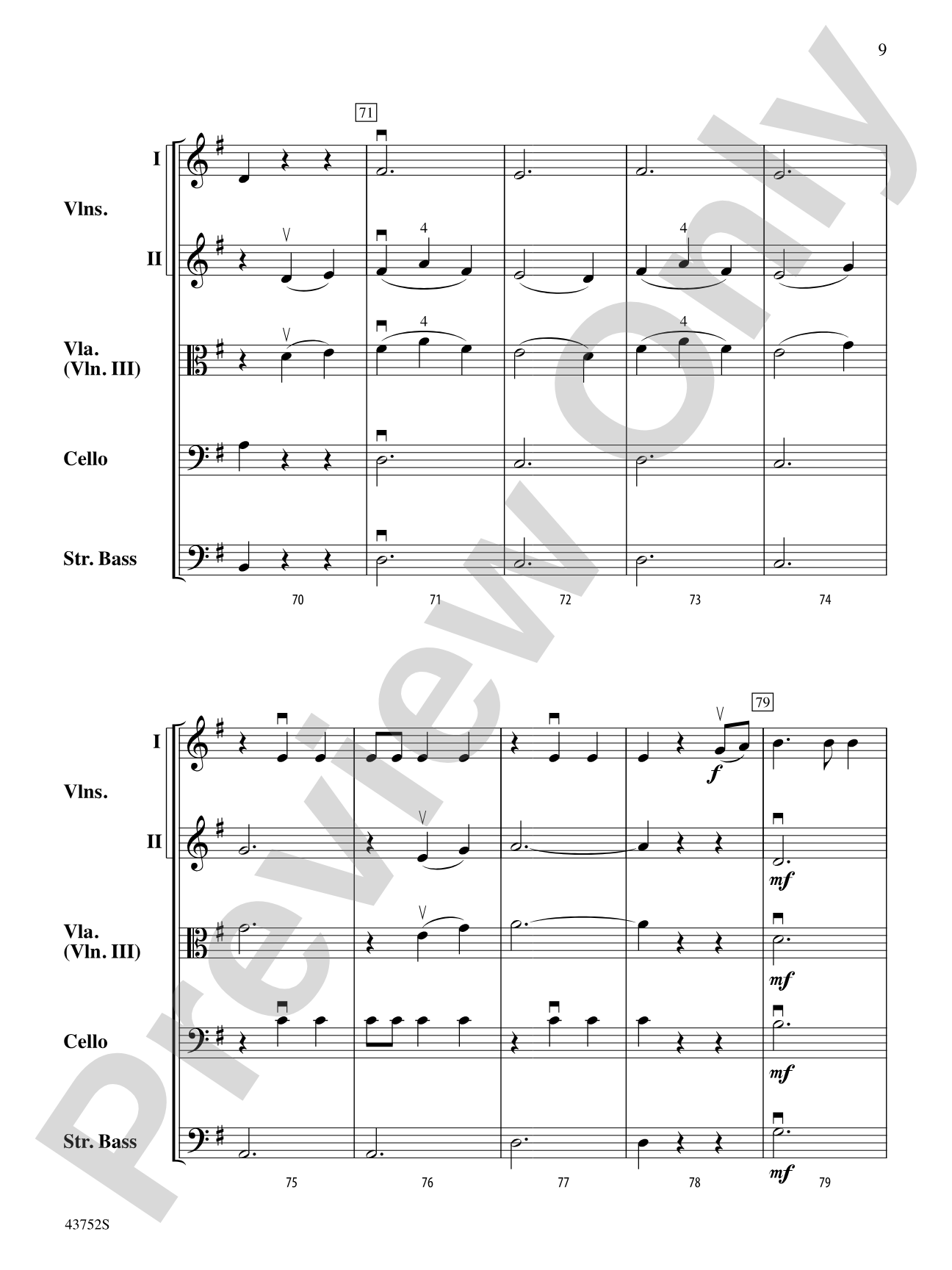
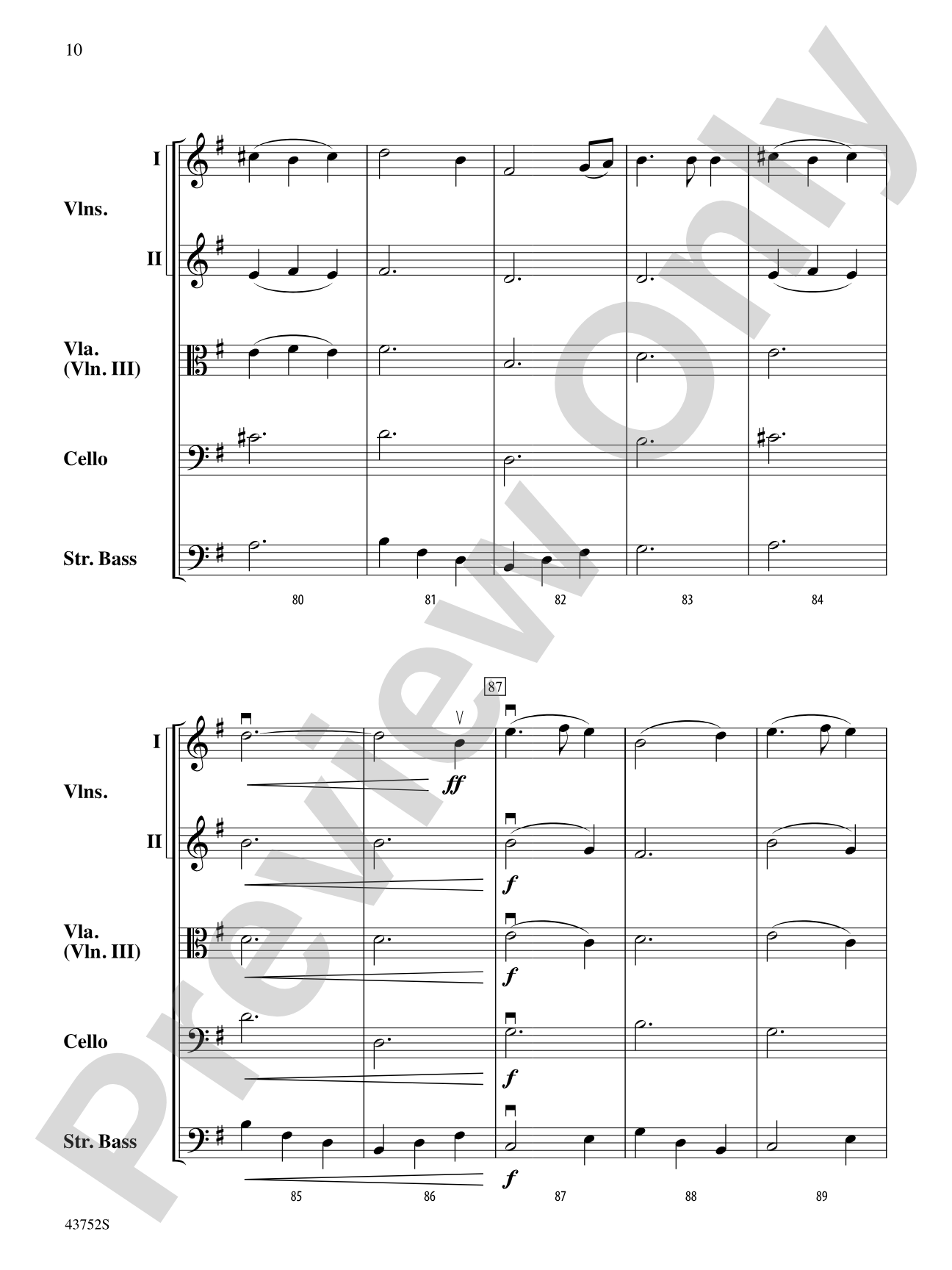
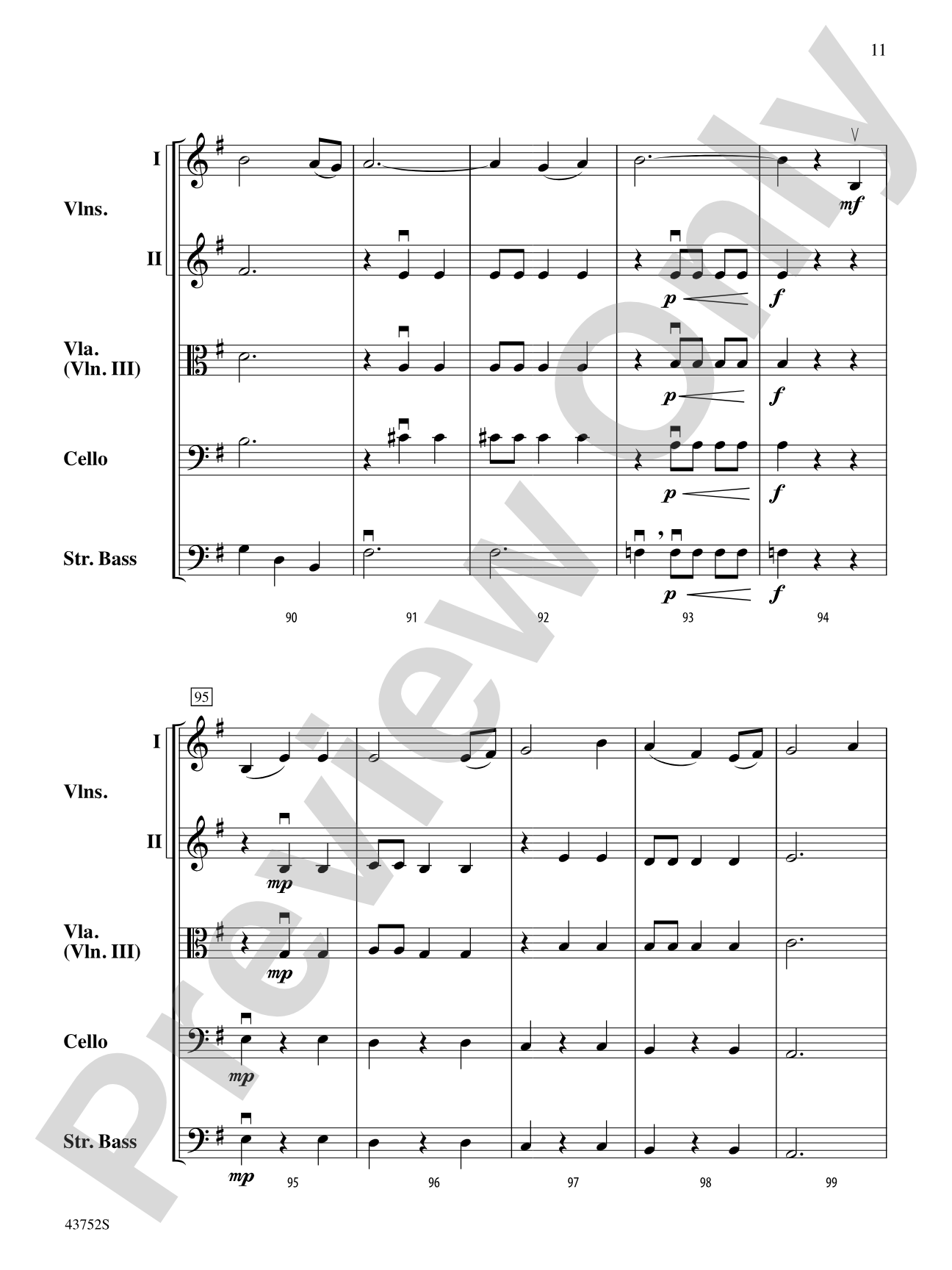
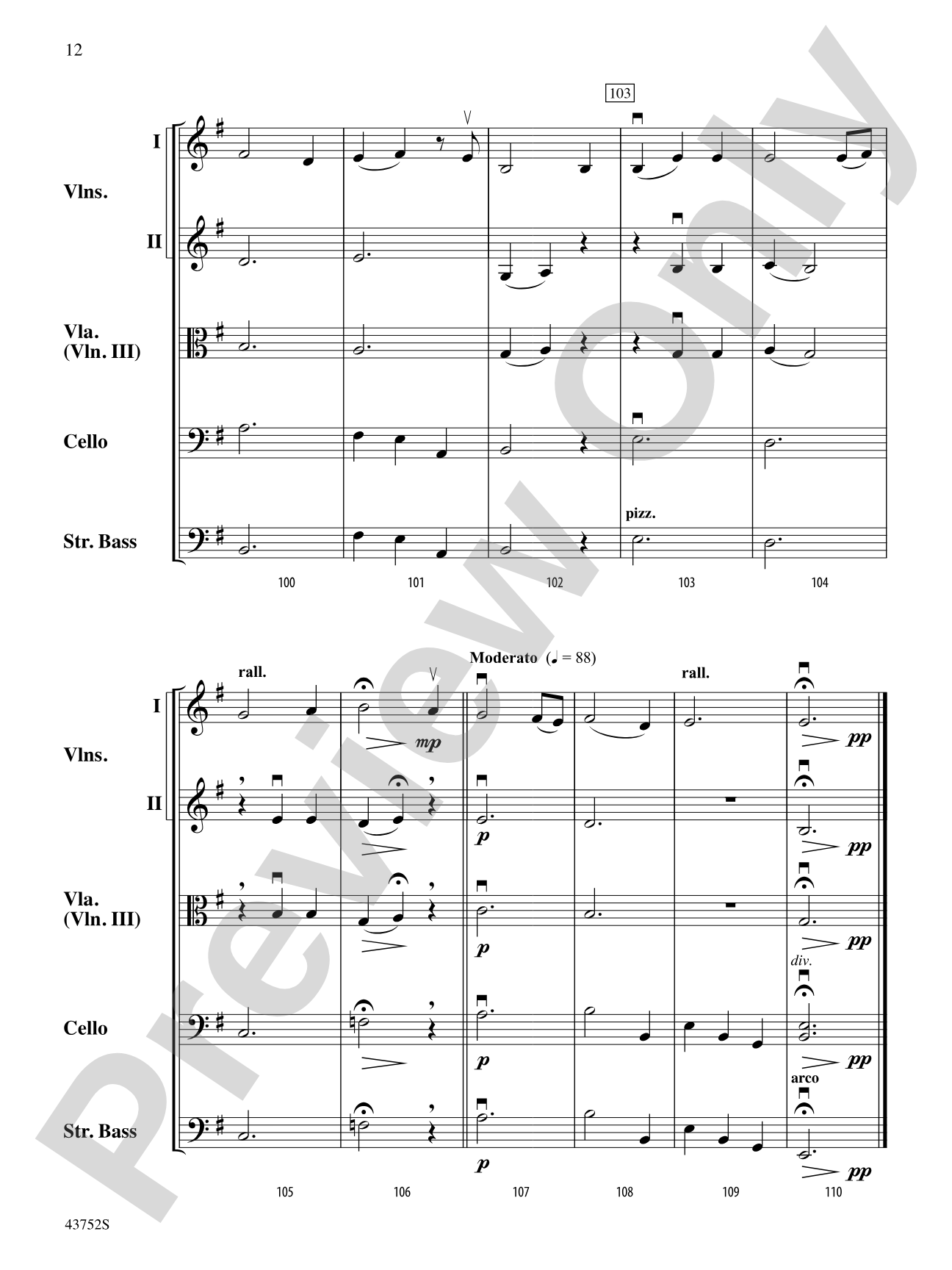
This original work in E minor is delightfully set to allow each section to play the melodies and includes a solo section. Ending with the softness of moonlight, this one will develop ensemble performance and develop dynamics. (2:30)


Don't just read it, hear it, play along with it, and watch your students grow with it. In MakeMusic Cloud, Moonlight Shadows: String Orchestra Conductor Score & Parts comes alive with professional accompaniment, adjustable tempo, and built-in practice tools that turn solo practice into real progress.
Open in the Player
Jump straight in and assign it today.
Start Your Free Trial
Open this title and explore the full library in minutes.
Sample Audio
1
Audio File
--:--
0:00
0:00
Sample Video
Additional Details
Series:
Belwin Beginning String Orchestra
Publisher:
Alfred Music
Page Count:
144
SKU:
00-PK-0006610
More about this title
Why we love this
Kamuf has written a piece that respects the Grade 1.5 player while refusing to shortchange the music. Every section gets melody time, which keeps ensemble engagement high and makes rehearsal feel purposeful rather than remedial. The dynamic arc from opening to that whisper-soft ending teaches conductors and players alike how to shape a complete musical thought.
What to expect
The piece unfolds like watching moonlight gradually reveal a landscape. There's clarity and presence in the middle sections where every voice contributes melody, then a gradual softening as the work settles into its final pages. It's contemplative without being heavy, accessible without being shallow.
Who it's for
String orchestra directors working with developing ensembles who want repertoire that builds both technical and interpretive skills without overwhelming players. This piece works equally well for concert programs and festival competition, making it a practical choice for programs that need versatile Grade 1.5 literature.
How to get the most out of it
- Balance the melody distribution across sections carefully during rehearsal. Mark which instruments carry the primary line in each phrase so players understand their role in the overall narrative rather than playing by rote.
- Establish a clear dynamic ceiling early. The piece's effectiveness depends on players having room to grow into the softer passages; if early sections play too loudly, the ending loses its impact.
- Use the solo sections as opportunities for individual confidence building. Even a Grade 1.5 player can feel the satisfaction of carrying the sound alone, which deepens their investment in ensemble work.
- Conduct the moonlight imagery literally. Guide the final pages with unhurried, gentle preparatory beats so players absorb the piece's reflective mood rather than rushing through the conclusion.
How to use it
Place this as a standalone opener or as a bridge between a faster work and a heavier piece. Its programmatic clarity and manageable length (2:30) make it ideal for concert-opening slots or as a contrasting moment in festival rotation. It also serves ensemble building well early in the academic year when you're establishing foundational sectional balance.
Skills your students will build
- Dynamic shaping across a complete phrase
- Melody sharing among string sections
- Sustaining soft dynamics with tone control
- Solo playing in an ensemble context
- Responding to programmatic imagery through musical expression