
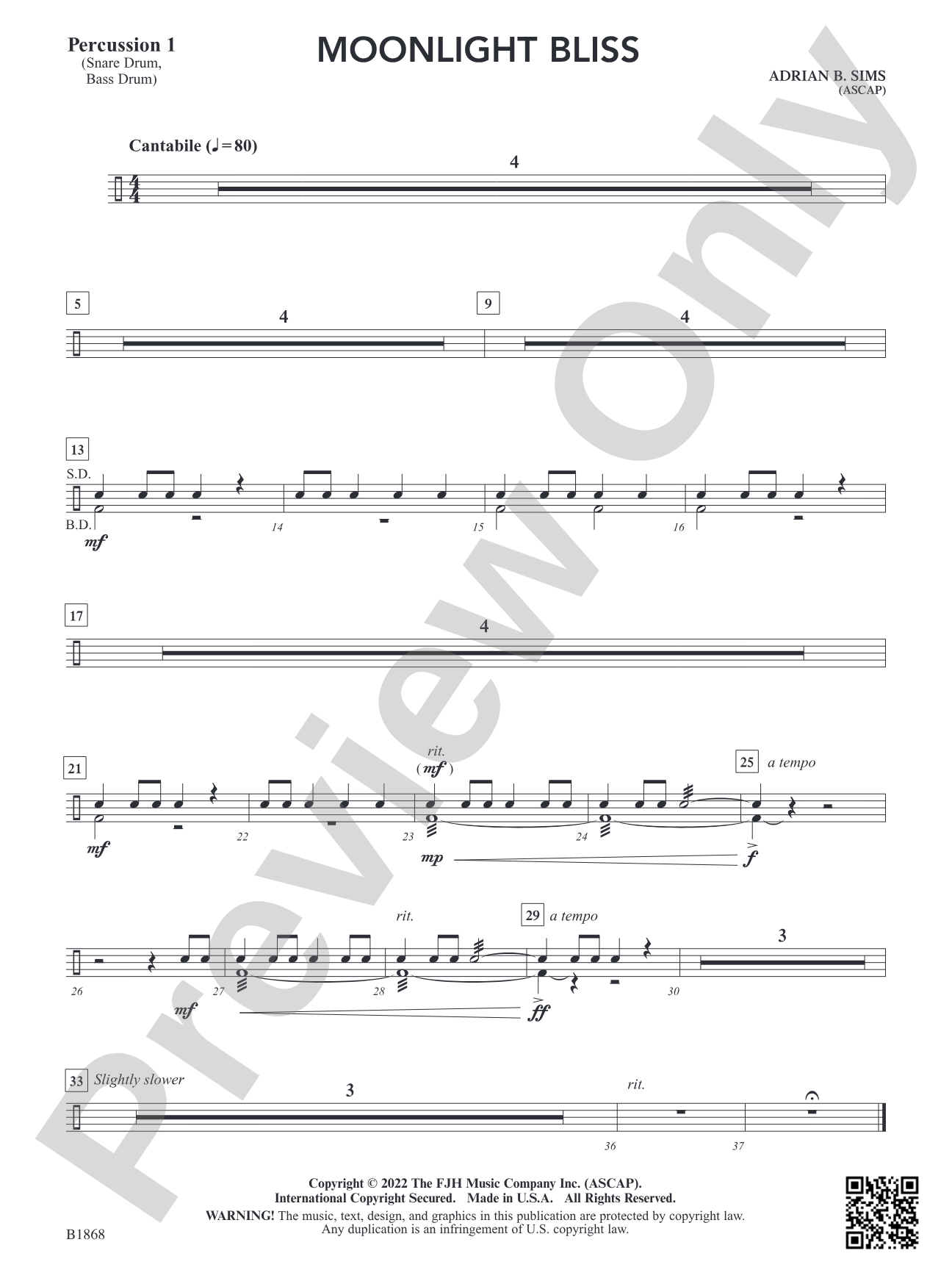

Moonlight Bliss: Percussion 1
By Adrian B. Sims
Grade: 1
Item: 98-PC-DB1868_PC1
$7.00
Pickup currently not available
Description
Enjoy the tranquility of the night and the stars above. A memorable theme and stunning harmonies encapsulate the view of the twinkling night sky. This approachable and powerful work will have your students enthusiastic about playing more lyrical music, and is certain to have a stunning impact on your audience.


Don't just read it, hear it, play along with it, and watch your students grow with it. In MakeMusic Cloud, Moonlight Bliss: Percussion 1 comes alive with professional accompaniment, adjustable tempo, and built-in practice tools that turn solo practice into real progress.
Open in the Player
Jump straight in and assign it today.
Start Your Free Trial
Open this title and explore the full library in minutes.
Sample Audio
1
Audio File
--:--
0:00
0:00
Sample Video
Additional Details
Series:
FJH Beginning Band
Publisher:
The FJH Music Company, Inc.
SKU:
98-PC-DB1868_PC1
More about this title
About the Composer: Adrian B. Sims
Adrian B. Sims began composing and conducting while developing himself as a trombonist in Maryland's vibrant school music scene. His works have earned recognition at the Midwest Band and Orchestra Clinic, claimed spots on the Bandworld Top 100 List, and won awards through the Maryland Music Educators Association Young Composers Project and Make Music Young Composers Contest. He has conducted his own compositions in performances across Maryland schools and performed as a trombonist in orchestral, jazz, and band settings, including appearances with the Baltimore Symphony Orchestra.
Currently pursuing dual degrees in Music Education and Composition at the University of Maryland, Sims studies composition with Dr. Robert Gibson and bass trombone with Matthew Guilford of the National Symphony Orchestra. His mentors in the field include world-renowned composer Brian Balmages, and he credits his high school band directors Christopher Gnagey and Cindy Stevenson with shaping his musical path.
Why we love this
Sims captures something rare at Grade 1 level: genuine lyricism without sacrificing accessibility. The memorable theme and rich harmonic vocabulary give young musicians something musically substantial to sink their teeth into, which pays dividends in rehearsal engagement and audience response. This is the kind of piece that reminds students why they wanted to play band in the first place.
What to expect
Moonlight Bliss evokes quiet wonder and gentle contemplation. The music settles over the ensemble like a peaceful night, with twinkling harmonies that shimmer around a clear, singing melodic line. There's a sense of stillness and reverence that invites both players and listeners to slow down.
Who it's for
Beginning band directors seeking Grade 1 repertoire that moves beyond technical exercises and into genuine musical expression. This work engages students who are just discovering that band can be about beauty and atmosphere, not just playing the right notes in the right order.
How to get the most out of it
- Bring out the lyrical quality by shaping phrases with subtle dynamic contours rather than maintaining a uniform sound throughout each section.
- Balance the inner voices carefully during the harmonic passages so the memorable theme doesn't overshadow the supportive lines that give the piece its depth.
- Allow the night sky imagery to inform your tempo choices; resist the urge to rush, which can undermine the tranquil character the composer intends.
- Use this as an opportunity to rehearse sustained, singing tone production across your entire band, since the lyrical writing demands it.
How to use it
This piece shines in spring or year-end concerts where you want to show the lyrical side of your band's musicianship. It pairs beautifully with more energetic programmatic works or marches, offering contrast and a moment of reflection. Consider opening a concert section with it to establish an introspective mood, or placing it strategically to provide emotional variety in your setlist.
Skills your students will build
- Sustained, singing tone production at soft dynamic levels
- Phrase shaping and direction in lyrical writing
- Balance and blend in harmonic textures
- Ensemble sensitivity to atmosphere and emotional intent
- Reading and responding to programmatic imagery in music