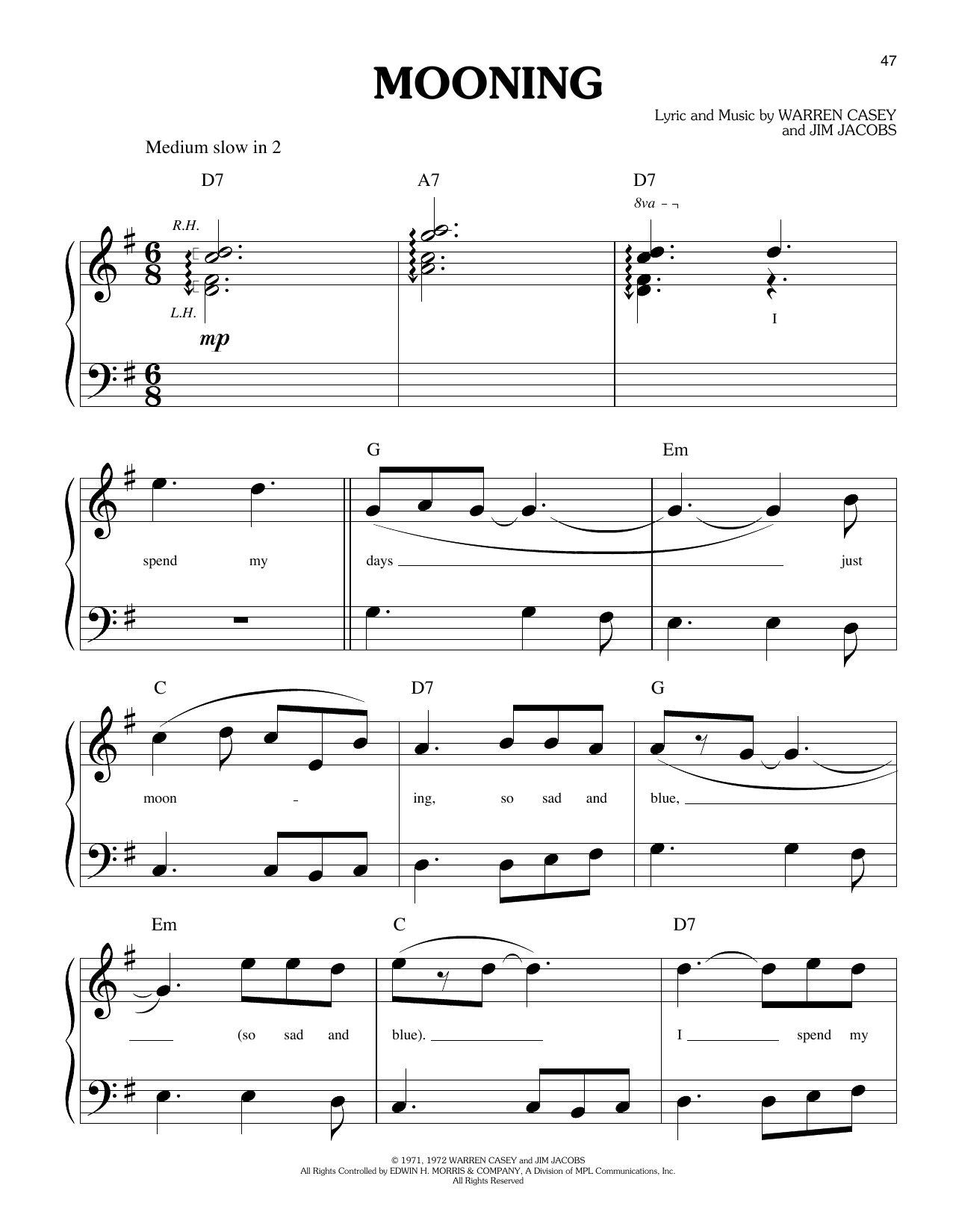
Warren Casey and Jim Jacobs wrote the music and lyrics for Grease, the 1971 musical that became a cultural phenomenon and has remained a staple of school and community theater for over fifty years. Their score captures the energy and humor of 1950s teen culture while creating some of Broadway's most memorable and singable melodies. Casey and Jacobs understood how to write music that appeals equally to performers and audiences, which explains why Grease continues to pack theaters across the country.
Why we love this
A five-page big note arrangement makes this beloved novelty song accessible to pianists who are still building technique and reading skills. Students get to play through a genuine Broadway moment without struggling with dense note clusters or rapid passagework, which means they can focus on capturing the song's playful character and supporting a vocalist or ensemble effectively.
What to expect
Playful and tongue-in-cheek, with a light-hearted energy that invites performers to lean into the song's absurdist humor. The big note format keeps the sound clean and readable while still delivering the charming, slightly mischievous vibe that makes this novelty number so fun to perform.
Who it's for
Pianists in the early intermediate to intermediate range who want to accompany singers or perform an arrangement that doesn't demand virtuosity. Music teachers and accompanists working with school productions or recital programs will find this format removes barriers to participation.
How to get the most out of it
Keep the tempo light and bouncy; let the humor of the lyrics inform your rhythmic choices rather than rushing the eighth notes
Shape phrases around the vocal line, pulling back slightly on instrumental fills so the melody stays front and center
Exaggerate the articulation in left-hand accompaniment patterns to give the accompaniment comic lift
How to use it
Include this as an accompaniment option for a Grease-themed concert or variety show, where a student pianist can support singers without requiring an experienced accompanist. It also works as a standalone novelty piece for piano recitals or as part of a musical theater showcase where accessible arrangements encourage broader student participation.
Skills your students will build
Supporting a vocal line while maintaining steady rhythmic accompaniment
Playing repeated chord patterns and ostinatos with consistent articulation
Reading and executing rhythmic figures typical of popular and theatrical music
Balancing dynamic control between melody and accompaniment
You May Also Like
Scan to Complete Your Purchase
Use your phone's camera to scan the code below
You'll log in on your phone and the order will be added to your account