Moon River (arr. Wendy Sergeant) Sheet Music Preview

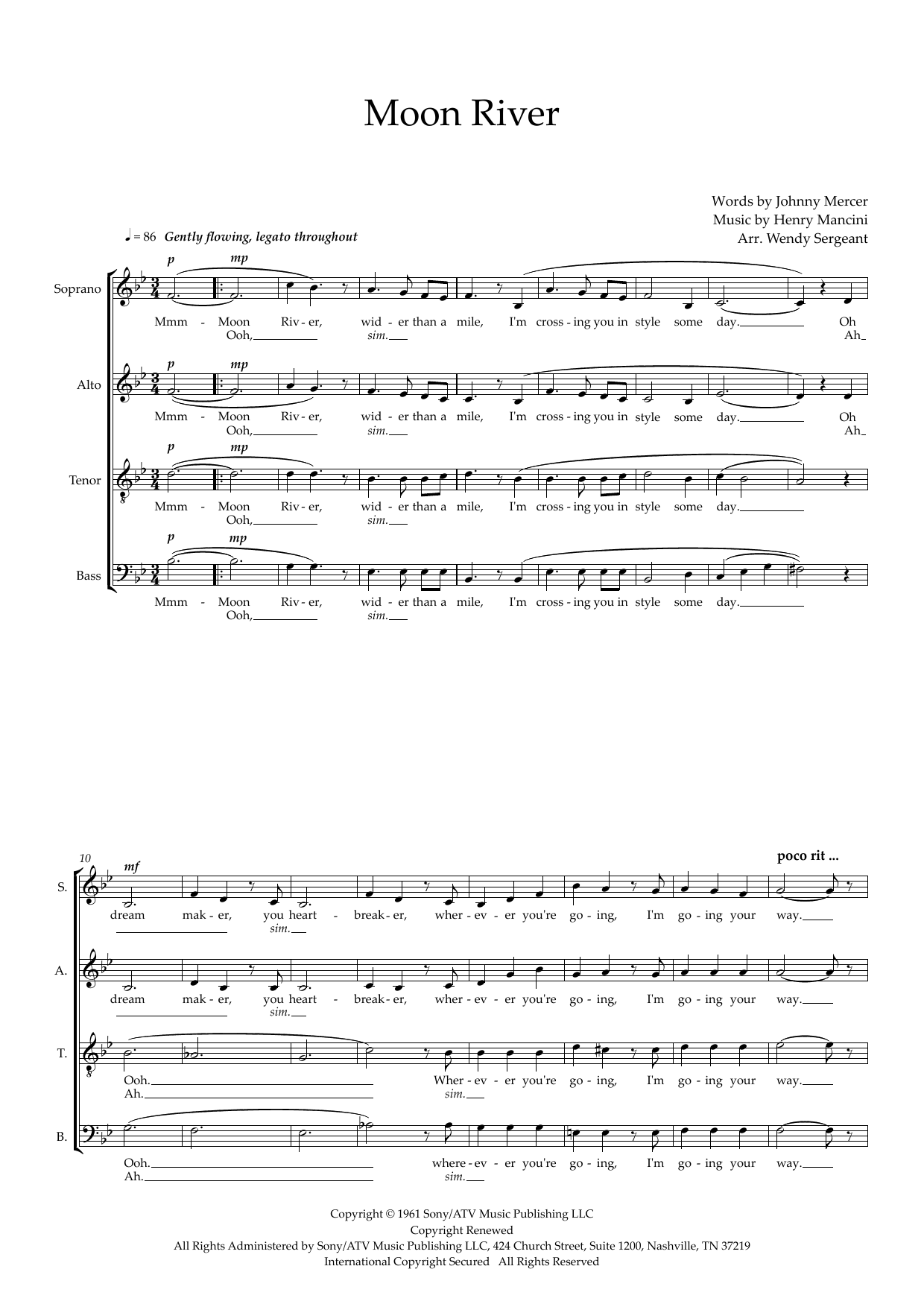
Moon River (arr. Wendy Sergeant): SAATB Choral Octavo

As performed by Audrey Hepburn / Arranged by Wendy Sergeant

Item: 35-DS00482365

Digital Download
$1.99
Description

Moon River (arr. Wendy Sergeant): SAATB Choral Octavo isn't in MakeMusic Cloud just yet...but it could be. Let us know you'd like to see it, and you'll help shape what comes next. In the meantime, start a free trial and dive into thousands of interactive titles your students can play along with today.

Sample Audio
No sample audio found.
Sample Video
Additional Details
Publisher: Hal Leonard
Page Count: 2
SKU: 35-DS00482365

More about this title

About the Artist: Audrey Hepburn

Audrey Hepburn's rendition of "Moon River" from the 1961 film Breakfast at Tiffany's became an iconic interpretation of this Henry Mancini standard. Her understated vocal delivery and impeccable phrasing set the gold standard for how this song is performed, influencing countless singers across multiple genres. For choral directors, her version serves as a masterclass in restraint and emotional directness; every note carries weight, and silence speaks as loudly as sound.

Why we love this

Wendy Sergeant's SAATB arrangement honors Hepburn's intimate vocal approach while creating genuine harmonic interest across all five parts. The arrangement respects the song's inherent tenderness without over-arranging it, making it accessible for choirs without extensive jazz experience yet sophisticated enough to hold the attention of experienced singers and audiences.

What to expect

This arrangement captures the quiet longing of Hepburn's original: reflective, intimate, and achingly beautiful. The five-part writing lets the harmony expand gently around the melody, creating moments of lushness that still feel vulnerable rather than overwrought. It's the sound of someone alone under the stars, genuinely hoping for connection.

Who it's for

Choirs seeking a standard that works well for concerts, community performances, and special events will find this arrangement immediately usable. It suits groups comfortable with jazz harmony and stylistic flexibility but doesn't demand advanced sight-reading or unusual technique.

How to get the most out of it

  • Treat the melody line as a conversation rather than a declaration. Space between phrases matters as much as the notes themselves.
  • Balance the inner voices carefully; they should support rather than compete with the soprano line, even when they have interesting countermelody material.
  • Let the harmonic movement breathe. Mancini's chord progressions create their own forward motion without forcing tempo changes.
  • Shape the phrase endings with a slight ritardando to mirror the song's contemplative character, but communicate this through the ensemble without explicit direction from the conductor.

How to use it

Pair this with other classic standards for a nostalgic concert segment, or use it as a reflective moment between more energetic pieces. Its brevity and emotional clarity make it an excellent choice for graduation ceremonies, holiday concerts, or any program that benefits from a moment of genuine sentiment.

Skills your students will build

  • Singing jazz harmony with accurate intonation across five parts
  • Balancing lead melody with supporting inner voices
  • Phrasing with space and intentional silence
  • Interpreting expressive markings in the context of a standard arrangement
  • Blending sustained notes with moving inner parts

You May Also Like