Moon River Sheet Music Preview

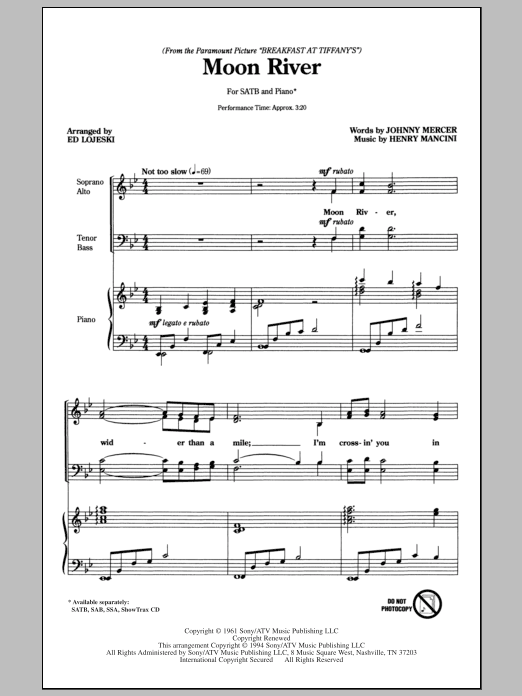
Moon River

Item: 35-DS00130742

Digital Download
$2.99
Description

Moon River isn't in MakeMusic Cloud just yet...but it could be. Let us know you'd like to see it, and you'll help shape what comes next. In the meantime, start a free trial and dive into thousands of interactive titles your students can play along with today.

Sample Audio
No sample audio found.
Sample Video
Additional Details
SKU: 35-DS00130742

More about this title

About the Composer: Henry Mancini

Henry Mancini (1924-1994) shaped American film music like few composers before or after him. His gift for melody, sophisticated orchestration, and ability to capture emotion through understatement made him one of the most recorded composers of the twentieth century. Mancini won four Academy Awards and eighteen Grammy Awards, but his lasting impact on music education comes from the accessibility and emotional clarity of his writing. Teachers and students return to his work because it demonstrates how thoughtful composition serves storytelling without sacrificing musical substance.

Why we love this

Mancini's melody is instantly recognizable yet sophisticated enough to hold a musician's interest through repeated rehearsals. Ed Lojeski's arrangement preserves the song's lyrical warmth while giving ensemble players real musical responsibility. It's the rare pop standard that sounds equally at home in a jazz ensemble, a vocal jazz setting, or a chamber context.

What to expect

Gentle and reflective, like looking back on something both beautiful and bittersweet. The melody floats above warm harmonies with a timeless quality that feels more intimate than bombastic, even when the full ensemble voices it.

Who it's for

This works beautifully in jazz ensembles, vocal jazz choirs, and small instrumental combos. It suits students who've moved past sight-reading exercises but still need pieces that reward careful attention to tone quality and phrase shape.

How to get the most out of it

  • Shape the melody with intentional rubato in the opening phrases; this song breathes, so resist the urge to keep every measure metronomic.
  • Balance accompaniment voices carefully so they support rather than overshadow the tune. The beauty lives in the simplicity.
  • Let rhythmic figures in the middle section have clarity and space between attacks; rushing will flatten the contemplative mood.
  • Listen for the harmonic movement underneath the melody and let those chord changes inform your phrasing, even in rhythmic sections.

How to use it

Include this in a concert exploring American standards and film music, where it pairs naturally with other mid-century popular compositions. It also serves as an excellent vehicles for small ensemble performance or as a showcase for a talented soloist with ensemble support.

Skills your students will build

  • Phrasing and breath placement in lyrical melodies
  • Harmonic listening and how chord quality shapes phrasing
  • Balancing solo and accompanying voices
  • Maintaining steady tempo while allowing for musical expression

You May Also Like