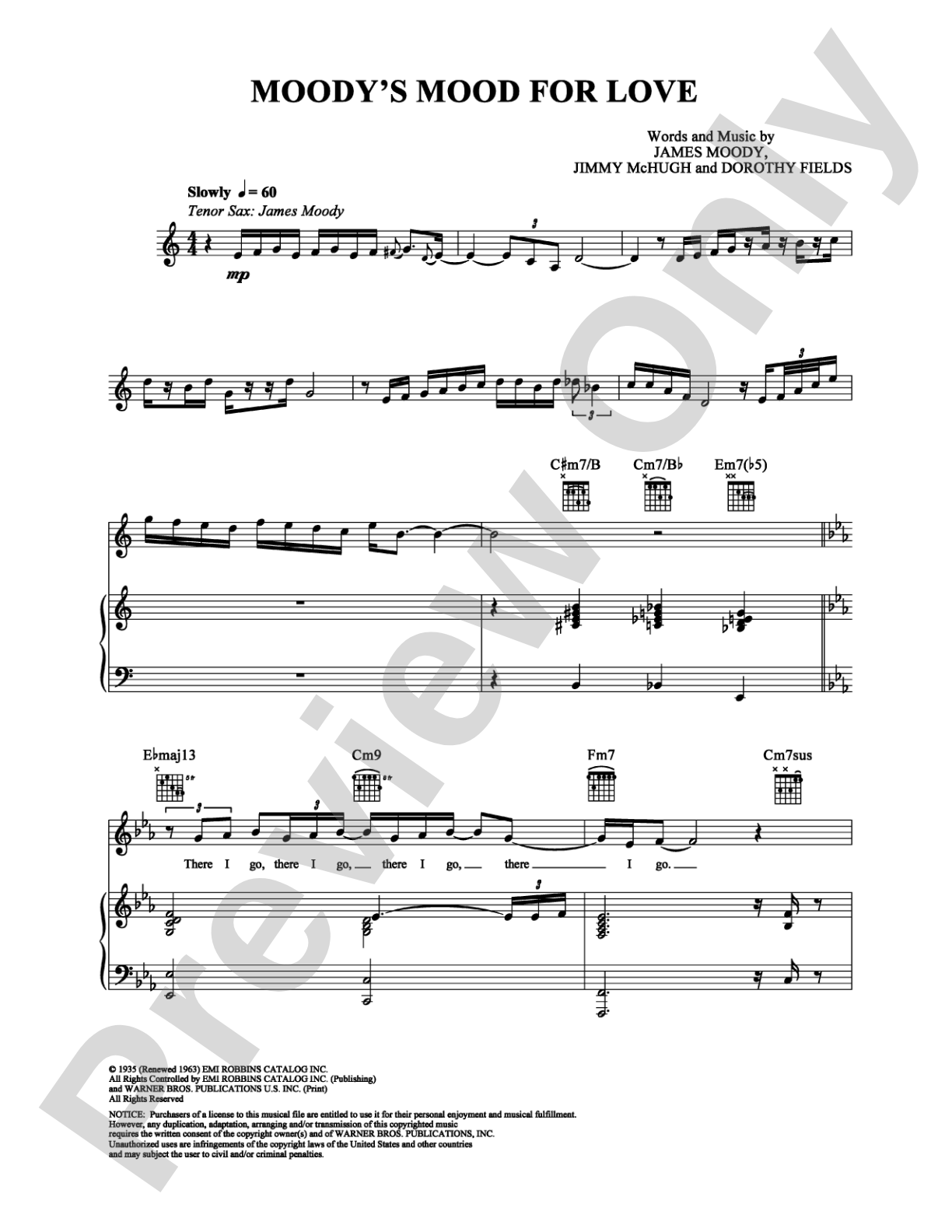
Moody's Mood for Love: Piano/Vocal/Chords Digital Sheet Music

Moody's Mood for Love: Piano/Vocal/Chords Digital Sheet Music

Jimmy McHugh, Dorothy Fields, Brian McKnight, James Moody

Item: 00-PS-0001332

Digital Download
$3.99
Description

Moody's Mood for Love: Piano/Vocal/Chords Digital Sheet Music isn't in MakeMusic Cloud just yet...but it could be. Let us know you'd like to see it, and you'll help shape what comes next. In the meantime, start a free trial and dive into thousands of interactive titles your students can play along with today.

Sample Audio
No sample audio found.
Sample Video
Additional Details
SKU: 00-PS-0001332

More about this title

About the Artist: Brian McKnight

Brian McKnight is an R&B and adult contemporary vocalist known for his smooth tenor voice and sophisticated interpretations of classic standards and contemporary ballads. His career spans decades of recording and performing, establishing him as a respected interpreter of jazz-inflected popular music and beloved covers.

Why we love this

This arrangement captures the sensuality and harmonic sophistication that makes the original standard enduring. The piano/vocal/chords format gives singers the freedom to phrase expressively while the chord symbols open the door to instrumental accompaniment or reharmonization, making it equally useful in a jazz vocal class, a cabaret setting, or a student recital.

What to expect

The mood is intimate and reflective, balancing romantic vulnerability with understated confidence. Harmonically rich and unhurried, this arrangement invites the performer to linger in the emotional landscape of the lyric while maintaining the sophisticated, mature sensibility the song demands.

Who it's for

Singers studying contemporary jazz interpretation, R&B vocal technique, or the intersection of standards and modern soul music will find this arrangement both accessible and musically rewarding. Pianists supporting vocal instruction or working toward jazz accompaniment skills can use the chord symbols to develop comping and voicing decisions.

How to get the most out of it

  • Pay attention to the chord symbols and consider where the harmony naturally wants to breathe; don't rush through passing chords or extended harmonies that create the sophisticated feel of this arrangement.
  • Shape the vocal line with restraint rather than oversinging; this standard rewards intimate phrasing and letting the lyrics tell the story.
  • Use the piano part as a harmonic anchor, but think of your voice as independent; jazz-influenced pop ballads thrive when the vocal line and accompaniment have subtle rhythmic independence.
  • Experiment with small vocal embellishments or slight timing shifts on repeated phrases to create forward motion without sacrificing the ballad's reflective mood.

How to use it

Include this in a recital exploring the overlap between jazz standards and contemporary R&B, pairing it with other great American songs reimagined through a soul lens. It works equally well in a cabaret-style concert or as a showcase piece for a singer developing their mature repertoire.

Skills your students will build

  • Interpreting jazz-influenced chord progressions (extended and altered harmonies)
  • Phrasing with restraint and emotional specificity in ballads
  • Reading lead sheets and using chord symbols to shape accompaniment
  • Balancing lyrical storytelling with melodic sophistication
  • Understanding the relationship between contemporary R&B and jazz vocal traditions

You May Also Like