
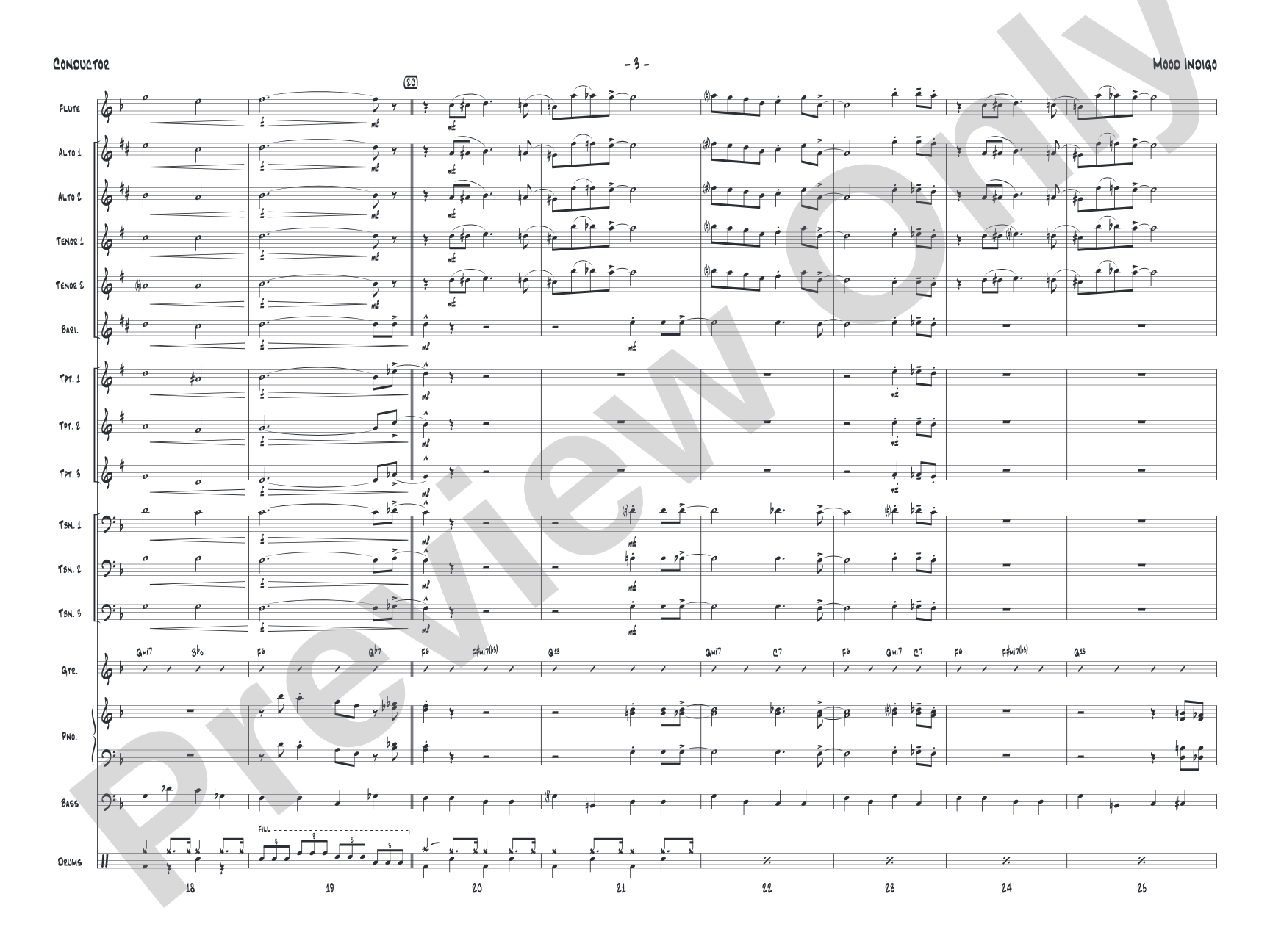
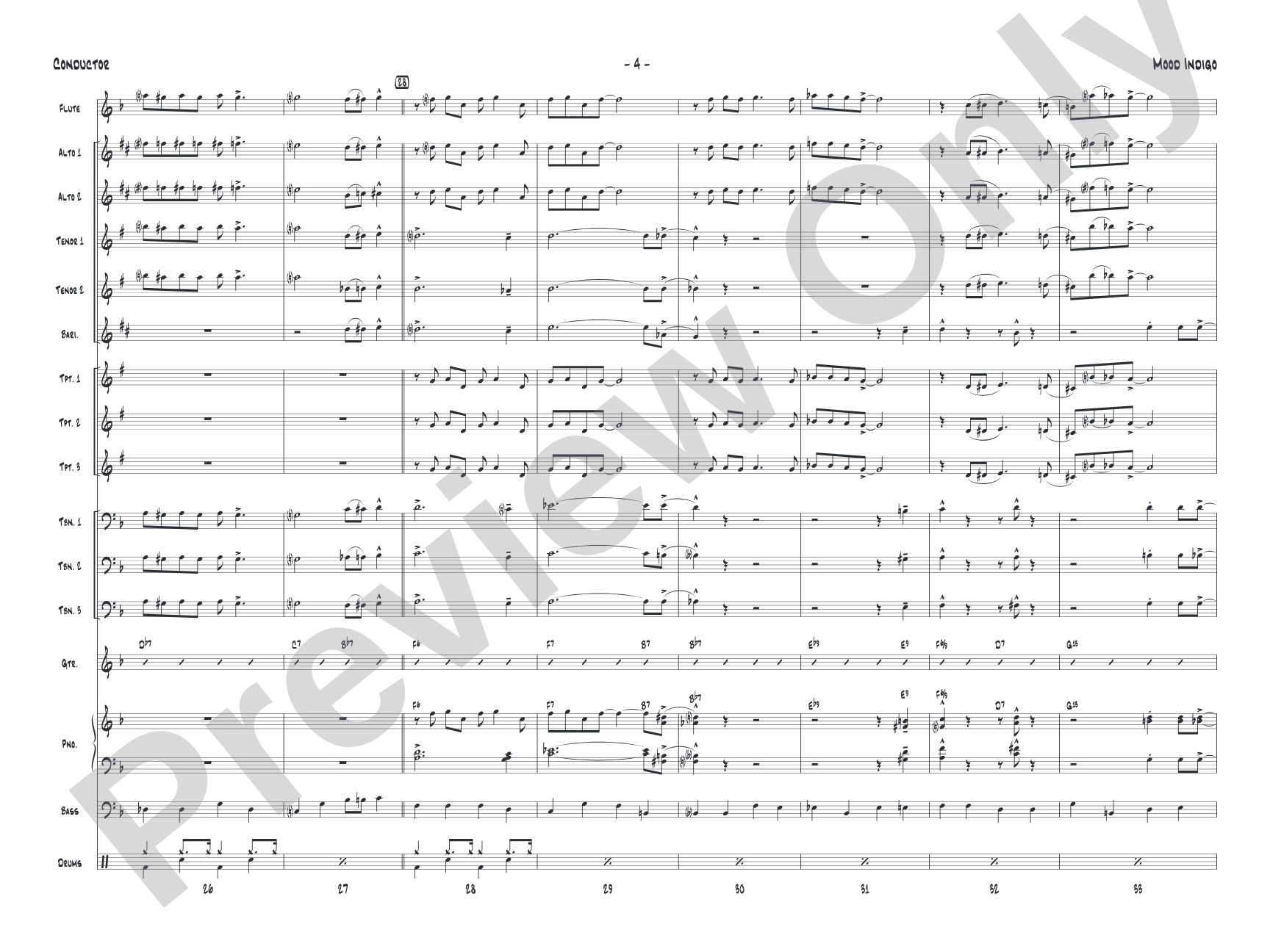
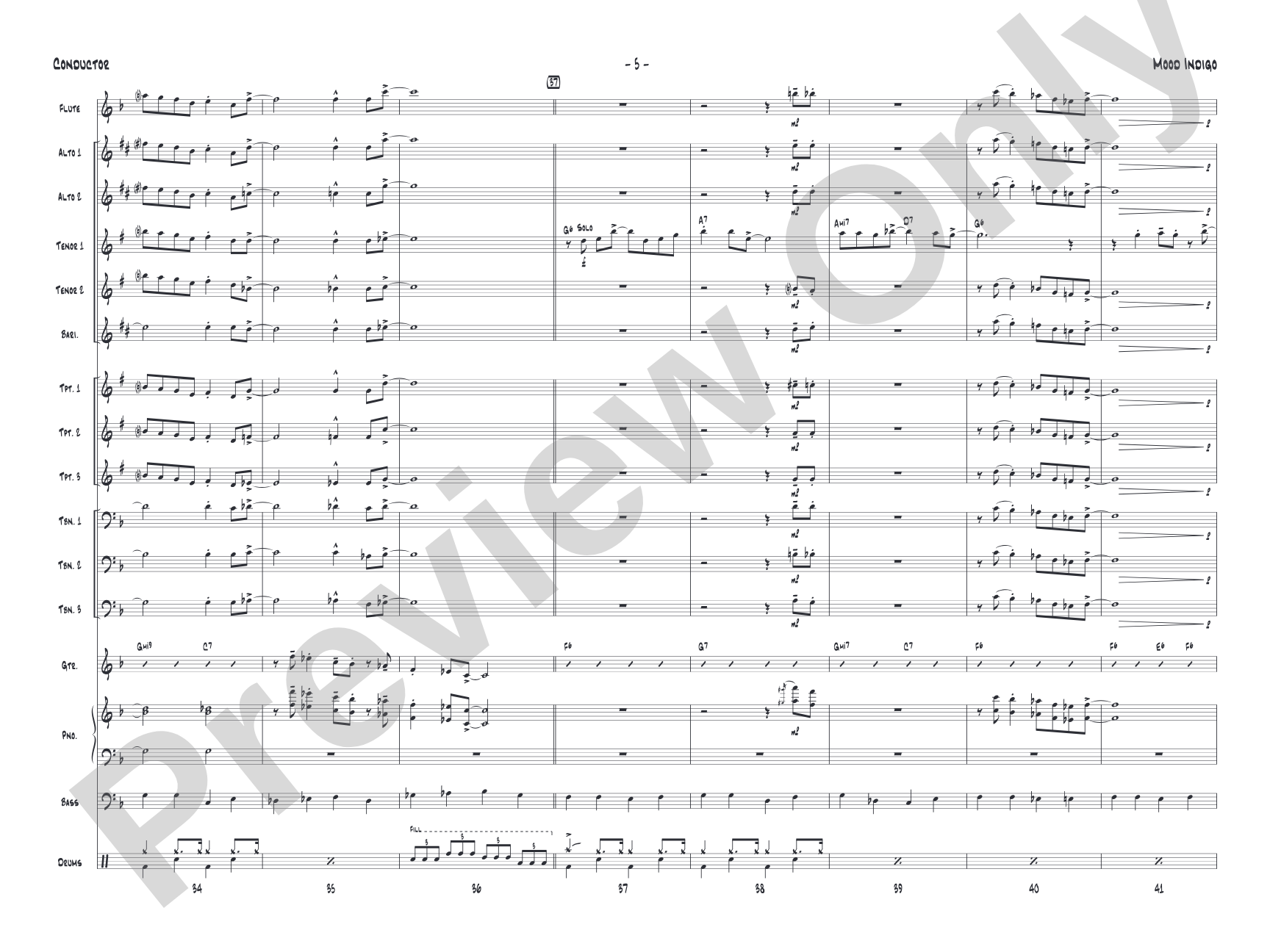
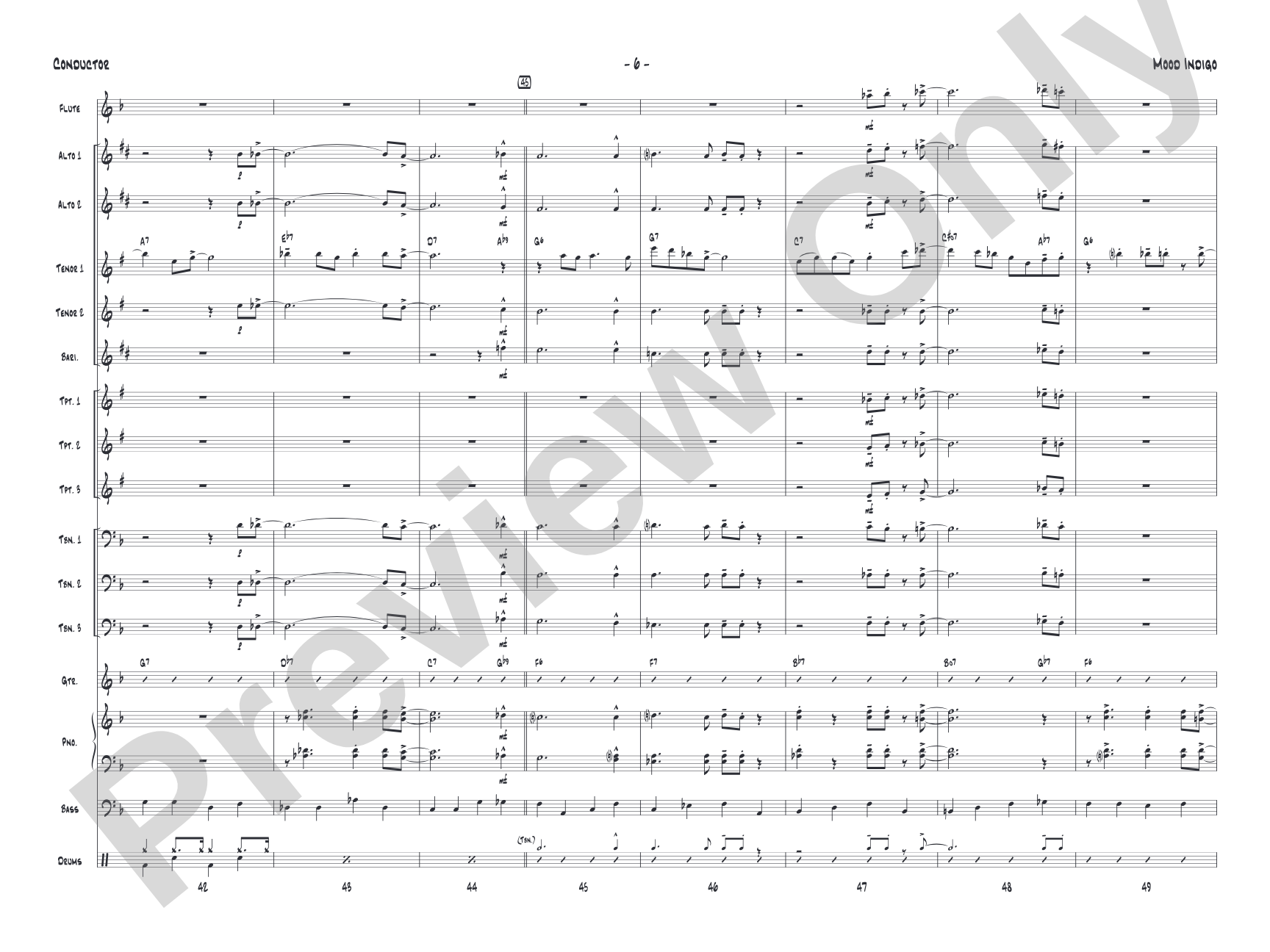
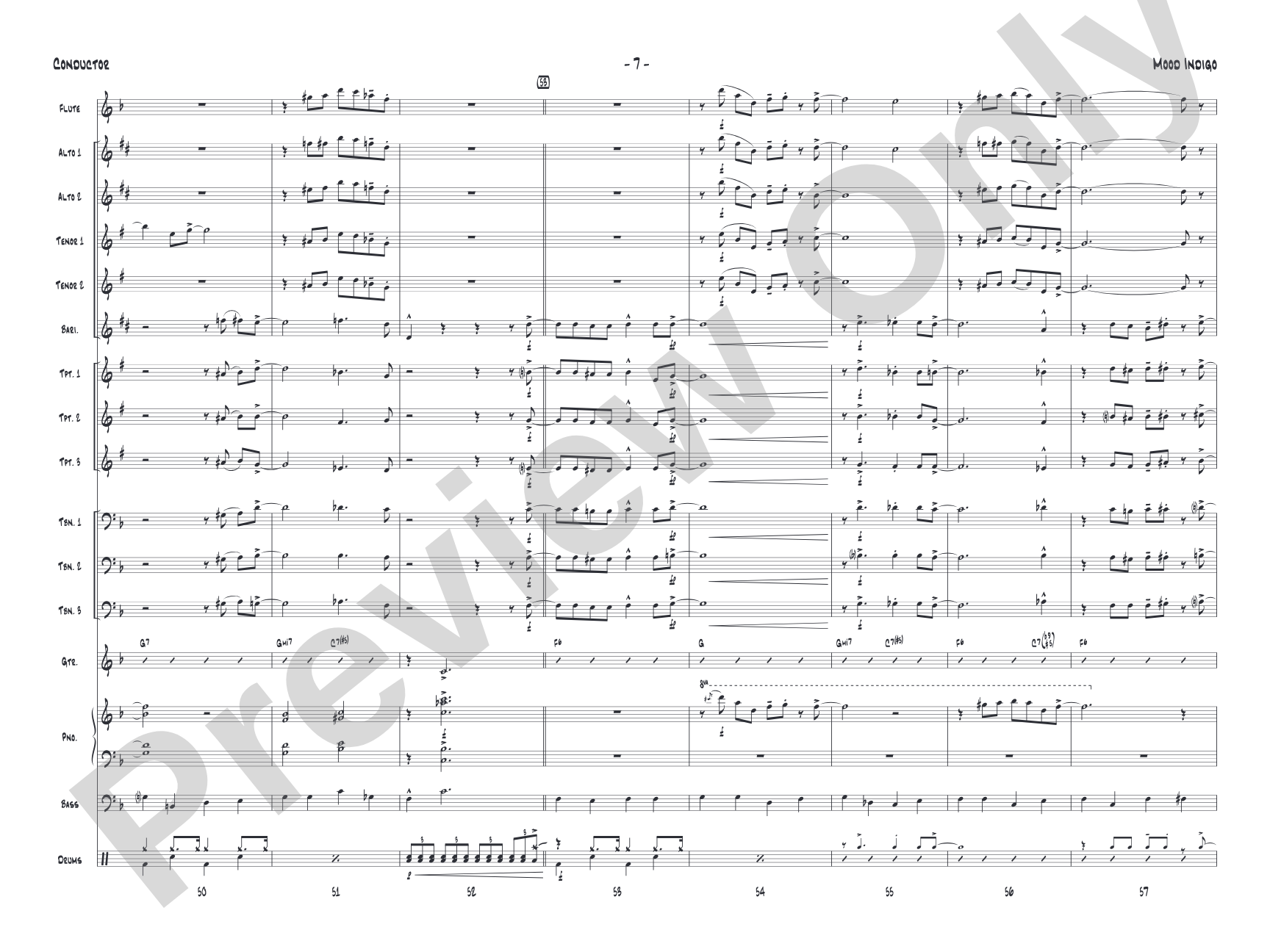
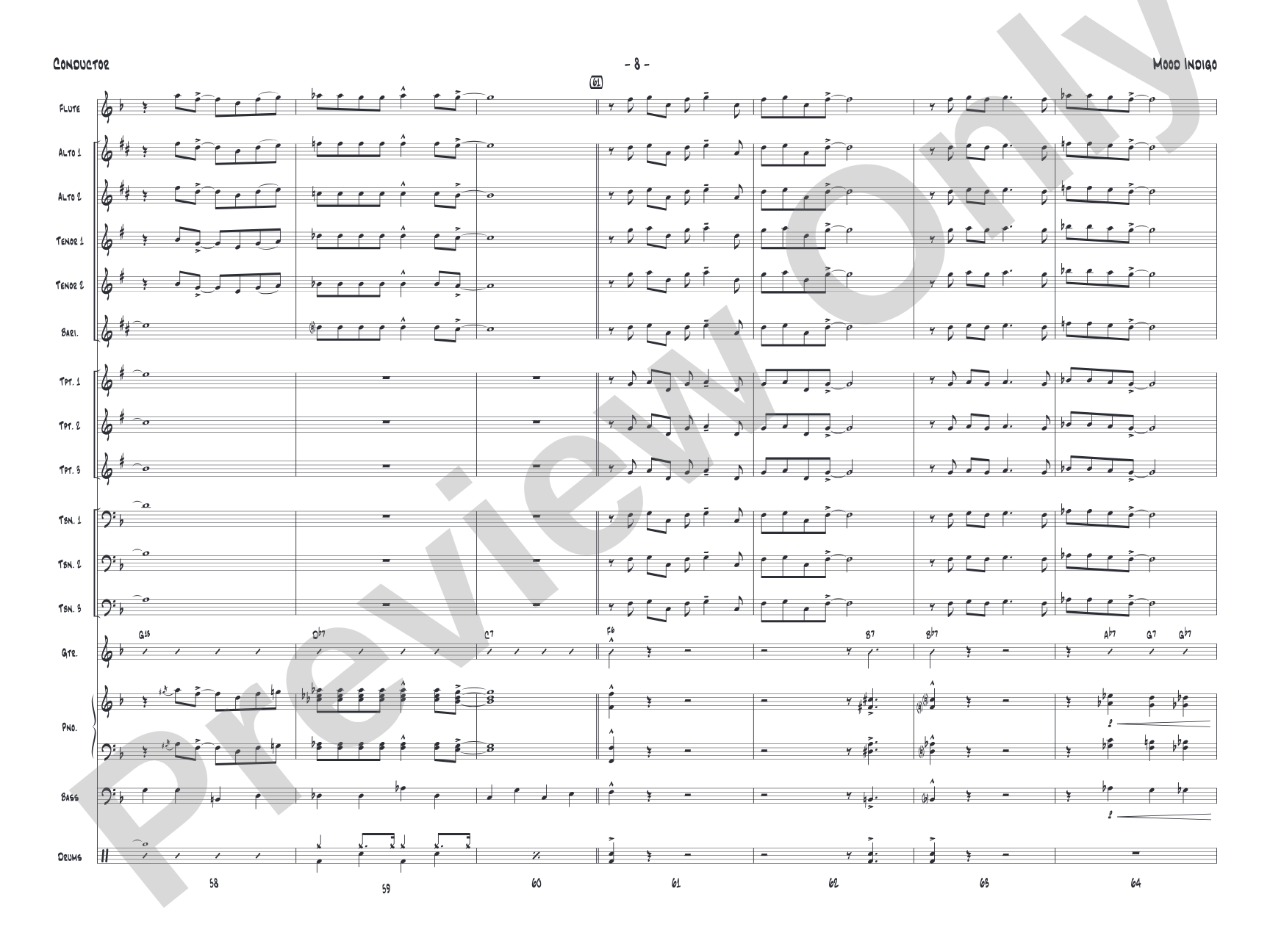
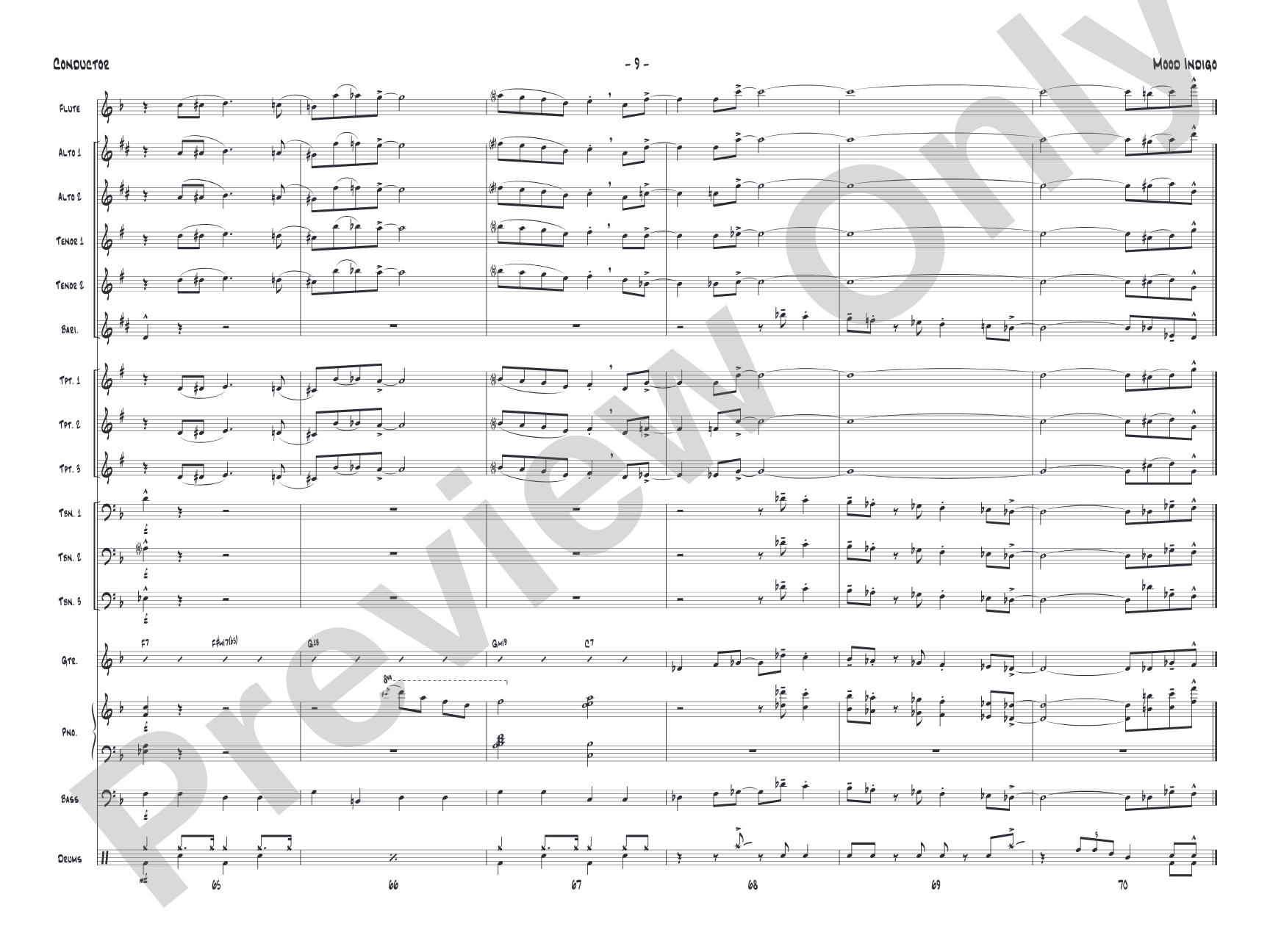

Mood Indigo: Score
Words and music by Duke Ellington, Irving Mills, and Albany Bigard / arr. Vince Gassi
Grade: 1 (Easy)
Item: 00-PR-0004505
$8.00
Pickup currently not available
Description
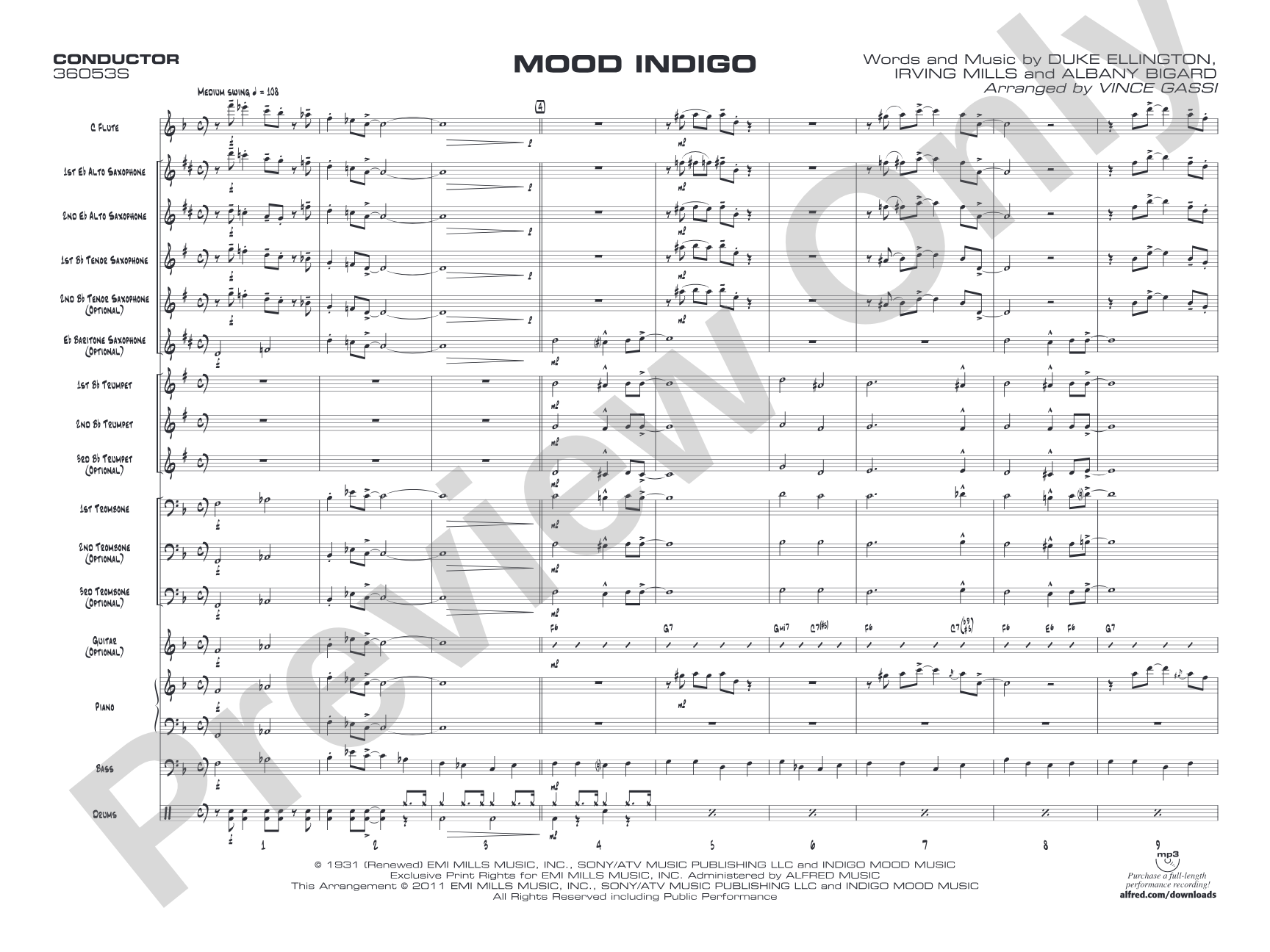
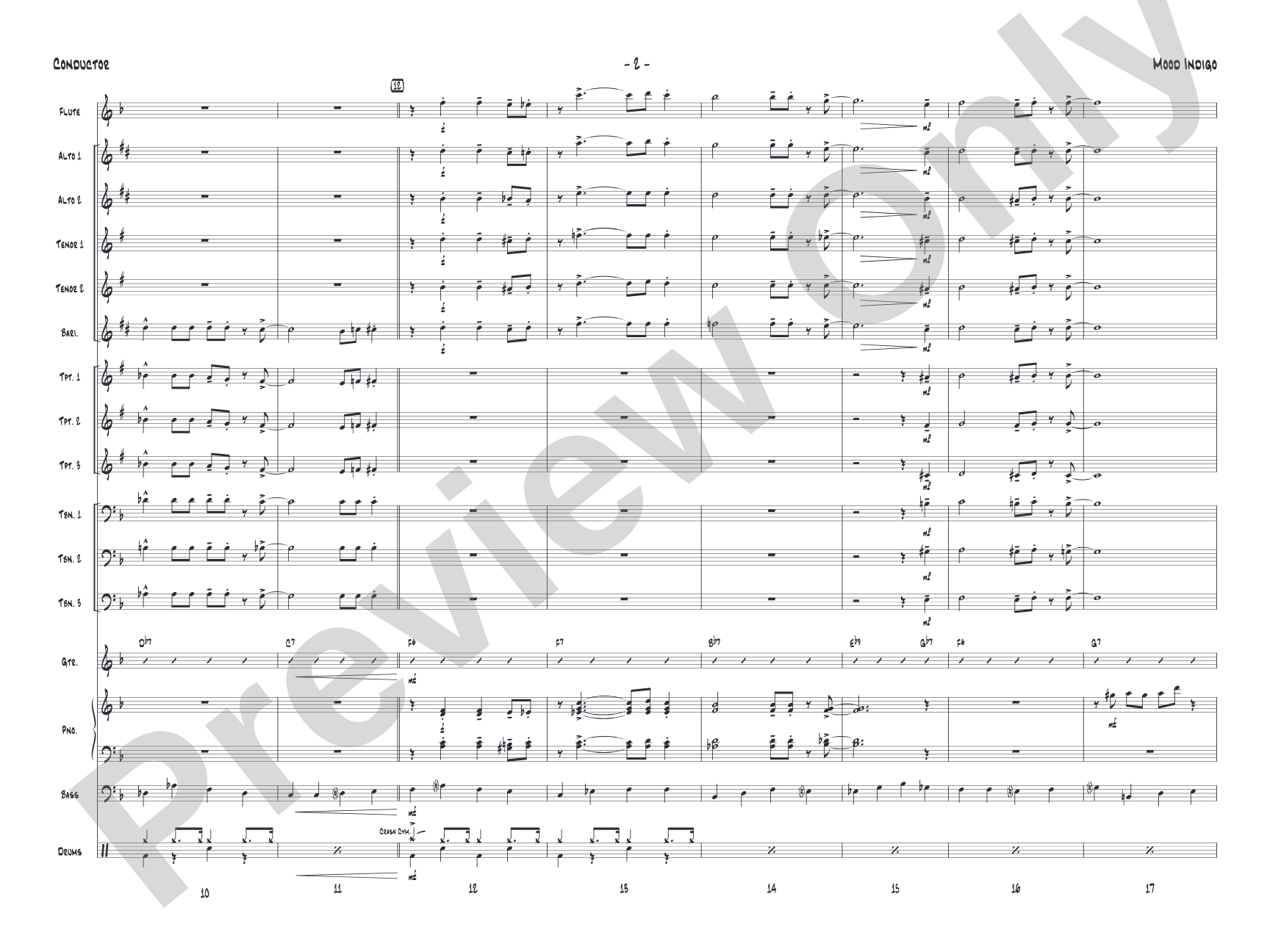
This medium swing arrangement of the dreamy Ellington tune will cook at just about any tempo (though the recommended tempo is 108 BPM). The chart features a written tenor sax solo and a lot of interplay between the brass and saxes. It even has a 4-bar stop-time section for a rhythmic contrast. The Duke would be pleased that you're playing one of his songs on your next concert program.


Don't just read it, hear it, play along with it, and watch your students grow with it. In MakeMusic Cloud, Mood Indigo: Score comes alive with professional accompaniment, adjustable tempo, and built-in practice tools that turn solo practice into real progress.
Open in the Player
Jump straight in and assign it today.
Start Your Free Trial
Open this title and explore the full library in minutes.
Sample Audio
1
Audio File
--:--
0:00
0:00
Sample Video
Additional Details
Series:
First Year Charts for Jazz Ensemble
Publisher:
Alfred Music
Page Count:
78
SKU:
00-PR-0004505
More about this title
About the Composer: Duke Ellington
Duke Ellington stands as one of the most consequential composers in American music history. His output spanned five decades and encompassed jazz standards, extended concert works, film scores, and sacred music, all marked by sophisticated harmonies, memorable melodies, and an instinctive understanding of instrumental color. For music educators, Ellington's catalog represents a direct gateway into jazz history and the composer's own belief that jazz deserved the same artistic consideration as any classical form.
Ellington's influence on jazz ensemble pedagogy cannot be overstated. His charts and compositions remain staples of high school and college jazz programs, offering arrangers and bandleaders models for how to balance solo space, section writing, and compositional architecture. "Mood Indigo" in particular demonstrates his gift for creating a complete musical world within a compact framework.
Why we love this
Gassi's arrangement captures the sophistication of Ellington's original while keeping the part writing accessible for first-year ensemble players. The combination of a written tenor solo, brass and sax interplay, and a stop-time section gives young musicians real jazz vocabulary to absorb without overwhelming them, and the flexibility around tempo means you can adjust the groove to match your ensemble's comfort level.
What to expect
"Mood Indigo" evokes a contemplative, sophisticated atmosphere. The melody drifts with an unhurried elegance, supported by rich harmonies that feel both dreamy and grounded. Even at the recommended 108 BPM, there's room to breathe and savor the interplay between sections.
Who it's for
This arrangement is designed for first-year jazz ensembles and younger high school groups seeking repertoire that teaches authentic jazz playing without excessive technical demands. Conductors will appreciate that the Grade 1 difficulty level doesn't sacrifice musicality or jazz character, making it ideal for early season programming or festival preparation.
How to get the most out of it
- Establish a relaxed swing feel at your chosen tempo before drilling individual sections. Young ensembles often rush swing eighths, so locking the rhythm section's interpretation early will anchor the whole group.
- Balance the tenor sax solo so it sits comfortably over the ensemble without needing excessive volume. This is a intimate tune, and the solo should feel conversational rather than exposed.
- Treat the stop-time section as a rhythmic spotlight. Have the rhythm section lock the groove tight, and let the horns accent and respond with precision to create the contrast the chart asks for.
- Work the brass and sax interplay in separate sections first, then gradually bring them together to hear how the lines complement each other. This kind of call-and-response phrasing is foundational jazz ensemble technique.
How to use it
Program this in the first half of a concert where it can establish sophistication early and set an audience expectation for what your ensemble can deliver musically. The accessible difficulty level and recognizable tune make it an excellent opener for a jazz festival or spring concert, and its relatively compact length allows room for another feature elsewhere on the program.
Skills your students will build
- Swing eighth-note interpretation and feel
- Sectional balance between brass and reeds in an ensemble texture
- Solo accompaniment (for rhythm section and supporting voices)
- Stop-time rhythmic accuracy and ensemble coordination
- Jazz comping and harmonic sensitivity