
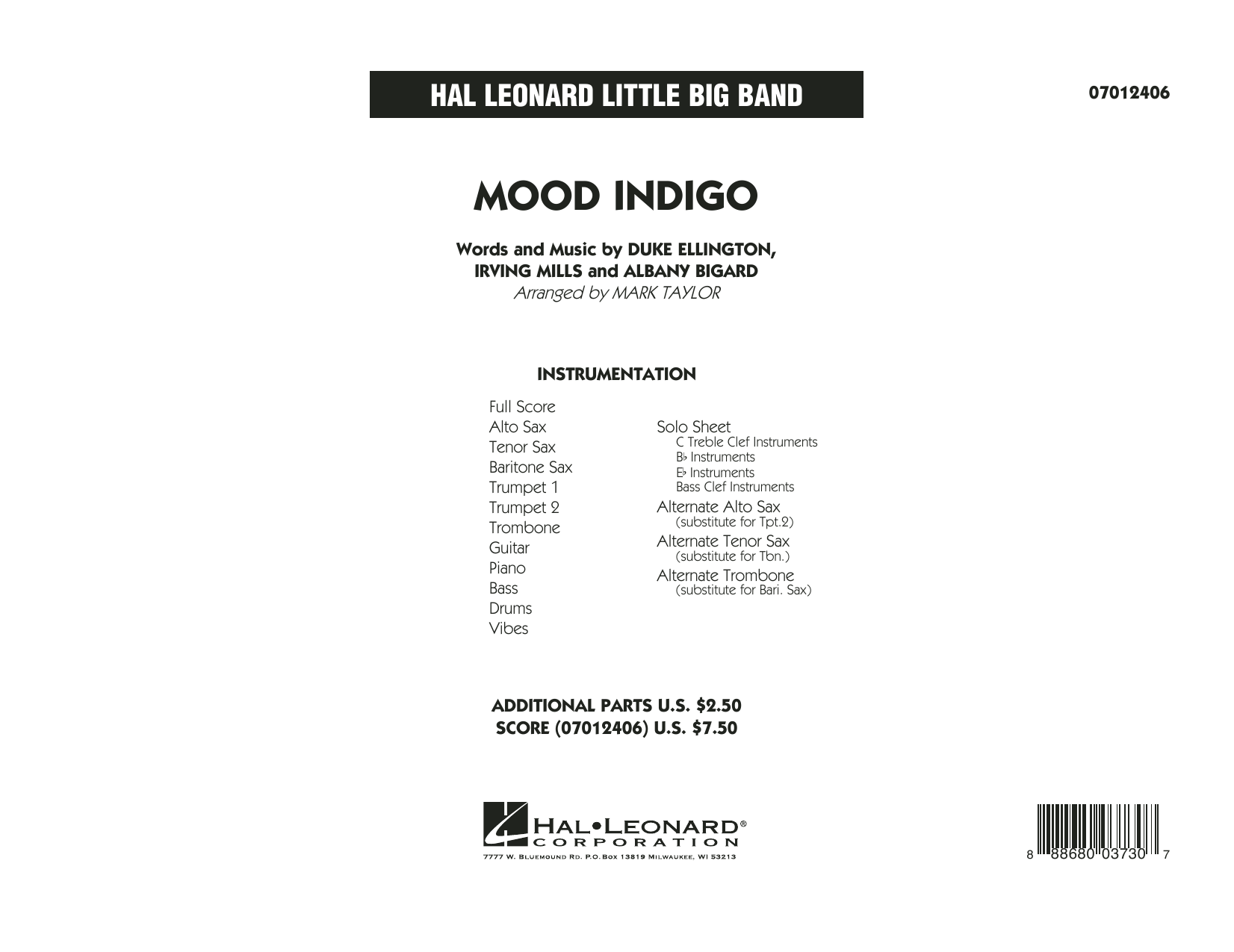

Mood Indigo: Jazz Ensemble Conductor Score & Parts
As performed by Duke Ellington / Arranged by Mark Taylor
Grade: 4
Item: 35-PK00303911
$45.00
Pickup currently not available
Buy Extra Parts (Digital PDF Download)
| Product | Price | Quantity |
|---|---|---|
| Mood Indigo - Full Score | $7.50 | |
| Mood Indigo - Alto Sax | $6.00 | |
| Mood Indigo - Tenor Sax | $6.00 | |
| Mood Indigo - Baritone Sax | $6.00 | |
| Mood Indigo - Trumpet 1 | $6.00 | |
| Mood Indigo - Trumpet 2 | $6.00 | |
| Mood Indigo - Trombone | $6.00 | |
| Mood Indigo - Guitar | $6.00 | |
| Mood Indigo - Piano | $6.00 | |
| Mood Indigo - Bass | $6.00 | |
| Mood Indigo - Drums | $6.00 | |
| Mood Indigo - Vibes | $6.00 | |
| Mood Indigo - C Solo Sheet | $6.00 | |
| Mood Indigo - Bb Solo Sheet | $6.00 | |
| Mood Indigo - Eb Solo Sheet | $6.00 | |
| Mood Indigo - Bass Clef Solo Sheet | $6.00 | |
| Mood Indigo - Alternate Alto Sax | $6.00 | |
| Mood Indigo - Alternate Tenor Sax | $6.00 | |
| Mood Indigo - Alternate Trombone | $6.00 |
Parts Added to Cart!
Description
The lush harmonies and flowing melody of this Ellington favorite are set in a medium samba style in this creative arrangement that takes full advantage of the six-horn format. In addition to full ensemble choruses and trade-offs, there is solo space for alto sax as well as guitar and/or piano.


Mood Indigo: Jazz Ensemble Conductor Score & Parts isn't in MakeMusic Cloud just yet...but it could be. Let us know you'd like to see it, and you'll help shape what comes next. In the meantime, start a free trial and dive into thousands of interactive titles your students can play along with today.
Request This Title
Tell us you want it.
Start Your Free Trial
Explore everything that's ready to play right now.
Sample Audio
No sample audio found.
Sample Video
No sample videos found.
Additional Details
Publisher:
Hal Leonard
SKU:
35-PK00303911
More about this title
About the Artist: Duke Ellington
Duke Ellington stands as one of the most prolific composers in American music history, crafting over a thousand works across jazz, classical, and popular idioms. His approach to orchestration and harmonic sophistication elevated jazz composition to an art form that demands serious musicianship from players and audiences alike, making his catalog essential study for any jazz ensemble.
Why we love this
Mark Taylor's samba reframing of this Ellington standard gives your ensemble a fresh entry point to big band arranging without sacrificing the harmonic richness that makes the tune endure. The six-horn configuration and built-in solo opportunities mean every section gets moments to shine, and the medium tempo sits perfectly for groups still building speed and articulation precision.
What to expect
The arrangement glides with a warm, tropical ease. Ellington's lush harmonies gain new dimension through the samba lens, creating a sophisticated sound that feels both approachable and genuinely swinging. The interplay between full ensemble choruses and focused solo moments gives the piece a conversational quality that keeps players and listeners engaged.
Who it's for
Jazz ensembles at the Grade 4 level who have solid fundamentals in swing style and want to explore Latin jazz textures. This works especially well for groups with capable soloists in alto sax and guitar/piano who are ready for meaningful improvisation space.
How to get the most out of it
- Balance the saxophone and guitar solos against the ensemble; these voices should cut through clearly without the full band dropping too far back dynamically.
- Shape the flowing melodic lines with consistent phrase breathing. Ellington's melodies reward legato phrasing, so coordinate section releases even when individual players have different rhythmic figures.
- Lock the samba rhythm section early in rehearsal. The groove foundation matters more here than in straight swing feels, and players need that pocket established before layering the horn lines.
- Let the alto saxophonist own their solo space. This is a chance to develop solo conception, so give them room to breathe and encourage phrasing choices that reflect the samba inflection rather than pure bebop vocabulary.
How to use it
Pair this with other Ellington standards in a concert celebrating the composer's range, or use it as your Latin jazz centerpiece in a program that otherwise stays grounded in straight-ahead swing. The medium tempo and accessibility make it equally fitting for a spring concert or a jazz festival showcase.
Skills your students will build
- Samba rhythm and swing feel integration
- Ensemble balance with featured soloists
- Improvisation over jazz changes in a Latin context
- Six-part voicing clarity and transparency
- Phrasing and legato control in harmonic passages