
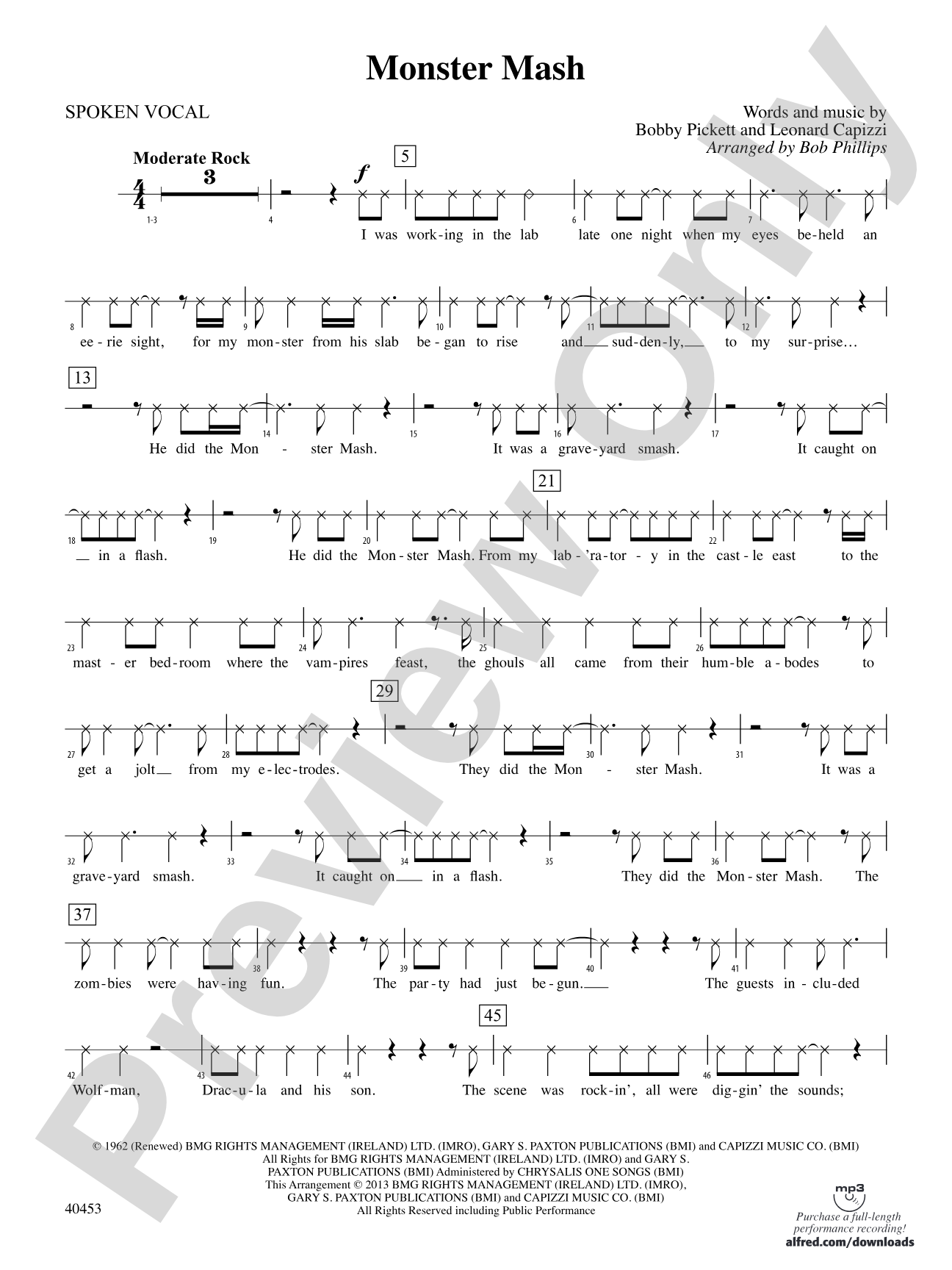

Monster Mash: Vocals
Words and music by Bobby Pickett and Leonard Capizzi / arr. Bob Phillips
Grade: 2.5
Item: 00-PC-0015987_VOC
$5.99
Pickup currently not available
Description
Yes! For the first time, just like the recording and in its entirety, here's "The Mash" for orchestra. With written-out narration, chorus parts for the string section or a choir, drumset, optional guitar, and piano, this one's ready for any bash. Add costumes, skits, and anything else the kids can think of to add excitement to your Halloween or pops concert. This is a great opportunity to invite that special guest to narrate. Correlates to Sound Innovations Book 2, Level 3.


Don't just read it, hear it, play along with it, and watch your students grow with it. In MakeMusic Cloud, Monster Mash: Vocals comes alive with professional accompaniment, adjustable tempo, and built-in practice tools that turn solo practice into real progress.
Open in the Player
Jump straight in and assign it today.
Start Your Free Trial
Open this title and explore the full library in minutes.
Sample Audio
1
Audio File
--:--
0:00
0:00
Sample Video
No sample videos found.
Additional Details
Series:
Sound Innovations for String Orchestra
Publisher:
Alfred Music
Page Count:
152
SKU:
00-PC-0015987_VOC
More about this title
About the Composer: Bobby Pickett
Bobby Pickett composed "Monster Mash" in 1962, creating one of the most enduring novelty songs in American popular music. His playful approach to songwriting and keen ear for what captures public imagination made him a distinctive voice in the pop music landscape. The song's infectious energy and theatrical appeal have made it a cultural fixture for over six decades, introducing generations of listeners to Pickett's gift for combining humor with memorable melodies.
Why we love this
This arrangement brings authentic orchestral life to a song students already know and love, eliminating the usual skepticism about "old" material. The inclusion of written-out narration and flexibility to use either strings or a choir for chorus parts makes it genuinely adaptable to your ensemble's strengths and your concert's creative vision. String players at this level rarely get to tackle something this fun and theatrical, and the optional guitar and piano parts give you room to expand the sound without complicating the core string work.
What to expect
Spooky fun with a rock and roll swagger. The arrangement captures the song's playful monster party atmosphere while keeping the orchestration clear enough that younger string players can navigate it confidently. It bounces along with infectious energy, inviting both ensemble members and audiences to let loose.
Who it's for
String orchestras at the intermediate level (Grade 2.5) who want to program something instantly recognizable and genuinely fun. This works for conductors teaching through the Sound Innovations curriculum and looking for repertoire that reinforces Book 2 skills while keeping student engagement high.
How to get the most out of it
- Secure the narration role early and give that person the full score ahead of time. Clear, theatrical delivery matters as much as musical timing, so rehearse the spoken parts alongside your ensemble from the start.
- Balance the drumset carefully in rehearsals. It's easy for drums to overwhelm strings at this level, so pay close attention to dynamics and mix during section rehearsals before combining everything.
- Use the optional guitar and piano parts strategically. Including them adds color and drives the energy, but removing them temporarily during rehearsal helps you isolate the string parts and build confidence in younger players.
- Lean into the humor in your interpretation. This piece invites costume, staging, and visual fun; encourage students to embrace the theatrical energy rather than play it straight.
How to use it
Perfect for a Halloween concert or fall pops program where you want to shift the mood and give your string orchestra a moment to show their fun side. Pair it with other seasonal selections or use it as an encore to energize an audience and remind them why kids love to play music.
Skills your students will build
- Reading and executing rhythmic figures in a pop/rock context
- Maintaining ensemble cohesion with written-out narration
- Dynamic control and balance between melodic and rhythmic parts
- Playing with style and character appropriate to contemporary repertoire
- Responding to optional instrumental parts and flexible scoring